Midnight sits exactly on the seam between two calendar days, and that single fact has quietly forced lawyers, hospital administrators, train dispatchers, and software engineers to each independently decide something the clock itself refuses to settle: does midnight belong to the day that’s ending, or
At 03:14:07 UTC on January 19, 2038, a number that has been counting upward since 1970 will run out of room. Any system still storing that number the way early Unix systems did will wrap around to a negative value and, depending on how the
On June 30, 2015, at 23:59:60 UTC, the clock did something it almost never does. It counted a second that doesn’t exist on any calendar, doesn’t fit into a normal minute, and broke code at several major websites the moment it happened. That second was
A normal day is usually described as 24 hours, 1,440 minutes, or 86,400 seconds. That number is useful, familiar, and easy to calculate: 24 × 60 × 60. But a day is not only a piece of arithmetic. It is also a practical agreement, an
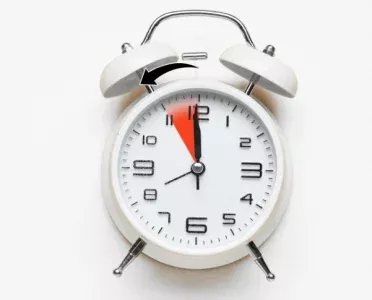
Daylight saving time exists because societies have tried to make better use of daylight during the brighter part of the year. By moving clocks forward, usually by one hour, people shift more usable daylight into the evening, when many are awake, active, shopping, commuting, exercising,
Zulu time is another name for UTC, or Coordinated Universal Time, used especially in aviation, the military, weather reporting, maritime operations, and other fields where people need one shared time reference across the world. When someone writes 1400Z, they mean 14:00 UTC. The letter Z
Time often seems to move faster as people get older. A summer that felt endless in childhood can feel short in adulthood. A school year once seemed like a major chapter of life, while a working year can pass almost without clear edges. The clock
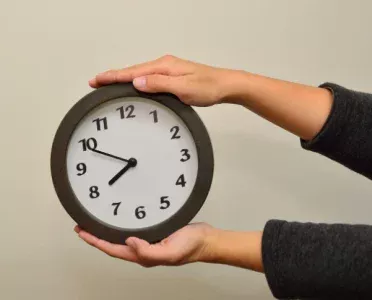
We say “o’clock” because it is a shortened form of the older phrase “of the clock.” When someone says “three o’clock,” the original meaning is close to “three of the clock” or “three according to the clock.” That may sound unusual today because clock time
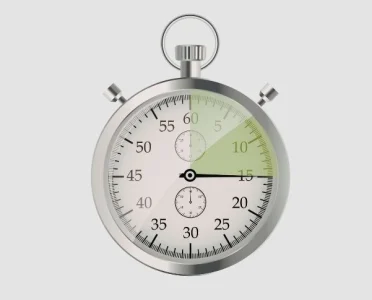
A second is the basic unit used to measure time. It is the small interval behind minutes, hours, days, clocks, calendars, computer timestamps, GPS signals, financial markets, scientific experiments, and almost every system that depends on precise timing. Most people learn that one minute has
Civil time is the official time used by people, governments, businesses, schools, transport systems, courts, and digital services in everyday life. It is the time shown on public clocks, used in work schedules, printed on train tickets, applied in legal deadlines, and written into national
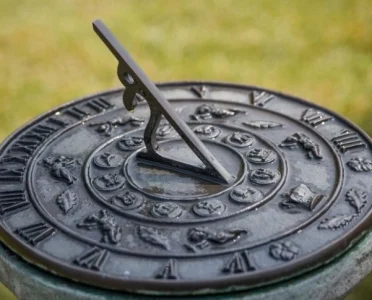
Before mechanical clocks, people measured time by watching change. They followed the Sun’s movement, the length of shadows, the phases of the Moon, the rising of stars, the flow of water, the burning of candles, and the rhythm of daily life. Time was not something
A date places an event on a calendar. A time interval measures how much time actually passed between two moments. That difference may sound small, but it is one of the most important ideas in timekeeping, scheduling, computing, science, finance, travel, and everyday planning. If
A minute has 60 seconds and an hour has 60 minutes because modern timekeeping inherited an old mathematical system that was practical long before mechanical clocks, atomic clocks, or digital screens existed. The number 60 may look arbitrary today, but historically it was one of
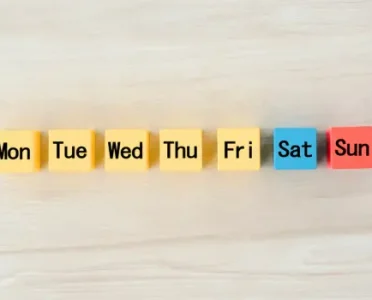
The seven-day week is one of the strangest time units in everyday life. A day comes from Earth’s rotation. A year comes from Earth’s orbit around the Sun. A month has roots in the lunar cycle. But the week is different: it does not fit
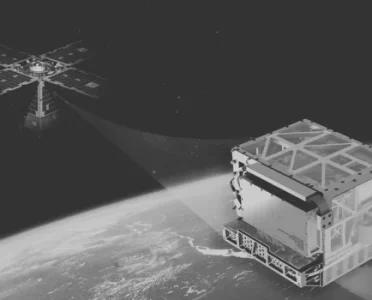
An atomic clock does not measure time by watching hands move, a pendulum swing, or Earth rotate. It measures time using one of the most stable processes in nature: the frequency of an atom shifting between two specific energy states. That idea transformed modern timekeeping.