Roughly one person in every 1,461 draws a birthday that the calendar only honors once every four years. That works out to somewhere around four to five million people worldwide, all sharing a date that legal systems have never fully agreed how to handle, that

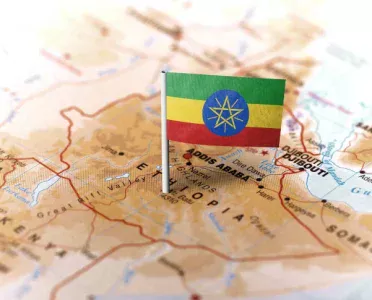
Whatever year it is on the Gregorian calendar, Ethiopia is living in a year numbered seven or eight lower. This isn’t a typo, a joke, or a sign of anything being broken. Ethiopia runs on its own calendar, in daily official use today, and the
Presidents Day is never on a Tuesday. Labor Day is never on a Wednesday. Martin Luther King Jr. Day never lands on a weekend. This isn’t a pattern that emerged by habit. It’s written into federal law, and the law itself has a more complicated
Father’s Day looks like a simple holiday until you try to place it on the calendar. In the United States, Canada, the United Kingdom, and several other countries, it is usually observed on the third Sunday of June. That sounds fixed, but it is fixed
Mother’s Day is easy to remember as a tradition, but not always as a date. In the United States, Canada, Australia, New Zealand, and several other countries, it is observed on the second Sunday of May. That keeps the holiday on Sunday every year, but
Black Friday is always a Friday, but it is not always the same date. It follows Thanksgiving in the United States, so its place on the calendar changes with the fourth Thursday of November. That is the simple answer, but the calendar logic is worth
Ramadan does not have one fixed date in the calendar most people use every day. One year it may begin in March, another year in February, and later it will move into winter, autumn, summer, and spring again. That movement can seem confusing if you
Halloween is celebrated every year on October 31. The date is fixed, but the way people experience the holiday changes depending on the weekday, the country, and local customs. A Saturday Halloween can feel like a major public event. A weekday Halloween may be more
Christmas is celebrated on December 25 because early Christian tradition eventually fixed that date as the feast of the Nativity, the celebration of the birth of Jesus Christ. The Bible does not give a calendar date for Jesus’s birth, and the choice of December 25
The first country to celebrate New Year is Kiribati, more precisely Kiritimati, also known as Christmas Island, in the Line Islands. This part of Kiribati uses the UTC+14 time zone, which makes it one of the first inhabited places on Earth to enter January 1.
Valentine’s Day is celebrated on February 14 because that date became attached to the memory of Saint Valentine in the Christian calendar and was later reshaped into a day of romance, poetry, gift-giving, and popular culture. The modern holiday looks simple on the surface: cards,
January 1 feels universal because it is the date most countries use for official New Year celebrations, civil calendars, business planning, government records, contracts, and international schedules. But it is not the only New Year in the world. Across different cultures and religions, the start
Some holidays stay fixed on the civil calendar. New Year’s Day always begins on January 1. Independence Day in the United States always falls on July 4, and Western Christmas is fixed on December 25. Other holidays behave differently. Easter can arrive in March or
Unlike Christmas or New Year, Easter does not have a fixed calendar date. In some years it arrives in March, while in others it moves deep into April. This shifting date confuses many people because most modern holidays follow the same day every year. Easter
Every September, millions of Americans get a long weekend without always thinking about where the holiday actually came from. For many people, Labor Day means barbecues, travel, shopping discounts, sports events, and the unofficial end of summer. Behind the modern holiday, however, is a much