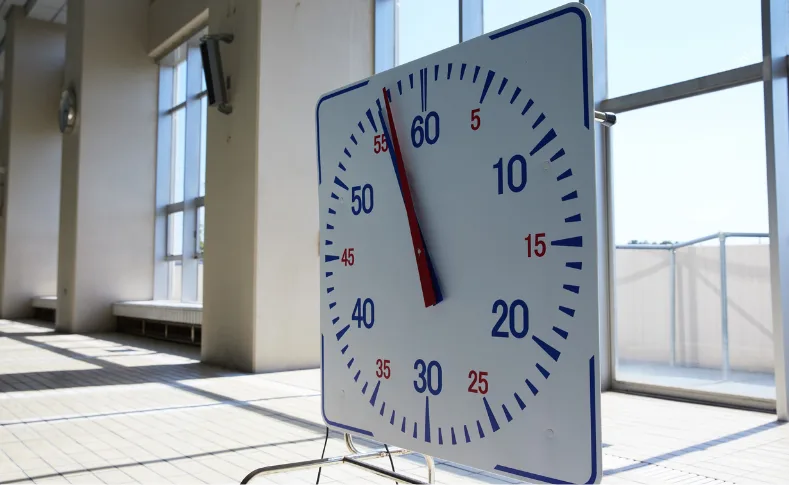
A normal day is usually described as 24 hours, 1,440 minutes, or 86,400 seconds. That number is useful, familiar, and easy to calculate: 24 × 60 × 60.
But a day is not only a piece of arithmetic. It is also a practical agreement, an astronomical idea, a computer problem, and a measurement challenge. The clean number works because society needs a stable clock day. The complication begins when that clock day is compared with the way Earth actually moves.
For everyday life, 86,400 seconds is the right answer. For precision timekeeping, astronomy, navigation, software, and UTC, the story is more interesting. A day can mean a civil day, a solar day, a sidereal day, or a UTC day adjusted by a leap second. Those are related ideas, but they are not identical.
The Calculation Is Simple. The Meaning Is Not.
The basic calculation is simple:
That is the standard civil answer. A normal clock day has 86,400 seconds because the modern day is divided into 24 hours, each hour into 60 minutes, and each minute into 60 seconds.
This structure connects directly with why time is divided into hours, minutes, and seconds. The system did not appear out of nowhere. It grew from older counting traditions, astronomical observation, and the need to break the day into parts people could actually use.
So the number 86,400 is not wrong. It is the practical version of a day: clean enough for schedules, calendars, transport, work, finance, and everyday planning.
Why Society Needs a Clean Clock Day
A civil day is not designed to follow every tiny variation in Earth’s rotation. It is designed to give people and machines a shared time grid.
That grid is what makes modern coordination possible. Trains need timetables. Markets need timestamps. Phones need alarms. Servers need logs. Calendars need to move cleanly from one date to the next. None of those systems can rebuild themselves around the sky every day.
This is the practical power of the 86,400-second day: it turns the uneven motion of a real planet into a stable system that society can use.
A clock day starts at midnight and ends at the next midnight. That sounds obvious now, but it is a human framework. It organizes life by rule, not by watching the Sun cross the sky in every location.
Earth Is Not a Perfect Clock
The problem is that Earth does not rotate with perfect regularity. Its rotation changes slightly because of tidal effects, the movement of oceans and atmosphere, seasonal patterns, changes inside the planet, and long-term slowing over time.
These changes are small. They do not matter when someone is making breakfast or checking a calendar. They do matter when time is measured with atomic precision.
That is why the old idea of defining a second as a simple fraction of Earth’s day eventually became unsatisfactory. If Earth’s rotation is not perfectly stable, then a second based directly on Earth’s rotation is not perfectly stable either.
Modern timekeeping solved this by defining the second through atomic behavior rather than by simply dividing one Earth rotation into equal parts. That is why what a second is and how it is measured matters so much, and why atomic clocks became central to official time.
In other words, the clock day is clean. The rotating Earth is not.
One Word, Several Kinds of Day
The word “day” feels simple because people use it every day. In timekeeping, however, it can point to different things.
A civil day is the day used by clocks and calendars. It runs from midnight to midnight and is the normal day people use for schedules, work, travel, and public life.
A solar day is connected to the apparent motion of the Sun. It is related to the time from one solar noon to the next. This is why solar noon is such a useful concept: it shows that the Sun’s highest point in the sky does not always match 12:00 on the clock.
A sidereal day is measured against distant stars instead of the Sun. This is important in astronomy, because stars are not tracked the same way the Sun is tracked in daily civil time.
Those meanings overlap, but they do not describe exactly the same thing. A calendar, a sundial, and a telescope can all care about a “day” for different reasons.
Why the Stars Give a Shorter Day
A sidereal day is about 23 hours, 56 minutes, and 4 seconds of ordinary solar time. That is almost four minutes shorter than the 24-hour day used in daily life.
The reason is Earth’s orbit. Earth is not only rotating on its axis. It is also moving around the Sun. After one rotation relative to distant stars, Earth has moved a little farther along its orbit. It must turn a little more before the Sun appears in the same position in the sky again.
That extra turn is why the solar day is longer than the sidereal day.
This does not make the 24-hour day fake or wrong. It means the reference point is different. A person planning lunch needs civil time. An astronomer pointing a telescope needs star-based time. The same planet is being measured through different systems.
The Day That Can Have 86,401 Seconds
Leap seconds are where the clean clock day meets the uneven rotation of Earth.
Atomic clocks keep extremely stable time. Earth’s rotation does not stay perfectly aligned with that atomic count forever. Coordinated Universal Time, or UTC, was built to use atomic seconds while staying close to Earth-rotation time.
This is why UTC has historically used leap seconds. A positive leap second adds one extra second to UTC. Instead of moving straight from 23:59:59 to 00:00:00, the clock can show 23:59:60.
On that kind of UTC day, the day has 86,401 seconds instead of 86,400.
That extra second is tiny for human experience, but it can be awkward for software, networks, databases, trading systems, satellite systems, and anything that expects time to move in perfectly regular steps.
Is Every Day Exactly 86,400 Seconds?
The answer depends on the kind of day being discussed.
| Type of day | Typical length | What it means |
|---|---|---|
| Civil clock day | 86,400 seconds | The normal day used by people, calendars, schedules, and most daily systems |
| UTC day with a positive leap second | 86,401 seconds | A rare adjusted day used to keep UTC close to Earth-rotation time |
| Sidereal day | About 23h 56m 4s | A day measured relative to distant stars, mainly useful in astronomy |
| Real Earth-rotation day | Slightly variable | The actual rotation of the planet, not an ideal clock unit |
For everyday use, 86,400 seconds is the answer people need. For precision systems, the word “day” needs more context.
Why Computers Like Simple Days
Computers prefer clean rules. A day with 86,400 seconds is easy to count, compare, store, and calculate.
That is why many systems are built around regular timestamps and elapsed seconds. Logs, databases, APIs, financial records, calendars, and analytics tools all benefit from predictable time intervals.
But human time is not only elapsed seconds. Local time has time zones, daylight saving changes, calendar rules, and political decisions. UTC can involve leap seconds. A local day can feel shorter or longer when clocks move for daylight saving time.
This is one reason Unix time is so important. Computers need a continuous way to count time, while humans need local clock time that matches dates, countries, schedules, and social rules.
The simple day is convenient. Real timekeeping systems exist because convenience is not always enough.
Why Leap Seconds Are Being Rethought
Leap seconds were created to keep official time close to Earth’s rotation, but they also created technical friction.
From an astronomical point of view, the logic is understandable. Civil time should not drift too far away from the rotating Earth. From a software and infrastructure point of view, inserting an extra second into a minute can be difficult.
This is why the future of leap seconds has been debated internationally. Modern timekeeping is moving toward a system that reduces the need for frequent leap-second adjustments while still preserving a meaningful relationship between UTC and Earth rotation over the long term.
The important point is not that the normal day is wrong. It is that the simple number seen on a clock depends on a deep global system: atomic clocks, national laboratories, international standards, satellite timing, software infrastructure, and astronomical monitoring.
Why This Matters Beyond Trivia
At first, “how many seconds are in a day?” looks like a basic arithmetic question. In reality, it opens the door to several layers of timekeeping.
Human time needs routine. Scientific time needs precision. Astronomical time needs the sky. Computer time needs consistent counting. Civil time needs rules that whole societies can share.
Those needs overlap, but they are not the same.
A traveler cares about local time. A programmer cares about timestamps. An astronomer cares about star positions. A trader cares about market time. A standards laboratory cares about the definition of the second. They can all use the word “day” correctly while paying attention to different details.
That is why time feels simple until precision matters.
The Practical Way to Think About 86,400 Seconds
For daily life, use the simple rule: a normal day has 86,400 seconds.
For astronomy and precision timekeeping, remember that Earth is not a perfect clock. Its rotation is real, physical, and slightly uneven.
For computers, remember that counting seconds is not always the same as understanding local time. Time zones, daylight saving rules, leap seconds, and calendar systems can all complicate the clean number.
The 86,400-second day is not wrong. It is one of the most useful simplifications in modern timekeeping. Behind it is a more complex reality: atomic clocks measure seconds with extreme precision, Earth rotates imperfectly, and global time systems keep both close enough for daily life, science, software, and international coordination to work.