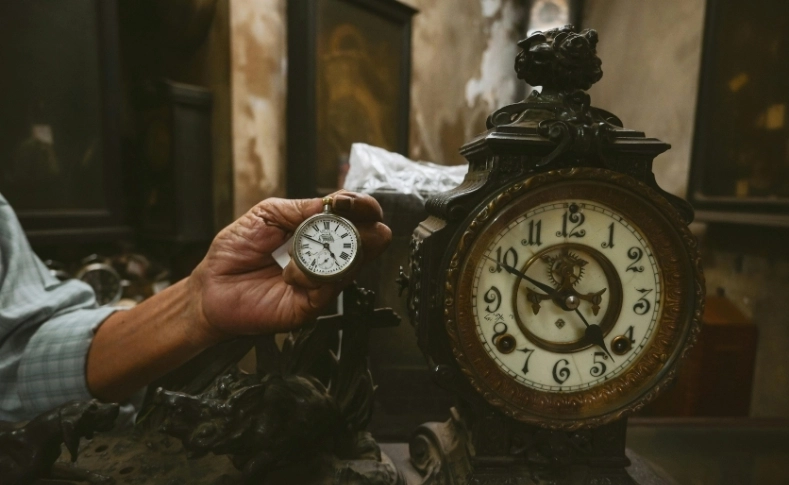
Time often seems to move faster as people get older. A summer that felt endless in childhood can feel short in adulthood. A school year once seemed like a major chapter of life, while a working year can pass almost without clear edges. The clock has not changed, but the experience of time has.
This feeling is common because human time is not only measured by clocks. It is also shaped by memory, attention, routine, emotion, novelty, and the way the brain organizes experience. A year is still a year, but the mind does not always feel each year with the same weight.
The simplest explanation is that life often becomes more predictable with age. Childhood is full of firsts. Adulthood often repeats patterns. New experiences create stronger memory markers, while repeated routines can blur together. When the brain looks back, a period with fewer distinct memories can feel shorter than it really was.
The Short Answer: Time Feels Faster Because Memory Changes
Time feels faster as we get older mainly because the brain records time through experience, not just through duration.
When people look back, the period with more memory markers often feels longer. The period with fewer markers feels compressed. This is why a childhood vacation may feel huge in memory, while several ordinary workweeks can feel like they disappeared.
This does not mean time literally speeds up. A minute is still a minute, and a second is still defined by measurement, not by feeling. But perceived time is not the same as measured time.
To understand the difference, it helps to separate clock time from lived time, which is part of the larger question of what time is.
Clock time is external and standardized. Psychological time is internal and flexible. The feeling that time speeds up with age comes from that second kind of time.
Why Childhood Feels Longer in Memory
Childhood often feels longer because it contains more novelty. Many experiences happen for the first time: the first school day, first friendship, first holiday memory, first bike ride, first trip, first fear, first success, first disappointment. The brain pays close attention to new situations because they require learning.
New experiences are easier to separate in memory. They have stronger edges. One summer may contain a new place, a new friend, a new skill, and a new emotional world. Later in life, many summers may contain similar work routines, similar weekends, similar errands, and similar screens.
That difference changes how time feels when remembered. A child’s year may contain many distinct chapters. An adult’s year may contain long stretches that blend together. The calendar may count both years equally, but memory does not.
This is one reason people often feel that early life lasted longer. The mind is not measuring the year like a stopwatch. It is rebuilding the year from remembered events. More distinctive events can make the past feel larger.
The Role of Routine in Making Time Feel Shorter
Routine is useful for life, but it can compress memory. When days follow the same pattern, the brain does not need to record every detail with the same intensity. Wake up, work, commute, check messages, eat, repeat. These actions may be necessary, but they do not always create strong memory boundaries.
This is why a busy month can still feel strangely short. Being busy is not the same as forming rich memories. A person may complete many tasks, answer many emails, attend many meetings, and still feel that the month vanished. The activity was real, but the days were similar.
Routine also changes attention. When a task is familiar, the mind can run parts of it automatically. Automatic behavior is efficient, but it often leaves a weaker memory trace. The less attention a moment receives, the less space it may occupy later.
This creates a paradox. A routine day can feel long while it is happening, especially if it is boring or stressful. But later, that same day may almost disappear from memory. In the moment it dragged. In retrospect it vanished.
Why New Experiences Make Time Feel Longer
New experiences often make time feel longer because they force the brain to pay attention. Travel is a simple example. The first day in a new city can feel unusually long because everything requires observation: streets, food, signs, sounds, transport, faces, and decisions. The brain is building a new map.
That same effect can happen without travel. Learning a skill, starting a new job, meeting new people, changing a routine, or facing a challenge can make time feel more detailed. The mind has more to encode, so the period feels fuller when remembered.
This is why novelty can stretch time in memory. It does not slow the clock. It increases the number of mental landmarks. Later, when the mind looks back, those landmarks make the period feel larger.
The practical lesson is not that life must be constantly exciting. It is that attention and variation matter. A life made only of repeated patterns may feel efficient, but it can also become hard to remember clearly.
The Proportional Theory: Each Year Becomes a Smaller Part of Life
Another common explanation is proportional. When you are 10 years old, one year is one tenth of your life. When you are 50, one year is one fiftieth. In relative terms, each year becomes a smaller piece of the life you have already lived.
This idea helps explain why childhood years can feel large. A single year once represented a huge share of experience. Later, the same calendar year becomes one chapter among many. The brain may not calculate this mathematically, but the feeling can still be real.
The proportional explanation is useful, but it is not enough by itself. A year can feel long at any age if it contains major change, uncertainty, or novelty. A year can feel short at any age if it is repetitive. So age matters, but memory structure matters too.
The best explanation combines both ideas. As people age, each year becomes a smaller fraction of life, and many adult years also become more routine. Together, those forces can make time feel faster.
Time in the Moment vs Time in Memory
One of the most important distinctions is the difference between time as it is experienced now and time as it is remembered later. These two forms of time can behave differently.
A boring afternoon can feel slow while it is happening. Minutes drag because attention keeps returning to the clock. But when that afternoon is remembered later, it may feel almost empty because little happened. The present felt long, but the memory feels short.
A difficult or exciting period can work the opposite way. It may feel fast while it is happening because attention is absorbed. But later, it may feel long because it created many memories. The present moved quickly, but the remembered period became large.
This is why asking “why does time feel faster?” can have two answers. Time can feel fast in the moment when attention is absorbed. Time can feel fast in retrospect when memory is sparse. These are different psychological effects.
This distinction is closely related to the idea of a time interval. A time interval may be objectively measured between two points, but the experience of that interval depends on how the mind fills it.
Why Attention Changes the Speed of Time
Attention has a strong effect on perceived time. When people are fully engaged, time often seems to pass quickly. This is common during creative work, sport, conversation, games, music, or any activity that absorbs focus. The mind is not constantly checking time, so the clock seems to move faster.
When people are waiting, bored, anxious, or uncomfortable, time often feels slower. Attention turns toward the passage of time itself. A five-minute wait can feel longer than an hour spent doing something meaningful.
This shows that perceived time is not only about age. It is also about where attention goes. If attention is on the activity, time may seem to pass quickly. If attention is on time itself, time may seem to drag.
As people get older, responsibilities can also fragment attention. Work, messages, family duties, bills, planning, and digital distractions can make days feel busy but thin. The mind moves through many small tasks without always forming deep memories. The result can be a strange mix: the day feels crowded, but the month feels short.
Why Emotion Can Stretch or Compress Time
Emotion also changes the experience of time. Fear, stress, excitement, grief, joy, and anticipation can all affect how long moments feel. Intense moments often feel slower while they are happening because attention becomes sharp and detailed.
But memory can treat emotional time in different ways. Some emotional periods become vivid and expansive in memory. Others become blurred, especially when stress is repetitive or overwhelming. The effect depends on attention, meaning, and how the brain stores the experience.
This is why important life events can feel large even if they happened quickly. A short conversation, a decision, a journey, or a moment of danger can occupy more memory than an ordinary week. The clock gives both periods a duration. The mind gives them different weight.
Time feels faster with age partly because not every year carries the same emotional density. Years with major transitions may stand out. Years of repetition may fold into each other.
Why Digital Life Can Make Time Feel Thinner
Modern digital life can make time feel thinner because it fills small gaps without always creating lasting memories. Scrolling, checking notifications, switching tabs, watching short videos, and jumping between tasks can occupy hours, but not all of that time becomes memorable.
This does not mean digital life is always empty. Online work, learning, communication, creativity, and entertainment can be meaningful. The issue is fragmentation. When attention is broken into many small pieces, time may be consumed without leaving clear memory structure.
A day spent online can feel busy in the moment and vague in memory. Many inputs passed through the mind, but few became strong markers. That can make weeks feel faster because the brain has fewer distinct scenes to return to.
This is one reason the modern feeling of time speeding up may not be only about age. It may also be about attention. A life full of interruptions can make time feel both crowded and empty.
Can You Make Time Feel Slower?
You cannot slow time itself, but you can change how time is experienced and remembered. The most practical way is to create more attention and more memory markers.
New experiences help. They do not have to be dramatic. A different walking route, a new skill, a conversation, a short trip, a handwritten journal, a new recipe, a museum, a class, or a weekend without the usual routine can make time feel more textured.
Attention also helps. When people are fully present, they often remember more detail. That does not mean every moment must be intense. It means that noticing a moment gives it a better chance of becoming part of memory.
Reflection can help too. Writing down what happened during the day or week gives the mind landmarks. Without reflection, repeated days can merge. With reflection, even ordinary time can gain shape.
The goal is not to make life feel slow in the sense of boring. The goal is to make life feel fuller. A fuller period often feels longer in memory because it contains more distinct experience.
Measured Time vs Remembered Time
The cleanest way to understand the feeling is to separate measured time from remembered time. Measured time moves at the same rate for everyone in ordinary daily life. Remembered time does not. It expands and contracts depending on attention, novelty, emotion, routine, and memory.
As people get older, life often becomes more structured and repetitive. Each year also becomes a smaller fraction of total life experience. At the same time, fewer events may feel completely new. Together, those changes can make years feel shorter than they once did.
But this is not only a sad fact of aging. It also means the feeling of time is partly changeable. A life with more attention, novelty, reflection, and meaningful variation can feel more detailed. The clock may not slow down, but memory can become richer.
Time feels faster as we get older because the mind does not store life like a calendar. It stores scenes, changes, emotions, patterns, and meanings. When life becomes repetitive, time compresses. When life becomes memorable, time expands.