If a newspaper horoscope calls you an Aries, the sun was not actually sitting in front of the constellation Aries on the day you were born. It hasn’t been for roughly two thousand years. This isn’t a conspiracy, a recent discovery, or a sign that
Four times a year, the sun does something specific and predictable enough that civilizations without clocks or written calendars built stone monuments to track it. Two of those moments are solstices, two are equinoxes, and together they’re the only truly fixed points in a year
High tide does not return at the same clock time every day. It may arrive in the morning one day, closer to midday the next, and later again after that. To someone looking only at a normal 24-hour clock, the pattern can feel strange. The
An eclipse happens when the Sun, the Moon, and Earth line up in space so precisely that one body blocks light from another. A solar eclipse happens when the Moon gets between Earth and the Sun. A lunar eclipse happens when Earth gets between the
Solar noon is the moment when the Sun reaches its highest point in the sky for a specific location. It sounds like it should happen at 12:00, but in many places it does not. Solar noon can be a few minutes away from clock noon,
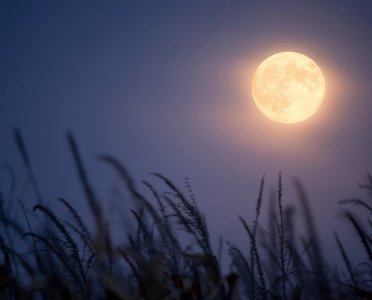
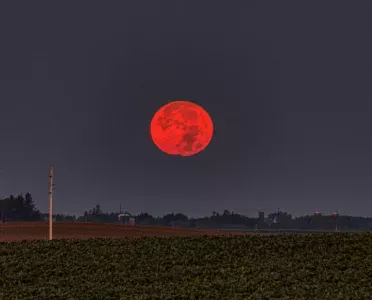
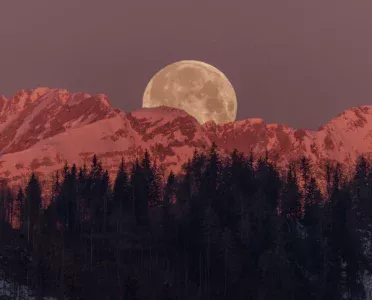
The Moon often looks much bigger when it is near the horizon than when it is high in the sky. It can seem huge as it rises behind trees, buildings, hills, or the ocean, then look smaller a few hours later when it is overhead.
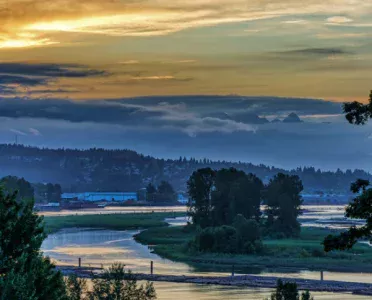
Golden hour is the period shortly after sunrise or shortly before sunset when sunlight looks warmer, softer, and less harsh than it does during the middle of the day. Photographers value it because faces, landscapes, buildings, and natural scenes often look more dimensional and balanced
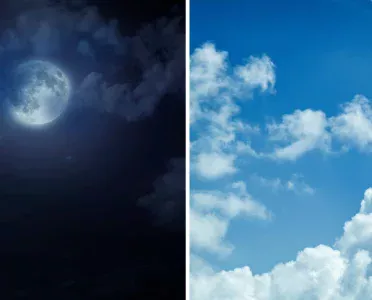
Seeing the Moon in daylight can feel strange because people often think of the Moon as something that belongs to the night. In reality, the Moon is not tied to nighttime. It is visible whenever three conditions come together: it is above the horizon, it
A sunset can look calm, dramatic, red, orange, pink, purple, or almost golden, but the reason is not that the Sun itself changes color at the end of the day. The Sun is still producing the same broad range of visible light. What changes is
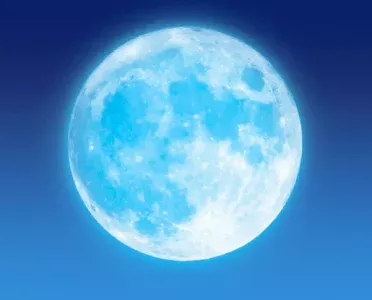
The Moon is one of the most visible objects in the sky, yet most people see it as something simple and unchanging. In reality, it is constantly shifting, and these changes follow precise physical laws. The phases of the Moon are the result of the
The Moon is one of the most familiar objects in the sky, but most people only know a few basic things about it. In reality, it plays a key role in how Earth works, from ocean tides to the stability of our planet’s rotation. Its
Astronomical time is a method of measuring time based on the actual motion of Earth and celestial bodies. It is not a convention like calendars or time zones, but a physical process that exists independently of human systems. Any modern time value is already a
The time of sunrise changes every day, and this change is not random. It is a direct result of the geometry of Earth’s motion relative to the Sun. This is not caused by a single factor. It is the combined effect of Earth’s axial tilt,