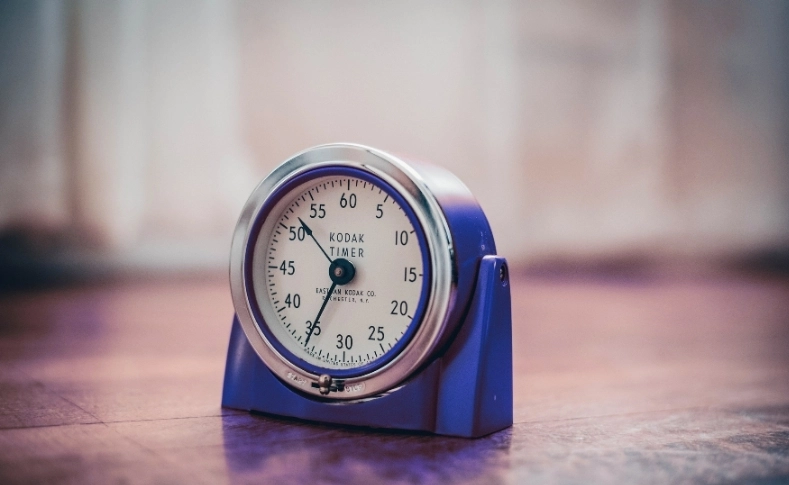
A second is the basic unit used to measure time. It is the small interval behind minutes, hours, days, clocks, calendars, computer timestamps, GPS signals, financial markets, scientific experiments, and almost every system that depends on precise timing.
Most people learn that one minute has 60 seconds and one day has 86,400 seconds. That is useful for everyday life, but it is not how the modern second is officially defined. Today, a second is not measured by simply dividing the day into smaller parts. It is defined by the behavior of atoms.
Today’s official second is an atomic unit of time. More precisely, the SI second is based on a fixed frequency of the caesium-133 atom. That definition gives the world a stable unit that does not depend on the slightly uneven rotation of Earth.
The Short Answer: A Second Is an Atomic Unit of Time
The second is the SI base unit of time. In the modern International System of Units, it is defined using the caesium-133 atom. The official definition fixes the caesium frequency at 9,192,631,770 cycles per second. In practical terms, an atomic clock counts that many oscillations, and that interval is one second.
This may sound far removed from everyday life, but it is the reason modern timekeeping can be so precise. A phone clock, a satellite navigation system, a financial timestamp, or a global computer network all depend on a definition of time that is more stable than sunrise, sunset, or the length of a solar day.
That is why a second is not just a convenient slice of a minute. It is the foundation of modern time measurement. To understand the bigger idea behind it, it helps to start with what time is as something we experience, measure, and standardize.
Why a Second Was Once Linked to the Day
Historically, the second was connected to the day. A day was divided into 24 hours, each hour into 60 minutes, and each minute into 60 seconds. That gives 86,400 seconds in a day.
This system made sense because human timekeeping began with visible cycles: sunrise, sunset, the Sun’s movement across the sky, and the rhythm of day and night. For everyday life, dividing the day into smaller parts was practical. People did not need atomic precision to farm, trade, pray, meet, travel locally, or organize work.
This older structure is still visible in the way we read clocks today. The reason we use 60 seconds in a minute and 60 minutes in an hour is historical, not atomic. It comes from older systems of counting and angle division, not from caesium atoms. That background is explained more fully in why there are 60 seconds in a minute.
The problem is that the natural day is not perfectly stable. Earth’s rotation is extremely regular by human standards, but not perfectly regular by scientific standards. The planet’s rotation can vary slightly because of tidal forces, changes inside Earth, atmospheric movement, ocean circulation, and other physical effects. For ordinary life, those variations are tiny. For precision timekeeping, they matter.
Why the Day Is Not Precise Enough
If the second were defined only as 1/86,400 of a day, then the unit would depend on Earth’s rotation. That sounds natural, but it creates a problem: Earth is not a perfect clock.
The length of the day changes very slightly over time. Some days are a little longer or shorter than others. Over long periods, Earth’s rotation also gradually slows because of tidal interactions with the Moon. These changes are small, but modern science, navigation, communication, and computing need something more stable.
This is why the second moved away from being defined by the mean solar day. The BIPM notes that the second was once defined as 1/86,400 of the mean solar day, but irregularities in Earth’s rotation made that definition unsatisfactory for precise measurement.
The key lesson is simple: the day is useful for calendars and daily life, but it is not stable enough to define the world’s most precise unit of time. Civil life can follow the Sun. Precision timekeeping needs atoms.
How the Modern Second Is Defined
The modern second is defined in the International System of Units using the caesium-133 atom. The BIPM states that the second is defined by fixing the numerical value of the caesium frequency, the unperturbed ground-state hyperfine transition frequency of the caesium-133 atom, at 9,192,631,770 hertz. Since hertz means cycles per second, this fixes the length of the second itself.
That definition can sound technical, but the core idea is understandable. Atoms can absorb or emit energy at very specific frequencies. Caesium-133 has a particular transition that is extremely stable and reproducible. If a clock can lock onto that frequency and count its oscillations, it can measure time with extraordinary consistency.
So a second is not defined by a swinging pendulum, the Sun crossing the sky, or the average length of the day. It is defined by a repeatable atomic process. That is what makes the modern second powerful.
This definition gives scientists and engineers a unit that can be reproduced in laboratories around the world. The goal is not just to keep clocks in one country accurate. The goal is to make time measurement globally comparable.
How Atomic Clocks Measure a Second
An atomic clock measures a second by using atoms as a frequency reference. In a caesium atomic clock, the clock is tuned to the frequency associated with a specific transition in caesium-133 atoms. The system counts the oscillations of the microwave radiation linked to that transition.
NIST explains the idea in direct terms: caesium atoms absorb and emit microwave radiation at a specific frequency, and atomic clocks count 9,192,631,770 of those oscillations to define one second.
This is very different from older clocks. A pendulum clock depends on mechanical motion. A quartz clock depends on the vibration of a quartz crystal. An atomic clock depends on a physical property of atoms. That makes it much more stable for high-precision measurement.
Atomic clocks are not just scientific instruments hidden in laboratories. They support technologies that people use every day. GPS needs extremely accurate timing because position is calculated from signal travel time. Telecommunications need synchronization. Financial systems need precise timestamps. Computer networks need coordinated time. Scientific experiments need measurements that can be compared across distance and time.
This is why the article on how atomic clocks measure time is central to understanding the modern second. Atomic clocks are not a side topic. They are the machinery that turns the definition of the second into real, usable time.
Why the Second Is More Than a Small Unit
Because the second feels small, it is easy to think of it as a minor unit. But the second is the base unit from which many larger and smaller time measurements are built. Minutes, hours, days, timestamps, frequencies, speeds, accelerations, and countless scientific measurements depend on the second.
A frequency is measured in hertz, which means cycles per second. Speed is often measured in meters per second. Acceleration is measured in meters per second squared. Computer systems measure events in seconds, milliseconds, microseconds, or nanoseconds. GPS satellites depend on nanosecond-level timing errors because light travels about 30 centimeters in one nanosecond.
That means the definition of the second affects far more than clocks. It affects navigation, physics, astronomy, engineering, finance, telecommunications, power grids, and digital infrastructure. A precise second is one of the hidden foundations of the modern world.
This is why time measurement cannot rely only on human convenience. The world needs a unit that is stable enough for science and practical enough for daily systems. The atomic second gives both: it is exact in definition and usable through global timekeeping networks.
Why the Second May Change Again
The current SI second is based on caesium-133, but scientists are already studying even more precise optical atomic clocks. These clocks use much higher frequencies than caesium microwave clocks, which allows time to be divided more finely and measured with even greater precision.
NIST notes that next-generation atomic clocks may eventually lead to a future redefinition of the second. The reason is not that the current second is wrong. The reason is that newer clocks can compare time with even smaller uncertainty and may support better tests of physics, improved geodesy, more precise navigation, and stronger time distribution systems.
This is an important point. A redefinition of the second would not mean everyday time suddenly changes. A minute would still have 60 seconds. A day would still be organized in the same civil way. The change would be about making the scientific definition more precise and more reproducible with the best technology available.
That is how measurement standards evolve. They keep familiar units, but improve the way those units are defined. The second began as a fraction of the day. It became an atomic standard. In the future, it may become an even more precise optical atomic standard.
A Second Connects Everyday Time and Scientific Precision
The cleanest way to understand a second is to separate everyday time from scientific time. In everyday life, a second is the small tick between moments on a clock. It is one sixtieth of a minute. It is part of the rhythm we use to count minutes, hours, and days.
In modern science, a second is something more exact. It is the SI base unit of time, defined by a fixed atomic frequency of caesium-133. That definition exists because Earth’s rotation is not stable enough to serve as the world’s most precise clock.
So the second has two meanings that work together. It is familiar enough to organize daily life and precise enough to support satellites, networks, laboratories, markets, and global systems. The second may feel ordinary because we use it constantly, but it is one of the most carefully defined units in the modern world.