A date places an event on a calendar. A time interval measures how much time actually passed between two moments. That difference may sound small, but it is one of the most important ideas in timekeeping, scheduling, computing, science, finance, travel, and everyday planning.
If someone says an event happened on March 10, that date gives you a calendar position. It does not tell you how long the event lasted, how much time passed since another event, or whether two events were separated by seconds, hours, days, or years. A date names a point. A time interval measures the distance between points.
This is why intervals often matter more than dates. Real decisions are usually based not only on when something happened, but on how much time passed before, during, or after it. Payment deadlines, flight durations, market sessions, timers, software timeouts, and interest calculations all depend on measured intervals.
A Date Is a Label, but an Interval Is a Measurement
The simplest way to understand the difference is this: a date is a label in a calendar system, while a time interval is a measured duration. The date “2026-04-15” identifies a day. The interval “48 hours” identifies a length of time. Those are not the same kind of information.
A date can be useful for human organization because people need shared calendar labels. Birthdays, appointments, holidays, contracts, reports, and historical events all need dates. But the date alone often hides the more important question: how much time passed?
For example, two tasks can both be due on Friday, but one may take 10 minutes and the other may take 10 hours. Two people may arrive on the same date, but one flight may last 90 minutes while another lasts 14 hours. Two records may share the same calendar day, but one may be created just after midnight and another just before midnight.
This is why time is not only about naming moments. It is also about measuring duration, sequence, and change. That broader idea is central to what time means as a measurement: time becomes useful when it allows us to compare one moment with another.
A date tells us where an event belongs on a calendar. A time interval tells us how far one moment is from another. worldtimedata
Why Intervals Are Better for Measuring Duration
Calendar dates are built for human readability, not perfect measurement. They group time into days, months, and years, but those units are uneven. Months have different lengths. Years can have 365 or 366 days. Days can be affected by daylight saving changes in local time. A calendar date can therefore be clear as a label while still being incomplete as a measurement.
A time interval avoids that problem by focusing on duration. If something lasted 3,600 seconds, that is one hour. If a process took 86,400 seconds, that is one standard day. The interval gives the actual amount of elapsed time, regardless of how people label the calendar around it.
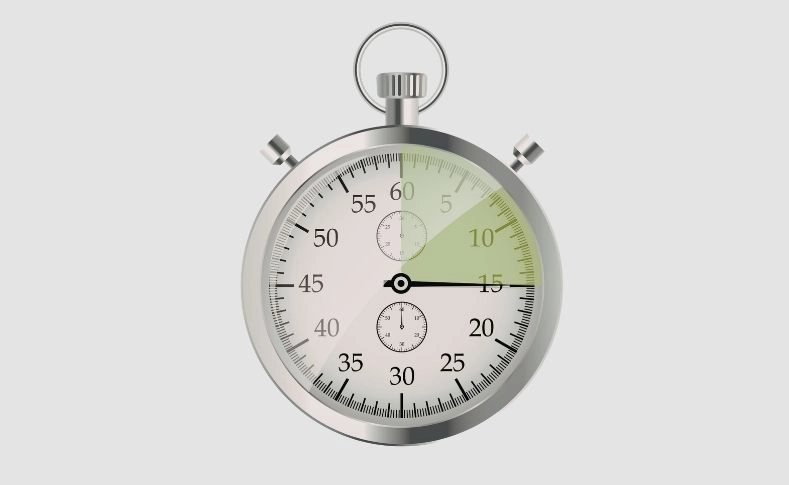
This matters especially when precision matters. A database cannot safely rely only on “Monday” or “June 1” if it needs to measure how long a session lasted. A stopwatch does not care what date it is. A trading platform needs to know how many milliseconds passed between orders. A satellite system needs precise timing, not just calendar labels.
Dates are excellent for communication. Intervals are better for calculation. The mistake is treating them as if they do the same job.
Why Computers Care More About Intervals Than Dates
Computers often display dates for humans, but internally they usually work with exact points in time and the intervals between them. This is why a calendar app can show “April 15” on the screen while the system underneath may be storing a timestamp, a time zone, and a duration.
That difference is important because dates can be ambiguous without context. April 15 begins earlier in Tokyo than it does in New York. A local date may refer to different actual moments depending on the time zone. Even the phrase “tomorrow morning” is easy for people but difficult for systems unless the location, time zone, and exact time are known.
Intervals make calculation cleaner. If a timer is set for 30 minutes, the system can count elapsed seconds. If a subscription lasts 30 days, the system must decide whether that means calendar days, exact 24-hour periods, or renewal at a specific local time. The difference can affect billing, access, reminders, and legal deadlines.
This is why Unix time became so useful in computing. Instead of relying on calendar wording, it represents time as a count of seconds from a fixed starting point. That makes it much easier for systems to compare moments and calculate intervals.
Humans prefer dates because they are readable. Computers rely on timestamps and intervals because they are measurable. Good time systems need both.
Where Dates Become Misleading
Dates become misleading when people treat them as if they automatically describe duration. Saying that something happened “over two days” may sound clear, but it can mean very different things. It could mean 25 hours, 48 hours, or only a few minutes across midnight.
For example, if a server outage starts at 11:55 PM and ends at 12:10 AM, it happened on two calendar dates, but it lasted only 15 minutes. If a flight leaves late at night and arrives the next morning, the arrival date changes, but the real duration may be much shorter than the calendar difference suggests.
This is also why age, deadlines, work hours, interest periods, and travel times cannot always be understood from dates alone. The interval is what determines how much time passed. The date only tells us how that time appears on a calendar.
Standard date formats help reduce confusion when dates need to be written clearly. That is one reason the ISO date format is useful: it makes calendar dates easier to read, sort, and exchange across systems. But even a perfectly formatted date is still not the same as a measured interval.
A clean date format answers the question “which day?” A time interval answers the question “how long?” Confusing those two questions is where many timing errors begin.
Why Time Intervals Matter in Real Life
Time intervals matter because life is full of processes, not just calendar points. A meeting has a start and end. A medication schedule depends on hours between doses. A loan depends on how long money is borrowed. A market session lasts for a defined period. A work shift is paid by duration, not by the calendar label attached to the day.
Intervals also help us understand cause and effect. If a website slows down after a software update, the important question is not only the date of the update. It is how much time passed before the problem appeared. If a stock moves after an earnings report, the interval between the report and the price reaction matters. If a machine fails after maintenance, the time elapsed since service can be more useful than the calendar date alone.
This is why serious time analysis usually starts with two points: when something began and when it ended. Once those are known, the interval can be measured. From there, people can compare performance, detect delays, calculate risk, enforce deadlines, or understand patterns.
The date gives context. The interval gives meaning.
The Difference That Makes Time Useful
A date is not unimportant. Without dates, humans would struggle to organize history, schedules, holidays, records, and plans. But dates become much more useful when they are connected to intervals.
The real power of timekeeping is not simply saying that something happened on a certain day. It is being able to measure how long it lasted, how long ago it happened, how much time remains, and how one event relates to another.
That is why a time interval can matter more than the date itself. The date places an event on the calendar. The interval explains the distance between events, the duration of a process, and the amount of time that actually passed.
In everyday life, dates help us remember. In measurement, intervals help us understand.