Every other time zone in North America sits cleanly on the hour. Drive from Vancouver to Halifax and the clock always jumps by a full sixty minutes at each border crossing. Then it reaches Newfoundland, and the jump is thirty. St. John’s runs half an
Why Australia Has Three Different Time Zones Fly from Perth to Sydney and you cross two time zone boundaries, but the clock doesn’t move forward by two clean hours. It moves forward by two and a half. Australia’s middle zone sits on a half-hour offset,
Fly from Auckland to Honolulu and you land the day before you took off. Nothing broke. No clock malfunctioned. You crossed the International Date Line, the one boundary on Earth that doesn’t measure hours, only days. Most time zone lines shift your clock by an
Spain looks like it should live closer to Greenwich time. On a map, much of the country sits west of many places that use Central European Time, and the Greenwich meridian itself even crosses eastern Spain. Portugal is next door and uses Western European time.
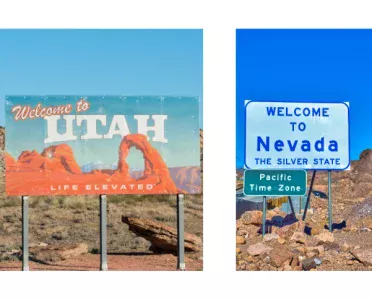
Pacific Time looks simple until you have to convert it. A webinar from California, a meeting with a team in Seattle, a product launch from Los Angeles, or a deadline written as “9 AM PST” can mean different things depending on the date. The reason
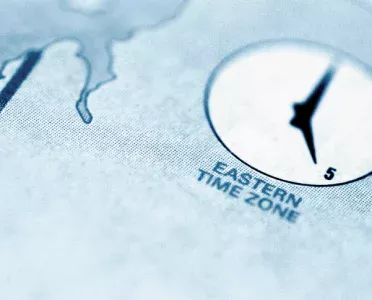
Eastern Time is the general time zone used in much of the eastern United States and parts of Canada and the Caribbean. EST and EDT are the two seasonal forms of Eastern Time. EST means Eastern Standard Time and uses UTC-5. EDT means Eastern Daylight
London is not always on GMT because the United Kingdom changes its clocks during part of the year. In winter, London uses Greenwich Mean Time, or GMT, which is UTC+0. In summer, the UK switches to British Summer Time, or BST, which is UTC+1. This
GMT stands for Greenwich Mean Time. UTC stands for Coordinated Universal Time. They are often used as if they mean the same thing, but they are not exactly the same. GMT is a historical time standard based on mean solar time at Greenwich in London.
The United States has 6 main time zones across the 50 states: Eastern, Central, Mountain, Pacific, Alaska, and Hawaii-Aleutian. This is the clearest answer for most readers because it covers the actual U.S. states. The contiguous United States, meaning the 48 connected states plus Washington,
An IANA time zone is a named time zone identifier used by computers, operating systems, calendars, databases, programming languages, and global applications to know what local time means in a specific region. It looks like a place name, such as Europe/Madrid, America/New_York, Asia/Tokyo, or Australia/Sydney.
China is one of the most interesting examples of how official time can follow political and administrative logic more than geography. The country stretches across a huge east-west distance, from the borders of Central Asia to the Pacific coast, and that width would normally suggest
Japan uses one national time zone across the entire country: Japan Standard Time, usually written as JST. Its offset is UTC+9, which means Japan is nine hours ahead of Coordinated Universal Time. This applies everywhere in Japan, from Tokyo and Osaka to Kyoto, Sapporo, Hiroshima,
Time zones often look straightforward on paper: the world is divided into hourly offsets, and countries simply choose the one that matches their location. A closer look quickly reveals that the system is far less tidy. India operates on UTC+5:30. Nepal uses UTC+5:45. Parts of
Time zones usually look simple on maps: neat vertical bands dividing the planet into equal sections. The actual system is far messier, shaped as much by politics and history as by geography itself. Some countries use multiple time zones because of their massive geographic size.
Hawaii Time in Simple Terms Hawaii operates on Hawaii Standard Time (HST, UTC−10:00). On paper, that just means the local time is ten hours behind Coordinated Universal Time. But in reality, this number only makes sense once you understand how global time itself is structured.