An atomic clock does not measure time by watching hands move, a pendulum swing, or Earth rotate. It measures time using one of the most stable processes in nature: the frequency of an atom shifting between two specific energy states.
That idea transformed modern timekeeping. GPS navigation, mobile networks, financial transactions, satellites, internet servers, stock exchanges, and Coordinated Universal Time all depend on the ability to count not just seconds, but billions of extremely stable atomic cycles.
Atomic clocks may sound like rare laboratory machines, but they already sit behind much of everyday life. When a phone shows the correct time, when a map locates your position, when a bank records the exact moment of a payment, some part of that system depends on atomic time.
Why Ordinary Clocks Are Not Accurate Enough
Before atomic clocks, time was measured through regular natural or mechanical processes. Sundials followed the apparent movement of the Sun. Pendulum clocks used the swing of a pendulum. Quartz clocks count the vibration of a quartz crystal.
Each method works, but each one has limits. A pendulum is affected by temperature, friction, and gravity. Quartz crystals age, react to temperature changes, and gradually drift. Even Earth’s rotation is not perfectly steady. The planet slowly changes speed due to the Moon’s gravity, ocean tides, atmospheric movement, and processes inside Earth itself.
For everyday life, these tiny changes barely matter. For GPS, satellites, telecom networks, scientific experiments, and financial systems, even millionths or billionths of a second can become important.
Why Atoms Are Useful for Measuring Time
Atoms are valuable because identical atoms of the same element behave the same way everywhere. A cesium-133 atom in a laboratory in the United States, Europe, or Japan has the same quantum properties. Its internal energy transitions do not depend on the brand of the clock, the shape of a mechanism, or the quality of manufactured parts.
In quantum physics, an atom can exist only in certain allowed energy states. To move from one state to another, it absorbs or emits electromagnetic radiation at a very specific frequency. If that frequency can be detected and reproduced reliably, it becomes an extremely stable reference for time.
That is the core idea behind atomic clocks. They do not ask Earth how long a second is. They ask the atom.
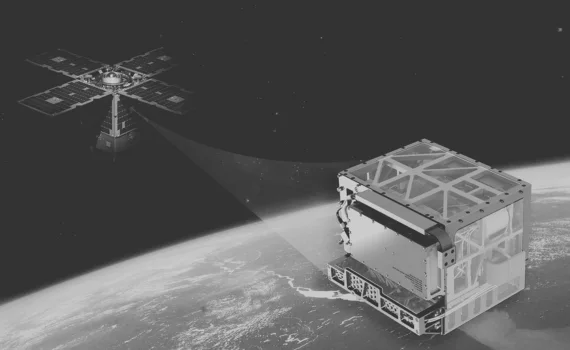
An atomic clock measures time by locking onto a stable quantum transition, not by tracking the motion of a mechanical part. worldtimedata
What a Second Means in Modern Science
The modern second is defined using the cesium-133 atom. This is not an approximation or a convenient everyday convention. In the International System of Units, the second is tied to the exact frequency of the transition between two hyperfine levels of the ground state of cesium-133.
In simple terms, an atomic clock counts 9,192,631,770 stable cycles of this radiation, and that count defines one second. The number was chosen so the atomic definition would match the older astronomical definition of time as closely as possible.
There is an important detail here: an atomic clock does not simply “look at an atom.” It creates controlled conditions where atoms respond to radiation at a specific frequency, then continuously adjusts an electronic oscillator until it matches the natural atomic transition as closely as possible.
How an Atomic Clock Works Inside
In a simplified view, an atomic clock has three essential parts: atoms, a frequency generator, and a feedback system. The generator produces an electromagnetic signal. The atoms test whether that signal is accurate. The control system keeps adjusting the generator so it stays locked to the atomic transition.
In cesium clocks, atoms of cesium-133 are prepared and sent through a controlled region where they interact with microwave radiation. If the microwave frequency matches the correct atomic transition, some atoms switch to another energy state.
The clock then measures how many atoms made that transition. If the response is weak, the generator is adjusted. If the response is strongest, the system knows the frequency is correctly tuned. This process repeats continuously, keeping the clock tied to the atomic standard.
The atoms act as the reference. The electronics constantly compare themselves against that reference. This is why atomic clocks can remain stable far longer than mechanical or quartz clocks.
Atomic Clocks vs Quartz Clocks
A quartz clock also measures time by counting oscillations, but the source of those oscillations is different. In a quartz clock, an electrical signal makes a quartz crystal vibrate at a predictable frequency. This is cheap, compact, and accurate enough for everyday devices.
The problem is that quartz is not a fundamental reference. Its frequency can drift because of temperature, aging, voltage changes, and manufacturing differences. In phones, laptops, and wristwatches, this is usually not a serious issue because those devices can regularly synchronize with external time sources.
An atomic clock works differently. Its reference is not a manufactured object but a quantum property of an atom. That makes it useful in systems where time must remain stable over long periods without relying on ordinary material behavior.
| Clock Type | What It Counts | Typical Use |
|---|---|---|
| Mechanical clock | Motion of a pendulum or balance wheel | Traditional clocks and watches |
| Quartz clock | Vibration of a quartz crystal | Phones, computers, watches, consumer devices |
| Atomic clock | Frequency of an atomic transition | UTC, GPS, satellites, science, telecom networks |
Why Atomic Clocks Are So Accurate
The accuracy of an atomic clock comes from the stability of the atomic transition. Under well-controlled conditions, atoms behave with extraordinary repeatability. They do not wear out like gears, and they do not vary from one manufactured component to another.
This does not mean atomic clocks are simple or immune to interference. Magnetic fields, temperature, atomic motion, particle collisions, gravity, and other subtle physical effects can influence the measurement. The most accurate atomic clocks are complex laboratory systems with lasers, vacuum chambers, magnetic shielding, and extremely precise electronics.
In cesium fountain clocks, atoms are cooled with lasers to temperatures close to absolute zero and then launched upward inside a vacuum chamber. As they rise and fall, they interact with microwave radiation. Slower atoms and better-controlled conditions allow scientists to measure the resonance frequency with much higher precision.
Why GPS Needs Atomic Clocks
GPS does not work because satellites simply “see” where a receiver is. It works by measuring how long signals take to travel from several satellites to the receiver. If the timing is wrong, the distance calculation is wrong.
Radio signals travel at nearly the speed of light, about 300,000 kilometers per second. A timing error of just one microsecond can create a position error of roughly 300 meters. That is far too large for modern navigation.
This is why GPS satellites carry atomic clocks, while ground systems constantly monitor and correct their timing. Without atomic clocks, modern satellite navigation would not deliver the precision people now expect from phones, cars, aircraft, ships, and logistics systems.
How Atomic Clocks Support UTC
UTC, or Coordinated Universal Time, is the foundation of modern civil time. Time zones, server time, aviation schedules, international communications, and many digital services are built around it.
UTC is not produced by one single clock. It is a coordinated time scale built from data provided by many atomic clocks in laboratories around the world. National metrology institutes compare their clocks, submit data, and international organizations calculate a shared global reference.
This is why UTC became the backbone of modern global synchronization. It allows countries, networks, satellites, financial systems, and digital infrastructure to operate in the same time framework even when they are spread across different time zones.
Why Atomic Time Matters for the Internet, Banks, and Exchanges
Precise time is not only a concern for physicists. In the digital economy, time is part of trust infrastructure. Servers need to know when an operation happened, which database entry came first, when a certificate expired, when a transaction was completed, and in what order events occurred across distributed systems.
Financial systems are especially sensitive to timing. Exchange orders, payments, banking records, and high-frequency trading depend on accurate timestamps. If two systems are not synchronized, the order of events can become unclear, creating problems for auditing, settlement, reporting, and transaction verification.
For ordinary users, this layer is invisible. But atomic time supports many processes that appear instant: mobile network synchronization, server clocks, payment processing, satellite navigation, and the timing systems behind modern markets.
Not All Atomic Clocks Are the Same
The phrase “atomic clock” covers several different technologies. Cesium clocks are the most famous because the cesium-133 transition defines the SI second. But rubidium clocks, hydrogen masers, and modern optical atomic clocks also play important roles.
Rubidium clocks are smaller and less expensive, so they are widely used in telecom networks, navigation systems, and industrial timing equipment. Hydrogen masers are extremely stable over short time intervals and are useful in radio astronomy and advanced scientific measurements. Optical clocks use much higher-frequency transitions than microwave cesium clocks and are already more accurate than traditional atomic standards.
Modern metrology is moving toward a future where the definition of the second may eventually be based on an optical standard rather than cesium. That would not make older atomic clocks useless, but it would allow time to be measured with even greater precision.
Why Gravity Affects Precise Time
At the level of atomic clocks, gravity is not just an abstract idea from physics. According to relativity, time passes slightly differently depending on gravitational potential. A clock at a higher altitude and a clock closer to Earth’s surface do not tick at exactly the same rate.
In everyday life, this difference is far too small to notice. The best atomic clocks, however, are sensitive enough to detect tiny changes in the flow of time caused by height differences. That opens unusual possibilities, including using ultra-precise clocks to measure Earth’s gravitational field or detect changes in elevation.
At that point, atomic clocks become more than tools for counting seconds. They become instruments for studying space, gravity, and the structure of the physical world.
The Future of Atomic Time
The next major step in time measurement is tied to optical atomic clocks. These clocks use frequencies much higher than the microwave frequency used in cesium clocks. A higher frequency means more “ticks” inside each second, which allows time to be divided and measured more precisely.
Optical clocks based on strontium, ytterbium, aluminum ions, and other atomic systems already outperform traditional cesium standards in precision. This is why global metrology organizations are preparing for a possible future redefinition of the second.
This is not just a scientific race for better numbers. More accurate clocks can improve navigation, network synchronization, geodesy, fundamental physics, and tests of natural laws. The more precisely humanity measures time, the more detail it can see in how the universe works.
The Timekeeping System Holding Modern Life Together
Atomic clocks may seem like specialized laboratory instruments, but they are one of the foundations of modern civilization. They define the second, support UTC, synchronize satellites, stabilize internet infrastructure, and give financial systems a reliable order of events.
Their power comes from replacing unstable mechanical and astronomical references with an extraordinarily repeatable quantum property of atoms. That is why modern time can work consistently for a laboratory, a satellite, a server, a stock exchange, and a phone in someone’s pocket.
When an atomic clock counts a second, it is doing more than keeping time. It is maintaining a shared time language that allows global digital infrastructure to stay synchronized.