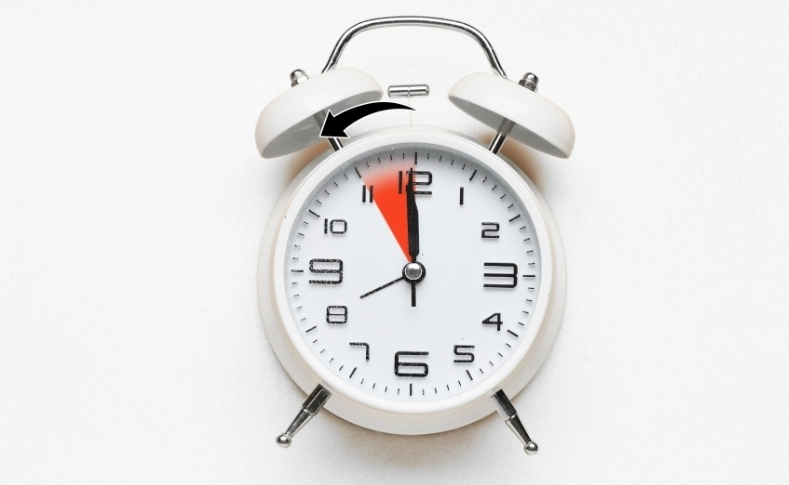
Daylight saving time exists because societies have tried to make better use of daylight during the brighter part of the year. By moving clocks forward, usually by one hour, people shift more usable daylight into the evening, when many are awake, active, shopping, commuting, exercising, or spending time outside.
The basic idea sounds simple: change the clock so daylight feels better aligned with daily life. But daylight saving time is not really a change to the Sun. It is a change to civil time, the official clock time that governments use to organize work, transport, schools, markets, broadcasting, and public life.
That is why daylight saving time remains controversial. Some people like the later sunsets. Others dislike the clock changes, darker mornings, sleep disruption, and confusion across countries. The debate is not only about time. It is about how society chooses to arrange daily life around natural daylight.
The Short Answer: Daylight Saving Time Shifts Daylight Into the Evening
Daylight saving time, often shortened to DST, is the practice of setting clocks forward during part of the year so that daylight appears later in the evening by clock time. In many places, clocks move forward in spring and move back in autumn.
The Sun does not rise or set differently because of DST. The Earth does not rotate differently. What changes is the number printed on the clock when sunrise and sunset happen. A sunset that would have been called 7:30 PM under standard time may be called 8:30 PM under daylight saving time.
The goal is to place more daylight into the evening hours, when more people are usually awake and active. That can make evenings feel longer, especially in spring and summer. It can also affect transport, business hours, energy use, sports, tourism, and daily routines.
Daylight saving time is therefore a rule of civil time. It is created by law and public policy, not by astronomy alone. Natural daylight sets the conditions, but governments decide whether clocks should be shifted.
What Daylight Saving Time Actually Does
Daylight saving time changes the relationship between local clock time and solar time. During DST, the official clock is usually one hour ahead of standard time. This makes sunrise and sunset appear one hour later on the clock.
For example, if sunrise would be 5:30 AM and sunset would be 7:30 PM under standard time, daylight saving time may make them appear as 6:30 AM and 8:30 PM by the clock. The amount of daylight is the same. Only the clock label changes.
| Situation | What changes | What does not change |
|---|---|---|
| Standard time | Clock follows the normal legal offset | The Sun, Earth rotation, and length of day |
| Daylight saving time | Clock is moved forward, usually by one hour | The actual amount of daylight |
| Return to standard time | Clock is moved back | The seasonal change in daylight |
This is why the phrase “saving daylight” can be misleading. DST does not create extra daylight. It changes when daylight falls on the clock. The idea is not to make the day longer, but to move more daylight into the part of the day that society values most.
Why Daylight Saving Time Was Introduced
The modern idea behind daylight saving time developed from a practical observation: in summer, many people were sleeping through early morning daylight while using artificial light in the evening. Supporters argued that shifting clocks forward would make better use of natural light.
Early advocates promoted DST as a way to reduce wasted daylight, support outdoor activity, and possibly reduce evening energy use. During wartime, the energy-saving argument became especially attractive because governments wanted to conserve fuel and coordinate national routines more efficiently.
That historical energy argument is part of why daylight saving time spread in several countries. But the original argument should not be treated as a simple modern fact. Today, homes, offices, transport systems, air conditioning, screens, and work schedules are different from the world in which DST became popular.
So the better explanation is this: daylight saving time was introduced to align human schedules more closely with seasonal daylight. Energy saving was one major argument, but not the only one, and its modern value is still debated.
Why Governments Use Daylight Saving Time
Governments use daylight saving time because official time has to be coordinated. If a country or region decides to shift clocks, the change affects schools, transport, business, courts, broadcasters, software systems, hospitals, financial markets, and public services.
Without a legal rule, local communities could choose different clock practices and create confusion. That is why DST is usually handled through national or regional law. It is not just a personal preference. It is part of the public time system.
This connects directly to why time differs between countries. Time is influenced by geography, but it is also shaped by law, politics, economics, and daily life. Daylight saving time is one of the clearest examples of that.
In the United States, for example, daylight saving time rules are tied to federal law through the Uniform Time Act. States may have choices about observing DST, but the structure is still governed by legal rules. In other countries, DST rules may be national, regional, or not used at all.
Why Some People Like Daylight Saving Time
Supporters of daylight saving time usually focus on evening daylight. A later sunset can make after-work and after-school hours feel more useful. People may have more daylight for walking, sports, shopping, travel, gardening, outdoor dining, or family time.
Businesses connected to evening activity may also prefer longer daylight after work. Retail, tourism, leisure, outdoor recreation, and some service industries can benefit when people are more willing to go out in the evening.
There is also a psychological side. Longer evening daylight can make the day feel more open and active. In spring and summer, many people prefer a bright evening over a very early sunrise that happens while they are still asleep.
This is the strongest everyday argument for DST. It is not that DST changes nature. It changes the social placement of daylight, giving more clock-time daylight to the evening.
Why Daylight Saving Time Is Controversial
Daylight saving time is controversial because the clock change has costs. Moving clocks forward can disrupt sleep, schedules, transport, meetings, medical routines, software systems, and international coordination. Even a one-hour shift can feel small on paper but large in daily life.
The spring change is often the most disliked because people effectively lose an hour of sleep. The body does not instantly adjust just because the clock changes. For some people, especially children, older adults, shift workers, and people with strict schedules, the transition can be difficult.
There is also the problem of darker mornings. Moving daylight into the evening often means taking it away from the morning. In some regions, daylight saving time can make winter or early spring mornings feel unusually dark if clocks are shifted too aggressively.
This is why the debate is not simply “more daylight is good.” Everyone gets the same natural daylight. The question is where that daylight should sit on the clock.
Does Daylight Saving Time Save Energy?
Energy saving is one of the oldest arguments for daylight saving time, but it is also one of the most debated. The original logic was that later daylight in the evening could reduce the need for artificial lighting. That made sense in a world where lighting was a larger part of household energy use.
Modern energy use is more complicated. Lighting is more efficient than it used to be, while air conditioning, heating, transport, electronics, and work patterns vary widely by region. A clock change that reduces lighting demand in one place may increase cooling or morning energy demand in another.
That means DST should not be explained as a guaranteed energy-saving tool everywhere. Its effect depends on climate, latitude, lifestyle, technology, and local behavior. In some places, the energy impact may be small or mixed.
The more accurate statement is that daylight saving time was partly promoted for energy reasons, but modern evidence and public opinion are more complicated than the original argument.
Why Daylight Saving Time Affects Global Scheduling
Daylight saving time becomes especially confusing when countries change clocks on different dates or do not change them at all. A meeting between New York, London, Tokyo, and Sydney may shift by one hour depending on which places are using DST at that moment.
This matters for remote work, travel, broadcasting, sports, software, aviation, and financial markets. A time difference that is stable in January may change in March or October. That is why international scheduling depends on exact dates, locations, and time-zone rules.
Financial markets are a good example. When one country changes clocks and another does not, market open and close times can temporarily feel different for international traders. That relationship is explained more directly in how daylight saving time affects stock market hours.
DST also shows why city-based time zones are safer than simple UTC offsets. A place may be UTC-5 in winter and UTC-4 in summer. The offset changes, but the location-based time-zone rule explains when and why it changes.
Why Some Countries Do Not Use Daylight Saving Time
Not every country uses daylight saving time. Some countries have little reason to shift clocks because their daylight pattern does not change dramatically across the year. This is especially common closer to the equator, where sunrise and sunset times are more stable than in higher latitudes.
Other countries have tried DST and decided that the disruption was not worth the benefit. Some prefer standard time all year. Others prefer different legal time arrangements based on geography, politics, business needs, or public opinion.
Latitude matters a lot. In high-latitude regions, summer daylight can be extremely long and winter daylight can be very short. In low-latitude regions, the seasonal daylight difference may be too small for DST to feel useful.
This is why daylight saving time is not a universal rule. It is a policy choice. Different countries make different decisions because their geography, economy, culture, and public priorities are different.
Should We Keep Changing the Clocks?
The modern debate is often less about daylight saving time itself and more about clock changes. Many people do not mind later summer sunsets. What they dislike is changing the clock twice a year.
Some argue for permanent daylight saving time because it would keep later sunsets year-round. Others argue for permanent standard time because it better matches morning light and natural solar time. Both sides are really arguing about where daylight should fall during daily life.
The challenge is that no system gives everyone what they want. Permanent daylight saving time can make winter mornings very dark in some places. Permanent standard time can make summer evenings feel shorter by the clock. Seasonal clock changes try to balance those tradeoffs, but they create disruption twice a year.
That is why DST remains debated. It is not only a technical time rule. It is a compromise between sunlight, sleep, work, safety, commerce, tradition, and public comfort.
Daylight Saving Time Changes the Clock, Not the Sun
The cleanest way to understand daylight saving time is this: DST does not change daylight. It changes the clock so that daylight appears later in the day during part of the year.
We have daylight saving time because governments and societies have tried to make daylight fit human schedules more conveniently, especially during brighter seasons. The main benefit is more evening daylight. The main cost is clock disruption, darker mornings, and coordination problems.
Daylight saving time is not an astronomical necessity. It is a civil-time decision. It shows that the time on the clock is not only about the Sun. It is also about law, work, transport, energy, health, habits, and the way people choose to organize daily life.
That is why daylight saving time still exists, and why people still argue about it. It is one of the clearest examples of a society adjusting the clock to fit human life, then debating whether the adjustment is worth it.