Most people never question the 12-hour clock because they have used it since childhood. If somebody says “meet me at 7,” the brain usually fills in the missing context automatically. In everyday life, context usually fills the gaps automatically. That approach works surprisingly well in

Every second, billions of computers exchange timestamps behind the scenes of the modern internet. Bank transfers, cloud servers, stock exchanges, GPS systems, messaging apps, and cybersecurity platforms all depend on one thing: agreeing on the exact moment an event happened. For humans, time feels intuitive
A calendar date tells you where you are in a month. But if you want to track real progress across the entire year, you need a different reference point. That’s where the day-of-year number becomes useful. Instead of jumping between months with different lengths, you
Time is one of those things we use every second, yet rarely understand deeply. We say that we “do not have time”, that “time flies”, or that “time heals”. But if we ask directly what time actually is, even physics does not give one simple
Most people say a year has 52 weeks. That answer is useful, but not exact. A week is always 7 days. A year is not built from weeks. It is based on Earth’s orbit, and that orbit does not fit neatly into 7-day cycles. This
The division of time into hours, minutes, and seconds seems obvious. In reality, it is not a property of time itself and not a physical law. It is the result of historical development, mathematical systems, and practical human needs. Time as a physical phenomenon is
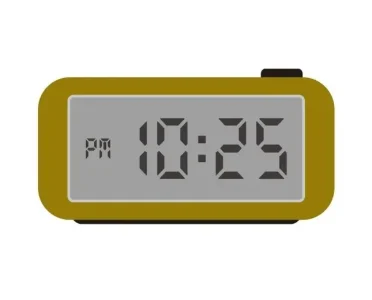
AM and PM are used in the 12-hour time format to divide the day into two distinct periods. They provide context for interpreting hours that repeat within a 24-hour cycle. Without this distinction, a time like 08:00 would be ambiguous. It could refer to morning
The ISO date format is an international standard for representing date and time in a way that can be interpreted consistently across countries and systems. Its full name is ISO 8601. It defines how to write dates, times, time zones, and intervals so that there