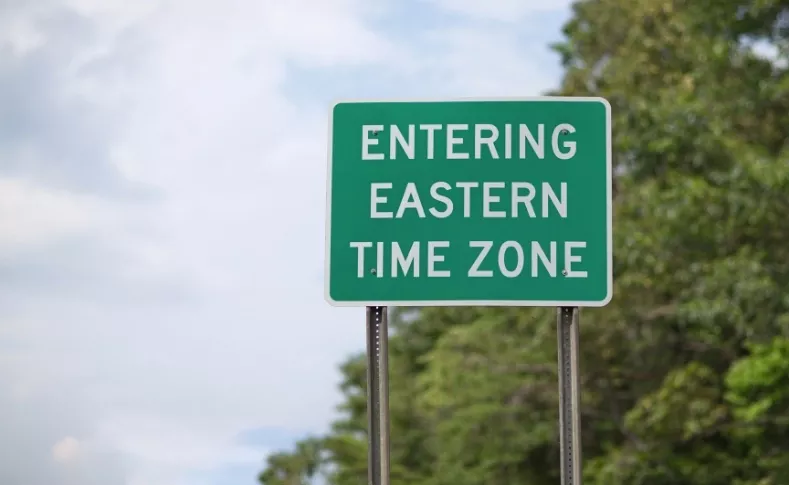
Eastern Time is the general time zone used in much of the eastern United States and parts of Canada and the Caribbean. EST and EDT are the two seasonal forms of Eastern Time. EST means Eastern Standard Time and uses UTC-5. EDT means Eastern Daylight Time and uses UTC-4.
The difference matters because people often write “EST” when they really mean “Eastern Time.” That can create mistakes. A meeting listed as 3:00 PM EST is not the same as 3:00 PM EDT. In winter, Eastern Time usually follows EST. In summer, it usually follows EDT.
The clean way to think about it is simple: Eastern Time is the broad zone. EST is the standard-time version. EDT is the daylight-saving version. The name changes because the UTC offset changes during the year.
The Short Answer: Eastern Time Is the Zone, EST and EDT Are Seasonal Forms
Eastern Time is a general label for the time used in places such as New York, Washington, D.C., Atlanta, Miami, Toronto, and many other locations in eastern North America. But Eastern Time is not always the same UTC offset all year.
During standard time, Eastern Time is EST, or Eastern Standard Time. EST is five hours behind UTC, so it is written as UTC-5. During daylight saving time, Eastern Time becomes EDT, or Eastern Daylight Time. EDT is four hours behind UTC, so it is written as UTC-4.
| Term | Full name | UTC offset | Used when |
|---|---|---|---|
| Eastern Time | General time-zone label | UTC-5 or UTC-4 | General reference to the Eastern zone |
| EST | Eastern Standard Time | UTC-5 | Standard time period |
| EDT | Eastern Daylight Time | UTC-4 | Daylight saving time period |
That one-hour difference is the reason the terms matter. If someone says “Eastern Time,” they may be safely referring to whatever Eastern offset is currently in effect. If they say “EST,” they are technically referring to UTC-5, not the summer daylight-saving offset.
What Eastern Time Means
Eastern Time is the practical umbrella term. It describes the time used in the Eastern time zone without forcing the speaker to choose between EST and EDT. That is why many schedules simply say “ET” instead of EST or EDT.
This is useful because the Eastern zone switches between standard time and daylight time in many places. When clocks change, the zone does not stop being Eastern Time. It simply changes from EST to EDT or from EDT back to EST.
For ordinary communication, “Eastern Time” is often the safest phrase. If a TV event, business meeting, sports broadcast, or webinar says 8:00 PM ET, it usually means 8:00 PM in the Eastern time zone, using whichever offset is legally active on that date.
The important detail is that Eastern Time is location-based and rule-based. It is not just a fixed number of hours from UTC. A city such as New York follows Eastern Time rules, including the daylight-saving switch. That is why a city-based time zone is often more reliable than a simple offset.
What EST Means
EST means Eastern Standard Time. It is the standard-time version of Eastern Time and is five hours behind UTC. In technical form, EST is UTC-5.
EST is used when the Eastern time zone is not observing daylight saving time. In many parts of the United States and Canada, that usually means the colder part of the year, after clocks move back in autumn and before they move forward again in spring.
If it is 12:00 UTC, then it is 7:00 AM EST. The five-hour difference is the defining feature of EST. To understand that relationship, it helps to know what UTC is and why it matters.
The common mistake is using EST all year. In summer, New York, Washington, D.C., and many other Eastern locations are usually not on EST. They are on EDT. Writing EST in July may be technically wrong by one hour.
What EDT Means
EDT means Eastern Daylight Time. It is the daylight-saving version of Eastern Time and is four hours behind UTC. In technical form, EDT is UTC-4.
EDT is used when daylight saving time is active in places that observe it. The clock is moved forward by one hour compared with standard time. That is why EDT is UTC-4 instead of UTC-5.
If it is 12:00 UTC, then it is 8:00 AM EDT. The local clock shows one hour later than it would under EST at the same UTC moment.
This is why EST and EDT are not interchangeable. They are both Eastern Time, but they do not point to the same offset. EST is standard time. EDT is daylight time. The difference is one hour.
Why People Confuse EST and Eastern Time
People confuse EST and Eastern Time because EST is often used casually as a shortcut for the entire Eastern zone. Someone may write “the meeting is at 2 PM EST” even if the meeting happens in July, when the correct technical term would be EDT.
In casual conversation, people usually understand the intent. But in scheduling, travel, trading, software, international work, and event planning, that shortcut can cause real mistakes. A person in London, Tokyo, or Los Angeles may convert the wrong offset and arrive an hour early or late.
This is especially common in emails and online event listings. The writer may not think about daylight saving time. They may use EST because it sounds familiar. But if the date falls during daylight saving time, EST may not describe the actual local time.
The safest public wording is often “ET” or “Eastern Time,” not “EST,” unless you are specifically referring to the standard-time part of the year.
EST vs EDT: The One-Hour Difference
The practical difference between EST and EDT is one hour. EST is UTC-5. EDT is UTC-4. That means EDT is one hour ahead of EST.
| UTC time | EST | EDT |
|---|---|---|
| 12:00 UTC | 7:00 AM EST | 8:00 AM EDT |
| 16:00 UTC | 11:00 AM EST | 12:00 PM EDT |
| 21:00 UTC | 4:00 PM EST | 5:00 PM EDT |
This one-hour difference is why precision matters. If a deadline is listed as 5:00 PM EST, that technically means 22:00 UTC. If it is listed as 5:00 PM EDT, that means 21:00 UTC. The local clock time looks the same, but the global moment is different.
For a local person, the clock may feel normal either way. For someone converting from another country, the label matters.
Why Eastern Time Matters for Business, Sports, and Markets
Eastern Time matters because many major U.S. institutions use it as their main scheduling reference. New York and Washington, D.C. are in the Eastern time zone. So are many major media, finance, government, sports, and business operations.
That is why U.S. national schedules often use ET. Earnings calls, press releases, TV broadcasts, sports games, political events, webinars, and business deadlines are frequently listed in Eastern Time even when the audience is national or international.
Financial markets are one of the strongest examples. The New York Stock Exchange lists its core trading session as 9:30 AM to 4:00 PM Eastern Time. For international traders, the UTC equivalent depends on whether New York is observing EST or EDT. That is why U.S. stock market hours can feel different from outside the United States during daylight-saving transitions.
The same issue appears in sports and broadcasting. A game listed at 8:00 PM ET happens at one UTC time in winter and a different UTC time in summer. The local Eastern clock still says 8:00 PM, but the global conversion changes.
Why IANA Time Zones Are Better Than EST or EDT in Software
For software, calendars, databases, and international scheduling, it is usually better to use an IANA time zone such as America/New_York instead of a fixed abbreviation such as EST or EDT.
The reason is that IANA time zones include the location-based rules. America/New_York knows when Eastern Time switches between EST and EDT. A fixed label like EST only describes UTC-5. It does not automatically know daylight-saving transitions.
This matters when scheduling future events. If you create an event for New York next July using EST as a fixed offset, you may be one hour wrong. If you use America/New_York, the system can apply the correct daylight-saving rule for that date.
This is exactly why an IANA time zone is often safer than a simple UTC offset. Time zones are not only numbers. They are rules attached to places.
Is New York on EST or EDT Right Now?
New York uses Eastern Time, but whether it is on EST or EDT depends on the date. During the standard-time part of the year, New York is on EST. During the daylight-saving part of the year, New York is on EDT.
This is why “What time is it in New York?” is not the same as asking for a permanent UTC offset. New York is commonly UTC-5 in standard time and UTC-4 in daylight time. The correct answer depends on the date and the current time-zone rule.
If you are writing for a general audience, “Eastern Time” or “ET” is usually safer than choosing EST or EDT manually. If you are writing for a technical system, use America/New_York or another correct IANA time zone for the location.
The same principle applies to many other places that observe daylight saving time. The abbreviation changes because the offset changes.
Common Mistakes to Avoid
The first mistake is using EST all year. EST is not the same as Eastern Time. EST is only the standard-time version of Eastern Time.
The second mistake is assuming Eastern Time always means UTC-5. It does not. Eastern Time can mean UTC-5 or UTC-4, depending on whether standard time or daylight time is active.
The third mistake is using a UTC offset for a future event without checking daylight saving rules. A meeting in New York may not have the same UTC offset in January and July.
The fourth mistake is relying on abbreviations in software. Abbreviations can be ambiguous. A location-based time zone is usually safer.
Eastern Time Is the Zone. EST and EDT Are the Offsets.
The cleanest way to understand the difference is this: Eastern Time is the general zone. EST is Eastern Standard Time, UTC-5. EDT is Eastern Daylight Time, UTC-4.
If you are speaking casually, “Eastern Time” or “ET” is usually the safest term. If you need a precise global timestamp, use the correct offset or a city-based IANA time zone. If you are writing software or scheduling international events, avoid treating EST as a year-round label.
EST and EDT are not competing time zones. They are two seasonal forms of Eastern Time. The difference is one hour, and that one hour matters whenever people, markets, flights, broadcasts, or systems need to agree on the same moment.