Halloween is celebrated every year on October 31. The date is fixed, but the way people experience the holiday changes depending on the weekday, the country, and local customs. A Saturday Halloween can feel like a major public event. A weekday Halloween may be more centered on schools, neighborhoods, or private parties.
That makes Halloween different from holidays calculated by lunar cycles, religious calendar rules, or weekday-based patterns. October 31 is not a random date. It became Halloween because it sits at the meeting point of older seasonal traditions and the Christian calendar.
The short version: Halloween comes from All Hallows’ Eve, the evening before All Saints’ Day on November 1. It also absorbed autumn customs connected with harvest, darkness, spirits, masks, fire, and the beginning of winter.
Why Halloween Is Always on October 31
Today, Halloween is fixed on October 31 in the modern Gregorian calendar. The date stays the same every year because it is tied to a calendar day, not to a moon phase, equinox, or weekday rule.
That fixed date also explains why Halloween planning often happens around the calendar rather than through the calendar. Communities may keep October 31 as the symbolic date, while schools, parties, or local events sometimes move to the nearest convenient evening.
This is the useful calendar distinction: Halloween has a stable date, but not a stable weekday. The date answers “when is Halloween?” The weekday often decides how people actually celebrate it.
Why October 31 Became Important
October 31 is the evening before All Saints’ Day, which falls on November 1 in the Western Christian calendar. All Saints’ Day is also called All Hallows’ Day. The evening before it was known as All Hallows’ Eve. Over time, that name became Halloween.
That name still explains the date. Halloween is not just a modern costume night placed randomly at the end of October. It is the eve before a religious observance that honored saints and, in the wider season, connected with remembrance of the dead.
There is another layer too. October 31 also overlapped with older Celtic seasonal customs, especially Samhain. Samhain marked the end of the harvest season and the beginning of the darker part of the year. In an agricultural world, this was a serious seasonal boundary: the productive part of the year was closing, and the difficult winter season was ahead.
That is why Halloween developed such a strong atmosphere: darkness, thresholds, spirits, fire, masks, food, and stories about the dead. The date sits exactly where the year starts to feel colder, darker, and more uncertain.
Halloween became powerful because October 31 is not only a date. It is a seasonal boundary. worldtimedata
Samhain, All Saints’ Day, and the Making of Halloween
Halloween is often described as “originally Samhain,” but that shortcut hides the more interesting story. The modern holiday is layered: part seasonal festival, part Christian calendar observance, part folk tradition, and part modern popular culture.
Samhain was a Celtic festival associated with the end of harvest and the start of winter. It carried ideas of transition, fire, feasting, spirits, and the closeness of the living and the dead. Those themes help explain why Halloween still feels connected with ghosts, darkness, and disguise.
Christian tradition added another calendar layer. All Saints’ Day on November 1 gave October 31 its “eve” identity. The night before a major religious day became All Hallows’ Eve. In practice, older seasonal customs and Christian observances influenced each other over centuries.
That is why Halloween does not fit neatly into one box. It is not only pagan, not only Christian, not only American, and not only commercial. It is a cultural blend shaped by calendar timing, migration, religion, folklore, local customs, and modern entertainment.
Why Halloween Does Not Change Date Like Easter
Halloween is a fixed-date holiday. Easter is a movable holiday. That difference comes from how the dates are assigned.
Halloween is attached to October 31. Easter follows a more complex rule connected to the spring equinox and the moon, which is why why Easter changes date every year is a different type of calendar question.
| Holiday type | How the date works | Example |
|---|---|---|
| Fixed-date holiday | Always falls on the same calendar date | Halloween on October 31 |
| Weekday-based holiday | Uses a rule such as “fourth Thursday” or “last Monday” | Thanksgiving or Memorial Day in the United States |
| Lunar or lunisolar holiday | Depends on moon-based calendar rules | Chinese New Year, Ramadan, Passover |
| Religious movable holiday | Uses a church calendar calculation | Easter |
This is the useful distinction: Halloween’s date is fixed, but the day of the week changes. Some holidays move because their rules are based on lunar cycles, weekdays, or religious calculations. For the broader calendar logic, see why some holidays change date every year.
Why the Night Before Matters
Halloween is an evening holiday by nature. That matters more than it may seem.
Many older traditions gave special meaning to the evening before an important day. The eve could become a time of preparation, watching, ritual, celebration, or storytelling. Halloween follows that pattern because it is the evening before All Saints’ Day.
Modern calendars treat midnight as a clean dividing line, but cultural life often does not work so neatly. The evening before a major date can develop its own identity. Christmas Eve is a familiar example. The main day is December 25, but the night before has its own mood, customs, and emotional weight. That comparison is also useful when looking at why Christmas is celebrated on December 25.
Halloween became especially strong because darkness is part of the experience. Costumes, lanterns, candles, ghost stories, haunted houses, and door-to-door traditions all make more sense at night than they would in the middle of the afternoon.
How October 31 Shaped Halloween Symbols
Halloween symbols are not just random decorations. Many of them fit the season around October 31.
Late October in the Northern Hemisphere is a time of shorter days, colder evenings, falling leaves, harvested fields, stored food, and the approach of winter. That background helps explain why Halloween is so strongly linked with autumn imagery.
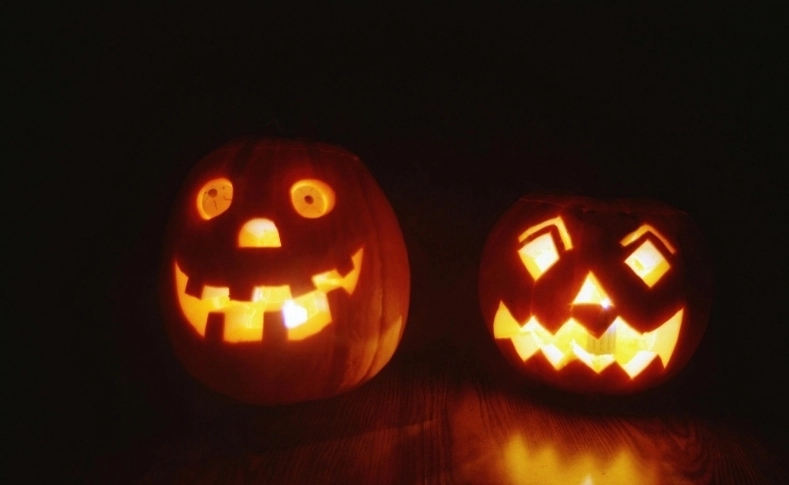
Pumpkins connect to harvest and seasonal food. Lanterns connect to light in darkness. Costumes connect to disguise, performance, and older beliefs about spirits. Ghost stories fit the longer nights. Orange and black work because they echo harvest color and darkness.
The modern version is more playful and commercial than many older customs, but the seasonal logic is still there. Halloween feels like Halloween because October 31 already carries the right atmosphere.
Halloween, All Saints’ Day, and All Souls’ Day
Halloween is close to All Saints’ Day and All Souls’ Day, but the three are not the same. Their closeness on the calendar helps explain why Halloween has so many themes connected with memory, death, spirits, and the boundary between worlds.
| Date | Observance | Basic meaning |
|---|---|---|
| October 31 | Halloween / All Hallows’ Eve | The evening before All Saints’ Day |
| November 1 | All Saints’ Day | Christian feast honoring saints |
| November 2 | All Souls’ Day | Christian observance connected with the faithful departed |
This sequence also explains why Halloween should not be confused with Día de los Muertos. The dates are close, and both involve themes of death, but they are different traditions. Día de los Muertos has its own Mexican cultural roots, family practices, altars, foods, symbolism, and religious meaning.
Why Halloween Became So Popular in the United States
Halloween’s global image today is strongly shaped by the United States, but many older customs came through Ireland, Scotland, Britain, and other parts of Europe.
Irish and Scottish immigrants helped bring Halloween traditions to North America. In the United States, those customs changed in a new social setting. Neighborhood visiting, children’s activities, costumes, candy, school events, community parties, horror movies, and retail culture gradually turned Halloween into a major seasonal celebration.
By the twentieth century, Halloween had become highly visible in American life. From there, it traveled outward through movies, television, social media, retail, and pop culture. That is why Halloween imagery is now recognizable in many countries even where the holiday does not have the same local history.
This is one reason Halloween is interesting as a calendar event. Its date comes from older religious and seasonal timing, but its modern style was shaped by migration, cities, media, and commerce.
Why October 31 Still Feels Like Halloween
Halloween keeps its date because October 31 carries more than one meaning at once.
It is the eve before All Saints’ Day. It stands near older end-of-harvest traditions. It arrives when nights are longer, the air is colder, and the year naturally feels closer to winter. Modern culture then adds costumes, horror stories, candy, parties, decorations, and neighborhood rituals on top of that older seasonal frame.
If Halloween were moved to a convenient weekend, it might be easier to schedule, but it would lose part of its identity. October 31 gives the holiday its atmosphere, its history, and its position at the edge of autumn and winter.