Daylight saving time changes in Palestinian Territory
Palestinian Territory has 2 listed IANA time zones. 2 of them observe daylight saving time changes in 2026.
Next change: October 24, 2026
Clock moves back from 02:00 to 01:00 local time.
Best Time to Call Palestinian Territory
Business hours in Palestinian Territory (9 AM–5 PM local time) fall at these local times elsewhere:
- Beijing: 2:00 PM – 10:00 PM ( Partial overlap)
- Paris: 8:00 AM – 4:00 PM ( Convenient)
- Toronto: 2:00 AM – 10:00 AM ( Outside normal hours)
- Seoul: 3:00 PM – 11:00 PM ( Partial overlap)
- Mexico City: 12:00 AM – 8:00 AM ( Outside normal hours)
- Cairo: 9:00 AM – 5:00 PM ( Convenient)
- Bangkok: 1:00 PM – 9:00 PM ( Partial overlap)
Times shown reflect current UTC offsets and may shift by up to an hour around daylight saving transitions.
Time Difference from Palestinian Territory
Compare time in Palestinian Territory with other countries.
Countries in the Same Time Zone as Palestinian Territory
Most Popular Cities in Palestinian Territory
Holidays in Palestinian Territory
Official national public holidays. Regional and religious observances may vary by area.
About Time in Palestinian Territory
Eleven Thousand Years of Continuous Settlement
Beneath the modern city of Jericho lies Tell es-Sultan, a mound of accumulated debris that archaeologists have identified as the site of the oldest continuously inhabited settlement yet discovered anywhere on Earth. The first permanent occupation there dates to roughly 9000 BCE, when Natufian hunter-gatherers began settling around a freshwater spring at the edge of the Jordan Valley, and by around 8000 BCE the community had grown sophisticated enough to raise the Tower of Jericho, an 8.5-metre stone structure with an internal staircase of twenty-two steps, among the oldest surviving monumental structures built by human hands anywhere in the world.
Excavations led by British archaeologist Kathleen Kenyon in the 1950s identified more than twenty distinct successive layers of settlement at the site, spanning roughly five broad cultural eras and revealing a community that had already mastered early agriculture, permanent mudbrick architecture and communal grain storage millennia before the invention of pottery or writing. The record is not entirely unbroken; at one point an earthquake appears to have disrupted the site's water supply, and archaeological evidence suggests the settlement stood empty for roughly 1,200 years before being reoccupied. Tell es-Sultan was formally inscribed as a UNESCO World Heritage Site in 2023, recognition of a settlement history now approaching twelve thousand years, nearly the entire span of the current geological epoch.
A Building Still in Use After Seventeen Centuries
Six miles south of Jerusalem, in Bethlehem, stands what historians generally regard as the oldest continuously used place of Christian worship anywhere in the world. Following a pilgrimage to the Holy Land by Empress Helena, mother of the Roman emperor Constantine, in 325 and 326 CE, construction began on a basilica over a cave venerated as the traditional site of Jesus's birth; the church was already being referenced by visitors as early as 333 and was formally dedicated on 31 May 339.
Constantine's original building did not survive intact. A fire, likely connected to the Samaritan revolts of the early sixth century, damaged the church sometime around 529, and the Byzantine emperor Justinian ordered it rebuilt on a larger scale; it is largely this sixth-century structure, with its five-aisled nave and cruciform sanctuary, that still stands today. According to a tradition recorded by multiple historians, the church survived the Persian invasion of 614 relatively undamaged because invading soldiers recognised the clothing worn by the Magi in a mosaic decorating its facade and spared the building as a result. Further additions followed during the Crusader period in the twelfth century, and portions of the original fourth-century mosaic floor, protected beneath later wooden flooring, can still occasionally be viewed today through specially installed hatches, a direct physical link to the building's earliest years nearly seventeen centuries ago.
Frequently Asked Questions
How many time zones does Palestinian Territory have?
One. The whole of Palestinian Territory follows Asia/Hebron, so every city shows the same local time as the capital, East Jerusalem.
Is Palestinian Territory ahead of or behind GMT?
Palestinian Territory is currently 3 hours ahead of GMT (UTC+3).
Does Palestinian Territory use summer time?
Yes. East Jerusalem uses UTC+2 (EET) in standard time and UTC+3 (EEST) during daylight saving time, and is currently on summer time.
How many public holidays does Palestinian Territory have in 2026?
Palestinian Territory has 18 national public holidays in 2026, when banks and government offices are usually closed. Some regions may also have their own local holidays.
How do I dial a phone number in Palestinian Territory from abroad?
From a mobile phone, type +970 and then the local number without the leading 0 used for domestic calls, if it has one. From a landline, replace the plus sign with your exit code: 011 from the US and Canada, or 00 from most of Europe, for example 00 970 followed by the number.
What language is spoken in Palestinian Territory?
The main language of Palestinian Territory is Arabic.
Beyond the Clock

Stock Market Early Close Days: When Trading Ends at 1 PM
Twice in the last stretch of 2026, the NYSE and Nasdaq will stop trading three hours ahead of schedule. The bell rings at 1:00 PM Eastern instead of 4:00 PM, and a session that normally runs 6.5 hours gets squeezed into 3.5. Anyone with a

Dividend Ex-Date Timing: Why the Date Matters More Than the Payment Date
The ex-dividend date, not the payment date, decides whether you actually receive a company's next dividend. Buy a stock on or after its ex-date and the payment goes to the person who sold it to you, no matter how soon the cash is scheduled to
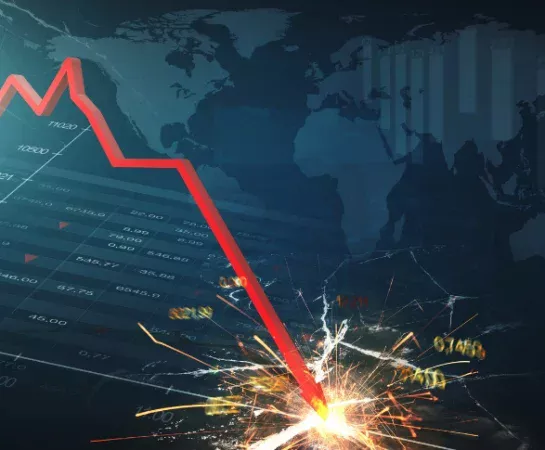
Circuit Breakers: How Long Does the Market Pause When It Crashes
On April 7, 2025, the S&P 500 swung 8.5% in a single session, one of the widest intraday ranges since March 2020. It closed down just 0.2%. No circuit breaker fired. Five years earlier, in March 2020, the same index tripped the exact same 7%

IPO First Trading Day: What Time Does a New Stock Start Trading
Every IPO photo looks the same: executives on a balcony, a giant chrome button, the 9:30 AM bell. What that photo doesn't show is that the stock almost never starts trading at 9:30. Facebook was supposed to open at 11:00 in 2012 and didn't trade

Why the Year Starts on January 1
Nothing happens in the sky on January 1. The winter solstice comes about ten days earlier, Earth's closest approach to the Sun a few days later, and no lunar phase is tied to the date. January 1 is not an astronomical boundary. It is an

What Is Nowruz and Why It Always Falls on the Spring Equinox
Nowruz is the Persian New Year, celebrated by more than 300 million people across Iran, Afghanistan, Central Asia, the Caucasus, and Kurdish communities, and it begins at the exact astronomical instant of the March equinox rather than on a fixed date on any calendar grid.
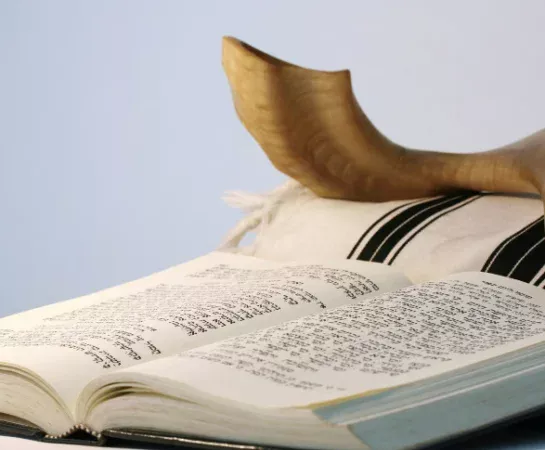
When Is Yom Kippur and Why It Always Falls 10 Days After Rosh Hashanah
Yom Kippur is the tenth day of Tishrei, and Rosh Hashanah is the first, so the ten-day gap between them looks like simple arithmetic. It isn't. The Hebrew calendar has a set of centuries-old rules that quietly forbid Rosh Hashanah from landing on three specific
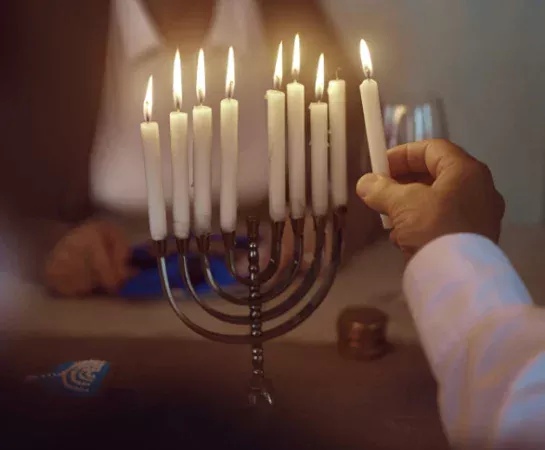
Why Hanukkah’s Date Moves Every Year on the Solar Calendar
In 2013, the first candle of Hanukkah was lit on the night before Thanksgiving, a coincidence rare enough that it won't happen again until 2070. Eleven years later, in 2024, the first candle fell on the evening of December 25 itself, the same alignment that
Time Tools
Quick access to timers, stopwatch, world clock and time zone tools.
Time Guides
Read useful guides about time zones, calendars, finance and astronomy.


