Major Airports in Finland
- Helsinki Vantaa Airport (HEL) - 01:48:38
- Ivalo Airport (IVL) - 01:48:38
- Kittilä International Airport (KTT) - 01:48:38
- Kuopio Airport (KUO) - 01:48:38
- Lappeenranta Airport (LPP) - 01:48:38
- Oulu Airport (OUL) - 01:48:38
- Rovaniemi Airport (RVN) - 01:48:38
- Tampere-Pirkkala Airport (TMP) - 01:48:38
- Turku Airport (TKU) - 01:48:38
- Vaasa Airport (VAA) - 01:48:38
Daylight saving time changes in Finland
Finland has 1 listed IANA time zones. 1 of them observe daylight saving time changes in 2026.
Next change: October 25, 2026
Clock moves back from 04:00 to 03:00 local time.
Best Time to Call Finland
Business hours in Finland (9 AM–5 PM local time) fall at these local times elsewhere:
- Beijing: 2:00 PM – 10:00 PM ( Partial overlap)
- Paris: 8:00 AM – 4:00 PM ( Convenient)
- Toronto: 2:00 AM – 10:00 AM ( Outside normal hours)
- Seoul: 3:00 PM – 11:00 PM ( Partial overlap)
- Mexico City: 12:00 AM – 8:00 AM ( Outside normal hours)
- Cairo: 9:00 AM – 5:00 PM ( Convenient)
- Bangkok: 1:00 PM – 9:00 PM ( Partial overlap)
Times shown reflect current UTC offsets and may shift by up to an hour around daylight saving transitions.
Time Difference from Finland
Compare time in Finland with other countries.
Countries in the Same Time Zone as Finland
Most Popular Cities in Finland
Holidays in Finland
Official national public holidays. Regional and religious observances may vary by area.
About Time in Finland
The Petition That Reached Brussels
Clock-shifting arrived in the country only once before the modern era, and briefly. During the Continuation War in 1942, clocks were moved forward an hour on 3 April and back again on 4 October, a single wartime trial intended to ease pressure on fuel and lighting; farmers complained that the change misaligned their work with the sun, and the idea was quietly dropped once the emergency passed. It was not revived again for almost forty years. When seasonal clock changes finally became a fixed annual practice in 1981, the country was the last in Europe to adopt them, trailing its Nordic neighbours, who had already made the switch the year before.
The delay in adopting daylight saving proved to be the prelude to an equally singular role in trying to get rid of it. In the spring of 2015, a citizens' initiative calling for an end to the twice-yearly clock change gathered more than 70,000 signatures, comfortably clearing the 50,000 needed to force parliamentary consideration, and by October of that year the transport and communications committee was recommending that the government lobby Brussels directly. A second initiative followed in 2018, again passing 50,000 signatures within weeks, this time calling specifically for permanent summer time. Of the European Union's member states, the country became the most vocal advocate for scrapping the practice altogether, and its pressure fed into a European Parliament vote in March 2019 that backed ending mandatory clock changes across the bloc from 2021. That deadline came and went, since the European Council and Parliament still have not agreed on how individual member states would choose between permanent summer or winter time, and each spring and autumn the clocks continue to move regardless of the petitions that started the debate.
Eight Seasons for a Land of Four
In the reindeer-herding regions of the far north, home to the Indigenous Sámi people, the familiar four-season calendar has never mapped well onto a landscape where daylight itself swings from near-total darkness to weeks without a sunset. Sámi tradition instead divides the year into eight: winter, spring-winter, spring, spring-summer, summer, autumn-summer, autumn and autumn-winter, each named for a distinct stage in the reindeer's own annual cycle rather than for a fixed calendar date. Spring-winter, for instance, is the season when pregnant does are moved from forest winter pasture up into the fells, where herders can watch over them more easily before calving begins in the true spring that follows.
The system is not a historical curiosity confined to museums. Herding families who have otherwise settled into permanent homes still plan migrations, calving, earmarking and autumn round-ups around these eight divisions rather than the Gregorian months, because the work itself, not the date on a wall calendar, has always set the rhythm. Tourism operators in Finnish Lapland have more recently adopted the same eight-part year to describe the region to visitors, a rare case of an Indigenous timekeeping system shaping how outsiders are taught to think about a place's calendar.
Fifty-One Days Without a Sunrise
In Utsjoki, the northernmost municipality in the European Union, the sun disappears below the horizon in late November and does not return for roughly seven weeks. Officials there, drawing on figures from the University of Helsinki's almanac office, have recorded polar night, kaamos in Finnish, running from around 26 November to 15 January in an ordinary year, a stretch of 51 days in which the sky never fully darkens but instead cycles through hours of blue and grey twilight rather than true daylight. The return of the sun is treated as a small annual event in its own right: in one recent year it reappeared over Utsjoki for barely an hour, rising at 11:57 and setting again at 12:47.
The boundary of the phenomenon is precise rather than approximate. Polar night begins about one degree north of the Arctic Circle, close to the village of Aska in the municipality of Sodankylä, and from there it lengthens steadily the further north one travels, reaching 51 days at Utsjoki and closer to two months in the very northernmost village of Nuorgam. Exactly on the Arctic Circle itself, which passes through Rovaniemi, the phenomenon shrinks to its narrowest possible form: a single day, the winter solstice, on which the sun fails to clear the horizon at all before rising again the next morning. The same geography produces the opposite extreme each summer, when the sun in Utsjoki stays above the horizon continuously from mid-May to late July, a stretch of light Finns call yötön yö, the nightless night, that underpins the long midsummer bonfires and celebrations held at the solstice each June.
Frequently Asked Questions
How many time zones does Finland have?
One. The whole of Finland follows Europe/Helsinki, so every city shows the same local time as the capital, Helsinki.
Is Finland ahead of or behind GMT?
Finland is currently 3 hours ahead of GMT (UTC+3).
Does Finland use summer time?
Yes. Helsinki uses UTC+2 (EET) in standard time and UTC+3 (EEST) during daylight saving time, and is currently on summer time.
How many public holidays does Finland have in 2026?
Finland has 15 national public holidays in 2026, when banks and government offices are usually closed. Some regions may also have their own local holidays.
How do I dial a phone number in Finland from abroad?
From a mobile phone, type +358 and then the local number without the leading 0 used for domestic calls, if it has one. From a landline, replace the plus sign with your exit code: 011 from the US and Canada, or 00 from most of Europe, for example 00 358 followed by the number.
What language is spoken in Finland?
The main languages of Finland are Finnish, Swedish and Inari Sami.
Beyond the Clock

How Many Weeks Are in a Quarter and How 4-4-5 Fiscal Calendars Work
A quarter is 13 weeks only on paper. A calendar quarter runs 90, 91, or 92 days, which works out to somewhere between 12.86 and 13.14 weeks, and it never starts on the same weekday two years in a row. That small mismatch is why

What Week Number Is It? ISO Week Numbers vs US Week Numbers
Ask a spreadsheet in Chicago and a planner in Stockholm what week Sunday, January 3, 2027 falls in, and you get two different years. Excel's default setting says week 2 of 2027. The ISO standard used across Europe says week 53 of 2026. Both answers

How Many Working Hours Are in a Year: Why 2,080 Isn’t Always Right
The standard answer is 2,080: 40 hours a week times 52 weeks. It sits behind most salary calculators and HR spreadsheets. But 52 weeks cover only 364 days. Every year has one or two days left over, and whether they land on a weekday or

Time Blocking vs Time Boxing vs Task Batching: What’s the Difference
The three names sound alike and are often used interchangeably, and all three promise a more focused day. They are not competing methods. Each one answers a different question. A frequent way for a technique to disappoint is being asked to do another one's job:

Why the Year Starts on January 1
Nothing happens in the sky on January 1. The winter solstice comes about ten days earlier, Earth's closest approach to the Sun a few days later, and no lunar phase is tied to the date. January 1 is not an astronomical boundary. It is an

What Is Nowruz and Why It Always Falls on the Spring Equinox
Nowruz is the Persian New Year, celebrated by more than 300 million people across Iran, Afghanistan, Central Asia, the Caucasus, and Kurdish communities, and it begins at the exact astronomical instant of the March equinox rather than on a fixed date on any calendar grid.

When Is Yom Kippur and Why It Always Falls 10 Days After Rosh Hashanah
Yom Kippur is the tenth day of Tishrei, and Rosh Hashanah is the first, so the ten-day gap between them looks like simple arithmetic. It isn't. The Hebrew calendar has a set of centuries-old rules that quietly forbid Rosh Hashanah from landing on three specific
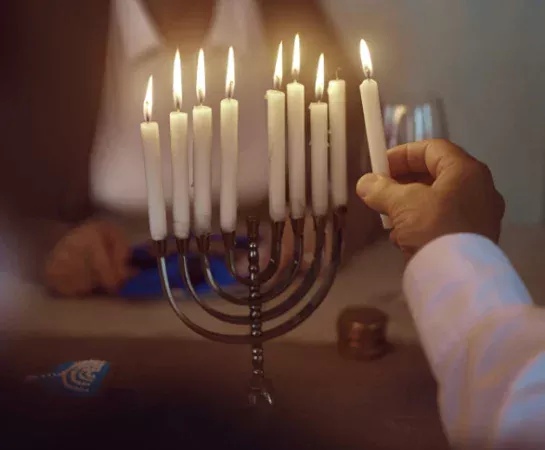
Why Hanukkah’s Date Moves Every Year on the Solar Calendar
In 2013, the first candle of Hanukkah was lit on the night before Thanksgiving, a coincidence rare enough that it won't happen again until 2070. Eleven years later, in 2024, the first candle fell on the evening of December 25 itself, the same alignment that
Time Tools
Quick access to timers, stopwatch, world clock and time zone tools.
Time Guides
Read useful guides about time zones, calendars, finance and astronomy.


