Major Airports in Moldova
- Chişinău International Airport (RMO) - 01:26:23
Daylight saving time changes in Moldova
Moldova has 1 listed IANA time zones. 1 of them observe daylight saving time changes in 2026.
Next change: October 25, 2026
Clock moves back from 04:00 to 03:00 local time.
Best Time to Call Moldova
Business hours in Moldova (9 AM–5 PM local time) fall at these local times elsewhere:
- Beijing: 2:00 PM – 10:00 PM ( Partial overlap)
- Paris: 8:00 AM – 4:00 PM ( Convenient)
- Toronto: 2:00 AM – 10:00 AM ( Outside normal hours)
- Seoul: 3:00 PM – 11:00 PM ( Partial overlap)
- Mexico City: 12:00 AM – 8:00 AM ( Outside normal hours)
- Cairo: 9:00 AM – 5:00 PM ( Convenient)
- Bangkok: 1:00 PM – 9:00 PM ( Partial overlap)
Times shown reflect current UTC offsets and may shift by up to an hour around daylight saving transitions.
Time Difference from Moldova
Compare time in Moldova with other countries.
Countries in the Same Time Zone as Moldova
Most Popular Cities in Moldova
Holidays in Moldova
Official national public holidays. Regional and religious observances may vary by area.
About Time in Moldova
At 02:00 on 6 May 1990, Moldova Repeated an Hour and Reset Its Civil Time
One of Moldova's most consequential clock changes happened before independence and did not follow the familiar spring-forward, autumn-back pattern. On 4 May 1990, the Council of Ministers of the Moldavian SSR adopted Resolution No. 132 changing how official time would be calculated across the republic.
The transition took effect on 6 May. At 02:00, clocks were moved back by one hour. The change shifted Moldavian civil time onto the second time zone while retaining an additional hour during the summer period.
That distinction matters because the event can look like the end of daylight saving when reconstructed from a list of offsets. It was not. Summer time continued. What changed was the underlying standard offset used for civil time.
The resolution then specified a recurring cycle: summer time would begin on the last Sunday of March at 02:00 and end on the last Sunday of September at 03:00. In 1996, practice shifted the autumn change to the last Sunday of October, following the increasingly coordinated European schedule.
An unusual legal problem survived for decades. By 2025, Moldova's government acknowledged that the 1990 resolution was still the principal national act governing official time even though actual clock-changing practice had evolved. Public notices from 2022 onward were already describing transitions at 03:00 in spring and 04:00 in autumn, matching the European system based on a common 01:00 UTC transition.
The gap between inherited law and operational practice finally closed in 2026. Government Decision No. 79 of 25 February formally established UTC+2 as Moldova's official standard time and retained seasonal summer time. Under the new rule, the last Sunday of March advances from 03:00 to 04:00. The modern clock did not visibly change for residents, but the legal framework finally caught up with the system they were already using.
At 03:39, a Vrancea Earthquake Left Hundreds of Chișinău Buildings Uninhabitable
On 10 November 1940, a deep earthquake beneath the Vrancea region sent destructive seismic waves across a large part of Eastern Europe. Modern catalogs place the origin at about 01:39:05 UTC. In the local civil time then used in the region, the strongest shaking arrived during the night, at approximately 03:39.
The earthquake had an estimated moment magnitude of about 7.7 and a source depth around 130 to 150 kilometers. Its intermediate depth allowed strong waves to travel far beyond the epicentral region. Moldova lay directly within the zone of serious macroseismic effects.
Chișinău suffered substantial damage. Later research based on Moldavian archival material records damage to important public buildings, including the cathedral and the National Museum of Ethnography and Natural History. The Costiujeni hospital complex was among the seriously affected sites.
A housing inventory prepared in January 1945 preserved a more revealing measure of the disaster's urban legacy. It recorded 256 collapsed buildings, 681 requiring substantial repairs and more than 2,300 needing lesser repairs. Roughly 400 families, representing about 2,000 people, had been left without homes. World Bank disaster-risk analysis later cited 78 fatalities in Moldova from the 1940 event.
The timing of the earthquake mattered because people were indoors and asleep. But its scientific importance also lies in how the event was reconstructed afterward. The strongest shock occurred before modern digital seismic networks, so researchers combined historical seismograms, damage reports, archival expeditions and macroseismic observations collected from settlements across several countries.
The 1940 earthquake therefore exists on two timelines. For residents, it was a sudden nocturnal event lasting seconds. For scientists, its chronology has continued to sharpen for decades as old records are reexamined, source parameters recalculated and damage evidence integrated across national borders.
In 2024, Some Moldovan Grapes Began Ripening 15 to 20 Days Earlier Than a Year Before
Viticulture turns the Moldovan year into a sequence of biological thresholds: sap flow, bud break, flowering, berry growth, veraison, ripening and harvest. These stages do not occur because a fixed calendar date has arrived. They respond to accumulated heat, rainfall, soil moisture and the timing of frost.
Recent research on local grape varieties shows how quickly that biological calendar can shift. Studies comparing the 2023 and 2024 seasons found that berry ripening in 2024 began roughly 15 to 20 days earlier for investigated Viorica vineyards. High temperatures and low humidity accelerated development but also reduced yields and must recovery in some sites.
The same year demonstrates why an earlier season is not automatically a better one. March frosts reached approximately -1.4 to -6.0 degrees Celsius in monitored areas, while winter temperatures had previously fallen to about -16.8 degrees. Later warmth then accelerated vine development. One growing season could therefore contain both frost injury and unusually early ripening.
Other Moldovan vineyard observations show the scale of phenological variation even across a few recent years. In one study, bud break occurred as early as 7 April in 2024 but not until 30 April in 2021. Veraison appeared on 2 August in 2024 compared with 20 August in 2021. Flowering and ripening phases in the warm year advanced by roughly eleven to thirteen days relative to some preceding seasons.
This matters because harvest timing is a quality decision rather than merely a logistical one. Sugar accumulation, acidity, aroma development and grape health do not advance at identical rates. A hotter season can increase sugar quickly while acidity falls, forcing winemakers to choose between waiting for flavor development and harvesting earlier to preserve balance.
Moldova's wine calendar is therefore becoming less reliable as a set of traditional dates. The sequence of stages remains, but the intervals between them can compress. A harvest historically associated with one part of September may increasingly demand decisions days or weeks earlier, depending on variety, terroir and the weather of that particular year.
The Dniester Can Take Months to Reveal a Drought That a Small River Shows Almost Immediately
A dry month does not become a hydrological drought everywhere in Moldova at the same speed. Research using observations from 1961 to 2020 shows that the country's river basins divide into fundamentally different response regimes.
Large regulated systems such as the Dniester and Prut can delay and soften the hydrological signal. A shortage of precipitation may take approximately two to six months to propagate clearly into river-flow deficits. Reservoir storage, basin size, groundwater exchange and management can all stretch the interval between meteorological drought and what eventually appears in discharge records.
Small basins behave differently. Rivers such as the Cogâlnic and Ialpug can respond within less than a month. Their flows are more closely tied to recent precipitation and local soil moisture, so the hydrological consequence of dry weather appears much faster.
This difference turns drought forecasting into a problem of lag rather than a simple comparison of rainfall totals. The same atmospheric anomaly in spring can create an almost immediate shortage in one catchment while its strongest effect on a larger regulated river is delayed until summer.
Human intervention complicates the sequence further. Researchers identified periods in which hydrological deficits appeared to precede the meteorological signal expected to cause them. Such phase reversals can indicate reservoir operation, water abstraction or groundwater pressure altering the natural relationship between rainfall and river flow.
The practical consequence is that Moldova cannot rely on a single national drought clock. Farmers near a small unregulated river may experience water stress while the Dniester still appears relatively stable. Months later, the larger basin may reveal the accumulated deficit after the local rainfall event that initiated it has already been forgotten.
Weather Observations Began in Chișinău in 1844, but War Repeatedly Broke the Record
Moldova's instrumental weather history reaches back well before the creation of a modern national meteorological service. The State Hydrometeorological Service traces the first documented meteorological observations in Chișinău to 1844.
Hydrology entered the observational network three decades later. In 1878, the first hydrological post was established on the Dniester at Tighina. Additional meteorological observation points followed at Briceni in 1887, Soroca in 1890, Comrat in 1892, Ploti in 1894 and Tiraspol in 1898.
By the beginning of the twentieth century, stationary meteorological observations were being made at eleven locations and hydrological measurements at six. The network was still fragile. Many stations worked intermittently, and both the First and Second World Wars repeatedly interrupted observations.
Those gaps are important because climate records become more valuable as they lengthen. A continuous fifty-year series can reveal long-term shifts that a five-year series cannot, while missing months or years complicate comparisons of drought, rainfall extremes, frost and river behavior across generations.
A more systematic institutional phase began in October 1944 with the creation of a dedicated hydrometeorological administration for the Moldavian republic. A meteorological bureau was formed within the organization, with groups specializing in weather and hydrological forecasting. Local forecasting methods were then adapted to the regional environment rather than relying only on generalized methods developed elsewhere.
The history makes Moldova's weather archive a record of observation itself. Rainfall, temperature and river levels are the measured variables, but the continuity of measurement has its own chronology: stations appear, wars interrupt them, institutions reorganize, instruments improve and forecasting methods become more local. Long-term climate analysis depends on understanding both timelines.
Saint George Opened the Pastoral Year, and the Bucium Divided the Working Day
Traditional Moldovan pastoral time combined annual feast days with signals repeated inside a single working day. The national inventory of intangible cultural heritage identifies Saint George's Day as the beginning of the pastoral calendar year, associated with hiring shepherds and taking flocks out to pasture.
The date served as a social boundary as well as a religious one. Contracts and responsibilities could be reorganized around the start of the grazing season. Sheep moved from winter arrangements toward pasture, and the pastoral community entered another phase of its annual work.
Once the flock was in the field, time could be communicated acoustically. Moldova's heritage inventory preserves a repertory of bucium, long-horn, and flute signals associated directly with pastoral tasks. Their names include calls for sending sheep out, bringing them to milking, midday, evening on the mountain, measuring milk, curdling milk and churning butter.
These were not melodies performed only for entertainment. They helped organize work in a landscape where people and animals could be spread across distance and where a mechanical clock was not always the most useful coordinating device. A recognizable signal could announce that one stage of the day had ended and another task should begin.
The annual and daily systems therefore fitted together. Saint George marked the opening of the pastoral season; environmental conditions determined how grazing developed; repeated sound signals divided the work inside the day. Time was embedded in movement, labor and sound rather than existing only as numbers on a clock face.
Frequently Asked Questions
How many time zones does Moldova have?
One. The whole of Moldova follows Europe/Chisinau, so every city shows the same local time as the capital, Chisinau.
Is Moldova ahead of or behind GMT?
Moldova is currently 3 hours ahead of GMT (UTC+3).
Does Moldova use summer time?
Yes. Chisinau uses UTC+2 (EET) in standard time and UTC+3 (EEST) during daylight saving time, and is currently on summer time.
How many public holidays does Moldova have in 2026?
Moldova has 13 national public holidays in 2026, when banks and government offices are usually closed. Some regions may also have their own local holidays.
How do I dial a phone number in Moldova from abroad?
From a mobile phone, type +373 and then the local number without the leading 0 used for domestic calls, if it has one. From a landline, replace the plus sign with your exit code: 011 from the US and Canada, or 00 from most of Europe, for example 00 373 followed by the number.
What language is spoken in Moldova?
The main languages of Moldova are Romanian, Russian and Gagauz.
Beyond the Clock

IST, CST, BST: Why the Same Time Zone Abbreviation Means Different Things
A meeting invite that says "10:00 IST" looks precise. It isn't. IST is India Standard Time (UTC+05:30), Irish Standard Time (UTC+01:00) and Israel Standard Time (UTC+02:00). In July, the first two are four and a half hours apart. CST can mean Chicago or Shanghai, 14

Why Nevada and Utah Sit in Different Time Zones Despite Sharing a Border
Nevada runs on Pacific Time. Utah runs on Mountain Time. The two states share a long, mostly straight desert border, yet anyone driving east from Ely, Nevada, toward Delta, Utah, loses an hour the moment they cross the line. This is not an accident of

Why Brazil Has Four Time Zones Despite Its Massive Size
Brazil covers 8,514,877 square kilometers, the fifth largest country on Earth, and its territory stretches 4,319 kilometers from its Atlantic tip near João Pessoa to the Peruvian border, a span of roughly 39 degrees of longitude. Despite that scale, Brazil runs on only four time

What Time Zone Is Kiribati In: The Country Furthest Ahead in Time
For most of the 20th century, Kiribati wasn't ahead of anyone. Parts of it were among the last places on Earth to see each new day, not the first. That changed in 1995 through a single, deliberate act of redrawing the map, and the country

Full Moon Names by Month: Where Beaver Moon and Cold Moon Come From
The November 2026 full moon, the Beaver Moon, peaks at 9:53 AM Eastern Time on Tuesday, November 24. The December full moon, the Cold Moon, follows at 8:28 PM Eastern on Wednesday, December 23. In UTC that moment already falls on December 24, so in
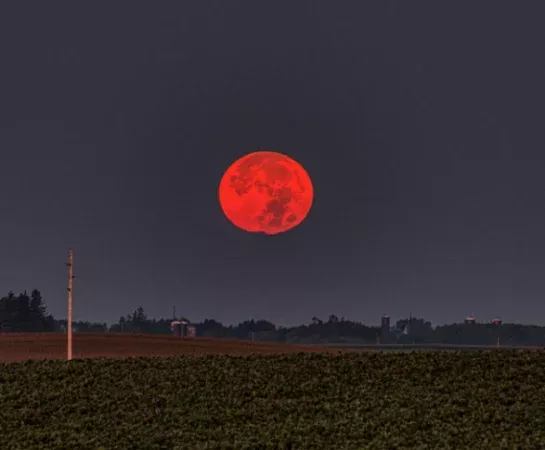
What Is a Blood Moon and Why Does the Moon Turn Red
On the night of August 27, 2026, the Moon came within a hair of disappearing entirely. Earth's shadow covered 96.2% of its surface, a partial eclipse so deep that skywatchers across the Americas, Europe, and Africa watched it turn a rusty, almost total red without
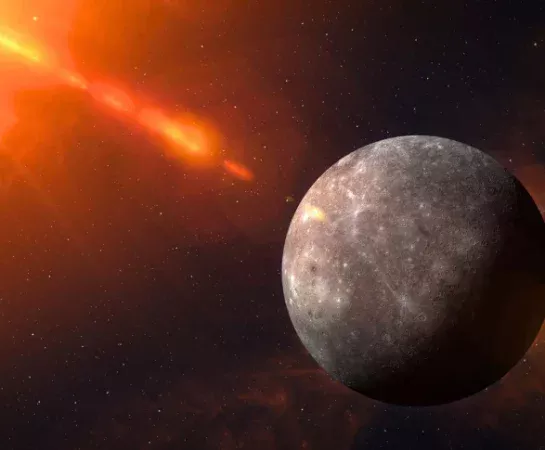
Mercury Retrograde: What’s Astronomically Real vs Astrological Myth
Mercury retrograde generates millions of searches every time it happens, and almost none of that content stops to explain what's actually occurring in space. The phenomenon itself is completely real, observable, and predictable centuries in advance. What isn't real is nearly everything attached to it

What Is Sidereal Time and How It Differs From Solar Time
Ask how long it takes Earth to spin once on its axis and the honest answer depends on what you're measuring the spin against. Measured against the sun, a full rotation takes 24 hours, the day everyone lives by. Measured against the distant stars, that
Time Tools
Quick access to timers, stopwatch, world clock and time zone tools.
Time Guides
Read useful guides about time zones, calendars, finance and astronomy.


