Major Airports in Mozambique
- Beira International Airport (BEW) - 01:33:43
- Maputo Airport (MPM) - 01:33:43
- Nampula Airport (APL) - 01:33:43
- Tete Airport (TET) - 01:33:43
Daylight saving time in Mozambique
Mozambique has 1 listed IANA time zones. None of them observe daylight saving time in 2026. The UTC offset remains stable throughout the year.
Best Time to Call Mozambique
Business hours in Mozambique (9 AM–5 PM local time) fall at these local times elsewhere:
- Beijing: 3:00 PM – 11:00 PM ( Partial overlap)
- Paris: 9:00 AM – 5:00 PM ( Convenient)
- Toronto: 3:00 AM – 11:00 AM ( Outside normal hours)
- Seoul: 4:00 PM – 12:00 AM (next day) ( Partial overlap)
- Mexico City: 1:00 AM – 9:00 AM ( Outside normal hours)
- Cairo: 10:00 AM – 6:00 PM ( Convenient)
- Bangkok: 2:00 PM – 10:00 PM ( Partial overlap)
Times shown reflect current UTC offsets and may shift by up to an hour around daylight saving transitions.
Time Difference from Mozambique
Compare time in Mozambique with other countries.
Countries in the Same Time Zone as Mozambique
Most Popular Cities in Mozambique
Holidays in Mozambique
Official national public holidays. Regional and religious observances may vary by area.
About Time in Mozambique
Fifty Years of Counting Animals
Between 1968 and 1972, aerial surveys of Gorongosa National Park recorded one of the richest concentrations of large mammals anywhere in Africa, with a biomass density of wildlife rivalling that of the Serengeti. Mozambique's sixteen-year civil war, which raged from 1977 to 1992, ended that abundance almost entirely: soldiers on both sides hunted elephants for ivory to fund the fighting and killed buffalo, hippo, zebra and wildebeest simply to eat, and by the time researchers conducted the first post-war aerial census in June 1994, total large-mammal populations had collapsed by more than ninety percent.
What followed became one of the most closely documented ecological recoveries anywhere in the world, built on a chance meeting in 2004 between American philanthropist Greg Carr and Mozambican President Joaquim Chissano. A formal twenty-year restoration partnership between the Carr Foundation and the Mozambican government, signed in 2008 and later extended by a further twenty-five years, funded reintroductions and anti-poaching efforts that gradually rebuilt the park's total wildlife biomass, though the mix of species shifted substantially in the process, with waterbuck now far more numerous than the elephant, hippo and buffalo populations that had once dominated. The recovery has continued in careful stages ever since: a leopard was photographed in the park in 2018 for the first time in years, and African wild dogs, absent for a quarter of a century, were successfully reintroduced in 2020, each milestone measured against aerial survey data stretching back, uninterrupted in intent if not in continuity, more than half a century.
Nearly Four Centuries as a Capital
Long before Maputo existed as a city, the small coral island now known simply as Ilha de Moçambique served as the administrative heart of an entire colonial empire. Portuguese explorer Vasco da Gama landed there in 1498, and from 1507 onward the island developed into a fortified way station on the sea route between Lisbon and Goa, its harbour sheltering ships waiting out the seasonal monsoon winds before continuing on to India. Portugal made it the capital of all of Portuguese East Africa, a role the island held for roughly four centuries.
The island's importance began to erode with the 1869 opening of the Suez Canal, which offered ships an alternative route to the Indian Ocean that no longer required rounding southern Africa or stopping at Mozambique's old ports along the way. In 1898, the colonial capital was formally transferred to Lourenço Marques, a mainland port town later renamed Maputo, ending the island's long run as the seat of Portuguese administration in the region. Ilha de Moçambique's uniform limestone architecture, built up over centuries using the same local materials and construction techniques, survived largely intact through the decline that followed, and the island was designated a UNESCO World Heritage Site in 1991, its buildings preserved less by active investment than by the sheer fact that economic importance, once it moved elsewhere, never fully came back.
The Largest Return of Its Kind in Sub-Saharan Africa
Mozambique became independent from Portugal on 25 June 1975, but stability did not follow: within two years, a civil war had broken out between the governing FRELIMO party and the RENAMO opposition movement, a conflict that would kill an estimated one million people and drag on until October 1992, when the two sides signed the Rome General Peace Accords under mediation by Italy's Community of Sant'Egidio.
The war's end triggered a demographic reversal on an extraordinary scale. More than 1.7 million Mozambicans who had fled as refugees into neighbouring Malawi, Zimbabwe, Eswatini, Zambia, Tanzania and South Africa returned home by mid-1995, a movement of people that researchers have described as the largest repatriation ever recorded in Sub-Saharan Africa, alongside an estimated four million more who had been internally displaced within Mozambique's own borders and who likewise made their way back to the places they had left. The scale and relative speed of that return, unfolding across barely three years under United Nations supervision, became one of the defining measures of how thoroughly the Rome accords had actually taken hold on the ground, well beyond the signatures on the page in Italy.
Frequently Asked Questions
How many time zones does Mozambique have?
One. The whole of Mozambique follows Africa/Maputo, so every city shows the same local time as the capital, Maputo.
Is Mozambique ahead of or behind GMT?
Mozambique is currently 2 hours ahead of GMT (UTC+2).
Does Mozambique use summer time?
No. Mozambique does not observe daylight saving time, so its clocks stay at UTC+2 all year. Its time difference with countries that do change their clocks still shifts by an hour in spring and autumn.
How many public holidays does Mozambique have in 2026?
Mozambique has 10 national public holidays in 2026, when banks and government offices are usually closed. Some regions may also have their own local holidays.
How do I dial a phone number in Mozambique from abroad?
From a mobile phone, type +258 and then the local number without the leading 0 used for domestic calls, if it has one. From a landline, replace the plus sign with your exit code: 011 from the US and Canada, or 00 from most of Europe, for example 00 258 followed by the number.
What language is spoken in Mozambique?
The main languages of Mozambique are Portuguese and Makhuwa.
Beyond the Clock

Why Scheduled Jobs Break at Daylight Saving Time
On Sunday, November 1, 2026, the local time 1:30 AM happens twice in New York. The first 1:30 AM is 05:30 UTC on Eastern Daylight Time. The second is an hour later, 06:30 UTC on Eastern Standard Time. Four and a half months later, on

The Hour That Happens Twice: What Actually Occurs at 1:30 AM When Clocks Fall Back
At 1:59:59 a.m. on Sunday, November 1, 2026, clocks in New York will not tick over to 2:00. They will jump back to 1:00:00 a.m., and the next 60 minutes will replay. Every time from 1:00 to 1:59 happens twice that night, once on Eastern
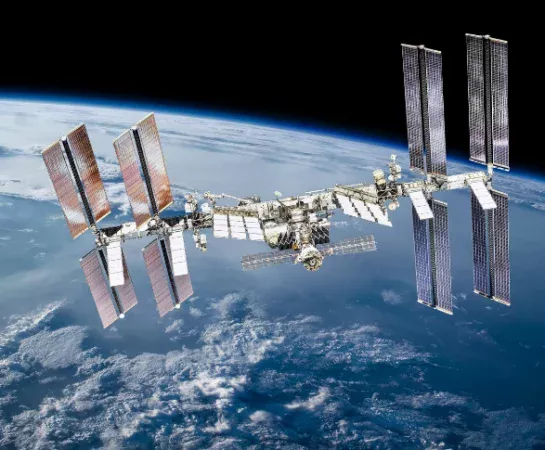
Why the International Space Station Runs on UTC Instead of Local Time
Astronauts aboard the International Space Station see the sun rise and set 16 times in a 24-hour period, once every 90 to 93 minutes, as the station circles Earth at roughly 28,000 kilometers per hour. No conventional time zone survives contact with that kind of
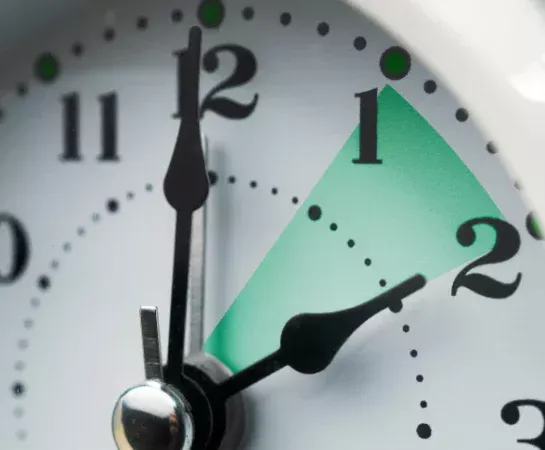
Standard Time vs Daylight Time: What’s the Actual Difference
Most people assume "Standard Time" is the normal, default setting and "Daylight Time" is some separate seasonal overlay that temporarily replaces it. That mental model is backwards in a way that federal law makes explicit, and once you see the actual legal language, the whole

When Does the Fed Announce Interest Rates: Exact Time and Why It Moves Markets
The Federal Reserve announces its interest rate decision at 2:00 p.m. Eastern Time on the final day of each scheduled Federal Open Market Committee (FOMC) meeting, and the Chair's press conference follows at 2:30 p.m. Those times have been fixed since March 2013. The rest

Why Bitcoin ETFs Close at 4 PM While Bitcoin Never Stops Trading
Bitcoin trades every minute of the year. The ETFs that hold it do not. A US spot bitcoin ETF follows a stock exchange schedule: regular trading from 9:30 AM to 4:00 PM ET on weekdays, thinner extended sessions on either side, and no trading at

What Is the Closing Auction and Why the Last 10 Minutes Move the Market
The 4:00 p.m. bell on the New York Stock Exchange does not simply end the trading day. It triggers the closing auction, a one-time match of buyers and sellers at a single price that becomes each stock's official close, and which NYSE describes as the
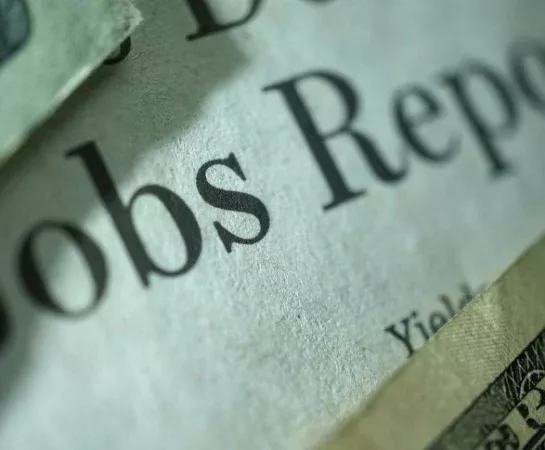
Jobs Report Day: Why the First Friday of the Month Moves Every Market at Once
Once a month, at 8:30 a.m. Eastern, currency pairs jump, bond yields snap, and equity futures swing before most traders have settled at their desks. Everyone calls it "the first Friday of the month." Almost everyone is wrong about why it lands there. The date
Time Tools
Quick access to timers, stopwatch, world clock and time zone tools.
Time Guides
Read useful guides about time zones, calendars, finance and astronomy.


