Major Airports in Latvia
- Riga International Airport (RIX) - 02:48:09
Daylight saving time changes in Latvia
Latvia has 1 listed IANA time zones. 1 of them observe daylight saving time changes in 2026.
Next change: October 25, 2026
Clock moves back from 04:00 to 03:00 local time.
Best Time to Call Latvia
Business hours in Latvia (9 AM–5 PM local time) fall at these local times elsewhere:
- Beijing: 2:00 PM – 10:00 PM ( Partial overlap)
- Paris: 8:00 AM – 4:00 PM ( Convenient)
- Toronto: 2:00 AM – 10:00 AM ( Outside normal hours)
- Seoul: 3:00 PM – 11:00 PM ( Partial overlap)
- Mexico City: 12:00 AM – 8:00 AM ( Outside normal hours)
- Cairo: 9:00 AM – 5:00 PM ( Convenient)
- Bangkok: 1:00 PM – 9:00 PM ( Partial overlap)
Times shown reflect current UTC offsets and may shift by up to an hour around daylight saving transitions.
Time Difference from Latvia
Compare time in Latvia with other countries.
Countries in the Same Time Zone as Latvia
Most Popular Cities in Latvia
Holidays in Latvia
Official national public holidays. Regional and religious observances may vary by area.
About Time in Latvia
At 03:30, the Daugava Ice Began Moving and Pļaviņas Rose Four Metres in a Day
On 19 April 2013, the Daugava at Pļaviņas demonstrated how quickly a Latvian spring can change from winter conditions to flood emergency. Only nine days earlier, large sections of the river were still covered by ice 39 to 52 centimeters thick.
The breakup began progressively upstream. Ice started moving around Piedruja and Krāslava on 14 and 15 April, then farther downstream during 16 and 17 April. Large jams formed in several sections as moving ice encountered stretches that had not yet opened.
During the night of 18 April, a jam approximately 1.5 kilometers long developed near Pļaviņas. More ice was still arriving from upstream, storing water behind a temporary barrier that could change much faster than an ordinary river flood.
At about 03:30 on 19 April, heavy ice movement began at the mouth of the Aiviekste and near Pļaviņas. A mass of ice and a rising water wave entered the reservoir together. During the twenty-four hours from 15:00 on 18 April, the water level at Pļaviņas rose by approximately four meters.
By 15:00 on the 19th, the level reached 75.60 meters in the Baltic height system at Pļaviņas. That exceeded the previous observation-period record from 1979 by 57 centimeters. Latvia's national hydrological service estimated the probability of such a level there at about 0.5 percent in any year.
Then the sequence reversed almost as quickly as it had developed. At approximately 15:30, the jam began moving intensively downstream and the water level started falling sharply.
The flood was therefore not simply the result of a large amount of meltwater. Its timing depended on different river sections thawing at different moments. Water that could normally continue downstream was temporarily trapped by ice, converting a seasonal thaw into a rapidly changing hydraulic event measured in hours.
Jāņi Begins with One of Europe's Shortest Nights and Ends by Greeting the Sun
Latvia's best-known seasonal celebration occupies a remarkably narrow part of the solar year. Jāņi, celebrated on 23 and 24 June, falls close to the summer solstice, when daylight reaches its annual maximum and darkness barely develops into a full night.
At Latvia's latitude, sunset occurs close to midnight during this period and sunrise follows at roughly 04:30, depending on location. Even between the two, the sky does not become deeply dark in the way it does during autumn or winter.
The structure of the celebration deliberately fills that interval. Traditional practice includes remaining awake through the night, singing, gathering around fires and waiting for sunrise. The fire itself is kept visible through the hours when the Sun is absent, sometimes elevated on a pole so that its light can be seen across a wider area.
The important unit of time is therefore not simply the date 23 June. Jāņi is built around the transition from evening through the shortest night to the return of daylight. Staying awake is part of the ritual logic because the celebration follows the entire solar interruption rather than ending when ordinary social activity would normally stop.
Latvian folk songs preserve this relationship with the Sun repeatedly. Many describe the setting Sun, the brief night and the expectation of dawn. Agricultural fertility, vegetation and seasonal abundance are woven into the same cycle because the solstice arrives when northern plant growth is near its most intense point.
The modern public holidays fall on fixed civil dates, while the astronomical solstice itself can occur on 20, 21 or occasionally 22 June. The two systems therefore do not always coincide exactly. Latvian cultural time preserves 23 and 24 June as the recurring festival, while astronomical time determines the actual instant when the Sun reaches its northernmost seasonal position.
Lamprey Fishermen Build for a Month to Fish from August Until 1 February
On the Salaca and Svētupe rivers, one of Latvia's oldest surviving fishing systems follows a calendar almost as important as the fishing gear itself. Traditional lamprey weirs are rebuilt every year, used through the migration season and then largely surrendered to the river again.
Latvia's national inventory of intangible cultural heritage records the fishing season as running from August until the beginning of February. River lampreys spend part of their lives at sea, then migrate into rivers before spawning. Fishermen position their work inside that migration rather than expecting the fishery to operate uniformly throughout the year.
The next season begins almost as soon as the previous one ends. When fishing stops on 1 February, fishermen start preparing timber for replacement structures. Spruce trees are cut or purchased, transported and peeled during spring.
Actual construction takes place during summer, when river levels are low enough to work in the channel. Building a weir can require about a month. Stakes are driven into the riverbed using a wooden mallet weighing approximately 16 kilograms, and the structure is assembled without relying on a permanent modern barrier across the river.
Most of the weir is expected to disappear eventually. Floods and ice commonly damage or wash away the structure, leaving mainly the base in the riverbed. The fishermen therefore do not simply maintain one installation indefinitely. They repeat a cycle of preparation, construction, fishing and destruction every year.
The technique has survived in this form only on the Salaca and Svētupe. Fishing rights are limited, and practical knowledge is normally transferred through a small network of families and experienced fishermen. The tradition therefore has two parallel timelines: the annual river cycle and the much slower transfer of specialized knowledge between generations.
The lamprey itself runs on an even longer biological schedule. Its life cycle averages around seven years, including three to six years spent as a larva buried in river sediment and another one to three years at sea before the adult migration back into freshwater. A fishing season lasting six months intersects an animal cycle lasting most of a decade.
Nearly 47,000 Observations Show Latvia's Early Spring Moving Forward
Latvia has an unusual scientific record of seasonal time because thousands of people spent decades writing down when ordinary natural events occurred. First flowers, unfolding leaves, arriving birds, insects, snow, frost, sowing and harvesting were recorded repeatedly across the country.
Researchers at the University of Latvia digitized almost 47,000 observations collected between 1970 and 2018. The dataset covers 159 phenological phases across eight biological groups as well as farming activities and non-biological events such as first snow and last spring frost.
Once combined, those observations reveal that the Latvian year is no longer unfolding on exactly the timetable it followed several decades ago. The strongest shifts appear among early spring species. Hazel, grey alder and aspen flowering have advanced at rates reaching approximately eight days per decade in parts of the dataset.
Tree responses are not identical. Earlier spring development has lengthened the effective growing season of some species. For Norway maple, researchers calculated an increase of approximately 7.7 days per decade in the interval represented by the observed phenological stages; for silver birch, the increase was around 3.3 days per decade.
Birds reveal a different speed of adjustment. A separate study using 4,291 first-arrival records of Common Starlings from 171 monitoring locations between 1922 and 2017 found that spring arrival advanced by about 4.7 days across the 96-year period.
Meteorological spring, however, moved faster than the birds. Its estimated shift was about 0.18 days per year, compared with roughly 0.05 days per year for starling arrival. The difference suggests that migration timing does not automatically keep pace with changing local spring conditions.
This is why phenology works as a biological clock. A thermometer records temperature directly. A flowering hazel, arriving starling or unfolding birch leaf records the accumulated environmental conditions required to reach a particular life stage. Repeating those observations for decades reveals changes that are difficult to see during any single spring.
A 1931 Station Clock Kept Two Clocks Moving from One Mechanism
The Latvian Railway History Museum preserves a station clock made in 1931 at the Latvian State Railways electromechanical workshops in Riga. It once operated at Skrunda station, where its job was more complex than simply telling passengers the hour.
The clock stood in the station master's working area and was mechanically or electrically connected with the platform clock. Both displays therefore showed synchronized time rather than depending on two separately adjusted mechanisms.
Every morning, the station master compared the station clocks with the recognized correct time and adjusted them when necessary. That routine mattered because even a small accumulated error could affect departures, train crossings and passengers attempting to make connections.
Railways had helped create the need for this kind of synchronization in the first place. Before railway traffic became widespread, towns could organize daily life around local solar time. Noon depended on longitude, so clocks in settlements east or west of one another did not need to agree exactly.
A timetable changed the problem. Once trains linked settlements over hundreds of kilometers, a departure time had to mean the same thing at the origin, destination and intermediate stations. Telegraph systems made it possible to distribute time information much faster than a physical clock could be carried between stations.
The railway also spread standardized time beyond the station. Museum records note that local residents became accustomed to adjusting their watches by train whistles. An operational signal intended for railway work became an informal public time reference for communities around the line.
The Skrunda clock therefore represents a larger transition. Time moved from something each locality could approximate independently to something that had to remain synchronized across an entire transport network.
Latvia's Clock Still Changes at 03:00 in March and 04:00 in October
Latvia uses UTC+2 as standard time, but the country's legal rules make the seasonal transition unusually explicit. Current regulations specify not just the Sundays on which clocks change but the local clock reading at which each transition occurs.
On the last Sunday of March, when standard time reaches 03:00, clocks advance directly to 04:00. The local times between 03:00 and 03:59 therefore do not occur that morning.
On the last Sunday of October, the reverse happens. When summer time reaches 04:00, clocks move back to 03:00. The hour from 03:00 through 03:59 then occurs twice, once before the transition and once after it.
The present rule is tied to the coordinated European summer-time system. Latvia's 1997 regulations already defined standard time as Greenwich time plus two hours and used the last Sundays of March and October, while later regulations aligned the transition moments with the common European framework.
The skipped and repeated hours matter most to systems that store exact timestamps. A statement such as "03:30 on the last Sunday of October" is incomplete unless the offset is also known, because two different instants can carry that same local clock reading. In March, the corresponding 03:30 does not exist at all.
For everyday life the change is usually automatic. Networked phones, computers and transport systems obtain the rule from time-zone software. Yet underneath that automation is a legal definition of when an hour is created or removed from the civil day.
Frequently Asked Questions
How many time zones does Latvia have?
One. The whole of Latvia follows Europe/Riga, so every city shows the same local time as the capital, Riga.
Is Latvia ahead of or behind GMT?
Latvia is currently 3 hours ahead of GMT (UTC+3).
Does Latvia use summer time?
Yes. Riga uses UTC+2 (EET) in standard time and UTC+3 (EEST) during daylight saving time, and is currently on summer time.
How many public holidays does Latvia have in 2026?
Latvia has 17 national public holidays in 2026, when banks and government offices are usually closed. Some regions may also have their own local holidays.
How do I dial a phone number in Latvia from abroad?
From a mobile phone, type +371 and then the local number without the leading 0 used for domestic calls, if it has one. From a landline, replace the plus sign with your exit code: 011 from the US and Canada, or 00 from most of Europe, for example 00 371 followed by the number.
What language is spoken in Latvia?
The main languages of Latvia are Latvian, Russian and Lithuanian.
Beyond the Clock

Why the Moon’s Phases Don’t Actually Change Its Size
A thin crescent looks small enough to disappear. A full moon looks like it's swelling on the horizon. Neither impression is true. The Moon's diameter is 3,474 kilometers on every night of the month, whether it's a sliver or a full disc, and nothing in

Why Saturn’s Rings Are Disappearing From View in 2025 and 2026
Saturn's rings turned edge-on to Earth on March 23, 2025, at 12:04 p.m. EDT, and for weeks the planet looked like a plain yellow ball through backyard telescopes. This is not decay or destruction. It is a geometric alignment called a ring plane crossing, and
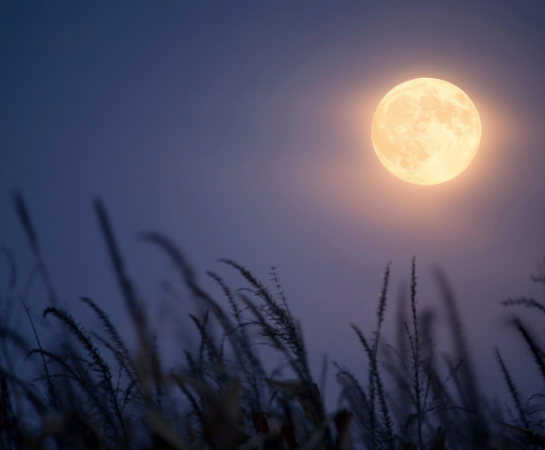
What Is a Harvest Moon and Why It Rises at Almost the Same Time Several Nights Running
On most nights of the year, the Moon rises roughly 50 minutes later than it did the night before. Around the Harvest Moon, that gap collapses to as little as 10 minutes in parts of the UK and Canada, and rarely more than 30 minutes
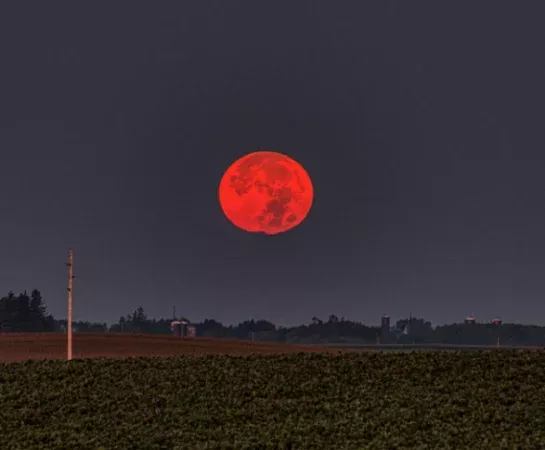
What Is a Blood Moon and Why Does the Moon Turn Red
On the night of August 27, 2026, the Moon came within a hair of disappearing entirely. Earth's shadow covered 96.2% of its surface, a partial eclipse so deep that skywatchers across the Americas, Europe, and Africa watched it turn a rusty, almost total red without

How Many Weeks Are in a Quarter and How 4-4-5 Fiscal Calendars Work
A quarter is 13 weeks only on paper. A calendar quarter runs 90, 91, or 92 days, which works out to somewhere between 12.86 and 13.14 weeks, and it never starts on the same weekday two years in a row. That small mismatch is why

Social Jet Lag: How Uneven Sleep Schedules Cost You a Time Zone Every Weekend
If you go to bed at 11 p.m. and wake at 6:30 a.m. on workdays, then sleep from 12:30 a.m. to 9 a.m. on weekends, your body spends every weekend about two hours west of where you live. On Monday morning, the alarm drags it

What Week Number Is It? ISO Week Numbers vs US Week Numbers
Ask a spreadsheet in Chicago and a planner in Stockholm what week Sunday, January 3, 2027 falls in, and you get two different years. Excel's default setting says week 2 of 2027. The ISO standard used across Europe says week 53 of 2026. Both answers

Time Blocking vs Time Boxing vs Task Batching: What’s the Difference
The three names sound alike and are often used interchangeably, and all three promise a more focused day. They are not competing methods. Each one answers a different question. A frequent way for a technique to disappoint is being asked to do another one's job:
Time Tools
Quick access to timers, stopwatch, world clock and time zone tools.
Time Guides
Read useful guides about time zones, calendars, finance and astronomy.


