Major Airports in Greenland
- Nuuk International Airport (GOH) - 23:38:56
Daylight saving time changes in Greenland
Greenland has 1 listed IANA time zones. 1 of them observe daylight saving time changes in 2026.
Next change: October 24, 2026
Clock moves back from 00:00 to 23:00 local time.
Best Time to Call Greenland
Business hours in Greenland (9 AM–5 PM local time) fall at these local times elsewhere:
- Beijing: 6:00 PM – 2:00 AM (next day) ( Partial overlap)
- Paris: 12:00 PM – 8:00 PM ( Partial overlap)
- Toronto: 6:00 AM – 2:00 PM ( Partial overlap)
- Seoul: 7:00 PM – 3:00 AM (next day) ( Partial overlap)
- Mexico City: 4:00 AM – 12:00 PM ( Outside normal hours)
- Cairo: 1:00 PM – 9:00 PM ( Partial overlap)
- Bangkok: 5:00 PM – 1:00 AM (next day) ( Partial overlap)
Times shown reflect current UTC offsets and may shift by up to an hour around daylight saving transitions.
Time Difference from Greenland
Compare time in Greenland with other countries.
Countries in the Same Time Zone as Greenland
Most Popular Cities in Greenland
Holidays in Greenland
Official national public holidays. Regional and religious observances may vary by area.
About Time in Greenland
One Island, Four Clocks
Greenland is the world's largest island, stretching roughly 2,670 kilometres from north to south, and its relationship with clock time reflects that scale more than any sense of national uniformity. Most of the population, concentrated along the west coast around the capital Nuuk, kept Western Greenland Time, three hours behind Greenwich, for decades. In March 2023 the government moved that zone forward to UTC−2, a deliberate decision aimed at narrowing the gap with Denmark and the rest of Europe for trade and administration, even though it pushed the clock further from the region's actual solar position.
The rest of the island simply never fell into line. Danmarkshavn, a weather station on the northeast coast staffed by a handful of Danish Meteorological Institute researchers, has kept UTC+0 year-round since it was established, largely because meteorological reporting is conventionally done in the same universal time used worldwide. Ittoqqortoormiit, the only town on the remote east coast, sits on its own zone, UTC−1, closer to Iceland's time than to Nuuk's. Farthest of all from the rest of the country, Pituffik Space Base in the northwest, a United States military installation still widely known by its former name, Thule, runs on UTC−4, aligned with the North American defence networks it serves rather than with anything happening elsewhere on the same island. A traveller crossing Greenland can, in principle, move through four different time zones without ever leaving Danish sovereign territory.
Five Centuries That Ended Without a Witness
Norse settlers led by Erik the Red arrived in southern Greenland around 985, founding what became known as the Eastern Settlement, and a smaller Western Settlement further north near present-day Nuuk. At its height the Eastern Settlement supported roughly two thousand people, complete with its own bishop and a cathedral at Garðar, sustained by farming, seal hunting and a lucrative trade in walrus ivory sent back to Scandinavia and onward across medieval Europe.
The Western Settlement fell silent first, sometime in the mid-14th century, for reasons that remain unclear even today. The Eastern Settlement lasted longer: the last confirmed written record from Norse Greenland describes a wedding held at Hvalsey Church in 1408, conducted by visiting Icelandic priests who noted nothing unusual about the community they found. By around 1450, archaeological evidence suggests the settlement was gone, and when Danish-Norwegian missionaries finally returned to the region in 1721 expecting to find descendants of the old colony, they discovered only ruined farmsteads and no people at all. Researchers have proposed a range of explanations since, including a cooling climate known as the Little Ice Age, soil exhaustion from overgrazing, the collapse of the European ivory market that had sustained their trade economy, conflict with the expanding Inuit population, and simple emigration back to Iceland or Norway, but no single account commands full agreement, and the Norse Greenlanders' actual end remains one of the more genuinely unresolved questions in North Atlantic archaeology.
A Year for Every Layer
Snow falling on the high interior of the Greenland ice sheet almost never melts; instead it is buried by the next year's snowfall, compressed gradually into ice, and preserved as a distinct band recording that specific year's atmospheric conditions. Scientists drilling ice cores down through the sheet can, under the right conditions, count these individual annual layers the way a botanist counts tree rings, using seasonal shifts in dust content, chemical composition and the ratio of oxygen isotopes in the ice to tell winter snow from summer snow. The technique works with an accuracy comparable to tree-ring dating for roughly the most recent eight thousand years, after which increasing pressure at depth begins to blur the layers together.
The North Greenland Ice Core Project, drilled at the ice sheet's summit, produced a continuous annual record reaching back more than 120,000 years, deep enough to capture the last interglacial period before the most recent ice age began. Volcanic eruptions and shifts in solar activity leave chemical fingerprints in specific layers, letting scientists cross-reference the Greenland record against tree rings, cave formations and ocean sediment cores from entirely different parts of the world to confirm that a climate shift recorded in the ice happened at the same moment as a corresponding shift recorded elsewhere, turning a two-mile column of compressed snow into one of the most precisely dated archives of the planet's climate history.
The Cookie Jars That Rewrote a Million Years
In 1966, engineers working out of a secret United States Army facility called Camp Century, built into the Greenland ice sheet under the cover story of Arctic research, drilled a nearly mile-long ice core down to bedrock and pulled up an unexpected final twelve feet of frozen soil beneath it. Without the analytical tools to study it properly, scientists set the sediment samples aside, and they were eventually shipped to a storage facility in Denmark, where they sat forgotten in glass jars labelled simply "Camp Century Sub-Ice" for roughly half a century.
Rediscovered in 2017 and finally examined in detail in 2019, the samples proved to contain remarkably well-preserved plant fragments, twigs, leaves and moss so intact that researchers said they looked as though they had died the day before. Radiocarbon and other dating methods indicated the material was probably several hundred thousand years old, quite possibly closer to 400,000, meaning that the ground beneath one of the thickest parts of Greenland's ice sheet had, at some point well within the last million years, been open tundra rather than ice. It was a striking finding for an ice sheet often assumed to have been continuously present for around three million years, and one with direct bearing on the present: it demonstrated that a large section of one of Earth's major ice sheets had disappeared and reformed within a geologically recent, human-scale window of climate warmth, a possibility scientists now weigh directly against projections for its future under continued warming.
Frequently Asked Questions
How many time zones does Greenland have?
One. The whole of Greenland follows America/Nuuk, so every city shows the same local time as the capital, Nuuk.
Is Greenland ahead of or behind GMT?
Greenland is currently 1 hour behind GMT (UTC-1).
Does Greenland use summer time?
Yes. Nuuk uses UTC-2 in standard time and UTC-1 during daylight saving time, and is currently on summer time.
How many public holidays does Greenland have in 2026?
Greenland has 11 national public holidays in 2026, when banks and government offices are usually closed. Some regions may also have their own local holidays.
How do I dial a phone number in Greenland from abroad?
From a mobile phone, type +299 and then the local number without the leading 0 used for domestic calls, if it has one. From a landline, replace the plus sign with your exit code: 011 from the US and Canada, or 00 from most of Europe, for example 00 299 followed by the number.
What language is spoken in Greenland?
The main languages of Greenland are Kalaallisut, Danish and English.
Beyond the Clock

When Do the Clocks Change in 2026: US, UK, and EU Dates
The clocks fall back twice this autumn on the two sides of the Atlantic, one week apart. The United Kingdom and every European Union country end summer time on Sunday, October 25, 2026. The United States and most of Canada end daylight saving time on

What Time Zone Is Mexico In and Why It Stopped Changing Its Clocks
Mexico uses four time zones, and since October 30, 2022, most of the country keeps the same time all year. Mexico City, Guadalajara and Monterrey stay at UTC−6 in January and in July. Cancún stays at UTC−5, Los Cabos and Mazatlán at UTC−7. The only
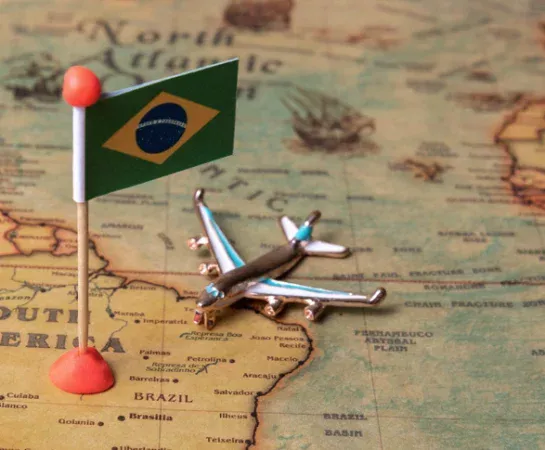
Why Brazil Has Four Time Zones Despite Its Massive Size
Brazil covers 8,514,877 square kilometers, the fifth largest country on Earth, and its territory stretches 4,319 kilometers from its Atlantic tip near João Pessoa to the Peruvian border, a span of roughly 39 degrees of longitude. Despite that scale, Brazil runs on only four time
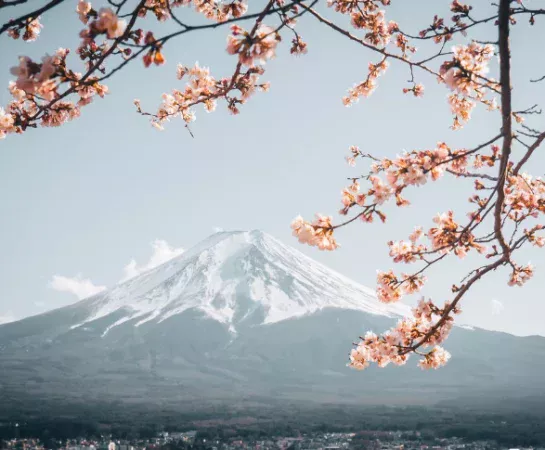
Why Japan Never Adopted Daylight Saving Time
The premise behind that headline needs a small correction before the story even starts. Japan did try daylight saving time, for four full years, complete with clocks moving forward and back on a fixed schedule. What Japan never did was choose it. The distinction between

Why Clocks Change at 2 AM on a Sunday
In the United States, the clock change is written into federal law to the hour. Daylight saving time begins "at 2 o'clock antemeridian" on the second Sunday of March and ends at the same hour on the first Sunday of November (15 U.S.C. 260a). In
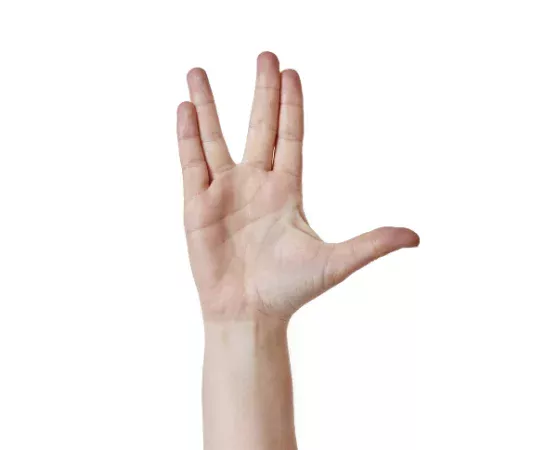
What Is Stardate and How Star Trek Invented Its Own Fictional Time System
A stardate is the fictional timekeeping system Star Trek's Starfleet uses instead of the Gregorian calendar, heard from the show's very first broadcast episode in September 1966, "Captain's log, star date 1513.1," and reworked at least three separate times since, in ways the franchise's own
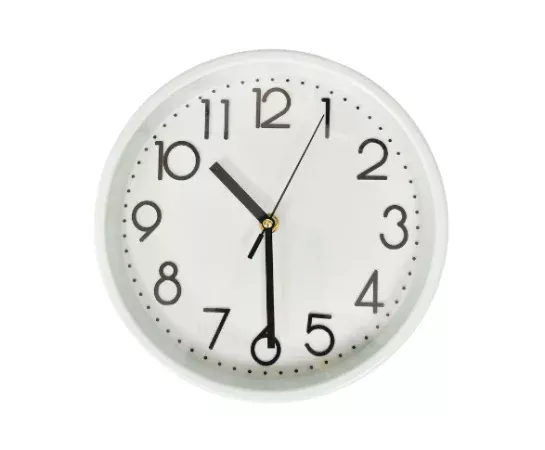
Why We Say “Quarter Past” and “Half Past” Instead of Just Saying the Minutes
By the year 1500, the clock at Wells Cathedral in England was already striking the quarter-hours for the whole town to hear. What it could not do was show a minute. There was no minute hand on any clock anywhere, because no clock mechanism was
Why Clocks Run Clockwise: The Sundial Origin of “Clockwise”
Nothing about the universe requires a clock's hands to sweep the way they do. There's no physical law dictating that "forward" in time should move to the right at the top of a dial. The direction is a historical accident, frozen into every watch, wall
Time Tools
Quick access to timers, stopwatch, world clock and time zone tools.
Time Guides
Read useful guides about time zones, calendars, finance and astronomy.


