Major Airports in Ivory Coast
- Félix-Houphouët-Boigny International Airport (ABJ) - 23:24:44
Daylight saving time in Ivory Coast
Ivory Coast has 1 listed IANA time zones. None of them observe daylight saving time in 2026. The UTC offset remains stable throughout the year.
Best Time to Call Ivory Coast
Business hours in Ivory Coast (9 AM–5 PM local time) fall at these local times elsewhere:
- Beijing: 5:00 PM – 1:00 AM (next day) ( Partial overlap)
- Paris: 11:00 AM – 7:00 PM ( Convenient)
- Toronto: 5:00 AM – 1:00 PM ( Outside normal hours)
- Seoul: 6:00 PM – 2:00 AM (next day) ( Partial overlap)
- Mexico City: 3:00 AM – 11:00 AM ( Outside normal hours)
- Cairo: 12:00 PM – 8:00 PM ( Partial overlap)
- Bangkok: 4:00 PM – 12:00 AM (next day) ( Partial overlap)
Times shown reflect current UTC offsets and may shift by up to an hour around daylight saving transitions.
Time Difference from Ivory Coast
Compare time in Ivory Coast with other countries.
Countries in the Same Time Zone as Ivory Coast
Most Popular Cities in Ivory Coast
Holidays in Ivory Coast
Official national public holidays. Regional and religious observances may vary by area.
About Time in Ivory Coast
When a Week Had Six Days Along the Lagoons
Historical calendars in Côte d'Ivoire were not simply local versions of the European seven-day week. Georges Niangoran-Bouah devoted an entire 1964 study to time reckoning among the lagoon peoples of the south. His research documented calendars built around six-day weeks, lunar cycles, ritual months and recurring ceremonial periods. The year could be interpreted through several systems at once: the succession of lunations, the alternation of rainy and dry seasons, and the observed positions of celestial bodies.
The calendar was inseparable from collective life. Ritual periods could recur after a week, after a sequence of lunations, or after much longer intervals extending over many years. Agricultural rites followed the yam cycle; fishing communities had their own temporal restrictions; ceremonies could mark age classes, purification, harvests or the consecration of a village. Time therefore provided a structure for social memory as well as a method of deciding when particular activities were permitted.
This system was especially important among lagoon societies organized through age classes. Government documentation on the Atchan, also known as Ebrié, records both the importance of age-class organization and the six-day calendar associated with it. The modern seven-day civil week eventually became universal for administration, schools and business, but it did not erase the historical evidence that communities around the Ébrié lagoon had organized recurring time according to a different numerical rhythm.
Seven Years Before the Tchélé Leaves the Sacred Grove
In the north, another temporal system survives in the Niarafolo form of the Senufo Poro initiation known as Tchologo. Research published by Lacina Yéo of Université Félix Houphouët-Boigny describes the Tchologo cycle around Ferkessédougou as lasting seven years. The first two stages together occupy six years. The decisive stage comes in the seventh year, when the initiates, known as Tchélés, enter the sacred grove for an intensive final period of instruction and ritual preparation.
That final retreat lasts about three months in the form documented around Ferkessédougou. The cycle is not simply a recurring festival date. It is a long educational sequence in which time marks progression from one social state to another. Knowledge, conduct, practical skills and obligations are accumulated over years rather than concentrated into a single initiation ceremony.
The research identifies seven villages around Ferkessédougou that participate in the institution, with generations passing through the cycle in succession. The persistence of this long rhythm is visible in recent events. In May 2022, the official emergence of the 23rd promotion of Tchélés was celebrated near Ferkessédougou after initiates came out of the sacred groves of Pissankaha, Oueliguekaha and Nabankaha. A seven-year cycle that originated outside the modern administrative calendar therefore continues to produce identifiable dates in contemporary public life.
The Baoulé Year Was Read in Yams, Rain, Insects and Coffee
Pierre Étienne's detailed field study Les Baoulé et le temps, published by ORSTOM in 1968, reveals a calendar far richer than a sequence of numbered months. Informants placed the beginning of the year around January, when late yams were harvested, while offerings of the first early yams occurred around the beginning of August. The words used for a month also referred to the Moon, but the traditional months were not simply twelve individually named compartments corresponding to the Gregorian calendar.
Étienne recorded 28 expressions used to identify periods of the year. Fourteen referred to meteorological phenomena and fourteen to agricultural activity. Rain alone supplied ten of the meteorological references. Instead of saying only that an event happened in March or September, a period could be identified through the kind of rain falling, the state of harvested rice fields, the harmattan, the arrival of the early-yam rains, or a particular stage of field preparation.
The agricultural cycle supplied an equally precise vocabulary. There were recognizable periods for clearing land, burning vegetation, constructing yam mounds and harvesting yams. Natural indicators could refine the timing further. Étienne recorded the appearance of particular insects as signals associated with the first clearing work and with the beginning of the early-yam harvest. These were practical seasonal markers embedded in an environment observed continuously from year to year.
The vocabulary of time also changed when the economy changed. Coffee cultivation, expanded under colonial rule and increasingly important for cash income, generated additional annual reference periods: clearing coffee fields around May and June, harvesting from roughly October to December, and selling the crop from the end of the year into January or February. A new commercial crop was therefore absorbed into the language used to locate events in the year. The calendar was not frozen tradition; it could acquire new temporal landmarks when economic life changed.
A Child Born After Sunset Could Already Belong to Tomorrow
The Baoulé week documented by Étienne had seven named days, and the day of birth could be encoded directly in a person's name. A boy born on Monday, kisie, could be called Kwasi, while a girl born on the same day could be called Akisi. Related day-name systems remain one of the most recognizable elements of Akan naming traditions in Côte d'Ivoire.
The boundary between one day and the next was more complicated than the naming system first suggests. Étienne recorded that the day was generally understood to begin with dawn. Yet a child born after sunset was named according to the following day. A ritual prohibition assigned to Friday could likewise begin on Thursday evening and cease after nightfall on Friday. The named day, the daylight cycle and the ritual day therefore did not always share exactly the same boundary.
Days could also determine whether agricultural work was allowed. The 1960s fieldwork recorded regional variations in days described as unsuitable for working the soil because of obligations to ancestors, the earth or particular cults. Around Béoumi, one group observed Wednesday as the weekly non-working ritual day. Around Bouaké, other communities observed Monday together with Wednesday or Friday. In the Dimbokro area, Étienne encountered a more elaborate four-week sequence in which the prohibited days changed from one week to another.
Even the vocabulary for the week records historical change. One Baoulé term, gwa, primarily meant a public place, market or price. Étienne linked its extension to the meaning "week" with the weekly periodicity of markets established under colonial administration. A new economic schedule had entered the language itself, leaving evidence of how an administrative calendar became part of everyday temporal vocabulary.
The Rainy Season Moved, and Farmers Had to Move the Calendar With It
Traditional agricultural calendars worked because generations accumulated knowledge about when rain, planting and harvesting were likely to occur. Modern rainfall records show what happens when those relationships shift. A study of the forest-savanna transition zone in central Côte d'Ivoire analyzed agro-meteorological records from 1937 to 2009 and field information from 450 farmers in nine villages.
At Dimbokro, the researchers found that the beginning of the main rainy season had shifted later by about one month. The shorter rainy season had contracted by two ten-day periods, approximately twenty days. The result was not merely a statistical change in annual rainfall. It altered the amount of usable time available between the beginning of reliable moisture and the later stages of the growing season.
The study consequently proposed changing parts of the working calendar. For tubers and cereals in the region, May was recommended for establishment instead of April, which had become increasingly deficient in its water balance. The researchers also identified August and September as periods for clearing around perennial crops. Here a calendar adjustment was an agricultural response to measured changes in rainfall timing.
More recent research using rainfall and temperature series from 1960 to 2023 in the southern V-Baoulé reached a related conclusion. It found a downward rainfall tendency, rising temperatures and a contraction of the cropping season, with two distinct wet periods becoming visible within the usable season after the identified rainfall break. The comparison is revealing: earlier ethnographic work recorded a year described through rain and agricultural events, while instrumental records now show that the timing of those events themselves is changing.
On 20 May 1947, Totality Crossed Abidjan
The total solar eclipse of 20 May 1947 cut directly across what was then French Côte d'Ivoire. NASA calculations classify it as a Saros 127 eclipse with a global maximum total phase of about 5 minutes 13 seconds. The path arrived in West Africa after crossing the Atlantic and continued eastward across the continent.
Modern calculations of local circumstances show how dramatically the duration varied across the country. Abidjan was inside the path of totality for about 2 minutes 59 seconds. Divo experienced roughly 4 minutes 43 seconds, while the area around Soubré was close to 4 minutes 45 seconds. The difference of almost two minutes within one country came from each location's distance from the eclipse center line.
Almost eighty years later, Abidjan is scheduled to experience a different central solar eclipse. On 6 February 2027, the city lies inside the annular path. Current calculations place maximum eclipse at about 17:52 local time, with approximately 1 minute 28 seconds of annularity. The Moon will be too small in apparent diameter to cover the solar disk completely, so the central phase will produce an annulus rather than the total darkness seen in 1947.
The pair of events is unusually useful for understanding eclipse time. Totality and annularity are not properties of an eclipse date alone. They depend on the observer's exact position inside a rapidly moving shadow path. A difference of tens or hundreds of kilometers changes the beginning and end of the central phase, its duration and, in some cases, whether an observer sees a central eclipse at all.
Dimbokro Measures Arrival Times for a Planetary Monitoring Network
One of the most precise uses of time in modern Côte d'Ivoire takes place far from ordinary clocks. The country hosts two certified facilities of the Comprehensive Nuclear-Test-Ban Treaty Organization's International Monitoring System at Dimbokro: primary seismic station PS15 and infrasound station IS17. Côte d'Ivoire ratified the Comprehensive Nuclear-Test-Ban Treaty on 11 March 2003, and the monitoring facilities form part of the global verification network created to detect evidence of nuclear explosions.
The measurements are useful because seismic chronology contains spatial information. Primary and secondary seismic waves travel at different speeds. CTBTO explains that the difference between their arrival times increases with distance from the source. Measurements from multiple stations can therefore be combined to estimate where an event occurred. The time at which a signal reaches a sensor is not merely metadata attached to the observation; it is one of the quantities used to reconstruct the event itself.
Data from the Ivorian stations are transmitted to the International Data Centre in Vienna and analyzed together with observations from the worldwide network. The same infrastructure also records natural and industrial events. During a 2018 portable infrasound deployment in Comoé National Park, researchers from the Ivorian National Data Centre and CTBTO detected regional sources associated with mining activity, hydroelectric installations and large convective weather systems.
The national scientific base behind much of this work is the Geophysical Station of Lamto. Côte d'Ivoire's Ministry of Higher Education and Scientific Research dates its establishment to 1962 and describes it as the country's reference geophysical observatory. It maintains continuous seismic observations together with long-term meteorological and climatological records. The result is a very different form of calendar from the agricultural and ritual systems documented elsewhere in the country: a continuous scientific chronology in which events are compared through precisely recorded sequences of signals.
Frequently Asked Questions
How many time zones does Ivory Coast have?
One. The whole of Ivory Coast follows Africa/Abidjan, so every city shows the same local time as the capital, Yamoussoukro.
Is Ivory Coast ahead of or behind GMT?
Neither. Ivory Coast currently keeps the same time as GMT (UTC+0).
Does Ivory Coast use summer time?
No. Ivory Coast does not observe daylight saving time, so its clocks stay at UTC+0 all year. Its time difference with countries that do change their clocks still shifts by an hour in spring and autumn.
How many public holidays does Ivory Coast have in 2026?
Ivory Coast has 14 national public holidays in 2026, when banks and government offices are usually closed. Some regions may also have their own local holidays.
How do I dial a phone number in Ivory Coast from abroad?
From a mobile phone, type +225 and then the local number without the leading 0 used for domestic calls, if it has one. From a landline, replace the plus sign with your exit code: 011 from the US and Canada, or 00 from most of Europe, for example 00 225 followed by the number.
What language is spoken in Ivory Coast?
The main language of Ivory Coast is French.
Beyond the Clock

Why the Earliest Sunset Comes Before the Winter Solstice
In New York, the Sun sets earliest on Monday, December 7, 2026, at about 4:28 PM. The shortest day comes two weeks later. The solstice falls at 20:50 UTC on December 21 (3:50 PM EST), and on that day New York gets roughly 9 hours

When Does Winter Start: Meteorological vs Astronomical Seasons
Winter 2026 starts twice in the Northern Hemisphere. Meteorological winter begins on Tuesday, December 1, 2026. Astronomical winter begins at the December solstice, on Monday, December 21, 2026 at 20:50 UTC, which is 3:50 p.m. Eastern and 12:50 p.m. Pacific. Both answers are correct. They
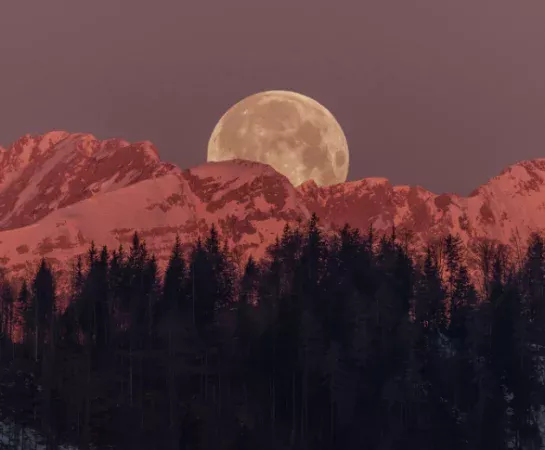
What Is a Supermoon and When Is the Next One
Every time a supermoon rises, the same statistic gets repeated: 14% bigger, 30% brighter. It's in almost every news segment and nearly every listicle, and it's also a comparison almost nobody in the audience will ever actually witness, because it measures the single closest possible
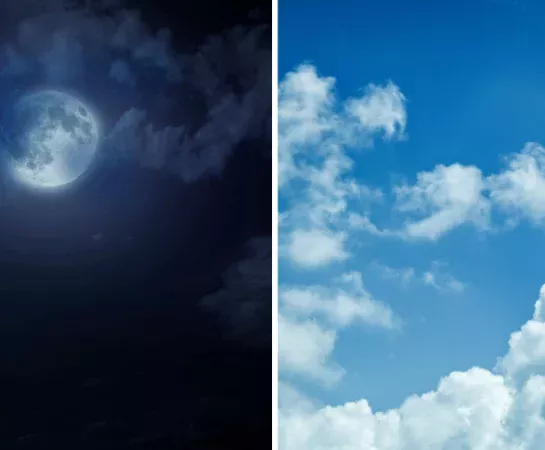
Why the Sky Is Blue During the Day and Black at Night
Sunlight is white. Air is, as far as anyone can tell by looking through a window, colorless. And yet every clear afternoon the same 400,000-kilometer column of gas above your head reads as a specific, saturated blue, then goes black within an hour of sunset.

Stock Market Early Close Days: When Trading Ends at 1 PM
Twice in the last stretch of 2026, the NYSE and Nasdaq will stop trading three hours ahead of schedule. The bell rings at 1:00 PM Eastern instead of 4:00 PM, and a session that normally runs 6.5 hours gets squeezed into 3.5. Anyone with a
Dividend Ex-Date Timing: Why the Date Matters More Than the Payment Date
The ex-dividend date, not the payment date, decides whether you actually receive a company's next dividend. Buy a stock on or after its ex-date and the payment goes to the person who sold it to you, no matter how soon the cash is scheduled to
Circuit Breakers: How Long Does the Market Pause When It Crashes
On April 7, 2025, the S&P 500 swung 8.5% in a single session, one of the widest intraday ranges since March 2020. It closed down just 0.2%. No circuit breaker fired. Five years earlier, in March 2020, the same index tripped the exact same 7%

IPO First Trading Day: What Time Does a New Stock Start Trading
Every IPO photo looks the same: executives on a balcony, a giant chrome button, the 9:30 AM bell. What that photo doesn't show is that the stock almost never starts trading at 9:30. Facebook was supposed to open at 11:00 in 2012 and didn't trade
Time Tools
Quick access to timers, stopwatch, world clock and time zone tools.
Time Guides
Read useful guides about time zones, calendars, finance and astronomy.


