Major Airports in Bolivia
- Alcantarí International Airport (SRE) - 19:29:48
- El Alto International Airport (LPB) - 19:29:48
- Jorge Wilsterman International Airport (CBB) - 19:29:48
- Joya Andina International Airport (UYU) - 19:29:48
- Juan Mendoza International Airport (ORU) - 19:29:48
- Viru Viru International Airport (VVI) - 19:29:48
Daylight saving time in Bolivia
Bolivia has 1 listed IANA time zones. None of them observe daylight saving time in 2026. The UTC offset remains stable throughout the year.
Best Time to Call Bolivia
Business hours in Bolivia (9 AM–5 PM local time) fall at these local times elsewhere:
- Beijing: 9:00 PM – 5:00 AM (next day) ( Partial overlap)
- Paris: 3:00 PM – 11:00 PM ( Partial overlap)
- Toronto: 9:00 AM – 5:00 PM ( Convenient)
- Seoul: 10:00 PM – 6:00 AM (next day) ( Outside normal hours)
- Mexico City: 7:00 AM – 3:00 PM ( Partial overlap)
- Cairo: 4:00 PM – 12:00 AM (next day) ( Partial overlap)
- Bangkok: 8:00 PM – 4:00 AM (next day) ( Partial overlap)
Times shown reflect current UTC offsets and may shift by up to an hour around daylight saving transitions.
Time Difference from Bolivia
Compare time in Bolivia with other countries.
Countries in the Same Time Zone as Bolivia
Most Popular Cities in Bolivia
Holidays in Bolivia
Official national public holidays. Regional and religious observances may vary by area.
About Time in Bolivia
The Summer-Time Experiment That Ended with a 27-Minute Reset
Bolivia's most unusual clock change did not involve a neat one-hour return to standard time. The current IANA time-zone record models La Paz at 4 hours, 32 minutes and 36 seconds behind Greenwich before 1931. From 1890 the same numerical offset appears under the label CMT, identified in the database as Calamarca Mean Time. The change of name did not move the clock; both entries retained exactly the same offset.
At midnight on 15 October 1931, the record adds one hour of summer time. Civil clocks therefore jumped from an offset of -4:32:36 to -3:32:36. Had the experiment ended conventionally, the reverse transition would simply have restored the old -4:32:36 standard.
That is not what the historical model records. At midnight on 21 March 1932, clocks moved backward by only 27 minutes and 24 seconds, landing on an even four hours behind Greenwich. The lost portion of the old difference, 32 minutes and 36 seconds, never returned. Bolivia had used a seasonal advance and, when it ended, emerged with a new permanent standard of UTC-4.
That peculiar transition is reproduced independently in historical clock-change tables for La Paz. It also explains why describing 1931 to 1932 simply as an early daylight-saving experiment misses half of the story. The interval linked an older longitude-based standard to the hour-aligned zone still used today.
The precision of the numbers should not be mistaken for perfect historical certainty. IANA describes its database as a practical reconstruction rather than an authoritative legal archive, and its South America source file acknowledges weaknesses in some of the historical material used for dates before 1990. The sequence is therefore valuable for converting old timestamps, but the Calamarca label and exact early rules should be treated as database history unless supported by surviving Bolivian legislation or contemporary records.
Noon Can Arrive at 12:49 and Still Be Solar Noon
A clock reading 12:00 is not a promise that the Sun is crossing the local meridian. The difference is particularly visible in Bolivia because all departmental capitals use the same UTC-4 clock while lying at different longitudes. In a 2024 bulletin, the National Astronomical Observatory in Tarija calculated an early-year zenith passage at 12:26 for Tarija, 12:25 for Santa Cruz, 12:46 for La Paz and 12:49 for Cobija. At the stated moment, a vertical object under ideal conditions casts almost no lateral shadow because the Sun is close to the zenith.
Such passages occur only within the tropics, when solar declination matches the observer's latitude. The clock time depends on more than latitude: longitude shifts local mean solar noon relative to the UTC-4 meridian, while the equation of time adds a smaller seasonal difference between mean and apparent solar time. The result is a useful reminder that one national clock can show quite different readings when the Sun reaches its highest point in different cities. The observatory's table is therefore not merely a list of curious dates. It is a direct comparison between astronomical time and the uniform civil time imposed across a geographically wide country.
Tarija Counted 200,000 Faint Stars from a Bolivian-Soviet Observatory
The astronomical station near Tarija grew from Bolivian-Soviet scientific cooperation rather than from a public planetarium project. A peer-reviewed account published in 1991 states that the Bolivia-USSR observatory began operating near Tarija in 1982. The Universidad Autónoma Juan Misael Saracho gives 14 April 1984 as the date of its formal inauguration at Santa Ana, about 15 kilometers from the city.
Its early observing program was heavily astrometric. The 1991 report records photographic observations of about 200,000 faint stars, 2,822 bright stars and Halley's Comet with the expedition astrograph. Astrometry turns time into positional information: an observation is useful only when the instant of exposure can be associated accurately with Earth's rotation and the celestial coordinate system. The observatory was therefore part of a tradition in which precise clocks and star catalogs belonged to the same measurement problem.
The institution later developed a strong public-education role and continues to publish detailed astronomical ephemerides. Its bulletins give timed solar and lunar phenomena, rise and set information and celestial coordinates for observers in Bolivia. University material also reports an atomic clock at the Tarija facility. That should not be confused with responsibility for the nationwide official-time service, which now belongs to the Instituto Boliviano de Metrología. The distinction is useful: an observatory may require and maintain precise time for astronomy without being the institution legally charged with disseminating the national reference.
Bolivia's Atomic Clock Entered the International UTC Calculation in 2023
Bolivia built its present national time infrastructure in stages. IBMETRO began developing official time dissemination in 2012 using a rubidium atomic standard and a GPS common-view system supplied by the U.S. National Institute of Standards and Technology. In 2013 it joined the time and frequency network of the Inter-American Metrology System and added an NTP server so computers and other networked systems could synchronize to the laboratory reference. A cesium 5071A primary standard was installed in 2018 with support from Korean cooperation and NIST.
Law No. 1256, promulgated in October 2019, authorized the Ministry of Productive Development and Plural Economy, through IBMETRO, to issue the official time of the state. IBMETRO publicly launched the service on 31 May 2021 for administrative systems, telecommunications, financial operations, digital signatures and other applications. The time signal is distributed electronically rather than through a traditional observatory bell, radio pulse or public clock.
A further change came in May 2023. IBMETRO began contributing clock data to the international calculation of Coordinated Universal Time, and the BIPM key-comparison results for that month list the Bolivian laboratory among the participating institutes. The scale maintained by the laboratory and the country's UTC-4 civil offset are different concepts. The laboratory compares a physical realization of time with UTC at the level of tiny fractions of a second; UTC-4 is the four-hour subtraction used to turn that international reference into local civil time. In less than a century, the national chronology recorded in time-zone files moved from Calamarca Mean Time measured in minutes and seconds of longitude to an atomic standard compared internationally in nanoseconds.
Frequently Asked Questions
How many time zones does Bolivia have?
One. The whole of Bolivia follows America/La_Paz, so every city shows the same local time as the capital, Sucre.
Is Bolivia ahead of or behind GMT?
Bolivia is currently 4 hours behind GMT (UTC-4).
Does Bolivia use summer time?
No. Bolivia does not observe daylight saving time, so its clocks stay at UTC-4 all year. Its time difference with countries that do change their clocks still shifts by an hour in spring and autumn.
How many public holidays does Bolivia have in 2026?
Bolivia has 13 national public holidays in 2026, when banks and government offices are usually closed. Some regions may also have their own local holidays.
How do I dial a phone number in Bolivia from abroad?
From a mobile phone, type +591 and then the local number without the leading 0 used for domestic calls, if it has one. From a landline, replace the plus sign with your exit code: 011 from the US and Canada, or 00 from most of Europe, for example 00 591 followed by the number.
What language is spoken in Bolivia?
The main languages of Bolivia are Spanish, Quechua and Aymara.
Beyond the Clock

The Hour That Happens Twice: What Actually Occurs at 1:30 AM When Clocks Fall Back
At 1:59:59 a.m. on Sunday, November 1, 2026, clocks in New York will not tick over to 2:00. They will jump back to 1:00:00 a.m., and the next 60 minutes will replay. Every time from 1:00 to 1:59 happens twice that night, once on Eastern

Why the International Space Station Runs on UTC Instead of Local Time
Astronauts aboard the International Space Station see the sun rise and set 16 times in a 24-hour period, once every 90 to 93 minutes, as the station circles Earth at roughly 28,000 kilometers per hour. No conventional time zone survives contact with that kind of

Standard Time vs Daylight Time: What’s the Actual Difference
Most people assume "Standard Time" is the normal, default setting and "Daylight Time" is some separate seasonal overlay that temporarily replaces it. That mental model is backwards in a way that federal law makes explicit, and once you see the actual legal language, the whole

How Accurate Are Atomic Clocks: How Much Do They Actually Drift
In 2015, physicists at JILA in Colorado built a strontium clock so stable that, if it had started running 15 billion years ago, before the universe itself existed, it would still be within one second of correct today. That number sounds like marketing. It isn't.

Which US States Are Split Between Two Time Zones (and Where the Line Runs)
"What time zone is Texas in?" has two correct answers. Houston, Dallas and Austin are on Central Time, while El Paso is on Mountain Time, an hour behind the rest of the state. Florida, Kentucky, Tennessee, Michigan and nine other states work the same way:

India vs US Time Difference: Why the Gap Changes Twice a Year
For most of the year, India is 9 hours 30 minutes ahead of New York. From November 1, 2026 to March 14, 2027, it is 10 hours 30 minutes ahead. India's clocks do not change in either case. The whole difference comes from the United
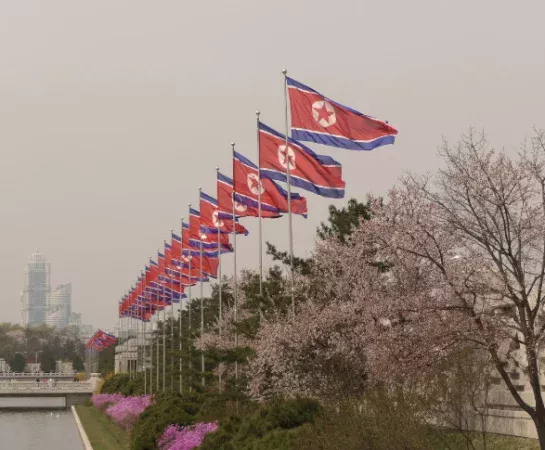
Why North Korea Changed Its Time Zone Twice in One Decade
North Korea turned its clocks back 30 minutes on August 15, 2015, breaking from South Korea and Japan to create its own "Pyongyang Time," then reversed the entire move less than three years later, on May 5, 2018, realigning with Seoul again. Both changes were

Why India’s Time Zone Is Exactly 5:30 Off UTC
India runs on a single clock from the Arabian Sea to the Myanmar border, a stretch of roughly 3,000 kilometers, and that clock sits at a UTC offset almost nobody outside the region can round off in their head. UTC+5:30 isn't a rough approximation or
Time Tools
Quick access to timers, stopwatch, world clock and time zone tools.
Time Guides
Read useful guides about time zones, calendars, finance and astronomy.


