Major Airports in Burkina Faso
- Bobo Dioulasso Airport (BOY) - 22:51:10
- Ouagadougou Thomas Sankara International Airport (OUA) - 22:51:10
Daylight saving time in Burkina Faso
Burkina Faso has 1 listed IANA time zones. None of them observe daylight saving time in 2026. The UTC offset remains stable throughout the year.
Best Time to Call Burkina Faso
Business hours in Burkina Faso (9 AM–5 PM local time) fall at these local times elsewhere:
- Beijing: 5:00 PM – 1:00 AM (next day) ( Partial overlap)
- Paris: 11:00 AM – 7:00 PM ( Convenient)
- Toronto: 5:00 AM – 1:00 PM ( Outside normal hours)
- Seoul: 6:00 PM – 2:00 AM (next day) ( Partial overlap)
- Mexico City: 3:00 AM – 11:00 AM ( Outside normal hours)
- Cairo: 12:00 PM – 8:00 PM ( Partial overlap)
- Bangkok: 4:00 PM – 12:00 AM (next day) ( Partial overlap)
Times shown reflect current UTC offsets and may shift by up to an hour around daylight saving transitions.
Time Difference from Burkina Faso
Compare time in Burkina Faso with other countries.
Countries in the Same Time Zone as Burkina Faso
Most Popular Cities in Burkina Faso
Holidays in Burkina Faso
Official national public holidays. Regional and religious observances may vary by area.
About Time in Burkina Faso
Six Minutes and Four Seconds Disappeared in 1912
Ouagadougou sits almost exactly one and a half degrees west of Greenwich. Before standardized time reached the territory, that longitude could be expressed directly as a clock difference. The historical IANA reconstruction assigns the city local mean time 6 minutes and 4 seconds behind Greenwich, an offset equivalent to a meridian at 1 degree 31 minutes west. Modern geographical data from Burkina Faso's national statistics institute place Ouagadougou at the same longitude.
At the beginning of 1912, the model changes abruptly from -00:06:04 to Greenwich Mean Time. The reform therefore advanced the local clock by 6 minutes and 4 seconds. This was part of a wider standardization of time in French possessions documented in a 1913 collection published by the Société Française de Physique. Instead of allowing each locality to inherit a clock from its own longitude, the administration adopted a common Greenwich reference.
The remarkable part of Burkina Faso's subsequent zone history is how little happened to the clock. The country still uses GMT, equivalent to UTC+0, throughout the year and has not developed a recurring daylight-saving regime. The 1912 correction effectively replaced solar-longitude time with a standard that has survived colonial rule, independence and the change from the name Upper Volta to Burkina Faso without another permanent shift of the national offset.
In Yatenga, Five Months Were Also Five Places
The calendar documented in the Mossi kingdom of Yatenga is much more intricate than a sequence of numbered months. Anthropologist Michel Izard described a system that brings a solar year together with twelve lunar months. The solar year begins around the December solstice, while the lunar year falls behind by about eleven days. Instead of allowing that difference to accumulate indefinitely, the system periodically reconciles the two cycles by doubling a lunation, approximately every three years, around the beginning of the rainy season.
The calendar is also geographical. Five lunar months following the first month carry the names of five localities associated with high-ranking custodians of the land. Those places are not merely labels borrowed for a calendar. They form part of the route followed by the bega ceremonial cycle, which moves through sectors of the kingdom and connects royal authority, land and fertility rites.
Month after month, ceremonial time therefore progresses through physical space. Izard describes the five named localities as forming a closed perimeter, with the sequence of ceremonies moving around that perimeter in a prescribed direction. Funerary ritual reverses the direction. The calendar can consequently be read simultaneously as a chronology, a map and a ritual ordering of the kingdom.
This is why translating the system into Gregorian month names would lose much of its meaning. The lunar count, the agricultural year, the onset of rains and the arrangement of places all participate in the same structure. Time is not represented as an abstract grid independent of the landscape. The landscape itself helps give the year its order.
A Bobo Timekeeper Could Count the Month with Twenty-Nine Stones
Research carried out by Alain Sanou among Bobo communities around Bobo-Dioulasso records an unusually tangible method for keeping track of time. Priests and blacksmiths responsible for fixing ritual dates kept a small patch of fine sand near where they slept. A bag contained twenty-nine stones. Each morning, one stone was removed and placed on the sand. The passage of days could literally be seen accumulating on the ground.
The same study describes the year not as an arbitrary total of numbered days but as the interval between two millet harvests. Around December, a ceremony authorizes the harvesting and consumption of millet and marks the opening of the new annual cycle. Linguistically, Sanou found an expression meaning that the year has turned rather than simply ended. The emphasis is recurrence: one agricultural cycle folds into the next.
The internal divisions of the year do not behave like twelve identical calendar boxes. Seasonal periods are associated with rain, clear skies, cold and heat, while other annual phases begin with events such as the appearance of néré pods, bean leaves or the millet harvest. An ecological event can therefore act as a temporal boundary in the same way that the first day of a month does in the Gregorian calendar.
The night sky supplies another layer of timing. The position of the Pleiades at dusk was used as a seasonal indicator. Their position toward the east, high in the sky or descending westward corresponded to different parts of the annual cycle. When the Pleiades became difficult to see, stars identified with Orion could serve as an alternative reference because of their proximity in the sky.
Birds, insects and vegetation added further signals. The movement of a small hornbill was associated with seasonal change; flowering of a particular néré tree could indicate the approach of the rains; nocturnal cricket calls were also read as a sign of the rainy season. This was not a calendar divorced from observation. It was a system in which astronomical, climatic and biological events continually checked the position of the community within the year.
Farmers Still Read More Than a Rain Gauge
That observational logic has not vanished with printed calendars and meteorological forecasts. A recent study in north-central Burkina Faso interviewed 204 farmers across ten localities about indigenous methods of anticipating the rainy season. The indicators they reported were diverse: temperature, winds, clouds and rainfall patterns, but also plant development, migrating birds, insects, the Sun, Moon and stars.
The practical purpose is timing. In a region where rain-fed agriculture is highly exposed to variability in the onset and distribution of rainfall, deciding when to prepare fields or sow can matter as much as the total rainfall eventually received. Farmers therefore combine signals operating on different timescales, from immediate cloud and wind conditions to biological changes interpreted as seasonal indicators.
The researchers did not present these signs as infallible forecasts. Their study was partly concerned with how farmers themselves judge reliability, and it documented a knowledge system operating alongside formal meteorological information. That distinction is important. The value of the evidence lies not in claiming that every traditional indicator predicts rainfall perfectly, but in showing how seasonal time is actively interpreted when a fixed calendar date is not enough to tell a farmer whether the rains have truly begun.
The Annular Eclipse Crossed the Country but Not the Capital
On 31 July 1962, when the country was still named Upper Volta, the antumbral shadow of the Moon crossed West Africa. NASA's eclipse calculations place the territory inside the path of annularity. The event continued eastward through Togo, Benin, Nigeria, Cameroon and across the continent, with a global maximum annular phase of about three and a half minutes.
The path through the country was narrow enough to create very different experiences within the same national borders. Reconstructions of the local circumstances place places such as Dano, Diébougou, Houndé and Bobo-Dioulasso inside the annular corridor, while Ouagadougou lay outside it and saw a deep partial eclipse. An observer in one part of the country could therefore see the complete bright ring of the solar photosphere surrounding the Moon while someone in the capital, using the same GMT civil clock, never entered the antumbral shadow.
The contrast is a useful lesson in astronomical timekeeping. The date and global event are the same, but eclipse circumstances depend on longitude, latitude and the rapidly moving geometry of the Moon's shadow. National borders and national time zones are irrelevant to that geometry. A few hundred kilometres of position can change an annular eclipse into a partial one even when every observer's clock follows the same Greenwich standard.
A Royal Genealogy Was Sounded Every Morning
Historical chronology in the Mossi court of Ouagadougou was preserved through sound as well as through remembered names. Yamba Tiendrebeogo's study of Mossi royal history records that the genealogy of the Mogho Naaba was proclaimed by drums each morning when the ruler made his first appearance. Court specialists and griots maintained knowledge of the succession, allowing researchers to reconstruct a sequence of rulers backward from the documented period.
The evidentiary precision changes with time. Tiendrebeogo considered reign lengths reliably known from 1897 onward, the year of the French arrival, while earlier reign durations came from court tradition and were understood as approximate. That difference is exactly what responsible chronology requires: a remembered sequence can preserve historical structure without every early year deserving the certainty of an archival date.
The practice also provides a striking counterpoint to the 1912 clock reform. One system synchronized hours to Greenwich; another organized historical time through a daily performance of dynastic memory. Both answered the question of where a community stood in time, but at radically different scales: one in minutes and seconds, the other across generations.
Frequently Asked Questions
How many time zones does Burkina Faso have?
One. The whole of Burkina Faso follows Africa/Ouagadougou, so every city shows the same local time as the capital, Ouagadougou.
Is Burkina Faso ahead of or behind GMT?
Neither. Burkina Faso currently keeps the same time as GMT (UTC+0).
Does Burkina Faso use summer time?
No. Burkina Faso does not observe daylight saving time, so its clocks stay at UTC+0 all year. Its time difference with countries that do change their clocks still shifts by an hour in spring and autumn.
How many public holidays does Burkina Faso have in 2026?
Burkina Faso has 17 national public holidays in 2026, when banks and government offices are usually closed. Some regions may also have their own local holidays.
How do I dial a phone number in Burkina Faso from abroad?
From a mobile phone, type +226 and then the local number without the leading 0 used for domestic calls, if it has one. From a landline, replace the plus sign with your exit code: 011 from the US and Canada, or 00 from most of Europe, for example 00 226 followed by the number.
What language is spoken in Burkina Faso?
The main languages of Burkina Faso are French and Mossi.
Beyond the Clock

Why the Earliest Sunset Comes Before the Winter Solstice
In New York, the Sun sets earliest on Monday, December 7, 2026, at about 4:28 PM. The shortest day comes two weeks later. The solstice falls at 20:50 UTC on December 21 (3:50 PM EST), and on that day New York gets roughly 9 hours

Total Solar Eclipse on August 2, 2027: Where, When, and Why It Lasts So Long
On Monday, August 2, 2027, the Moon's shadow will cross southern Spain, North Africa and the Arabian Peninsula, producing the second-longest total solar eclipse of the 21st century. At its maximum, in southern Egypt near Luxor, the Sun will be completely covered for about 6
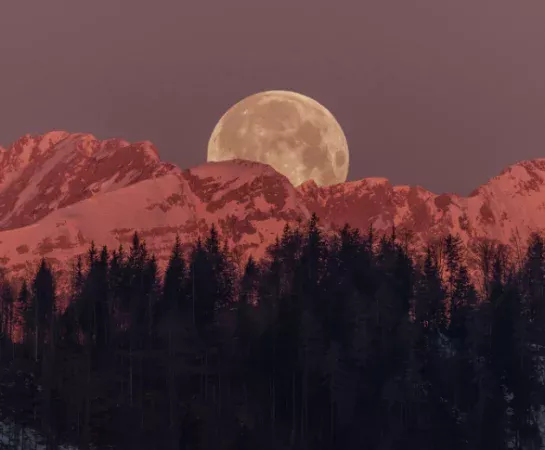
What Is a Supermoon and When Is the Next One
Every time a supermoon rises, the same statistic gets repeated: 14% bigger, 30% brighter. It's in almost every news segment and nearly every listicle, and it's also a comparison almost nobody in the audience will ever actually witness, because it measures the single closest possible
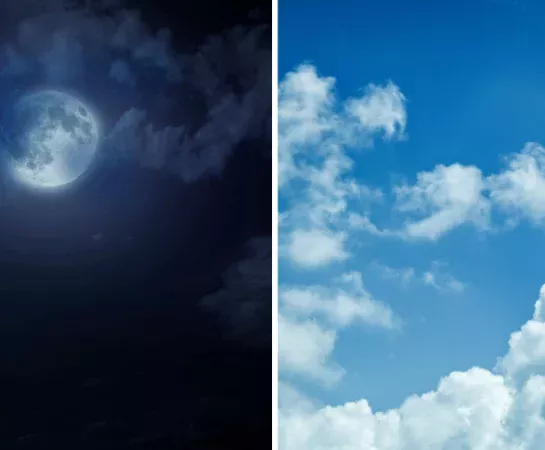
Why the Sky Is Blue During the Day and Black at Night
Sunlight is white. Air is, as far as anyone can tell by looking through a window, colorless. And yet every clear afternoon the same 400,000-kilometer column of gas above your head reads as a specific, saturated blue, then goes black within an hour of sunset.

Why Clocks Change at 2 AM on a Sunday
In the United States, the clock change is written into federal law to the hour. Daylight saving time begins "at 2 o'clock antemeridian" on the second Sunday of March and ends at the same hour on the first Sunday of November (15 U.S.C. 260a). In
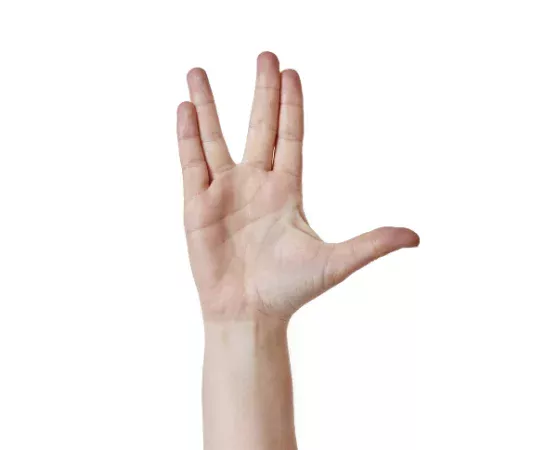
What Is Stardate and How Star Trek Invented Its Own Fictional Time System
A stardate is the fictional timekeeping system Star Trek's Starfleet uses instead of the Gregorian calendar, heard from the show's very first broadcast episode in September 1966, "Captain's log, star date 1513.1," and reworked at least three separate times since, in ways the franchise's own
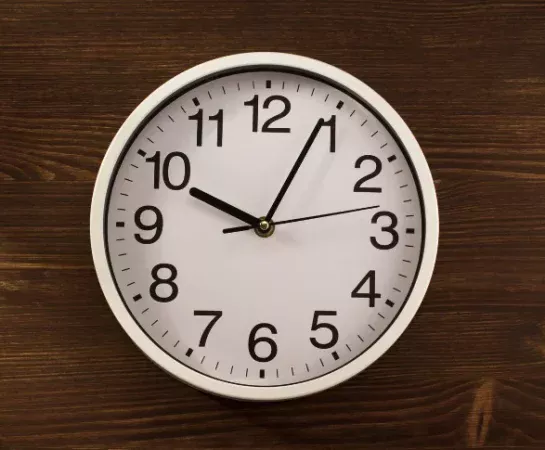
Why Clocks Run Clockwise: The Sundial Origin of “Clockwise”
Nothing about the universe requires a clock's hands to sweep the way they do. There's no physical law dictating that "forward" in time should move to the right at the top of a dial. The direction is a historical accident, frozen into every watch, wall

What Is Swatch Internet Time and Why It Failed
On October 23, 1998, at a ceremony called the Junior Summit '98, a Swiss watch executive and the then-director of the MIT Media Lab stood together and announced that time zones were unnecessary. The proposal was called Swatch Internet Time. It replaced hours, minutes, and
Time Tools
Quick access to timers, stopwatch, world clock and time zone tools.
Time Guides
Read useful guides about time zones, calendars, finance and astronomy.


