Major Airports in Guinea
- Ahmed Sékou Touré International Airport (CKY) - 23:06:42
Daylight saving time in Guinea
Guinea has 1 listed IANA time zones. None of them observe daylight saving time in 2026. The UTC offset remains stable throughout the year.
Best Time to Call Guinea
Business hours in Guinea (9 AM–5 PM local time) fall at these local times elsewhere:
- Beijing: 5:00 PM – 1:00 AM (next day) ( Partial overlap)
- Paris: 11:00 AM – 7:00 PM ( Convenient)
- Toronto: 5:00 AM – 1:00 PM ( Outside normal hours)
- Seoul: 6:00 PM – 2:00 AM (next day) ( Partial overlap)
- Mexico City: 3:00 AM – 11:00 AM ( Outside normal hours)
- Cairo: 12:00 PM – 8:00 PM ( Partial overlap)
- Bangkok: 4:00 PM – 12:00 AM (next day) ( Partial overlap)
Times shown reflect current UTC offsets and may shift by up to an hour around daylight saving transitions.
Time Difference from Guinea
Compare time in Guinea with other countries.
Countries in the Same Time Zone as Guinea
Most Popular Cities in Guinea
Holidays in Guinea
Official national public holidays. Regional and religious observances may vary by area.
About Time in Guinea
At 04:11, a Rare Intraplate Earthquake Broke the Silence of Northwestern Guinea
At 04:11 UTC on 22 December 1983, a powerful earthquake struck northwestern Guinea. Its importance goes beyond the destruction it caused. The epicentral area lay inside a part of West Africa where historical seismicity had been extremely low, far from the plate boundaries that generate most of the world's large earthquakes.
Later seismological work described the event as an unusual intraplate earthquake associated with a pre-existing fault system near the margin of the West African Craton. Published magnitude estimates cluster around 6.3 to 6.4, depending on the scale and analysis used. Rather than force those values into a single supposedly exact number, the more important point is that this was a substantial earthquake in a region where an event of that size had not been expected.
The main shock lasted only a tiny fraction of the historical period over which the region had appeared quiet, yet it changed scientific understanding of the area. Ground deformation and surface breaks were documented, and later field studies found that the geometry of the surface faulting corresponded with the distribution of aftershock hypocenters and the reconstructed focal mechanism.
The chronology continued after the main shock. Geological and seismological teams investigated the affected area and used aftershocks to reconstruct the fault structure below the surface. What residents experienced as a sudden event at 04:11 became, for researchers, a sequence of precisely timed seismic signals extending through the following days and weeks.
The earthquake is a useful reminder that geological time and human time operate on radically different scales. A fault system may remain quiet throughout all available written memory, then release accumulated stress within seconds. In Guinea, one predawn event was enough to force a reassessment of a supposedly low-seismicity part of West Africa.
Four Days Separated a Referendum from an Independent Republic
Guinea's independence came through an unusually compressed political chronology. On 28 September 1958, voters in French Guinea participated in the referendum on the proposed constitution of the French Fifth Republic and the new French Community. Unlike the other participating French African territories, Guinea rejected the proposal by an overwhelming majority.
The surviving proclamation reproduced in United Nations records gives the official result as 1,136,324 votes against the proposal and 56,891 in favor. The document also recalled Charles de Gaulle's declaration in Conakry that a negative vote would mean that Guinea could choose independence and that France would not prevent it.
Only four days after the referendum, on 2 October, the Territorial Assembly met in extraordinary session. It declared that the referendum result placed the territory outside the French Republic, proclaimed national independence, transformed itself into a sovereign National Constituent Assembly and gave the new state the name Republic of Guinea.
The speed of the transition is what makes the episode remarkable from a temporal perspective. The referendum was not followed by a long scheduled transition extending over months or years. A popular vote on Sunday, 28 September, was followed by the formal establishment of the independent republic on Thursday, 2 October.
Those four days became the hinge between two political systems. Before the vote, the territory was still French Guinea. By the end of the extraordinary assembly session, the legal language of the proclamation described a sovereign republic. The interval is short enough that the sequence can be followed almost as a day-by-day transformation rather than as a broad historical period.
The Ebola Clock Ran in Twenty-One-Day and Forty-Two-Day Intervals
One of the most consequential timelines in modern Guinean history began quietly on 26 December 2013. Retrospective investigation by the World Health Organization traced the first recognized chain of the West African Ebola epidemic to an eighteen-month-old child in Meliandou, in southeastern Guinea. The child developed symptoms that day and died two days later.
The significance of the illness was not understood immediately. Cases appeared in other places during the following weeks, and early symptoms were initially interpreted in the context of diseases already familiar to local health workers. An official alert concerning the unidentified outbreak was issued on 13 March 2014. On 21 March, Institut Pasteur in Lyon identified the causative agent as a filovirus, and laboratory work then confirmed Zaire ebolavirus. WHO publicly reported the outbreak on 23 March.
The epidemic introduced an especially rigid form of timekeeping into public-health operations. A person exposed to Ebola was monitored around the maximum incubation period of twenty-one days. At the national level, twice that period became critical: forty-two days without a new transmission event were required before the interruption of transmission could be declared.
That rule made the end of an epidemic a countdown rather than a vague judgment. On 29 December 2015, WHO declared Ebola virus transmission in Guinea ended after forty-two days had passed since the last confirmed patient tested negative for the virus for the second time. The country then entered an additional ninety-day period of heightened surveillance.
The clock had to be started again. New cases were identified in southeastern Guinea in March 2016. The final known patient in that flare-up tested negative for a second time on 19 April, beginning another forty-two-day countdown. WHO declared the renewed transmission ended on 1 June 2016.
This chronology shows how epidemiological time can govern an entire country's status. Twenty-one days represented the biological window associated with incubation. Forty-two days represented two such cycles. Ninety more days represented heightened vigilance after transmission appeared to have stopped. In Guinea, the end of the crisis could not simply be announced when hospitals became quiet; defined intervals had to expire without another detected chain of infection.
A Nimba Toad Spends Much of Its Nine-Month Pregnancy Underground
High in the Nimba Mountains, another Guinean time cycle operates with remarkable precision. The Nimba toad, Nimbaphrynoides occidentalis, is restricted to high-elevation grasslands and has one of the most unusual reproductive systems known among amphibians. Instead of laying eggs in water, females retain developing young internally and give birth to fully developed toadlets.
Its reproductive calendar is tied closely to the mountain's alternating wet and dry seasons. Research on the species describes a gestation lasting about nine months. Mating takes place toward the end of the rainy season, while much of pregnancy continues through the dry months when females are hidden underground.
The annual rhythm of Mount Nimba is unusually important because suitable open water is scarce in the high grasslands. The wet season generally develops from around May or June into October, while the dry period dominates roughly November through February or March. During the dry season the toads can remain dormant below ground for four to seven months, with about six months described as typical.
Pregnant females emerge as conditions become wetter. Birth occurs around June or July in much of the documented population, after approximately nine months of development. The animals then have only a limited active period above ground before mating later in the rainy season and entering the next dry-season refuge.
This creates an annual biological timetable in which several clocks must remain synchronized: rainfall, humidity, underground dormancy, gestation, birth and mating. A delay in the onset or duration of rains can affect how long young females have to mature before the breeding period. Researchers have found that some become reproductively mature within their first active season, while others do not mature until the following year.
The species therefore measures the year very differently from a human calendar. Months underground are not an interruption of its life cycle but part of pregnancy itself. The dry season slows activity while embryonic development continues, and the return of wet conditions determines when the next visible phase of the cycle can begin.
Fourteen Years Were Needed to Push the Railway from Conakry to Kankan
At the beginning of the twentieth century, moving between Guinea's Atlantic coast and its interior depended largely on roads, tracks, rivers and human or animal transport. Colonial construction of the Conakry-Niger railway introduced a new transport chronology by connecting the port with major inland centers along a permanent rail corridor.
World Bank historical material dates construction of the public Conakry-Kankan railway from 1900 to 1914. The completed metre-gauge route extended for roughly 662 kilometers. Building it across the difficult terrain between the coast and the interior therefore occupied about fourteen years.
The engineering reflected the constraints of its period. Historical technical descriptions record steep gradients, tight curves and light track construction. The railway nevertheless became a principal corridor through which people and agricultural products moved between inland Guinea and Conakry. Up to the mid-twentieth century it carried a large share of agricultural exports toward the port.
Railways alter time even when surviving records do not provide one simple journey duration for every year. A transport corridor creates scheduled departures, station sequences and repeatable movement along a fixed route. Distance that had previously been experienced through variable overland travel becomes divided into an ordered succession of railway stages.
The chronology eventually reversed. Maintenance deteriorated after independence, traffic declined, and World Bank transport studies report that long-distance operation had effectively ceased by about 1987. By 1981 the public railway was already carrying only about 10,000 tons of freight and 288,000 passengers annually, most of those passengers using suburban rather than long-distance services.
The line therefore has two contrasting temporal stories. It took fourteen years to construct a railway intended to shorten and regularize movement across hundreds of kilometers, but decades of deterioration gradually removed that time advantage from much of the national network. Guinea's later mining railways continued operating on separate corridors, while the old route to Kankan largely ceased to perform the long-distance role for which it had been built.
Frequently Asked Questions
How many time zones does Guinea have?
One. The whole of Guinea follows Africa/Conakry, so every city shows the same local time as the capital, Conakry.
Is Guinea ahead of or behind GMT?
Neither. Guinea currently keeps the same time as GMT (UTC+0).
Does Guinea use summer time?
No. Guinea does not observe daylight saving time, so its clocks stay at UTC+0 all year. Its time difference with countries that do change their clocks still shifts by an hour in spring and autumn.
How many public holidays does Guinea have in 2026?
Guinea has 12 national public holidays in 2026, when banks and government offices are usually closed. Some regions may also have their own local holidays.
How do I dial a phone number in Guinea from abroad?
From a mobile phone, type +224 and then the local number without the leading 0 used for domestic calls, if it has one. From a landline, replace the plus sign with your exit code: 011 from the US and Canada, or 00 from most of Europe, for example 00 224 followed by the number.
What language is spoken in Guinea?
The main language of Guinea is French.
Beyond the Clock

Three Kings Day: Why Epiphany Falls on January 6
On the morning of Wednesday, January 6, 2027, children across Spain will open what are traditionally the main presents of the holiday season. In Spain the gifts come not from Santa Claus but from the Three Kings. In Puerto Rico, children leave grass in shoeboxes

Why Orthodox Christmas Falls on January 7, Not December 25
Millions of Orthodox Christians open presents and attend Christmas liturgy on January 7. They aren't celebrating a different holiday, and they aren't twelve days behind on purpose. They're marking December 25 on a calendar that stopped syncing with the seasons centuries ago and was never

Why Diwali’s Date Changes Every Year
Why Diwali's Date Changes Every Year In October 2025, Diwali split down the middle. Cities where the sun set before 5:30 p.m. lit their lamps on October 21. Everywhere else celebrated a day earlier, on October 20. Same festival, same religious significance, nearly a billion
Why Chinese New Year Changes Date Every Year
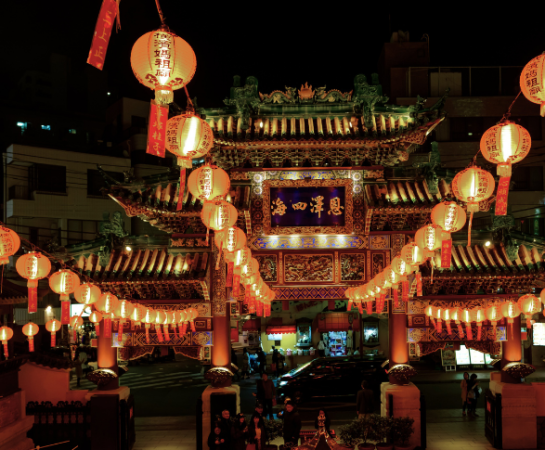
Chinese New Year fell on January 22 in 2023, February 10 in 2024, January 29 in 2025, and February 17 in 2026. That's a swing of nearly four weeks across four consecutive years, and none of it is random. Every date traces back to a

Why Clocks Change at 2 AM on a Sunday
In the United States, the clock change is written into federal law to the hour. Daylight saving time begins "at 2 o'clock antemeridian" on the second Sunday of March and ends at the same hour on the first Sunday of November (15 U.S.C. 260a). In
Why We Say “Quarter Past” and “Half Past” Instead of Just Saying the Minutes
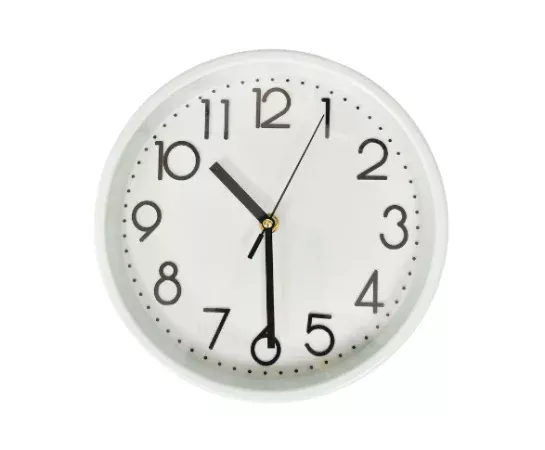
By the year 1500, the clock at Wells Cathedral in England was already striking the quarter-hours for the whole town to hear. What it could not do was show a minute. There was no minute hand on any clock anywhere, because no clock mechanism was
Why Clocks Run Clockwise: The Sundial Origin of “Clockwise”
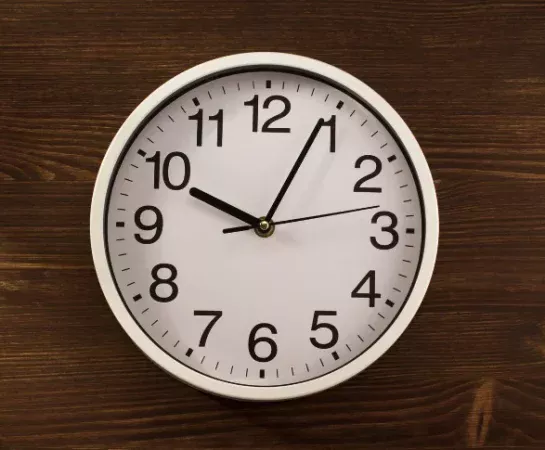
Nothing about the universe requires a clock's hands to sweep the way they do. There's no physical law dictating that "forward" in time should move to the right at the top of a dial. The direction is a historical accident, frozen into every watch, wall

What Is Swatch Internet Time and Why It Failed
On October 23, 1998, at a ceremony called the Junior Summit '98, a Swiss watch executive and the then-director of the MIT Media Lab stood together and announced that time zones were unnecessary. The proposal was called Swatch Internet Time. It replaced hours, minutes, and
Time Tools
Quick access to timers, stopwatch, world clock and time zone tools.
Time Guides
Read useful guides about time zones, calendars, finance and astronomy.


