Major Airports in Botswana
- Kasane International Airport (BBK) - 01:12:36
- Maun International Airport (MUB) - 01:12:36
- Phillip Gaonwe Matante International Airport (FRW) - 01:12:36
- Sir Seretse Khama International Airport (GBE) - 01:12:36
Daylight saving time in Botswana
Botswana has 1 listed IANA time zones. None of them observe daylight saving time in 2026. The UTC offset remains stable throughout the year.
Best Time to Call Botswana
Business hours in Botswana (9 AM–5 PM local time) fall at these local times elsewhere:
- Beijing: 3:00 PM – 11:00 PM ( Partial overlap)
- Paris: 9:00 AM – 5:00 PM ( Convenient)
- Toronto: 3:00 AM – 11:00 AM ( Outside normal hours)
- Seoul: 4:00 PM – 12:00 AM (next day) ( Partial overlap)
- Mexico City: 1:00 AM – 9:00 AM ( Outside normal hours)
- Cairo: 10:00 AM – 6:00 PM ( Convenient)
- Bangkok: 2:00 PM – 10:00 PM ( Partial overlap)
Times shown reflect current UTC offsets and may shift by up to an hour around daylight saving transitions.
Time Difference from Botswana
Compare time in Botswana with other countries.
Countries in the Same Time Zone as Botswana
Most Popular Cities in Botswana
Holidays in Botswana
Official national public holidays. Regional and religious observances may vary by area.
About Time in Botswana
A Calendar Could Be Corrected by Watching Crops, Birds and Animals
The older Setswana calendar was not originally a simple translation of the twelve Gregorian months. Historical linguistic material records periods of the year whose names were connected with agriculture, weather, plants and animal behavior. Their boundaries did not necessarily coincide consistently with modern calendar months, and names could vary between dialects and communities.
Research published in Botswana Notes and Records argues that the precolonial system was lunisolar. Lunar months had to remain aligned with the agricultural year, which created the familiar problem of intercalation: twelve lunar months are shorter than a solar year. The surviving evidence does not reveal one securely documented mechanical rule for inserting an extra month. Bruce Bennett therefore cautions against inventing a precise lost algorithm. His reconstruction suggests that adjustment may have depended partly on seasonal observations and practical decisions rather than on a rigid repeating cycle.
The month names preserve clues to how this worked. Tlhakole was associated with grain shedding its covering; Mopitlwe with closely packed or ripening sorghum grain; Moranang with ripening beans. Phukwi could be connected with leafless trees beginning to bud, Lwetse with clouds heavy with approaching rain, and Phalane with the period when impala give birth. Molomo was associated with the first-fruits observance. These names placed agricultural and ecological events inside the language of the year.
Other names read almost like comments on seasonal experience. Seetebosigo, associated with the cold part of the year, has been interpreted as an instruction not to visit at night because of the cold. Motsheganong refers in one explanation to laughing at birds because sorghum grain has hardened beyond the stage at which they can easily eat it. Such meanings should not be treated as a perfectly preserved master calendar, because scholars record competing etymologies for some names. Their importance lies in the principle they reveal: time could be checked against what fields, trees, clouds and animals were actually doing.
This also explains why translating every traditional month name directly into January, February or March can be misleading. Modern Setswana uses these names for Gregorian months, but the older seasonal periods from which some of them developed belonged to a calendar whose synchronization depended on the environment and the Moon. The vocabulary survived more completely than the original calendrical mechanism.
Okavango's Annual Flood Arrives When the Rains Are Already Over
The Okavango Delta reverses an assumption that usually works elsewhere: the wettest-looking period in the landscape is not produced by rain falling there at that moment. Most of the water begins its journey far upstream in the Angolan highlands. By the time the annual flood spreads through north-western Botswana, the local rainy season is ending or has already ended.
Hydrological research shows the scale of the delay. The flood pulse reaches the upper Delta around Mohembo between roughly February and May, then progresses slowly through the wetland. Traveling through the distributary system toward the lower Delta and Maun can take another four to six months. Maximum inundation in distant parts of the system may therefore occur in August or September, deep in Botswana's dry season.
The delay produces two seasonal clocks in the same landscape. Local rainfall is concentrated mainly in the austral summer, while river flooding expands months later. UNESCO singled out this out-of-phase cycle when the Okavango Delta was inscribed as a World Heritage property. Plants and animals have synchronized growth, reproduction and movement with the arrival of floodwater during the dry winter season rather than simply with local rainfall.
The size of the annual transformation is not constant. Hydrological studies place the normal minimum inundated area at roughly 4,500 to 6,000 square kilometers and the annual maximum commonly around 9,000 to 12,000 square kilometers, depending on upstream flow and local conditions. Researchers have been able to use long satellite records and river discharge measurements to forecast the likely maximum flood extent months before the seasonal peak.
Okavango time is therefore dominated by delay. Rain falling hundreds of kilometers away enters rivers, advances slowly across an almost level alluvial system and finally reaches landscapes that may have experienced months without substantial local rainfall. For wildlife, tourism, fisheries and flood-recession agriculture, the important calendar is not simply when rain falls, but when that delayed pulse finally arrives.
A Zebra Migration Returned After Being Blocked for Thirty-Six Years
One of Botswana's most striking examples of seasonal timing was discovered through GPS tracking. Researchers studying zebras on the southeastern edge of the Okavango Delta found animals making a highly directed migration to the Makgadikgadi grasslands at the beginning of the rainy season and returning toward the Delta for the dry season.
The round trip measured about 588 kilometers. The outward movement was linked to the first rains, when the Makgadikgadi grasslands became usable and offered high-quality forage. The animals later returned toward the Okavango as seasonal conditions changed. Movement was therefore organized around recurring environmental windows rather than a fixed calendar date.
What made the discovery extraordinary was the history of the route. A veterinary cordon fence had cut across it from 1968 until 2004. During those thirty-six years, zebras could not follow the direct migration documented by the later study. Earlier work from the fenced period had not recorded movement between the two systems along this route.
Yet within four years of the fence being removed, researchers documented the migration again. The interval is crucial because wild zebras do not normally live for anything close to thirty-six years. The animals undertaking the restored migration could not simply have been individuals remembering a journey they had personally made before the fence existed.
Later research examined how such a route could reappear. The evidence indicated that memory remains important in zebra migration, but the restored movement could not have depended on uninterrupted lifetime memory across the whole closure. Seasonal cues, social learning, exploration and landscape knowledge transmitted or rebuilt within the population provide a more plausible framework. Botswana therefore supplied an unusually valuable natural experiment: a recurring movement disappeared for decades and then re-emerged rapidly when the physical barrier was removed.
Seventeen Hours of Dikopelo Run From Midnight to Sunset
Among the Bakgatla-ba-Kgafela, time is also built into the form of dikopelo performance. Anthropologist Keletso Gaone Setlhabi, writing from both participant observation and her own experience as a performer, documented annual festive performances connected with the ending of seasons and the return of choirs to their performance grounds.
The duration is exceptional. The performance examined in the study runs for approximately seventeen hours, beginning at midnight and continuing until sunset the following day. This is not a short stage presentation extended for spectators. Endurance through the night and across most of the following day is part of how the event is experienced by performers, families and supporters.
Setlhabi's research treats this duration as lived time rather than as a timetable detail. Midnight changes the character of the gathering, darkness gives way to morning, heat and fatigue accumulate during daylight, and the approach of sunset becomes part of the performance's progression. The same ground is experienced differently as the hours pass.
The documented observations covered performances between December 2015 and January 2019, placing the event within a recurring annual seasonal cycle. The result is a form of cultural time that cannot be understood adequately by listing a festival date. Its identity depends on return, duration and the movement through an entire night and day.
At Midnight in 1966, Bonfires Marked the End of Bechuanaland
Botswana's independence was deliberately staged around an exact boundary in the civil day. Government records describing the night of 29 September 1966 place thousands of people at the National Stadium in the new capital as the final hours of the Bechuanaland Protectorate ran out.
Preparations had been underway for months. Contemporary government reporting announced that bonfires would be lit on hilltops around the country at midnight. In Gaborone and other centers, the Union Jack was to come down as the flag of the new Republic of Botswana went up.
At midnight, Thursday 29 September became Friday 30 September and the symbolism was executed literally. The British flag was lowered while God Save the Queen was played. Botswana's flag was raised to Fatshe Leno La Rona, the national anthem composed by Kgalemang Tumediso Motsete. The protectorate had ended and the independent republic had begun.
The next constitutional moment came later that morning rather than at midnight. Government historical records place the swearing-in of Sir Seretse Khama as the first President at 9:50 a.m. on 30 September, with Chief Justice Laurence Weston presiding. Independence night and presidential inauguration therefore formed a sequence of timed events rather than one undifferentiated ceremony.
Fifty years later, Botswana's 2016 jubilee deliberately reenacted the lowering of the Union Jack and raising of the national flag. The original midnight had become part of national memory precise enough to reproduce ceremonially half a century later.
Fifty-Seven Seconds of Totality Passed Over Masunga in 2002
On the morning of 4 December 2002, a narrow total solar eclipse crossed southern Africa and clipped northern Botswana. NASA's calculations show the Moon's umbral shadow entering Botswana at about 06:09 UTC before moving rapidly toward Zimbabwe and South Africa. The total phase was brief because Botswana lay along a part of the track where the shadow was relatively narrow and moving quickly.
Masunga was one of the places inside the path. Local eclipse calculations give first contact at about 07:08:45, the beginning of totality at approximately 08:13:45 and maximum eclipse at 08:14:13 local time. Totality ended at about 08:14:41. The period during which the Sun was completely covered lasted only about fifty-seven seconds.
The difference over surprisingly short distances was severe. Francistown, although close enough to experience an extremely deep eclipse, remained outside the narrow total path. Kasane also saw a partial eclipse rather than totality. Whether morning daylight disappeared completely therefore depended on position within a corridor only tens of kilometers wide.
The shadow itself made the event a timed journey across national borders. NASA calculated that it entered northern Botswana with totality lasting a little over a minute near the central line, then followed the Botswana-Zimbabwe frontier before continuing east. At the surface, the umbra was moving on the order of a kilometer per second. A village could spend more than an hour watching the partial phases build and recede, while the defining total phase was over in less than a minute.
For Masunga, 4 December 2002 is therefore an unusually exact entry in local astronomical history: a long morning eclipse organized around fifty-seven seconds that nearby towns did not share in the same form.
Frequently Asked Questions
How many time zones does Botswana have?
One. The whole of Botswana follows Africa/Gaborone, so every city shows the same local time as the capital, Gaborone.
Is Botswana ahead of or behind GMT?
Botswana is currently 2 hours ahead of GMT (UTC+2).
Does Botswana use summer time?
No. Botswana does not observe daylight saving time, so its clocks stay at UTC+2 all year. Its time difference with countries that do change their clocks still shifts by an hour in spring and autumn.
How many public holidays does Botswana have in 2026?
Botswana has 15 national public holidays in 2026, when banks and government offices are usually closed. Some regions may also have their own local holidays.
How do I dial a phone number in Botswana from abroad?
From a mobile phone, type +267 and then the local number without the leading 0 used for domestic calls, if it has one. From a landline, replace the plus sign with your exit code: 011 from the US and Canada, or 00 from most of Europe, for example 00 267 followed by the number.
What language is spoken in Botswana?
The main languages of Botswana are English and Tswana.
Beyond the Clock

Why the Moon’s Phases Don’t Actually Change Its Size
A thin crescent looks small enough to disappear. A full moon looks like it's swelling on the horizon. Neither impression is true. The Moon's diameter is 3,474 kilometers on every night of the month, whether it's a sliver or a full disc, and nothing in

Why Saturn’s Rings Are Disappearing From View in 2025 and 2026
Saturn's rings turned edge-on to Earth on March 23, 2025, at 12:04 p.m. EDT, and for weeks the planet looked like a plain yellow ball through backyard telescopes. This is not decay or destruction. It is a geometric alignment called a ring plane crossing, and
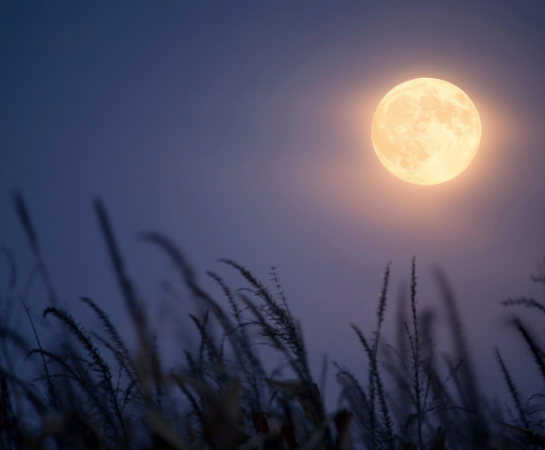
What Is a Harvest Moon and Why It Rises at Almost the Same Time Several Nights Running
On most nights of the year, the Moon rises roughly 50 minutes later than it did the night before. Around the Harvest Moon, that gap collapses to as little as 10 minutes in parts of the UK and Canada, and rarely more than 30 minutes
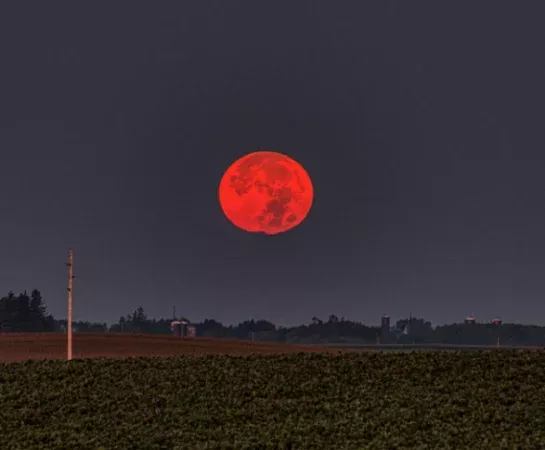
What Is a Blood Moon and Why Does the Moon Turn Red
On the night of August 27, 2026, the Moon came within a hair of disappearing entirely. Earth's shadow covered 96.2% of its surface, a partial eclipse so deep that skywatchers across the Americas, Europe, and Africa watched it turn a rusty, almost total red without

Why the Year Starts on January 1
Nothing happens in the sky on January 1. The winter solstice comes about ten days earlier, Earth's closest approach to the Sun a few days later, and no lunar phase is tied to the date. January 1 is not an astronomical boundary. It is an

Friday the 13th: How Often It Happens and Why It Falls on a Friday Most Often
November 13, 2026 is the third Friday the 13th of the year, after February 13 and March 13. That won't happen again until 2037. The next one after November comes on August 13, 2027, and then the calendar produces the longest possible drought: 14 months

When Is Eid al-Fitr and How Its Date Depends on Ramadan’s Final Moon Sighting
Eid al-Fitr never sits on a fixed date, and it isn't confirmed until the night before it happens. Unlike Christmas or New Year's Day, locked to the Gregorian calendar months in advance, the first day of Shawwal depends on whether a sliver of crescent moon
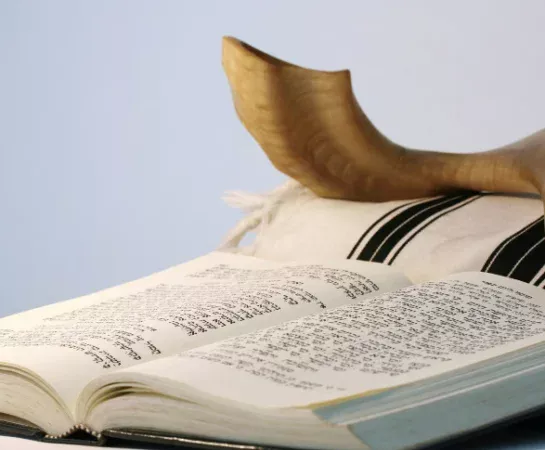
When Is Yom Kippur and Why It Always Falls 10 Days After Rosh Hashanah
Yom Kippur is the tenth day of Tishrei, and Rosh Hashanah is the first, so the ten-day gap between them looks like simple arithmetic. It isn't. The Hebrew calendar has a set of centuries-old rules that quietly forbid Rosh Hashanah from landing on three specific
Time Tools
Quick access to timers, stopwatch, world clock and time zone tools.
Time Guides
Read useful guides about time zones, calendars, finance and astronomy.


