Daylight saving time changes in Aland Islands
Aland Islands has 1 listed IANA time zones. 1 of them observe daylight saving time changes in 2026.
Next change: October 25, 2026
Clock moves back from 04:00 to 03:00 local time.
Best Time to Call Aland Islands
Business hours in Aland Islands (9 AM–5 PM local time) fall at these local times elsewhere:
- Beijing: 2:00 PM – 10:00 PM ( Partial overlap)
- Paris: 8:00 AM – 4:00 PM ( Convenient)
- Toronto: 2:00 AM – 10:00 AM ( Outside normal hours)
- Seoul: 3:00 PM – 11:00 PM ( Partial overlap)
- Mexico City: 12:00 AM – 8:00 AM ( Outside normal hours)
- Cairo: 9:00 AM – 5:00 PM ( Convenient)
- Bangkok: 1:00 PM – 9:00 PM ( Partial overlap)
Times shown reflect current UTC offsets and may shift by up to an hour around daylight saving transitions.
Time Difference from Aland Islands
Compare time in Aland Islands with other countries.
Countries in the Same Time Zone as Aland Islands
Most Popular Cities in Aland Islands
Holidays in Aland Islands
Official national public holidays. Regional and religious observances may vary by area.
About Time in Aland Islands
Twenty Minutes, Then Seven Weeks
On 1 May 1921, Finland abandoned the old Helsinki-based mean time it had used for civil purposes and adopted Eastern European Time, standardized on the 30th meridian east. Official Finnish sources put the change with unusual precision: at midnight, clocks were moved forward twenty minutes and roughly eleven seconds. Fewer than eight weeks later, on 24 June 1921, the League of Nations in Geneva settled a separate and much larger question. Despite a petition signed by well over ninety percent of participating islanders asking to rejoin Sweden, the archipelago would remain under Finnish sovereignty, compensated with a far-reaching charter of autonomy, demilitarization and language protection. The two decisions were legally unconnected, but between them, in the space of a single season, they fixed both which country's calendar the islands would keep and which country's clock.
The geography makes the outcome an odd fit. Mariehamn sits at roughly 19 degrees 56 minutes east, more than ten degrees short of the 30th meridian that defines Eastern European Time. At the standard four minutes of time per degree of longitude, the sun over the town reaches its highest point close to forty minutes after the clock indicates noon under winter standard time, a considerably larger gap than the one affecting Helsinki itself, which lies much nearer the reference meridian. A traveler arriving by ferry from Sweden crosses no meaningful change in the sun's position but gains a full hour on the clock the moment the vessel enters Ålandic waters.
The islands remain overwhelmingly Swedish speaking, and daily life, broadcasting and ferry traffic still run largely on Stockholm's rhythm, yet every public clock answers to Helsinki. It is a quiet, daily trace of a settlement that had nothing to do with the sun and everything to do with a League of Nations ruling handed down one early summer in 1921.
The Post That Could Not Keep a Timetable
In 1636 the Swedish crown, ruling a kingdom that then included Finland, ordered the creation of a regular postal service to bind its territories together, and in 1638 a route was opened running from Stockholm across the Sea of Åland to Turku and onward toward the eastern border. The Finnish Postal Museum, which has documented the route in detail, describes the 53 kilometre open-water crossing through the islands as one of the most hazardous mail routes ever operated in Europe. Selected peasant farmers, organized in teams and exempted from other crown duties in exchange for the work, carried the mailbag by boat and on foot, changing hands at post houses spaced twenty to thirty kilometres apart.
The schedule the crown demanded took little account of what the crossing actually involved. Postmen were required to travel "as quickly as anyone with urgent matters to attend to would", a pace fixed at roughly ten kilometres every two hours, with a threatened penalty of eight days in the stocks on bread and water for unexplained delay. A single relay could take anywhere from six to fifteen hours depending on distance and weather, slowest in February and late autumn, fastest in high summer, over a strait that froze unevenly and could just as easily swallow a rowing boat as trap it in pack ice. In the winter of 1710 to 1711, seventeen men from the parish of Eckerö alone lost their lives attempting the passage.
A stone post and customs house, designed in the 1820s by the architect Carl Ludvig Engel, still stands at Eckerö as a monument to the route's later importance under Russian rule, when the crossing became the western gateway for mail bound for Saint Petersburg. The relay finally ended in 1910, after 272 years of trying, and mostly failing, to hold a fixed timetable against an indifferent sea.
A Cup Measured in Days, Not Minutes
By the 1920s Mariehamn had become the home port of the last great fleet of commercial sailing ships anywhere in the world. Shipowner Gustaf Erikson built up dozens of iron and steel-hulled windjammers at a time when almost every other merchant fleet had converted to steam, and used them chiefly to carry grain from South Australia to Britain around Cape Horn. One of his ships, the four-masted barque Pommern, survives today as a preserved museum vessel in Mariehamn harbor, the only ship of its type still kept in original condition.
The Australia to England run became an unofficial annual contest among the captains, later formalized when a paint manufacturer began donating a silver cup for the fastest passage in 1928. Unlike the steamers that had already displaced sail on almost every other trade route, these ships carried no engines and depended on traditional celestial navigation, fixing their position with sextant and chronometer much as ocean-going sailing ships had for two centuries. The measure of success was not clock precision but elapsed days at sea: the fastest recorded passage, by the barque Parma in 1933, took 83 days, while a "good" crossing was judged as anything under a hundred.
The trade peaked in 1939, when thirteen windjammers gathered to load grain off Port Victoria in South Australia, all but two of them flying Erikson's colours. The Second World War scattered and sank much of the fleet, and after the war only two ships, Pamir and Passat, made a final pair of grain voyages in 1949, closing a competition whose currency, uniquely among the entries in this record, was never the minute but the day.
Frequently Asked Questions
How many time zones does Aland Islands have?
One. The whole of Aland Islands follows Europe/Mariehamn, so every city shows the same local time as the capital, Mariehamn.
Is Aland Islands ahead of or behind GMT?
Aland Islands is currently 3 hours ahead of GMT (UTC+3).
Does Aland Islands use summer time?
Yes. Mariehamn uses UTC+2 (EET) in standard time and UTC+3 (EEST) during daylight saving time, and is currently on summer time.
How many public holidays does Aland Islands have in 2026?
Aland Islands has 16 national public holidays in 2026, when banks and government offices are usually closed. Some regions may also have their own local holidays.
How do I dial a phone number in Aland Islands from abroad?
From a mobile phone, type +358-18 and then the local number without the leading 0 used for domestic calls, if it has one. From a landline, replace the plus sign with your exit code: 011 from the US and Canada, or 00 from most of Europe, for example 00 358-18 followed by the number.
What language is spoken in Aland Islands?
The main language of Aland Islands is Swedish.
Beyond the Clock

Why the Moon’s Phases Don’t Actually Change Its Size
A thin crescent looks small enough to disappear. A full moon looks like it's swelling on the horizon. Neither impression is true. The Moon's diameter is 3,474 kilometers on every night of the month, whether it's a sliver or a full disc, and nothing in

Why Saturn’s Rings Are Disappearing From View in 2025 and 2026
Saturn's rings turned edge-on to Earth on March 23, 2025, at 12:04 p.m. EDT, and for weeks the planet looked like a plain yellow ball through backyard telescopes. This is not decay or destruction. It is a geometric alignment called a ring plane crossing, and
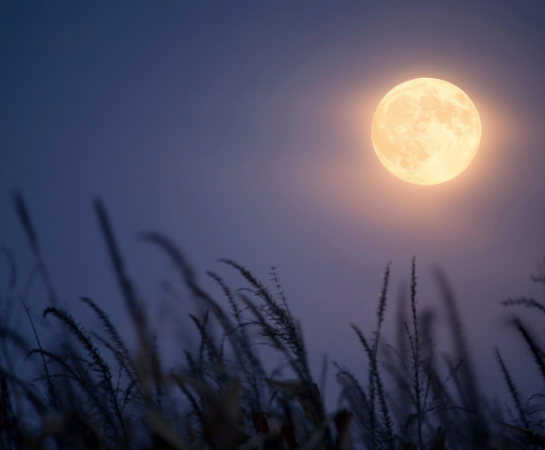
What Is a Harvest Moon and Why It Rises at Almost the Same Time Several Nights Running
On most nights of the year, the Moon rises roughly 50 minutes later than it did the night before. Around the Harvest Moon, that gap collapses to as little as 10 minutes in parts of the UK and Canada, and rarely more than 30 minutes
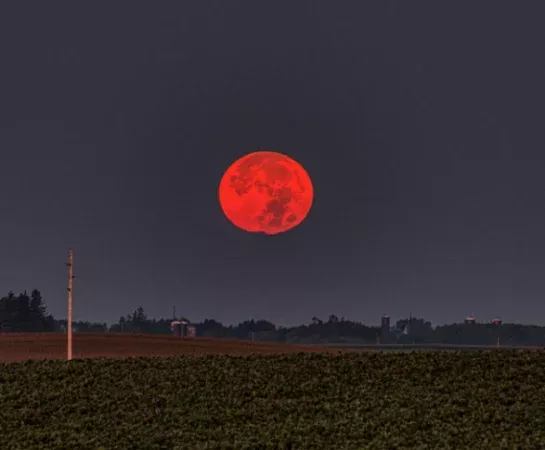
What Is a Blood Moon and Why Does the Moon Turn Red
On the night of August 27, 2026, the Moon came within a hair of disappearing entirely. Earth's shadow covered 96.2% of its surface, a partial eclipse so deep that skywatchers across the Americas, Europe, and Africa watched it turn a rusty, almost total red without

The Planning Fallacy: Why Tasks Take Longer Than You Expect and How to Correct It
In a 1994 study, 37 psychology students estimated how long it would take them to finish their honors theses. Their average answer was 33.9 days. They also gave a best-case estimate, 27.4 days on average, and a worst-case estimate, "if everything went as poorly as

What the Research Actually Says About the “23 Minutes to Refocus” Claim
"It takes 23 minutes and 15 seconds to refocus after an interruption" shows up in productivity apps, management slide decks, and posts about deep work. The figure is real, and it comes from a serious researcher. It does not mean what it is usually taken

Why the 40-Hour Work Week Exists: From 10-Hour Days to Ford’s 1926 Experiment
The 40-hour week looks like a natural unit of work, but the number was never derived from a measurement of how much work is best. It is the product of two separate fights: one over the length of the day, which ended at eight hours,

How Americans Spend Their 24 Hours: What the Time Use Survey Shows
The average American age 15 and over logs about 9 hours of sleep a day, spends just over 5 hours on leisure and works 3 hours. That last number looks wrong until you see how it is built, and nearly every headline figure from the
Time Tools
Quick access to timers, stopwatch, world clock and time zone tools.
Time Guides
Read useful guides about time zones, calendars, finance and astronomy.


