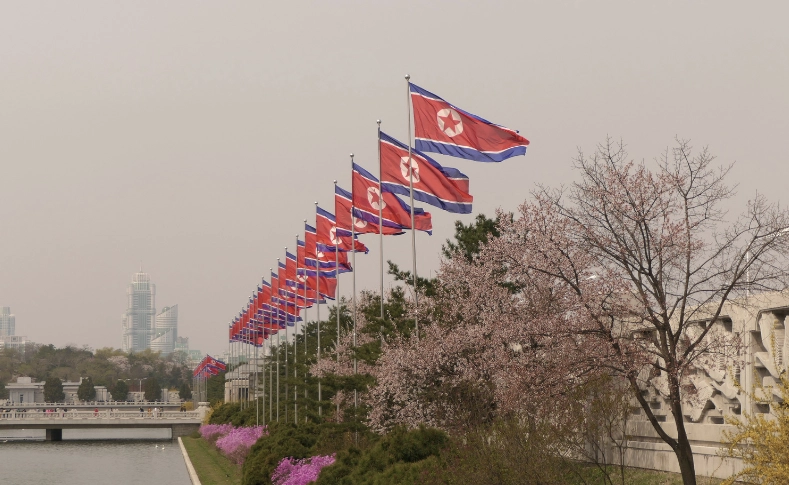
North Korea turned its clocks back 30 minutes on August 15, 2015, breaking from South Korea and Japan to create its own “Pyongyang Time,” then reversed the entire move less than three years later, on May 5, 2018, realigning with Seoul again. Both changes were explicitly political, not practical. The first was framed as erasing a colonial-era insult from 1912, timed to the exact anniversary of Japan’s surrender. The second came directly from Kim Jong Un himself, who told state media he found it a “painful wrench” to see two different clocks on the wall during his first face-to-face summit with South Korea’s president. In between, North Korea spent nearly three years as the only country on the planet observing a UTC+8:30 offset, a distinction no other nation shared before or has claimed since. Few governments have ever used a 30-minute time shift so openly as a diplomatic signal, let alone reversed themselves and did it twice within a single decade.
The Original Sin: How Japan Erased Korea’s Clock in 1912
Before any of this, Korea kept its own solar time the way most of the world once did, tied to local longitude rather than a designated zone. The Korean Empire formally standardized this in 1908, setting the country’s official time at UTC+8:30 based on the 127.5th meridian east, close to the peninsula’s actual geographic center, similar in spirit to the pre-standardization era most of the world once shared before fixed zones existed at all. That lasted four years. In 1912, two years into Japan’s colonial rule, the Governor-General of Korea issued an official decree shifting the peninsula to UTC+9, matching Japan Standard Time exactly. Korea did not choose that change. It was administered from Tokyo, and it stayed in place, unbroken, for the entire 35-year occupation that followed.
August 15, 2015: A Clock Turned Back to Mark Liberation
North Korea’s parliament, the Supreme People’s Assembly, approved the reversal in early August 2015 and set it to take effect on August 15, the 70th anniversary of Japan’s surrender and Korea’s liberation. State news agency KCNA did not soften the framing. It described Japan’s original 1912 decision as an act of “unpardonable crimes,” language aimed squarely at erasing what North Korea called a lingering mark of imperial rule. At midnight, the Pyongyang Astronomical Observatory rang a bell, factories sounded sirens, and the country’s clocks moved back to UTC+8:30, restoring the exact offset Korea had briefly held before Japanese rule began. South Korea, which shares the same colonial history but had already tried and abandoned the identical gesture decades earlier, made no matching change, choosing to stay on UTC+9 and leaving its northern neighbor to make the symbolic move alone.
South Korea Already Tried This Exact Move, Decades Earlier
The irony largely missing from most retellings of 2015 is that South Korea got there first, and for the identical reason. Under President Syngman Rhee, Seoul reverted to UTC+8:30 in March 1954, explicitly reclaiming the pre-colonial meridian just as Pyongyang would do 61 years later. That arrangement held for seven years. In August 1961, under the military government that followed Park Chung-hee’s coup, South Korea switched back to UTC+9, largely for practical trade reasons: Japan was already the country’s dominant economic partner, and keeping a matching clock made commerce and logistics simpler. North Korea, isolated from that kind of trade calculus and unconcerned with convenience, was free decades later to make the symbolic move that Seoul had already tried, tested, and ultimately walked away from once the economics stopped supporting it. The two Koreas, in other words, have now each run this exact experiment once, reaching opposite conclusions about whether the gesture was worth keeping.
What Pyongyang Time Actually Disrupted
For nearly three years, North Korea was the only country on Earth using the UTC+8:30 offset, joining a short list of nations that split their zones by 30 or 45 minutes instead of a full hour, the same quirky category covered by half-hour time zones elsewhere in the world. South Korea’s Unification Ministry warned at the time that the mismatch could complicate operations at the jointly run Kaesong Industrial Complex, a factory park just north of the border where more than 50,000 North Korean workers and a few hundred South Korean managers had coordinated on a single shared clock for over a decade before the split. After August 2015, shift schedules, customs paperwork, and cross-border phone calls between the two sides all had to account for a 30-minute offset that hadn’t existed the week before. Domestically, the change touched train timetables, television broadcast schedules, and factory shift changes across the country, a disruption North Korean state media chose to frame as a point of pride rather than an inconvenience.
That math is the entire basis of the original 1908 decision, and it follows the same longitude-based logic used to set every time zone offset on Earth. Japan’s 1912 imposition of UTC+9 was never about geography. Tokyo sits close enough to the 135th meridian that UTC+9 fits Japan naturally, but applying that same meridian to a peninsula centered near 127.5°E was a political convenience for the colonizer, not an astronomical one for Korea.
April 27, 2018: Two Clocks on One Wall
The reversal traces to a single, widely reported moment. During the inter-Korean summit at Panmunjom’s Peace House, where Kim Jong Un became the first North Korean leader since the Korean War to set foot in South Korean territory, he reportedly noticed two clocks mounted on the wall of the meeting room, one running on Pyongyang Time and one on Seoul’s. According to South Korean officials who relayed his remarks, Kim described the sight of the two separate clocks as a small, physical proof of division that struck him more than any policy briefing had, and proposed unifying the clocks as an immediate, concrete gesture before tackling anything harder. The summit, its formal outcome later published as the Panmunjom Declaration, also produced commitments on ending loudspeaker broadcasts along the border and pursuing a formal end to the Korean War, but the clock pledge was the one commitment that required no negotiation with Washington, no verification regime, and no timeline beyond a single announced date a week later.
May 5, 2018: Unwinding the Clock
North Korea’s Presidium of the Supreme People’s Assembly formalized the change days later with a decree titled “On Resetting Pyongyang Time,” moving the country’s clocks forward 30 minutes back to UTC+9 effective May 5. KCNA quoted Kim framing the shift not as a retreat from the 2015 decision’s symbolism but as a first practical step toward turning the North and South’s “different and separated things into the same and single ones.” The reversal arrived just weeks before Kim’s planned summit with US President Donald Trump, adding another layer of diplomatic signaling to a clock adjustment that, on paper, cost nothing and changed nothing structurally, only the number on a dial.
Time Zones as Political Theater: North Korea Isn’t Alone
Using a clock to make a geopolitical statement did not start or end with Korea. Spain switched from Greenwich-aligned time to Central European Time in 1940 under Francisco Franco, aligning the country’s clocks with Nazi Germany’s, a political decision Spain has never reversed even though the country geographically belongs in the same zone as Britain and Portugal.
Samoa took the opposite approach in 2011, jumping forward across the International Date Line entirely to align its trading week with Australia and New Zealand instead of the United States, a move detailed in Samoa’s skipped day. Both cases, like North Korea’s, used a fundamentally administrative tool, the assignment of a UTC offset, to declare where a country’s loyalties or identity actually sit.
| Year | Country | Change | Stated Reason |
|---|---|---|---|
| 1940 | Spain | GMT to Central European Time | Political alignment with Nazi Germany |
| 1954 | South Korea | UTC+9 to UTC+8:30 | Reject Japanese colonial-era time |
| 1961 | South Korea | UTC+8:30 back to UTC+9 | Trade practicality with Japan |
| 2011 | Samoa | Skipped a calendar day across the date line | Align trading week with Australia/NZ |
| 2015 | North Korea | UTC+9 to UTC+8:30 | Reject Japanese colonial-era time |
| 2018 | North Korea | UTC+8:30 back to UTC+9 | Reconciliation gesture toward South Korea |
North Korea Is Still Rewriting Its Clocks, Just a Different One
The time zone has held steady at UTC+9 since 2018, but Pyongyang’s relationship with official timekeeping has kept shifting in a less visible way. Since 1997, three years after Kim Il Sung’s death, North Korean newspapers, birth certificates, and public documents dated years using the Juche calendar, which numbered 1912, the birth year of founder Kim Il Sung, as year one, so that a date like October 17, 2024 would formally read “Juche 113 (2024).” Starting in October 2024, the state’s main newspaper, Rodong Sinmun, quietly stopped printing Juche years and switched to the plain Gregorian year instead, a break first visible when Kim Yo Jong, the leader’s influential sister, issued a public statement dated simply “2024” with no Juche reference at all, days after her brother’s own October 10 speech had still used “Juche 113.” By January 2025, the country’s official calendars for the new year dropped the Juche numbering entirely in favor of “2025,” ending a 27-year practice without any formal public explanation from Pyongyang. Analysts studying North Korean state media read the shift as Kim Jong Un distancing his own leadership from his grandfather’s founding mythology, choosing to no longer date the entire nation’s official history against Kim Il Sung’s birth year. The clock itself hasn’t moved since 2018, but the number Pyongyang uses to mark the year has just quietly stopped being about the past at all.