Major Airports in Uganda
- Entebbe International Airport (EBB) - 02:24:16
Daylight saving time in Uganda
Uganda has 1 listed IANA time zones. None of them observe daylight saving time in 2026. The UTC offset remains stable throughout the year.
Best Time to Call Uganda
Business hours in Uganda (9 AM–5 PM local time) fall at these local times elsewhere:
- Beijing: 2:00 PM – 10:00 PM ( Partial overlap)
- Paris: 8:00 AM – 4:00 PM ( Convenient)
- Toronto: 2:00 AM – 10:00 AM ( Outside normal hours)
- Seoul: 3:00 PM – 11:00 PM ( Partial overlap)
- Mexico City: 12:00 AM – 8:00 AM ( Outside normal hours)
- Cairo: 9:00 AM – 5:00 PM ( Convenient)
- Bangkok: 1:00 PM – 9:00 PM ( Partial overlap)
Times shown reflect current UTC offsets and may shift by up to an hour around daylight saving transitions.
Time Difference from Uganda
Compare time in Uganda with other countries.
Most Popular Cities in Uganda
Holidays in Uganda
Official national public holidays. Regional and religious observances may vary by area.
About Time in Uganda
A Dispute Settled Only After Its Chief Witness Was Dead
On 3 August 1858, British explorer John Hanning Speke, travelling with Richard Burton but pressing ahead alone while his companion lay ill with fever, reached the southern shore of a vast lake he named after Queen Victoria and immediately became convinced he had found the long-sought source of the Nile. Burton, who considered the evidence flimsy, disagreed sharply, favouring instead the nearby Lake Tanganyika, and the dispute between the two former travelling companions escalated into one of the most bitter controversies in the history of exploration.
Speke returned to Africa in 1860 specifically to settle the question, and on 28 July 1862, having negotiated for months with Mutesa, the king of Buganda, he finally reached the precise point where the Nile flows out of Lake Victoria, which he named Ripon Falls, and sent back to London a famously terse telegram: the Nile was settled. Burton remained unconvinced, and the argument was scheduled for a formal public debate before the British Association in Bath on 16 September 1864. Speke never appeared. He died the day before, apparently by an accidental self-inflicted gunshot wound while out hunting, a circumstance debated ever since. The dispute itself outlived him by more than a decade, only being conclusively resolved in 1875, when the explorer Henry Morton Stanley circumnavigated Lake Victoria and confirmed, seventeen years after Speke's first sighting of its shores, that he had been right all along.
The Ice That Ptolemy Predicted and the Twenty-First Century Is Watching Disappear
Writing in Alexandria around 150 CE, the Greek geographer Ptolemy described a range of snow-capped equatorial peaks, fed by local reports rather than his own observation, which he called the Mountains of the Moon, and identified their melting snow as the ultimate source of the lakes that fed the Nile. For over seventeen centuries the description remained little more than an intriguing classical rumour, until nineteenth-century European explorers identified it with the real Rwenzori range straddling the modern border between Uganda and the Democratic Republic of the Congo, an equatorial massif whose upper peaks genuinely do carry permanent snow and glacial ice.
The mountains were first fully climbed in 1906, during an expedition led by the Duke of Abruzzi, whose team also produced the first detailed map of the range's glacier cover, measured at roughly 6.5 square kilometres. Later surveys documented a steady, then accelerating, retreat: the glaciated area had shrunk to about 3.2 square kilometres by 1955, and continued shrinking through the following decades to roughly 1.7 square kilometres by the 1990s and still further by the mid-2000s, a loss exceeding seventy percent of the ice Ptolemy's informants would have described nearly two thousand years earlier. Scientists monitoring the range now generally expect the glaciers to disappear entirely within a matter of decades, a genuinely ancient geographical feature, first recorded in writing before the fall of Rome, on track to vanish from the Earth within the lifetime of people alive today.
Frequently Asked Questions
How many time zones does Uganda have?
One. The whole of Uganda follows Africa/Kampala, so every city shows the same local time as the capital, Kampala.
Is Uganda ahead of or behind GMT?
Uganda is currently 3 hours ahead of GMT (UTC+3).
Does Uganda use summer time?
No. Uganda does not observe daylight saving time, so its clocks stay at UTC+3 all year. Its time difference with countries that do change their clocks still shifts by an hour in spring and autumn.
How many public holidays does Uganda have in 2026?
Uganda has 16 national public holidays in 2026, when banks and government offices are usually closed. Some regions may also have their own local holidays.
How do I dial a phone number in Uganda from abroad?
From a mobile phone, type +256 and then the local number without the leading 0 used for domestic calls, if it has one. From a landline, replace the plus sign with your exit code: 011 from the US and Canada, or 00 from most of Europe, for example 00 256 followed by the number.
What language is spoken in Uganda?
The main languages of Uganda are English, Ganda and Swahili.
Beyond the Clock

Options Expiration Time: When Do Options Actually Expire
Ask five options traders when a contract expires and you'll likely get three different answers, and all three will sound confident. Some will say 4:00 PM. Others will say 4:15 PM. A few old-timers will insist it's actually Saturday. All of them are half right,

Best Time to Trade Silver: When the Market Actually Moves
The single best window to trade silver runs from roughly 8:30 a.m. to noon Eastern time, when London's afternoon session overlaps with the COMEX floor in New York and the day's biggest US economic releases land at 8:30 a.m. sharp. That much silver shares with

What Time Does the Stock Market Open in Your Time Zone
The New York Stock Exchange opens at 9:30 AM. That single fact is true every trading day of the year, and it's also close to useless on its own, because 9:30 AM Eastern Time lands at a different clock reading in nearly every other country

IPO First Trading Day: What Time Does a New Stock Start Trading
Every IPO photo looks the same: executives on a balcony, a giant chrome button, the 9:30 AM bell. What that photo doesn't show is that the stock almost never starts trading at 9:30. Facebook was supposed to open at 11:00 in 2012 and didn't trade

Full Moon Names by Month: Where Beaver Moon and Cold Moon Come From
The November 2026 full moon, the Beaver Moon, peaks at 9:53 AM Eastern Time on Tuesday, November 24. The December full moon, the Cold Moon, follows at 8:28 PM Eastern on Wednesday, December 23. In UTC that moment already falls on December 24, so in
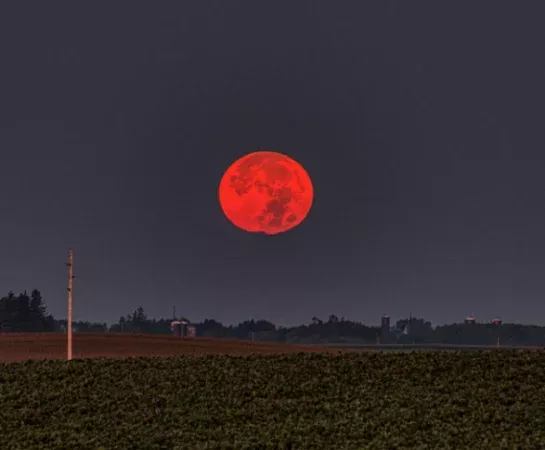
What Is a Blood Moon and Why Does the Moon Turn Red
On the night of August 27, 2026, the Moon came within a hair of disappearing entirely. Earth's shadow covered 96.2% of its surface, a partial eclipse so deep that skywatchers across the Americas, Europe, and Africa watched it turn a rusty, almost total red without
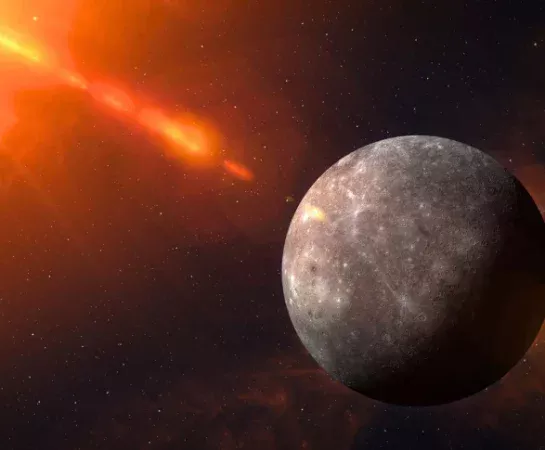
Mercury Retrograde: What’s Astronomically Real vs Astrological Myth
Mercury retrograde generates millions of searches every time it happens, and almost none of that content stops to explain what's actually occurring in space. The phenomenon itself is completely real, observable, and predictable centuries in advance. What isn't real is nearly everything attached to it

What Is Sidereal Time and How It Differs From Solar Time
Ask how long it takes Earth to spin once on its axis and the honest answer depends on what you're measuring the spin against. Measured against the sun, a full rotation takes 24 hours, the day everyone lives by. Measured against the distant stars, that
Time Tools
Quick access to timers, stopwatch, world clock and time zone tools.
Time Guides
Read useful guides about time zones, calendars, finance and astronomy.


