Major Airports in Tanzania
- Abeid Amani Karume International Airport (ZNZ) - 02:28:36
- Julius Nyerere International Airport (DAR) - 02:28:36
- Kilimanjaro International Airport (JRO) - 02:28:36
- Mwanza International Airport (MWZ) - 02:28:36
Daylight saving time in Tanzania
Tanzania has 1 listed IANA time zones. None of them observe daylight saving time in 2026. The UTC offset remains stable throughout the year.
Best Time to Call Tanzania
Business hours in Tanzania (9 AM–5 PM local time) fall at these local times elsewhere:
- Beijing: 2:00 PM – 10:00 PM ( Partial overlap)
- Paris: 8:00 AM – 4:00 PM ( Convenient)
- Toronto: 2:00 AM – 10:00 AM ( Outside normal hours)
- Seoul: 3:00 PM – 11:00 PM ( Partial overlap)
- Mexico City: 12:00 AM – 8:00 AM ( Outside normal hours)
- Cairo: 9:00 AM – 5:00 PM ( Convenient)
- Bangkok: 1:00 PM – 9:00 PM ( Partial overlap)
Times shown reflect current UTC offsets and may shift by up to an hour around daylight saving transitions.
Time Difference from Tanzania
Compare time in Tanzania with other countries.
Most Popular Cities in Tanzania
Holidays in Tanzania
Official national public holidays. Regional and religious observances may vary by area.
About Time in Tanzania
Where the Day Begins at Sunrise: Swahili Time
Across the Swahili speaking regions of East Africa, including most of Tanzania, everyday timekeeping in the local language does not begin at midnight the way English or French clocks do. Instead the day starts at sunrise, which near the equator falls at roughly six o'clock in the morning almost year round. In Swahili, that moment of sunrise is counted as the first hour, saa moja, so what an English speaker calls seven in the morning is saa moja, hour one, to a Swahili speaker, and the two systems are offset from each other by a consistent six hours.
The system extends through a full daily cycle, with hours numbered from one to twelve running from sunrise to sunset and then starting again from one through the night. Because Tanzania sits so close to the equator, sunrise and sunset vary only slightly across the year, which makes this sun anchored system practical and remarkably stable compared to timekeeping in regions farther from the equator, where day length shifts dramatically with the seasons. The same dawn to dusk method of counting hours, and much of its vocabulary, is shared by related Bantu languages across the region, a linguistic footprint of how deeply the rhythm of the sun shaped daily life along the Swahili coast long before mechanical clocks arrived.
Thirty Eight Minutes: The Shortest War in Recorded History
Shortly after nine in the morning on August 27, 1896, British warships anchored off Zanzibar's Stone Town opened fire on the sultan's palace, beginning a conflict that would end before ten o'clock the same morning. The fighting had been triggered two days earlier when Khalid bin Barghash proclaimed himself sultan without British approval following the sudden death of his predecessor, prompting British officials to issue an ultimatum demanding he stand down by nine that morning or face bombardment.
When the deadline passed without Khalid's surrender, the bombardment began at 09:02 and the guns fell silent at 09:40, a total of thirty eight minutes that made the Anglo Zanzibar War the shortest conflict in recorded history. Zanzibari casualties were heavy, with several hundred killed or wounded as shells tore through the largely wooden palace structure, while the British side recorded only a single sailor injured. Khalid fled to the German consulate and was eventually exiled, and the British installed a more cooperative sultan in his place, ending the brief war as abruptly as it had begun.
The Clock Tower That Rose From a Ruined Lighthouse
Built in 1883 for Sultan Barghash bin Said, the ceremonial palace in Zanzibar's Stone Town known as the House of Wonders, or Beit al Ajaib in Arabic, was among the most modern buildings on the East African coast, the first in Zanzibar to have electric lighting and the first in the region to install an elevator. In front of the palace originally stood a lighthouse rather than a clock, marking the waterfront for ships approaching the harbor.
That lighthouse was destroyed during the bombardment of the Anglo Zanzibar War in 1896, and when the palace was repaired the following year, a prominent clock tower was built into the facade in its place, becoming the structure most associated with the building's silhouette ever since. The clock tower long served as a landmark visible from ships approaching Stone Town, though the aging building has faced serious structural problems in recent decades, including a partial collapse of the facade and clock tower during renovation work in December 2020, prompting an ongoing restoration effort.
April 26, 1964: Two Nations Become One
Tanganyika, on the East African mainland, had gained independence from British rule on December 9, 1961, with Julius Nyerere as its first leader, while the nearby island sultanate of Zanzibar became independent in December 1963 before a revolution in January 1964 overthrew its Arab dominated monarchy and installed Abeid Amani Karume as head of a new government. Negotiations between Nyerere and Karume moved quickly in the following months, and on April 22, 1964, the two leaders signed the Articles of Union setting out the terms by which their two states would merge.
Formal union followed just days later, on April 26, 1964, when Tanganyika and Zanzibar combined to form the United Republic of Tanganyika and Zanzibar, with Nyerere as president and Karume as first vice president. The new state took the name United Republic of Tanzania later that same year, blending syllables from both original names, and April 26 has been observed ever since as Union Day, the country's founding anniversary.
Sailing on Schedule: The Monsoon Trade of the Swahili Coast
Long before mechanical clocks reached East Africa, merchants along the Swahili coast, including the islands that now form part of Tanzania, organized their entire commercial calendar around the predictable rhythm of the Indian Ocean monsoon winds. The Kaskazi, a wind blowing from the northeast roughly from November into March, carried Arab and Indian dhows south toward the coast of what is now Tanzania and Kenya, while the Kusi, blowing from the southeast for much of the remaining months, carried them back north laden with African goods.
Traders arriving on the Kaskazi winds often had to wait months in port for the seasonal shift before they could sail home again, an enforced layover that helped turn Zanzibar and other coastal towns into cosmopolitan hubs where Arab, Persian, Indian and African communities mixed and settled permanently. This wind driven commercial calendar, moving ivory, gold and timber outward and bringing back cloth, dates and pearls, endured for well over a thousand years and only faded in the twentieth century as steam power made ships largely independent of the seasonal winds that had once dictated exactly when a voyage could begin or end.
Hans Meyer and the First Recorded Summit of Kilimanjaro
After two earlier failed attempts, the German geographer Hans Meyer, accompanied by the Austrian mountaineer Ludwig Purtscheller and the local guide Yohani Kinyala Lauwo, set out in 1889 determined to finally reach the summit of Kilimanjaro, Africa's highest mountain. Meyer had concluded that earlier expeditions failed largely because they lacked adequate supply camps at high altitude, so this time his team established a chain of camps along the route, allowing food to be carried up gradually rather than forcing the climbers to return to the base for fresh supplies.
On October 6, 1889, after cutting steps into an ice wall with hand axes over the preceding days, Meyer and Purtscheller reached the crater rim of Kibo, Kilimanjaro's highest cone, becoming the first climbers recorded to stand on its summit. Meyer named the peak Kaiser Wilhelm Spitze after the German emperor of the time, a name it kept until Tanzanian independence, when it was renamed Uhuru Peak, meaning Freedom Peak in Swahili. The summit would not be reached again for another twenty years, a testament to how difficult and dangerous the climb remained even after Meyer had shown it was possible.
Frequently Asked Questions
How many time zones does Tanzania have?
One. The whole of Tanzania follows Africa/Dar_es_Salaam, so every city shows the same local time as the capital, Dodoma.
Is Tanzania ahead of or behind GMT?
Tanzania is currently 3 hours ahead of GMT (UTC+3).
Does Tanzania use summer time?
No. Tanzania does not observe daylight saving time, so its clocks stay at UTC+3 all year. Its time difference with countries that do change their clocks still shifts by an hour in spring and autumn.
How many public holidays does Tanzania have in 2026?
Tanzania has 17 national public holidays in 2026, when banks and government offices are usually closed. Some regions may also have their own local holidays.
How do I dial a phone number in Tanzania from abroad?
From a mobile phone, type +255 and then the local number without the leading 0 used for domestic calls, if it has one. From a landline, replace the plus sign with your exit code: 011 from the US and Canada, or 00 from most of Europe, for example 00 255 followed by the number.
What language is spoken in Tanzania?
The main languages of Tanzania are Swahili, English and Arabic.
Beyond the Clock

Options Expiration Time: When Do Options Actually Expire
Ask five options traders when a contract expires and you'll likely get three different answers, and all three will sound confident. Some will say 4:00 PM. Others will say 4:15 PM. A few old-timers will insist it's actually Saturday. All of them are half right,

Best Time to Trade Silver: When the Market Actually Moves
The single best window to trade silver runs from roughly 8:30 a.m. to noon Eastern time, when London's afternoon session overlaps with the COMEX floor in New York and the day's biggest US economic releases land at 8:30 a.m. sharp. That much silver shares with

What Time Does the Stock Market Open in Your Time Zone
The New York Stock Exchange opens at 9:30 AM. That single fact is true every trading day of the year, and it's also close to useless on its own, because 9:30 AM Eastern Time lands at a different clock reading in nearly every other country

IPO First Trading Day: What Time Does a New Stock Start Trading
Every IPO photo looks the same: executives on a balcony, a giant chrome button, the 9:30 AM bell. What that photo doesn't show is that the stock almost never starts trading at 9:30. Facebook was supposed to open at 11:00 in 2012 and didn't trade

Total Solar Eclipse on August 2, 2027: Where, When, and Why It Lasts So Long
On Monday, August 2, 2027, the Moon's shadow will cross southern Spain, North Africa and the Arabian Peninsula, producing the second-longest total solar eclipse of the 21st century. At its maximum, in southern Egypt near Luxor, the Sun will be completely covered for about 6

When Does Winter Start: Meteorological vs Astronomical Seasons
Winter 2026 starts twice in the Northern Hemisphere. Meteorological winter begins on Tuesday, December 1, 2026. Astronomical winter begins at the December solstice, on Monday, December 21, 2026 at 20:50 UTC, which is 3:50 p.m. Eastern and 12:50 p.m. Pacific. Both answers are correct. They
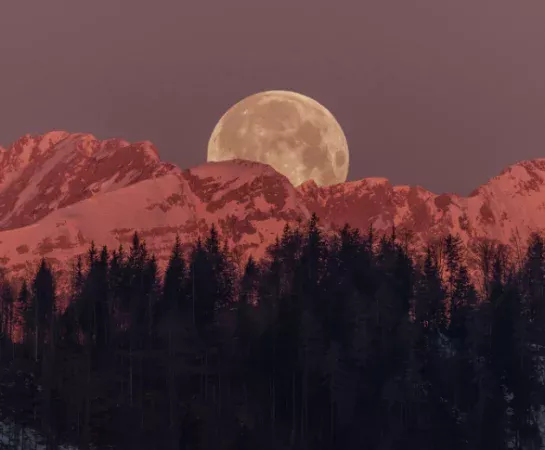
What Is a Supermoon and When Is the Next One
Every time a supermoon rises, the same statistic gets repeated: 14% bigger, 30% brighter. It's in almost every news segment and nearly every listicle, and it's also a comparison almost nobody in the audience will ever actually witness, because it measures the single closest possible

Why the Sky Is Blue During the Day and Black at Night
Sunlight is white. Air is, as far as anyone can tell by looking through a window, colorless. And yet every clear afternoon the same 400,000-kilometer column of gas above your head reads as a specific, saturated blue, then goes black within an hour of sunset.
Time Tools
Quick access to timers, stopwatch, world clock and time zone tools.
Time Guides
Read useful guides about time zones, calendars, finance and astronomy.


