Major Airports in Syria
- Aleppo International Airport (ALP) - 01:27:02
- Damascus International Airport (DAM) - 01:27:02
Daylight saving time in Syria
Syria has 1 listed IANA time zones. None of them observe daylight saving time in 2026. The UTC offset remains stable throughout the year.
Best Time to Call Syria
Business hours in Syria (9 AM–5 PM local time) fall at these local times elsewhere:
- Beijing: 2:00 PM – 10:00 PM ( Partial overlap)
- Paris: 8:00 AM – 4:00 PM ( Convenient)
- Toronto: 2:00 AM – 10:00 AM ( Outside normal hours)
- Seoul: 3:00 PM – 11:00 PM ( Partial overlap)
- Mexico City: 12:00 AM – 8:00 AM ( Outside normal hours)
- Cairo: 9:00 AM – 5:00 PM ( Convenient)
- Bangkok: 1:00 PM – 9:00 PM ( Partial overlap)
Times shown reflect current UTC offsets and may shift by up to an hour around daylight saving transitions.
Time Difference from Syria
Compare time in Syria with other countries.
Most Popular Cities in Syria
Holidays in Syria
Official national public holidays. Regional and religious observances may vary by area.
About Time in Syria
The 2022 Reform Changed the Rule Without Moving the Hands
The modern clock is fixed at UTC+3 throughout the year. That arrangement dates from October 2022, when the Council of Ministers decided to retain summer time permanently and abolish the seasonal return to winter time. The important detail is that residents did not experience an immediate one-hour jump when the decision was announced. Clocks had already been running at UTC+3 since the spring transition on 25 March, so the practical change was the cancellation of the expected autumn rollback. The international IANA time-zone database now represents Damascus as a fixed UTC+3 zone after the 2022 seasonal system ended.
The simplicity of the current rule hides a much longer history. Before standardized zone time, historical reconstruction places Damascus on local mean time at UTC+2:25:12. The unusual seconds were a consequence of longitude: the clock was effectively tied to the local meridian rather than rounded to an international whole-hour offset. In 1920, this was replaced by Eastern European Time at UTC+2, moving the legal clock about 25 minutes backward from the older astronomical reference.
Seasonal time began almost immediately. Records show daylight saving operating from April to October in 1920, 1921, 1922 and 1923. It then disappeared for long periods and returned repeatedly during the second half of the twentieth century. The start and end dates changed many times. Some transitions occurred in March, others in April or May, while autumn reversals appeared in September, October or November depending on the year. The history is therefore much more irregular than a simple rule such as "last Sunday in March and October" would suggest.
This matters for historical data. A local timestamp from Damascus cannot safely be converted by applying the modern UTC+3 offset to every period. Before 1920 the offset included minutes and seconds, much of the twentieth century used UTC+2 as standard time, and numerous years temporarily advanced to UTC+3. Since 2022 the same numerical offset has become permanent, so modern timestamps are simpler even though the historical record remains complex.
The Gate Where Falcons Dropped the Hours Into Metal Bowls
Medieval Damascus had a public timekeeping machine that would have been impossible to mistake for an ordinary sundial. During the reign of Nur al-Din in the twelfth century, Muhammad al-Saati constructed a monumental water clock beside Bab Jayrun, the eastern gate associated with the Umayyad Mosque. Academic research places its construction during the period from the mid-1150s to the 1160s. After a fire damaged the mechanism in 1166 or 1167, the same clockmaker rebuilt it.
The machine announced the passage of hours through moving components visible from the street. The Andalusian traveler Ibn Jubayr saw it during his visit to Damascus in 1184 and left one of the most valuable descriptions of its operation. A row of doors represented the hours of daylight. As time passed, the display changed and metal balls were released from the beaks of two mechanical falcons into brass vessels below. The sound of the falling balls turned the measurement of time into a public signal that could be both seen and heard.
The system also had a night-time display. Lamps behind openings in the clock indicated the progression of the nocturnal hours, allowing the mechanism to continue communicating time after the daylight display was no longer visible. The clock was driven hydraulically, with water regulating the rate at which the mechanism advanced. This was a sophisticated engineering problem because traditional temporal hours did not always have equal duration. Daylight and darkness change length through the seasons, so a machine intended to represent such hours needed a way to accommodate that variation.
Knowledge of the mechanism survived because Muhammad al-Saati was followed by his son Ridwan. Ridwan repaired the clock and in 1203 completed a treatise explaining its construction and operation. Manuscript copies preserve enough information for modern historians and engineers to study and reconstruct the design. The importance of the Jayrun clock therefore lies not only in the machine itself, which no longer survives, but also in the unusually detailed documentary trail linking its maker, eyewitness descriptions and a technical manual written by the next generation.
The clock demonstrates that public time in medieval Damascus could be architectural, mechanical and theatrical at once. Hours were not hidden inside a personal device. They were translated into doors, lamps, moving birds, falling metal balls and sound in one of the busiest religious and urban spaces of the city.
Ibn al-Shatir Turned Prayer Time Into Precision Astronomy
Two centuries later, the Umayyad Mosque became associated with another major advance in practical timekeeping. Ibn al-Shatir, who died in 1375, worked there as a muwaqqit, a specialist responsible for determining the correct times of the daily prayers. The position demanded considerably more than reading a clock. Prayer times depend on the changing altitude of the Sun, twilight and the seasonal length of the day, so a professional muwaqqit needed geometry, spherical astronomy, tables and observational instruments.
Ibn al-Shatir constructed a monumental horizontal sundial for the mosque in 1371 or 1372. Research by historians of Islamic astronomy describes a marble slab approximately two metres by one metre, engraved with an exceptionally complex network of lines and curves. The instrument could indicate equal, or equinoctial, hours as well as intervals measured from sunrise, toward sunset, around midday and in relation to the afternoon prayer.
One of its technically important features was a gnomon aligned with the celestial pole rather than simply standing vertically above the dial. A polar gnomon produces a shadow whose angular motion corresponds directly to the rotation of Earth, making equal-hour markings much more practical. The design incorporated several related time scales on the same surface rather than reducing the day to one set of hour lines.
The original instrument did not remain intact. Modern scholarship records that fragments survive at the National Museum in Damascus, while the sundial visible on the mosque minaret is a later reproduction made in the nineteenth century. That distinction is useful because photographs of the present structure can otherwise be mistaken for the fourteenth-century original.
Ibn al-Shatir also prepared astronomical tables relevant to practical timekeeping. Surviving manuscript traditions include calculations for sunrise, sunset, twilight and the afternoon prayer, along with other spherical astronomical functions. His work illustrates how demanding accurate time determination could become before mechanical clocks and electronic ephemerides. A daily religious requirement helped sustain a specialized scientific profession in which observational astronomy, mathematical calculation and instrument design were tightly connected.
At Ugarit, Archaeologists Found Calendars Written More Than Three Thousand Years Ago
On the Mediterranean coast near modern Latakia, the ruins of Ugarit preserve a much older record of how organized societies structured time. The city flourished during the second millennium BCE and produced a large archive of clay tablets written in Ugaritic, Akkadian and other languages. Archaeological work at Ras Shamra has recovered administrative, literary and ritual documents from the Late Bronze Age, providing unusually detailed evidence for the chronology of festivals and named months.
One tablet in particular, RS 24.249, has been described in academic research as the most complete surviving ritual calendar from Ugarit for a single month. Rather than presenting an abstract calendar detached from human activity, the text organizes ceremonies and offerings according to particular days. Other tablets extend across more than one month but survive in more fragmentary condition. Together they allow scholars to reconstruct parts of a calendrical system that was already regulating communal activity thousands of years before mechanical timekeeping.
Lunar phases were important temporal markers. Ugaritic ritual texts contain references associated with the new Moon and full Moon, and some ceremonies were organized around particular numbered days within the month. This is significant because observing the Moon provides a naturally repeating cycle of roughly 29.5 days. A lunar sequence can organize months effectively, but it does not divide evenly into the solar year, creating the familiar ancient problem of keeping lunar months aligned with agricultural seasons.
Researchers are deliberately cautious about how the Ugaritic calendar solved that problem. A recent scholarly review of the surviving evidence shows that even the exact order and interpretation of several month names remain under discussion. There are possible references to an intercalary, or additional, month, but the evidence is not strong enough to reconstruct a complete fixed intercalation rule with confidence. Rather than being a weakness, this uncertainty is part of what makes the tablets useful: they preserve an actual historical calendar whose details must be rebuilt from incomplete administrative and ritual records rather than projected backward from later systems.
The contrast with modern timekeeping is striking. Current civil time can be expressed as a numerical offset from UTC and synchronized electronically. At Ugarit, chronology was embedded in named months, lunar phases, ritual obligations and the sequence of days within the religious year. Both systems coordinate society, but they do so at very different scales and with very different astronomical foundations.
In 1999, the Moon's Shadow Crossed the Far Northeast in About Two Minutes
On 11 August 1999, the last total solar eclipse of the twentieth century crossed Europe, Turkey and the Middle East before continuing through Iran, Pakistan and India. NASA calculations show that after traversing southeastern Turkey, the Moon's umbral shadow briefly entered the northeastern corner of Syrian territory on its way toward Iraq.
The timing can be reconstructed very precisely. NASA placed the shadow near the Turkish-Syrian border at approximately 11:45 UTC. Around that section of the central path, totality lasted about 2 minutes and 5 seconds and the Sun stood approximately 50 degrees above the horizon. Because seasonal time was in force in August 1999, local civil clocks were three hours ahead of UTC. The central phase therefore occurred at roughly 14:45 local time in the affected area.
Total solar eclipses demonstrate the difference between ordinary civil time and astronomical prediction particularly well. The local clock may be set by legislation and political boundaries, but the arrival of the lunar shadow is determined by orbital mechanics, Earth rotation and the exact geometry of the Sun and Moon. Predicting where a strip only tens of kilometres wide will cross the surface requires the event to be calculated in a uniform astronomical time framework and then converted into the local time used by observers.
The 1999 event also provides a useful example of why UTC is indispensable for international science. Observers in different countries along the path could record the same eclipse using one reference scale even though their wall clocks showed different hours. The shadow crossed national borders within minutes, while UTC allowed photographs, atmospheric measurements and contact timings from widely separated locations to be compared without ambiguity.
There is a remarkable historical continuity behind these different methods. Ugaritic scribes organized ritual time partly through the Moon, medieval engineers used water to make hours visible in the streets of Damascus, Ibn al-Shatir calculated solar positions for daily timekeeping, and twentieth-century astronomers predicted the passage of the lunar shadow to the second. The instruments and numerical standards changed completely, but the underlying task remained the same: relate human time to repeatable motions in the sky.
Frequently Asked Questions
How many time zones does Syria have?
One. The whole of Syria follows Asia/Damascus, so every city shows the same local time as the capital, Damascus.
Is Syria ahead of or behind GMT?
Syria is currently 3 hours ahead of GMT (UTC+3).
Does Syria use summer time?
No. Syria does not observe daylight saving time, so its clocks stay at UTC+3 all year. Its time difference with countries that do change their clocks still shifts by an hour in spring and autumn.
How many public holidays does Syria have in 2026?
Syria has 20 national public holidays in 2026, when banks and government offices are usually closed. Some regions may also have their own local holidays.
How do I dial a phone number in Syria from abroad?
From a mobile phone, type +963 and then the local number without the leading 0 used for domestic calls, if it has one. From a landline, replace the plus sign with your exit code: 011 from the US and Canada, or 00 from most of Europe, for example 00 963 followed by the number.
What language is spoken in Syria?
The main languages of Syria are Arabic, Kurdish and Armenian.
Beyond the Clock

Why the Year Starts on January 1
Nothing happens in the sky on January 1. The winter solstice comes about ten days earlier, Earth's closest approach to the Sun a few days later, and no lunar phase is tied to the date. January 1 is not an astronomical boundary. It is an

Friday the 13th: How Often It Happens and Why It Falls on a Friday Most Often
November 13, 2026 is the third Friday the 13th of the year, after February 13 and March 13. That won't happen again until 2037. The next one after November comes on August 13, 2027, and then the calendar produces the longest possible drought: 14 months

When Is Eid al-Fitr and How Its Date Depends on Ramadan’s Final Moon Sighting
Eid al-Fitr never sits on a fixed date, and it isn't confirmed until the night before it happens. Unlike Christmas or New Year's Day, locked to the Gregorian calendar months in advance, the first day of Shawwal depends on whether a sliver of crescent moon
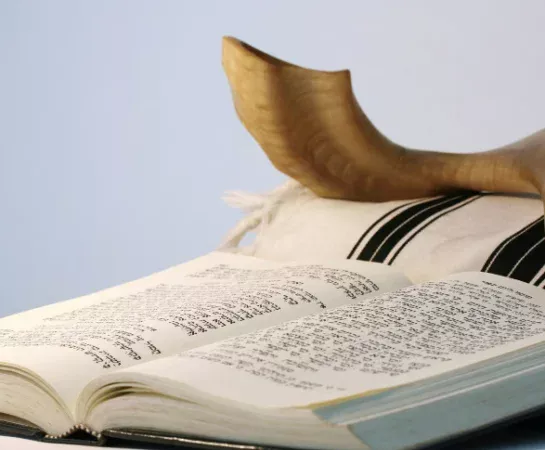
When Is Yom Kippur and Why It Always Falls 10 Days After Rosh Hashanah
Yom Kippur is the tenth day of Tishrei, and Rosh Hashanah is the first, so the ten-day gap between them looks like simple arithmetic. It isn't. The Hebrew calendar has a set of centuries-old rules that quietly forbid Rosh Hashanah from landing on three specific

Why the Moon’s Phases Don’t Actually Change Its Size
A thin crescent looks small enough to disappear. A full moon looks like it's swelling on the horizon. Neither impression is true. The Moon's diameter is 3,474 kilometers on every night of the month, whether it's a sliver or a full disc, and nothing in
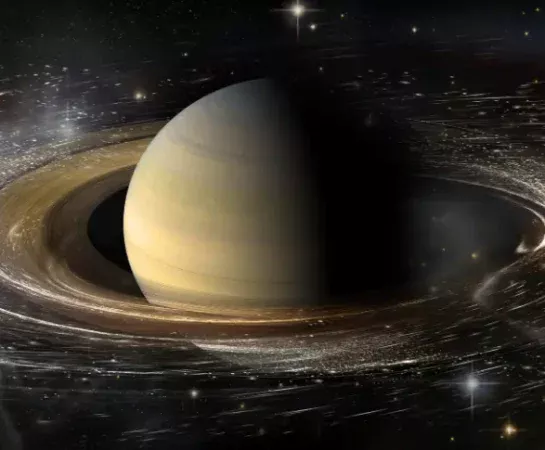
Why Saturn’s Rings Are Disappearing From View in 2025 and 2026
Saturn's rings turned edge-on to Earth on March 23, 2025, at 12:04 p.m. EDT, and for weeks the planet looked like a plain yellow ball through backyard telescopes. This is not decay or destruction. It is a geometric alignment called a ring plane crossing, and
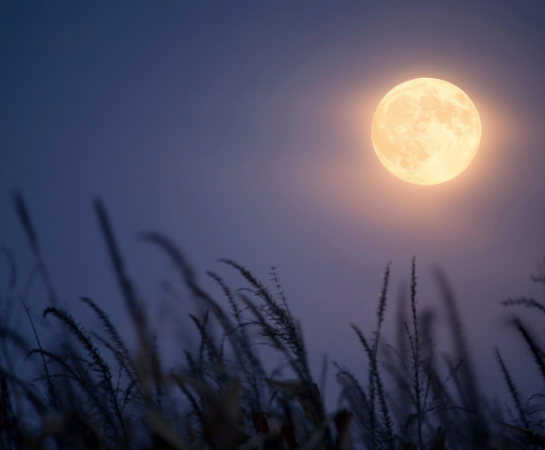
What Is a Harvest Moon and Why It Rises at Almost the Same Time Several Nights Running
On most nights of the year, the Moon rises roughly 50 minutes later than it did the night before. Around the Harvest Moon, that gap collapses to as little as 10 minutes in parts of the UK and Canada, and rarely more than 30 minutes
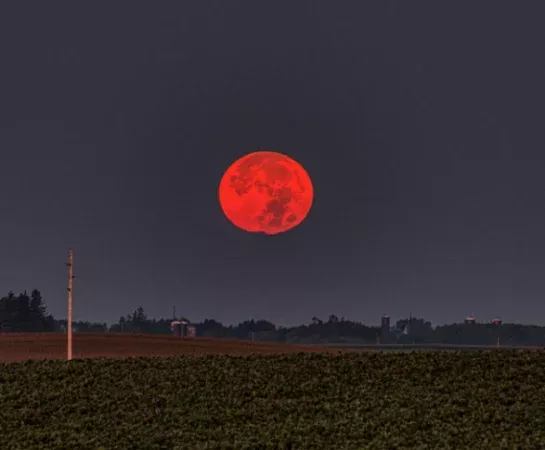
What Is a Blood Moon and Why Does the Moon Turn Red
On the night of August 27, 2026, the Moon came within a hair of disappearing entirely. Earth's shadow covered 96.2% of its surface, a partial eclipse so deep that skywatchers across the Americas, Europe, and Africa watched it turn a rusty, almost total red without
Time Tools
Quick access to timers, stopwatch, world clock and time zone tools.
Time Guides
Read useful guides about time zones, calendars, finance and astronomy.


