Major Airports in Slovakia
- M. R. Štefánik Airport (BTS) - 00:20:18
Daylight saving time changes in Slovakia
Slovakia has 1 listed IANA time zones. 1 of them observe daylight saving time changes in 2026.
Next change: October 25, 2026
Clock moves back from 03:00 to 02:00 local time.
Best Time to Call Slovakia
Business hours in Slovakia (9 AM–5 PM local time) fall at these local times elsewhere:
- Beijing: 3:00 PM – 11:00 PM ( Partial overlap)
- Paris: 9:00 AM – 5:00 PM ( Convenient)
- Toronto: 3:00 AM – 11:00 AM ( Outside normal hours)
- Seoul: 4:00 PM – 12:00 AM (next day) ( Partial overlap)
- Mexico City: 1:00 AM – 9:00 AM ( Outside normal hours)
- Cairo: 10:00 AM – 6:00 PM ( Convenient)
- Bangkok: 2:00 PM – 10:00 PM ( Partial overlap)
Times shown reflect current UTC offsets and may shift by up to an hour around daylight saving transitions.
Time Difference from Slovakia
Compare time in Slovakia with other countries.
Most Popular Cities in Slovakia
Holidays in Slovakia
Official national public holidays. Regional and religious observances may vary by area.
About Time in Slovakia
Two Nations Born at the Same Midnight
At midnight on 1 January 1993, Czechoslovakia, a federal state formed in 1918 from the wreckage of the Austro-Hungarian Empire, ceased to exist, and the Czech Republic and the Slovak Republic came into being simultaneously in its place. The dissolution followed a vote in the federal legislature that November, negotiated primarily between Czech prime minister Václav Klaus and Slovak prime minister Vladimír Mečiar, and notably proceeded without any public referendum on either side, even though opinion polls at the time suggested most citizens in both republics actually preferred to remain united.
What made the split genuinely unusual in the history of national breakups was how little drama accompanied it. Dubbed the Velvet Divorce, a deliberate echo of the peaceful Velvet Revolution that had ended communist rule four years earlier, the separation unfolded through negotiation rather than force, standing in stark contrast to the violent disintegration of Yugoslavia happening at almost exactly the same moment elsewhere in Europe. The practical effects of the split accumulated gradually rather than all at once: Czech television largely stopped broadcasting in Slovak in the years that followed, and within a generation, younger Czechs had noticeably weaker comprehension of a language their parents had grown up hearing every day as a normal part of shared national life.
Sixty Days at Eight O'Clock in the Evening
At 20:00 on 29 August 1944, Slovak Lieutenant Colonel Ján Golian issued a coded order over a resistance radio transmitter, the phrase "start the evacuation," setting the Slovak National Uprising formally in motion from its headquarters in the central town of Banská Bystrica. The revolt was aimed simultaneously at the invading German Wehrmacht and at the collaborationist Slovak government of Jozef Tiso, a Catholic priest whose wartime state had allied itself with Nazi Germany.
What began with fewer than 20,000 mutinous soldiers eventually drew in tens of thousands more, alongside partisan fighters representing some thirty different nationalities, and at its peak the insurgents controlled more than half of what was then Slovak territory. German reinforcements diverted from Hungary prevented the rebels from linking up with the advancing Soviet Army through the Carpathian mountains, and after roughly sixty days of fighting, the uprising collapsed with the fall of Banská Bystrica on 27 or 28 October 1944, depending on the source consulted, though scattered partisan resistance continued for months afterward. Despite its military defeat, the uprising is remembered as one of the largest anti-Nazi insurrections anywhere in occupied Europe, and its anniversary has been marked as a national holiday in Slovakia continuously since the end of the war.
Frequently Asked Questions
How many time zones does Slovakia have?
One. The whole of Slovakia follows Europe/Bratislava, so every city shows the same local time as the capital, Bratislava.
Is Slovakia ahead of or behind GMT?
Slovakia is currently 2 hours ahead of GMT (UTC+2).
Does Slovakia use summer time?
Yes. Bratislava uses UTC+1 (CET) in standard time and UTC+2 (CEST) during daylight saving time, and is currently on summer time.
How many public holidays does Slovakia have in 2026?
Slovakia has 11 national public holidays in 2026, when banks and government offices are usually closed. Some regions may also have their own local holidays.
How do I dial a phone number in Slovakia from abroad?
From a mobile phone, type +421 and then the local number without the leading 0 used for domestic calls, if it has one. From a landline, replace the plus sign with your exit code: 011 from the US and Canada, or 00 from most of Europe, for example 00 421 followed by the number.
What language is spoken in Slovakia?
The main languages of Slovakia are Slovak and Hungarian.
Beyond the Clock

India vs US Time Difference: Why the Gap Changes Twice a Year
For most of the year, India is 9 hours 30 minutes ahead of New York. From November 1, 2026 to March 14, 2027, it is 10 hours 30 minutes ahead. India's clocks do not change in either case. The whole difference comes from the United

When Do the Clocks Change in 2026: US, UK, and EU Dates
The clocks fall back twice this autumn on the two sides of the Atlantic, one week apart. The United Kingdom and every European Union country end summer time on Sunday, October 25, 2026. The United States and most of Canada end daylight saving time on

What Time Zone Is Mexico In and Why It Stopped Changing Its Clocks
Mexico uses four time zones, and since October 30, 2022, most of the country keeps the same time all year. Mexico City, Guadalajara and Monterrey stay at UTC−6 in January and in July. Cancún stays at UTC−5, Los Cabos and Mazatlán at UTC−7. The only
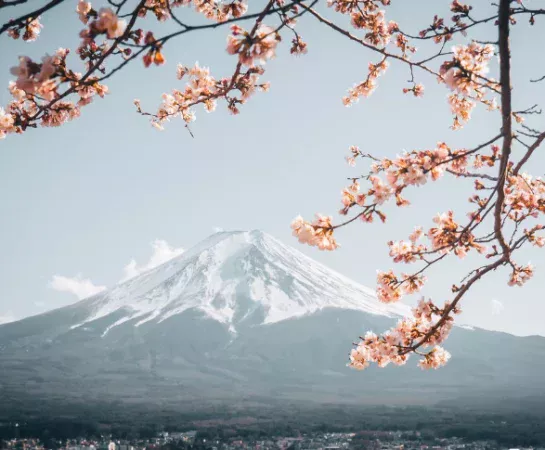
Why Japan Never Adopted Daylight Saving Time
The premise behind that headline needs a small correction before the story even starts. Japan did try daylight saving time, for four full years, complete with clocks moving forward and back on a fixed schedule. What Japan never did was choose it. The distinction between

Why the Earliest Sunset Comes Before the Winter Solstice
In New York, the Sun sets earliest on Monday, December 7, 2026, at about 4:28 PM. The shortest day comes two weeks later. The solstice falls at 20:50 UTC on December 21 (3:50 PM EST), and on that day New York gets roughly 9 hours

When Does Winter Start: Meteorological vs Astronomical Seasons
Winter 2026 starts twice in the Northern Hemisphere. Meteorological winter begins on Tuesday, December 1, 2026. Astronomical winter begins at the December solstice, on Monday, December 21, 2026 at 20:50 UTC, which is 3:50 p.m. Eastern and 12:50 p.m. Pacific. Both answers are correct. They
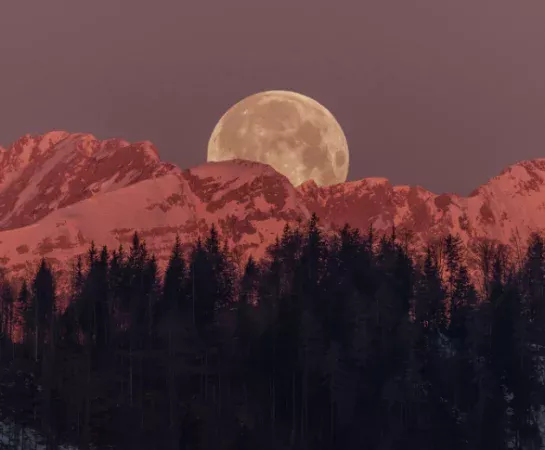
What Is a Supermoon and When Is the Next One
Every time a supermoon rises, the same statistic gets repeated: 14% bigger, 30% brighter. It's in almost every news segment and nearly every listicle, and it's also a comparison almost nobody in the audience will ever actually witness, because it measures the single closest possible
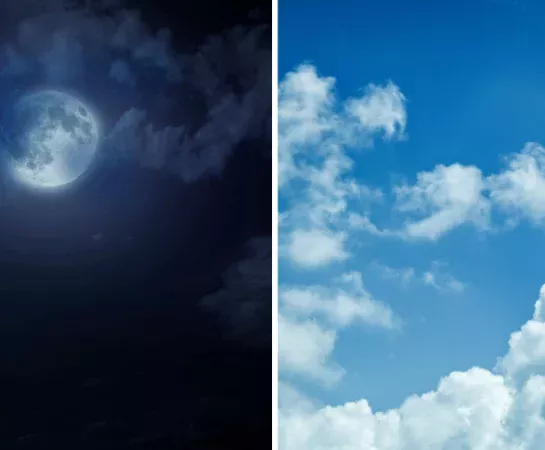
Why the Sky Is Blue During the Day and Black at Night
Sunlight is white. Air is, as far as anyone can tell by looking through a window, colorless. And yet every clear afternoon the same 400,000-kilometer column of gas above your head reads as a specific, saturated blue, then goes black within an hour of sunset.
Time Tools
Quick access to timers, stopwatch, world clock and time zone tools.
Time Guides
Read useful guides about time zones, calendars, finance and astronomy.


