Major Airports in Angola
- Dr. Antonio Agostinho Neto International Airport (NBJ) - 05:58:27
- Quatro de Fevereiro International Airport (LAD) - 05:58:27
Daylight saving time in Angola
Angola has 1 listed IANA time zones. None of them observe daylight saving time in 2026. The UTC offset remains stable throughout the year.
Best Time to Call Angola
Business hours in Angola (9 AM–5 PM local time) fall at these local times elsewhere:
- Beijing: 4:00 PM – 12:00 AM (next day) ( Partial overlap)
- Paris: 10:00 AM – 6:00 PM ( Convenient)
- Toronto: 4:00 AM – 12:00 PM ( Outside normal hours)
- Seoul: 5:00 PM – 1:00 AM (next day) ( Partial overlap)
- Mexico City: 2:00 AM – 10:00 AM ( Outside normal hours)
- Cairo: 11:00 AM – 7:00 PM ( Convenient)
- Bangkok: 3:00 PM – 11:00 PM ( Partial overlap)
Times shown reflect current UTC offsets and may shift by up to an hour around daylight saving transitions.
Time Difference from Angola
Compare time in Angola with other countries.
Most Popular Cities in Angola
Holidays in Angola
Official national public holidays. Regional and religious observances may vary by area.
About Time in Angola
How Angola Moved From Local Solar Time to UTC+1
Angola uses one civil time across the entire country: West Africa Time, UTC+1. The offset remains unchanged throughout the year, and Angola does not use daylight saving time. This makes the modern system unusually stable. There is no spring or autumn clock change, and the relationship between local civil time and UTC is always exactly one hour.
That simplicity is the result of an earlier transition away from local timekeeping. Historical data preserved in the IANA time zone database reconstructs Luanda at UTC+0:52:56 before 1892 and at UTC+0:52:04 afterward. Offsets of this kind were common before national standard time because clocks could be based on the local meridian rather than on a uniform international zone. In practical terms, noon was tied much more closely to the Sun's passage over a particular place than it is under modern civil time.
The decisive standardization came through the Portuguese time reform adopted in 1911 for Portugal and its overseas territories. Historical corrections to the IANA database place Angola's transition to UTC+1 at the beginning of 1912. The change was small on a clock, only a few minutes from the previous Luanda offset, but conceptually it was much larger. Angola had moved from a locally defined time to an exact whole-hour relationship with the international reference system. UTC+1 has remained the basis of Angolan civil time ever since.
Angola also avoided a second layer of complexity that affected many countries during the twentieth century. There is no recorded period of daylight saving time in its modern time-zone history. As a result, a historical timestamp expressed in Angolan civil time does not require the seasonal DST checks that are necessary for many European or North American locations. For modern computing, aviation, telecommunications and international scheduling, Africa/Luanda is therefore one of the more straightforward time-zone histories once the early local-time period has been accounted for.
The Eclipse That Put Angola on the Astronomical Clock
On 21 June 2001, the first total solar eclipse of the twenty-first century brought one of the century's most dramatic astronomical events directly across Angola. The Moon's umbral shadow began over the South Atlantic and reached the Angolan coast before continuing east across southern Africa. NASA's eclipse calculations show that the center line in Angola offered roughly four and a half minutes of totality, long enough for both scientific observations and detailed photography of the solar corona.
The timing was especially favorable for Angola. NASA maps place the passage of totality across the country at roughly 12:35 to 12:55 Universal Time, which corresponded to about 13:35 to 13:55 on Angolan clocks because the country was, as it is today, on UTC+1. During those minutes, locations inside the path of totality experienced the rapid sequence that makes a total eclipse so striking: daylight weakened, the Sun disappeared behind the Moon, the corona became visible, and direct sunlight returned only minutes later.
Angola was not simply a point on an eclipse map. Scientific teams traveled there to observe the event, and the European Space Agency documented observations made from Angola while the ESA and NASA SOHO spacecraft monitored the Sun continuously from space. That combination allowed researchers to compare the corona seen from the ground during totality with simultaneous spacecraft measurements. Angola therefore became one of the principal observing locations for an astronomical event whose path later crossed Zambia, Zimbabwe, Mozambique and Madagascar before ending over the Indian Ocean.
The event is a useful example of the difference between civil time and astronomical time. Angolan clocks continued normally through the afternoon, but the eclipse itself was calculated in Universal Time to allow observations from many countries to be coordinated on a single reference scale. For scientists in Angola, the same instant could therefore be described as a local afternoon time in WAT or as a precise UT value used in an international observing program.
Midnight on 11 November 1975
Few moments in Angola's modern history are tied to the clock as precisely as independence. Portuguese documentation transmitted to the United Nations specified that Angola's independence and full sovereignty would take effect at midnight on 11 November 1975. At essentially the same historical threshold, Agostinho Neto proclaimed the People's Republic of Angola in Luanda. Contemporary material later submitted to the United Nations likewise describes the proclamation as taking place at midnight.
The choice of midnight had a clear legal meaning. It created an exact boundary between two political periods: before that instant Angola remained formally within the Portuguese decolonization process, while from midnight the transfer of sovereignty was considered effective. Independence dates are often remembered only as calendar dates, but in Angola the surviving diplomatic record makes the transition unusually precise. The change was attached not simply to 11 November, but to the moment that date began.
The surrounding circumstances were far from ceremonial. Angola was already in armed conflict, Portuguese authority was ending, and competing Angolan movements were contesting control and political legitimacy. That makes the midnight timestamp particularly important when reading historical records from the period. Events described as occurring on 10 or 11 November can fall on opposite sides of the formal independence boundary even when separated by only a few hours.
Every 11 November, Angola's Independence Day commemorates that national transition. Behind the annual date is a specific temporal marker preserved in international records: midnight, the conventional point at which one civil day becomes the next, was also used to mark the legal end of Portuguese sovereignty and the beginning of independent Angola.
Frequently Asked Questions
How many time zones does Angola have?
One. The whole of Angola follows Africa/Luanda, so every city shows the same local time as the capital, Luanda.
Is Angola ahead of or behind GMT?
Angola is currently 1 hour ahead of GMT (UTC+1).
Does Angola use summer time?
No. Angola does not observe daylight saving time, so its clocks stay at UTC+1 all year. Its time difference with countries that do change their clocks still shifts by an hour in spring and autumn.
How many public holidays does Angola have in 2026?
Angola has 15 national public holidays in 2026, when banks and government offices are usually closed. Some regions may also have their own local holidays.
How do I dial a phone number in Angola from abroad?
From a mobile phone, type +244 and then the local number without the leading 0 used for domestic calls, if it has one. From a landline, replace the plus sign with your exit code: 011 from the US and Canada, or 00 from most of Europe, for example 00 244 followed by the number.
What language is spoken in Angola?
The main language of Angola is Portuguese.
Beyond the Clock

Why Europe Still Changes Its Clocks Despite Voting to Stop
On Sunday, October 25, 2026, clocks across the European Union will go back one hour, exactly as they have every autumn since the 1980s. That is seven and a half years after the European Parliament voted to end seasonal clock changes by 2021. Many Europeans

When Do the Clocks Change in 2026: US, UK, and EU Dates
The clocks fall back twice this autumn on the two sides of the Atlantic, one week apart. The United Kingdom and every European Union country end summer time on Sunday, October 25, 2026. The United States and most of Canada end daylight saving time on

What Time Zone Is Mexico In and Why It Stopped Changing Its Clocks
Mexico uses four time zones, and since October 30, 2022, most of the country keeps the same time all year. Mexico City, Guadalajara and Monterrey stay at UTC−6 in January and in July. Cancún stays at UTC−5, Los Cabos and Mazatlán at UTC−7. The only

Why Japan Never Adopted Daylight Saving Time
The premise behind that headline needs a small correction before the story even starts. Japan did try daylight saving time, for four full years, complete with clocks moving forward and back on a fixed schedule. What Japan never did was choose it. The distinction between

Why Clocks Change at 2 AM on a Sunday
In the United States, the clock change is written into federal law to the hour. Daylight saving time begins "at 2 o'clock antemeridian" on the second Sunday of March and ends at the same hour on the first Sunday of November (15 U.S.C. 260a). In
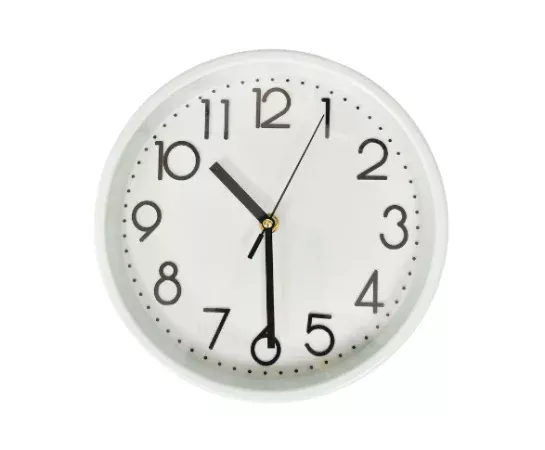
Why We Say “Quarter Past” and “Half Past” Instead of Just Saying the Minutes
By the year 1500, the clock at Wells Cathedral in England was already striking the quarter-hours for the whole town to hear. What it could not do was show a minute. There was no minute hand on any clock anywhere, because no clock mechanism was
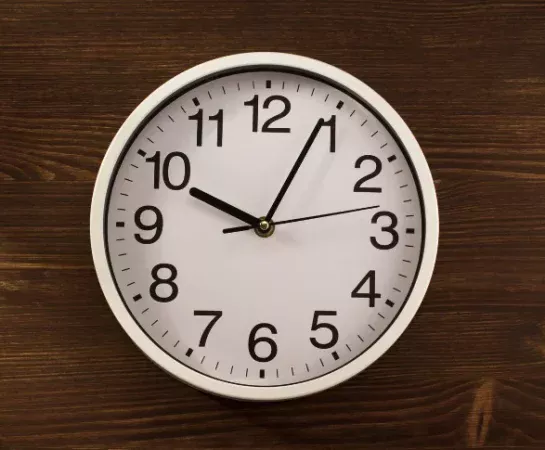
Why Clocks Run Clockwise: The Sundial Origin of “Clockwise”
Nothing about the universe requires a clock's hands to sweep the way they do. There's no physical law dictating that "forward" in time should move to the right at the top of a dial. The direction is a historical accident, frozen into every watch, wall

What Is Swatch Internet Time and Why It Failed
On October 23, 1998, at a ceremony called the Junior Summit '98, a Swiss watch executive and the then-director of the MIT Media Lab stood together and announced that time zones were unnecessary. The proposal was called Swatch Internet Time. It replaced hours, minutes, and
Time Tools
Quick access to timers, stopwatch, world clock and time zone tools.
Time Guides
Read useful guides about time zones, calendars, finance and astronomy.


