Major Airports in Nigeria
- Akanu Ibiam International Airport (ENU) - 23:44:19
- Asaba International Airport (ABB) - 23:44:19
- General Tunde Idiagbon International Airport (ILR) - 23:44:19
- Kaduna International Airport (KAD) - 23:44:19
- Maiduguri International Airport (MIU) - 23:44:19
- Mallam Aminu Kano International Airport (KAN) - 23:44:19
- Murtala Muhammed International Airport (LOS) - 23:44:19
- Nnamdi Azikiwe International Airport (ABV) - 23:44:19
- Port Harcourt International Airport (PHC) - 23:44:19
- Sadiq Abubakar III International Airport (SKO) - 23:44:19
- Sir Abubakar Tafawa Balewa Bauchi State International Airport (BCU) - 23:44:19
Daylight saving time in Nigeria
Nigeria has 1 listed IANA time zones. None of them observe daylight saving time in 2026. The UTC offset remains stable throughout the year.
Best Time to Call Nigeria
Business hours in Nigeria (9 AM–5 PM local time) fall at these local times elsewhere:
- Beijing: 4:00 PM – 12:00 AM (next day) ( Partial overlap)
- Paris: 10:00 AM – 6:00 PM ( Convenient)
- Toronto: 4:00 AM – 12:00 PM ( Outside normal hours)
- Seoul: 5:00 PM – 1:00 AM (next day) ( Partial overlap)
- Mexico City: 2:00 AM – 10:00 AM ( Outside normal hours)
- Cairo: 11:00 AM – 7:00 PM ( Convenient)
- Bangkok: 3:00 PM – 11:00 PM ( Partial overlap)
Times shown reflect current UTC offsets and may shift by up to an hour around daylight saving transitions.
Time Difference from Nigeria
Compare time in Nigeria with other countries.
Most Popular Cities in Nigeria
Holidays in Nigeria
Official national public holidays. Regional and religious observances may vary by area.
About Time in Nigeria
In 1920s Lagos, Cannon Fire Was Part of the City's Timekeeping System
Before radio receivers and synchronized personal clocks became ordinary, Lagos had a much louder way of distributing the time. Time guns were fired as public signals, allowing people within earshot to check clocks and organize the working day without needing direct access to a precision timepiece.
Historical research on colonial Lagos records that during the 1920s time guns could be fired three times a day and heard within roughly a two-mile radius. The service was regular enough to appear as a government expense. In 1928, about 22 shillings and 6 pence per month was being spent on gunpowder for the signals, which were fired by soldiers or locally hired personnel.
The importance of the signal became clearest when it disappeared. The Apapa time gun was suspended during the Second World War for security reasons. After the war, Lagos residents asked for it back. In October 1945, a newspaper correspondent argued for its restoration because the gun signal had served to regulate public time.
By then Nigeria had already possessed a legal national time for decades. The continued usefulness of the gun shows the difference between defining standard time and distributing it. A government could legislate the correct hour, but ordinary clocks still needed a practical signal against which they could be set.
Lagos Tried Greenwich Time in 1905, Then Went Back to Its Own Local Time
At the beginning of the twentieth century, Lagos mean time was approximately 13 minutes and 35 seconds ahead of Greenwich. That offset followed the city's longitude and is preserved in modern historical reconstruction as UTC+00:13:35.
An official notice in June 1905 announced a sharp break with that system. From July 1, Greenwich Mean Solar Time was to be used throughout the Colony and Protectorate. The instruction was practical and unusually precise: clocks showing local mean time had to be put back by 13 minutes and 35 seconds.
The experiment did not last. Contemporary newspaper evidence later recovered by time-zone researchers reports another official notice for July 1, 1908, restoring local mean time. Clocks in Lagos therefore returned to the longitude-based offset they had used before 1905.
The episode gives Lagos an uncommon early twentieth-century sequence: local solar time, three years on Greenwich time, then a deliberate return to local solar time. Current IANA historical data encode that reversal in Africa/Lagos, although the pre-1970 record depends heavily on surviving notices and later historical reconstruction.
The Political Unification of Nigeria in 1914 Also Created a New National Clock
January 1, 1914 joined the Northern and Southern Nigeria protectorates into a single administration. On the same date, a universal standard time was introduced for the new Nigeria: GMT+00:30.
The official colonial report for 1914 described the new time as half an hour ahead of Greenwich, corresponding to the meridian 7°30′ east. Lagos had previously been using its own mean time near GMT+00:13:35, so the new standard advanced Lagos clocks by a little more than sixteen minutes.
Choosing a half-hour offset was a compromise between local solar geography and the need for one administrative time across a large territory. The country no longer required the clock in each place to reflect its own longitude. Courts, government offices, transport and communications could work against the same civil reference.
The half-hour system survived for only five years, but it marks the point at which Nigeria acquired a genuinely nationwide standard time rather than a time convention centered on Lagos.
In 1919 Nigeria Advanced Every Official Clock by Another 30 Minutes, Including the Time Guns
On August 28, 1919, Nigeria's Legislative Council considered another change. The country was then using GMT+00:30. The proposal was to abandon the half-hour standard and join the one-hour zone east of Greenwich, making Nigerian time GMT+01:00.
The debate was explicitly connected with international standardization. The acting legal adviser described a system of hourly zones around the globe and argued that common time notation would help military, naval and air services operate on compatible standards.
The reform affected more than clocks in government buildings. The council discussion specifically noted that the firing times of the public time guns would also have to be moved forward by thirty minutes. Legal time and the physical signal used to communicate that time were changed together.
Ordinance 18 of 1919 took effect on September 1. Nigeria moved from GMT+00:30 to GMT+01:00, establishing the offset now known as West Africa Time. Unlike the repeated experiments of the previous fourteen years, this change endured. Nigeria has remained on UTC+01:00 without a seasonal daylight-saving system.
Frequently Asked Questions
How many time zones does Nigeria have?
One. The whole of Nigeria follows Africa/Lagos, so every city shows the same local time as the capital, Abuja.
Is Nigeria ahead of or behind GMT?
Nigeria is currently 1 hour ahead of GMT (UTC+1).
Does Nigeria use summer time?
No. Nigeria does not observe daylight saving time, so its clocks stay at UTC+1 all year. Its time difference with countries that do change their clocks still shifts by an hour in spring and autumn.
How many public holidays does Nigeria have in 2026?
Nigeria has 14 national public holidays in 2026, when banks and government offices are usually closed. Some regions may also have their own local holidays.
How do I dial a phone number in Nigeria from abroad?
From a mobile phone, type +234 and then the local number without the leading 0 used for domestic calls, if it has one. From a landline, replace the plus sign with your exit code: 011 from the US and Canada, or 00 from most of Europe, for example 00 234 followed by the number.
What language is spoken in Nigeria?
The main languages of Nigeria are English, Hausa and Yoruba.
Beyond the Clock

Why the Earliest Sunset Comes Before the Winter Solstice
In New York, the Sun sets earliest on Monday, December 7, 2026, at about 4:28 PM. The shortest day comes two weeks later. The solstice falls at 20:50 UTC on December 21 (3:50 PM EST), and on that day New York gets roughly 9 hours

Total Solar Eclipse on August 2, 2027: Where, When, and Why It Lasts So Long
On Monday, August 2, 2027, the Moon's shadow will cross southern Spain, North Africa and the Arabian Peninsula, producing the second-longest total solar eclipse of the 21st century. At its maximum, in southern Egypt near Luxor, the Sun will be completely covered for about 6
What Is a Supermoon and When Is the Next One
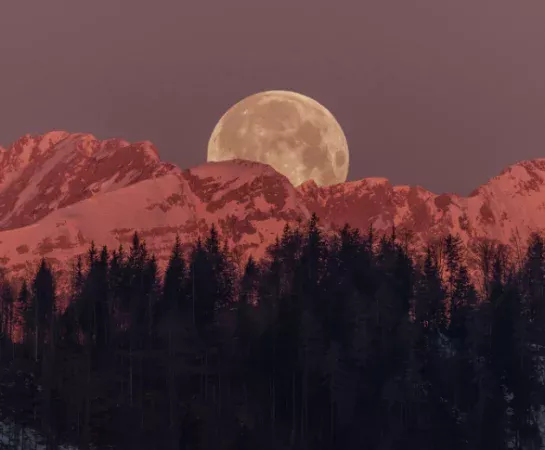
Every time a supermoon rises, the same statistic gets repeated: 14% bigger, 30% brighter. It's in almost every news segment and nearly every listicle, and it's also a comparison almost nobody in the audience will ever actually witness, because it measures the single closest possible

Why the Sky Is Blue During the Day and Black at Night
Sunlight is white. Air is, as far as anyone can tell by looking through a window, colorless. And yet every clear afternoon the same 400,000-kilometer column of gas above your head reads as a specific, saturated blue, then goes black within an hour of sunset.

Working Hours by Country: How Long Is the Workday and the Work Year Around the World
The average worker in Mexico puts in about 2,200 hours a year. The average worker in Germany puts in about 1,340. The gap of roughly 860 hours equals more than 21 standard 40-hour weeks, close to five extra months of full-time work. Most "who works

Why the 40-Hour Work Week Exists: From 10-Hour Days to Ford’s 1926 Experiment
The 40-hour week looks like a natural unit of work, but the number was never derived from a measurement of how much work is best. It is the product of two separate fights: one over the length of the day, which ended at eight hours,

How Americans Spend Their 24 Hours: What the Time Use Survey Shows
The average American age 15 and over logs about 9 hours of sleep a day, spends just over 5 hours on leisure and works 3 hours. That last number looks wrong until you see how it is built, and nearly every headline figure from the

Pomodoro Technique: Why 25 Minutes and When a Different Interval Works Better
The most famous number in time management started as a workaround. In the late 1980s Francesco Cirillo, a university student who could not make himself study, used a tomato-shaped kitchen timer to test a small question: could he work for two minutes without interruption? Twenty-five
Time Tools
Quick access to timers, stopwatch, world clock and time zone tools.
Time Guides
Read useful guides about time zones, calendars, finance and astronomy.


