Major Airports in Algeria
- Aguenar – Hadj Bey Akhamok Airport (TMR) - 00:32:02
- Annaba Rabah Bitat Airport (AAE) - 00:32:02
- Batna Mostefa Ben Boulaid Airport (BLJ) - 00:32:02
- Biskra - Mohamed Khider Airport (BSK) - 00:32:02
- Chlef Aboubakr Belkaid International Airport (CFK) - 00:32:02
- Houari Boumediene Airport (ALG) - 00:32:02
- Jijel Ferhat Abbas Airport (GJL) - 00:32:02
- Mohamed Boudiaf International Airport (CZL) - 00:32:02
- Oran Es-Sénia (Ahmed Ben Bella) International Airport (ORN) - 00:32:02
- Soummam–Abane Ramdane Airport (BJA) - 00:32:02
- Tiska Djanet Airport (DJG) - 00:32:02
- Zenata – Messali El Hadj Airport (TLM) - 00:32:02
Daylight saving time in Algeria
Algeria has 1 listed IANA time zones. None of them observe daylight saving time in 2026. The UTC offset remains stable throughout the year.
Best Time to Call Algeria
Business hours in Algeria (9 AM–5 PM local time) fall at these local times elsewhere:
- Beijing: 4:00 PM – 12:00 AM (next day) ( Partial overlap)
- Paris: 10:00 AM – 6:00 PM ( Convenient)
- Toronto: 4:00 AM – 12:00 PM ( Outside normal hours)
- Seoul: 5:00 PM – 1:00 AM (next day) ( Partial overlap)
- Mexico City: 2:00 AM – 10:00 AM ( Outside normal hours)
- Cairo: 11:00 AM – 7:00 PM ( Convenient)
- Bangkok: 3:00 PM – 11:00 PM ( Partial overlap)
Times shown reflect current UTC offsets and may shift by up to an hour around daylight saving transitions.
Time Difference from Algeria
Compare time in Algeria with other countries.
Most Popular Cities in Algeria
Holidays in Algeria
Official national public holidays. Regional and religious observances may vary by area.
About Time in Algeria
In Algiers, an Observatory Once Set the City Clock by Electrical Signal
Long before radio-controlled clocks, precise time in Algiers was already being distributed electrically. By the mid-1880s the astronomical observatory at Bouzaréah had organized a time service for Algiers and Tunis. Contemporary scientific reporting described it as one of the observatory's established functions alongside astronomy and geodetic work.
An administrative report from the period records the system in unusually practical detail. Twice each week the astronomical observatory communicated directly with the central meteorological office in Algiers. Electrical signals transmitted Algiers mean time from Bouzaréah and were used to regulate a precision clock installed in the courtyard of the Hôtel de Ville. Astronomical observation was therefore converted into a public urban time reference.
The same meteorological network was already operating on strict schedules. Observations from different stations were assembled into a daily weather map, reports were distributed around Algiers, and a forecast was telegraphed to ports along the Algerian and Tunisian coasts before 4 p.m. A dedicated telegraph connection between the meteorological office and the central Post and Telegraph office had entered service on 1 August. Time synchronization, weather observation and telegraphy were becoming parts of the same information infrastructure.
The instruments behind the time service survived even as its technology changed. CRAAG documentation notes that a meridian telescope installed at the observatory supported the Service de l'Heure for years. Determining time from stellar transits and then transmitting it electrically was a direct link between astronomical measurement and the clocks used by institutions in the city below.
Algiers Became One Corner of a Planet-Wide Clock Triangle in 1926
Forty years later, the observatory was no longer merely distributing time locally. It became one of the principal stations in the International Longitude Operation of 1926, an ambitious attempt to compare positions around the Earth using astronomical observations and radio time signals. The International Astronomical Union had approved the project in 1925, and observations ran from 1 October to 1 December 1926.
The central arrangement was deliberately global. Algiers Observatory, the U.S. Naval station at San Diego and the Zi-ka-wei Observatory in Shanghai were selected as three fundamental stations. Their longitude differences formed a large reference polygon around the planet. Other observatories were attached to this framework through secondary networks that included major institutions such as Greenwich, Paris, Potsdam, Pulkovo and Washington.
The experiment depended on clocks being compared across enormous distances. Radio stations transmitted predetermined sequences of rhythmic time signals, while observatories made their own astronomical determinations of time from star transits. Historical technical accounts describe sequences containing 61 signals per minute for five minutes, producing 306 signals in a transmission series. Receiving observatories could record the pulses automatically on chronographs or compare them by coincidence methods.
The purpose was not simply to tell each observatory what time it was. If the stations compared clocks against the same radio signals while independently measuring local astronomical time, scientists could refine differences in longitude and test the consistency of a network extending around the Earth. Algiers had moved from sending its own time to a city clock to participating in an experiment in which synchronized clocks became tools for measuring the planet.
Yennayer Is Older Than the Number 2976
Algeria's calendar culture contains an important distinction that is easily lost in simplified accounts of Yennayer. The festival itself belongs to an old North African agricultural tradition, associated with the opening of a new agrarian year and with seasonal customs that vary between regions. The modern practice of numbering the year as 2976 in 2026 is much newer.
Algerian historical research has examined this distinction directly. Academic studies published through the country's ASJP platform describe the numbered Amazigh era as a twentieth-century construction, established around 1980 and retrospectively anchored to approximately 950 BCE, the period associated with the accession of Shoshenq I in Egypt. The widespread claim that communities had continuously counted thousands of numbered Amazigh years in this form is therefore not supported by that research.
The older layer is agricultural and seasonal. Studies of Yennayer describe it as a renewal festival tied to the rural year, food, household rituals and hopes for agricultural abundance. Regional forms differ, which is precisely why attempts to reduce Yennayer to one origin story or one supposedly unchanged ancient ceremony are historically risky.
Modern Algeria has given the festival a fixed place in the national civil calendar. The state observes 12 January as a paid public holiday. In 2026 official celebrations referred to the occasion as Yennayer 2976. The same date therefore carries two different kinds of chronology: a long-established seasonal festival and a modern numbered era used to express Amazigh historical identity.
Ramadan Can Remain Undated Until the Moon Is Checked
The beginning of Ramadan demonstrates another way in which a national calendar can remain open almost until the month begins. Algeria maintains a National Committee for Crescent Observation under the Ministry of Religious Affairs and Wakfs. Its task is not merely to publish a pre-calculated calendar. The committee announces the beginning of the lunar month after the official observation process.
The 1447 AH decision provides a clear recent example. The committee met at Dar El-Imam in Algiers on the evening of 17 February 2026 to assess the new crescent. The crescent was not established as sighted, so the committee announced that Ramadan would begin on Thursday, 19 February rather than the following day.
This produces a different relationship between calculation and civil scheduling from a holiday fixed permanently to a Gregorian date. Astronomical calculations can predict conjunctions and visibility conditions well in advance, but the national religious announcement follows the procedure used by the official crescent committee. The definitive beginning of the month may therefore be confirmed only shortly before it takes effect.
That decision propagates through daily schedules. Prayer timetables, fasting, religious programming, working arrangements and commercial routines all become attached to the announced lunar date. In this context, astronomical time is not an abstract scientific subject. A decision made after sunset can determine the national timetable for the following weeks.
At 7:04 on 13 February 1960, Reggane Entered the Nuclear Age
The first French nuclear test was detonated in the Algerian Sahara near Reggane on 13 February 1960. The device, code-named Gerboise Bleue, was fired at 07:04. French parliamentary records and the Atomic Energy Commission identify it as the first of four atmospheric tests conducted in the Reggane area between February 1960 and April 1961.
The event is unusually well preserved as a timed audio document. Reporters were present at the test base, and the French audiovisual archive INA retains the broadcast account. Their recorded sequence begins shortly before the explosion. Safety positions were taken as the countdown approached zero, warning rockets indicated that less than a minute remained, and the reporters recorded the detonation and its aftermath.
The sound itself did not arrive as one instantaneous event. INA's description of the recording notes that the audible explosion lasted about fourteen seconds. The reporters first saw the intense flash and developing cloud, then the pressure wave reached their microphones after a delay. Their commentary therefore captured different physical signals from the same event arriving at different times.
The recording did not reach radio listeners live from the Sahara. According to INA, the material was transported to Paris by jet aircraft, passed through the Ministry of the Armed Forces and was broadcast later that day. A precisely scheduled event at 07:04 thus produced two chronologies: the seconds recorded at the test site and the delayed public chronology of a radio audience hearing the event hours afterward.
The later history of the Saharan program extended well beyond that morning. French official and parliamentary records count seventeen nuclear tests in the Algerian Sahara from 1960 to 1966: four atmospheric tests around Reggane and thirteen underground tests at In Ekker. The environmental and health consequences have remained subjects of scientific, legal and historical investigation long after the test clocks stopped.
At 12:25:23.5 UTC, El Asnam Changed Algerian Geophysics
On 10 October 1980, one of the most destructive earthquakes in Algerian history struck the El Asnam region, now Chlef. The U.S. Geological Survey gives the origin time with unusual precision: 12:25:23.5 UTC. Its contemporary report gives the corresponding local time as about 1:25 p.m. and a surface-wave magnitude of 7.3.
The sequence did not end with the main shock. USGS recorded a magnitude 6-class aftershock roughly three hours later. Field investigations documented extensive surface rupture, and the disaster caused thousands of deaths, thousands of injuries and widespread destruction. For seismologists, the exact timing of the shocks was essential for correlating recordings from different stations and reconstructing the rupture process.
The earthquake also changed the institutional history of time-based geophysical monitoring in Algeria. Algerian astronomers writing for the International Astronomical Union later recalled that the 1980 disaster demonstrated the importance of systematic study of natural hazards. It contributed to the decision to establish a new research center at the Algiers Observatory site and to develop an Algerian earthquake-surveillance network.
The institutional successor is today's Centre de Recherche en Astronomie, Astrophysique et Géophysique, CRAAG. The observatory that had once used stellar transits to determine time became a center where clocks serve another scientific purpose: comparing the arrival of seismic waves across a network. In earthquake science, milliseconds and seconds help determine where rupture began, how waves travelled and how one shock relates to another.
That makes the El Asnam timestamp more than an item in a disaster chronology. It sits at the beginning of a new phase in Algerian geophysical monitoring, linking one precisely recorded afternoon in 1980 with decades of subsequent seismic observation.
Frequently Asked Questions
How many time zones does Algeria have?
One. The whole of Algeria follows Africa/Algiers, so every city shows the same local time as the capital, Algiers.
Is Algeria ahead of or behind GMT?
Algeria is currently 1 hour ahead of GMT (UTC+1).
Does Algeria use summer time?
No. Algeria does not observe daylight saving time, so its clocks stay at UTC+1 all year. Its time difference with countries that do change their clocks still shifts by an hour in spring and autumn.
How many public holidays does Algeria have in 2026?
Algeria has 14 national public holidays in 2026, when banks and government offices are usually closed. Some regions may also have their own local holidays.
How do I dial a phone number in Algeria from abroad?
From a mobile phone, type +213 and then the local number without the leading 0 used for domestic calls, if it has one. From a landline, replace the plus sign with your exit code: 011 from the US and Canada, or 00 from most of Europe, for example 00 213 followed by the number.
What language is spoken in Algeria?
The main language of Algeria is Arabic.
Beyond the Clock

Why Orthodox Christmas Falls on January 7, Not December 25
Millions of Orthodox Christians open presents and attend Christmas liturgy on January 7. They aren't celebrating a different holiday, and they aren't twelve days behind on purpose. They're marking December 25 on a calendar that stopped syncing with the seasons centuries ago and was never
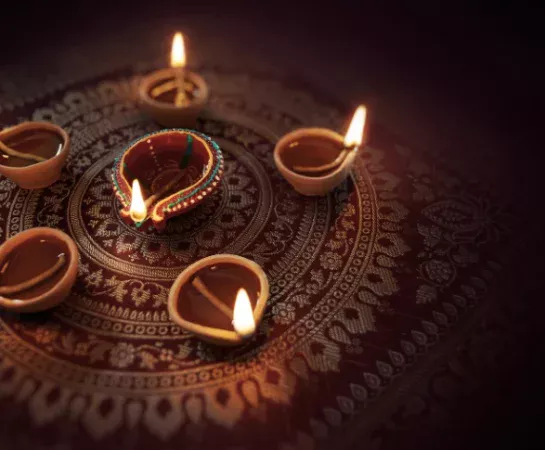
Why Diwali’s Date Changes Every Year
Why Diwali's Date Changes Every Year In October 2025, Diwali split down the middle. Cities where the sun set before 5:30 p.m. lit their lamps on October 21. Everywhere else celebrated a day earlier, on October 20. Same festival, same religious significance, nearly a billion

Why April Fools’ Day Falls on April 1
Ask almost anyone why April Fools' Day exists and the answer comes back the same way: France switched calendars in the 1500s, some people kept celebrating New Year's on the old date, and everyone else mocked them for it. It's a tidy story, repeated by
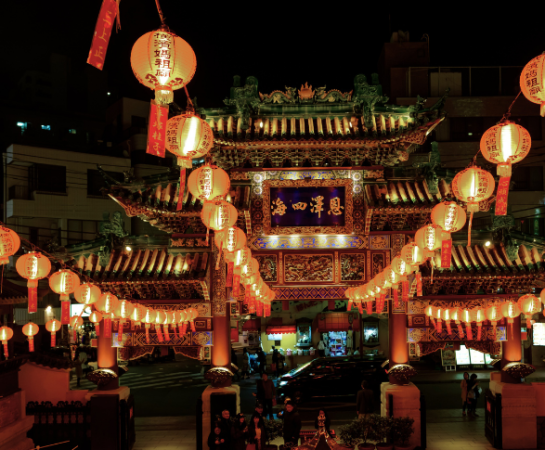
Why Chinese New Year Changes Date Every Year
Chinese New Year fell on January 22 in 2023, February 10 in 2024, January 29 in 2025, and February 17 in 2026. That's a swing of nearly four weeks across four consecutive years, and none of it is random. Every date traces back to a

Why the Earliest Sunset Comes Before the Winter Solstice
In New York, the Sun sets earliest on Monday, December 7, 2026, at about 4:28 PM. The shortest day comes two weeks later. The solstice falls at 20:50 UTC on December 21 (3:50 PM EST), and on that day New York gets roughly 9 hours

Total Solar Eclipse on August 2, 2027: Where, When, and Why It Lasts So Long
On Monday, August 2, 2027, the Moon's shadow will cross southern Spain, North Africa and the Arabian Peninsula, producing the second-longest total solar eclipse of the 21st century. At its maximum, in southern Egypt near Luxor, the Sun will be completely covered for about 6

When Does Winter Start: Meteorological vs Astronomical Seasons
Winter 2026 starts twice in the Northern Hemisphere. Meteorological winter begins on Tuesday, December 1, 2026. Astronomical winter begins at the December solstice, on Monday, December 21, 2026 at 20:50 UTC, which is 3:50 p.m. Eastern and 12:50 p.m. Pacific. Both answers are correct. They
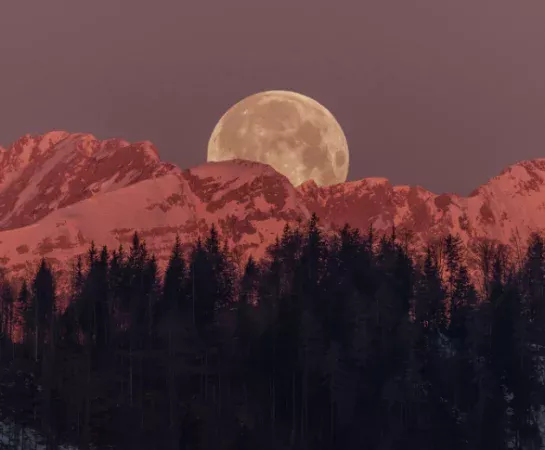
What Is a Supermoon and When Is the Next One
Every time a supermoon rises, the same statistic gets repeated: 14% bigger, 30% brighter. It's in almost every news segment and nearly every listicle, and it's also a comparison almost nobody in the audience will ever actually witness, because it measures the single closest possible
Time Tools
Quick access to timers, stopwatch, world clock and time zone tools.
Time Guides
Read useful guides about time zones, calendars, finance and astronomy.


