Major Airports in Benin
- Cotonou Cadjehoun International Airport (COO) - 00:04:21
Daylight saving time in Benin
Benin has 1 listed IANA time zones. None of them observe daylight saving time in 2026. The UTC offset remains stable throughout the year.
Best Time to Call Benin
Business hours in Benin (9 AM–5 PM local time) fall at these local times elsewhere:
- Beijing: 4:00 PM – 12:00 AM (next day) ( Partial overlap)
- Paris: 10:00 AM – 6:00 PM ( Convenient)
- Toronto: 4:00 AM – 12:00 PM ( Outside normal hours)
- Seoul: 5:00 PM – 1:00 AM (next day) ( Partial overlap)
- Mexico City: 2:00 AM – 10:00 AM ( Outside normal hours)
- Cairo: 11:00 AM – 7:00 PM ( Convenient)
- Bangkok: 3:00 PM – 11:00 PM ( Partial overlap)
Times shown reflect current UTC offsets and may shift by up to an hour around daylight saving transitions.
Time Difference from Benin
Compare time in Benin with other countries.
Most Popular Cities in Benin
Holidays in Benin
Official national public holidays. Regional and religious observances may vary by area.
About Time in Benin
A Week Could Turn in Four Market Days
In southern Dahomey, the recurring market could organize time as effectively as a numbered weekday. Ethnographic research places the region within a West African four-day market zone, where trading centers operated on staggered cycles rather than every settlement opening its principal market on the same day. The interval mattered enough to function as a practical week of its own.
Claudine and Claude Tardits, working in southern Dahomey in the 1950s, found an exceptionally dense market landscape. Their study noted that a traveler could scarcely cover five or six miles without encountering a market place. That density did not mean continuous trade everywhere. Periodicity was the organizing principle: particular places became the center of exchange when their turn in the cycle arrived.
The pattern could become more complicated than a simple market every fourth day. Comparative research on West African market periodicity records two-day schedules in southern Dahomey, interpreted as alternating larger and smaller markets within the wider four-day system. The result was a temporal geography of commerce. Knowing where to trade depended on knowing where the cycle currently stood.
This was not a four-day replacement for every other calendar. It was a specialized rhythm created by exchange, mobility and custom. The seven-day week could coexist with a market cycle running on another count, just as agricultural and ritual schedules could follow seasons or lunar phases. Historical time in the region was therefore layered rather than governed by one universal sequence of days.
Gaani Names Both a Lunation and the Festival Inside It
In northern Benin, Gaani offers an unusually direct connection between the name of a festival and the calendar that locates it. Research on the Borgu region records that in Dendi the word Gáàní can denote both a dance and a lunar month. Related Baatonu usage applies the name to the lunation in which the great royal celebrations take place and to the celebrations themselves.
The historical timing is associated with Mawlid, the commemoration of the Prophet Muhammad's birth. Because the Islamic calendar is lunar, its year is roughly eleven days shorter than the solar year. A celebration anchored to that system does not occupy one permanent position in the Gregorian calendar. It migrates through the seasons over long periods instead of returning automatically to the same civil date.
That lunar framework became intertwined with the political calendar of the old Borgu kingdoms. At Nikki, Gaani developed as a royal occasion involving the ruler, dignitaries, sacred drums, equestrian displays, allegiance ceremonies and collective remembrance. The calendar therefore did more than announce when festivities would begin. It placed royal authority inside a recurring cycle whose timing was inherited rather than chosen from a fixed Gregorian date.
Modern organization adds another layer. The Ministry of Culture announced the 2026 Nikki edition for 25 to 27 August and built a three-day public programme around the traditional ceremonies. Administrative schedules can now specify exact dates months in advance, but the older calendrical vocabulary remains visible in the name itself: Gaani is not merely an event placed inside a month. Historically, Gaani was also the month.
At 12:00 WAT, Porto-Novo Is Still About Fifty Minutes Short of Mean Solar Noon
Benin's official clock is one hour ahead of UTC, yet Porto-Novo lies nowhere near the theoretical central meridian of UTC+1. IANA uses 6 degrees 29 minutes north and 2 degrees 37 minutes east as the reference coordinates for Africa/Porto-Novo. A zone centered geometrically on UTC+1 would instead use longitude 15 degrees east.
The difference can be expressed directly as time. Longitude 2 degrees 37 minutes east corresponds to 10 minutes 28 seconds of mean solar time east of Greenwich. A UTC+1 clock is therefore 49 minutes 32 seconds ahead of Porto-Novo's local mean solar time. On that simplified mean-solar model, the Sun reaches the local meridian at about 12:49:32 WAT rather than at 12:00.
Actual solar noon is not fixed at 12:49:32 every day. Apparent solar time departs from mean solar time during the year because Earth's orbit is elliptical and its axis is tilted, the effect summarized by the equation of time. The calculation nevertheless explains the underlying geometry: civil noon in Benin comes substantially earlier than astronomical mean noon because the country uses the one-hour zone centered far to its east.
The same longitude is preserved in IANA's reconstruction of Porto-Novo before standardized time. The database gives local mean time as UTC+0:10:28 until 1 January 1912, then Greenwich Mean Time. Read literally, the transition would have moved clocks backward by 10 minutes 28 seconds, replacing a city-specific longitude clock with the same GMT used at Greenwich.
The next historical transition is less secure. The current IANA backzone model moves Porto-Novo from GMT to West Africa Time, UTC+1, on 26 February 1934. The database itself records a conflicting source: Edward Whitman placed the change in 1946 instead. IANA chooses the 1934 chronology from Shanks and Pottenger while simultaneously warning that this compilation contains many errors and provides no source citations. For timestamps between 1934 and 1946, the disagreement is not academic trivia. Competing historical reconstructions can differ by a full hour.
After that disputed early period, the record becomes uncomplicated. Benin uses UTC+1 throughout the year and does not operate a seasonal daylight-saving system. The striking feature is not clock changing but the permanent separation between legal time and the solar longitude of the country.
Gelede Has a Season, but Not One Immutable Date
The UNESCO-listed Gelede tradition of Yoruba-Nago communities in Benin, Nigeria and Togo follows another kind of temporal rule. UNESCO describes the ceremony as taking place annually after the harvests, but also on important occasions and in response to events such as drought or epidemics. Its timing is therefore partly cyclical and partly conditional.
That distinction matters. A Gregorian festival can be defined by saying that it occurs on the same numbered date every year. Gelede cannot be reduced so neatly. The agricultural cycle provides its recurring seasonal setting, while circumstances within a community can create another reason for the ceremony to be held. Harvest time and social need act as temporal markers alongside the printed calendar.
The hour of performance is equally characteristic. After weeks of preparation, UNESCO records that the ceremony begins at night in a public square. Singers and drummers open the sequence before masked dancers enter. Night is not incidental background here. It forms part of the traditional staging and separates the long preparatory period from the concentrated public performance.
In 1947, the Moon's Shadow Drew a Boundary Across Southern Dahomey
On 20 May 1947, a total solar eclipse crossed the Atlantic coast of West Africa and passed directly over the southern part of what was then French Dahomey. NASA's path calculations show the central line moving eastward through the region shortly before 15:00 UTC, with the total-eclipse corridor extending roughly 180 kilometres from north to south at the longitude of present-day Benin.
The geometry can be compared almost directly with Porto-Novo. At 14:56 UTC, NASA places the eclipse center line near 6 degrees 08 minutes north and 2 degrees 37 minutes east. The longitude is the same to the minute as the IANA reference longitude for Porto-Novo, although the capital lies farther north at about 6 degrees 29 minutes. NASA gives a central-line totality of just over four minutes at that stage of the eclipse.
Porto-Novo remained inside the umbral corridor, as did Cotonou, Ouidah and much of the southern coastal region. Modern eclipse reconstructions independently classify both Porto-Novo and Cotonou as locations that experienced totality. Farther north, the result changed quickly: Bohicon, Djougou, Parakou and Kandi lay outside the total path and saw only a partial eclipse. A single national clock could therefore show almost the same hour across the country while the sky changed from complete darkness in the south to a partially covered Sun farther north.
The event also intersects neatly with the uncertainty in the historical time-zone record. Whether the change from GMT to UTC+1 occurred in 1934, as IANA currently models it, or in 1946, as Whitman reported, both chronologies place Dahomey on the one-hour-ahead standard by May 1947. The NASA central-line time of about 14:56 UTC therefore corresponds to about 15:56 local civil time. For this particular event, the disputed earlier transition date no longer changes the conversion.
Frequently Asked Questions
How many time zones does Benin have?
One. The whole of Benin follows Africa/Porto-Novo, so every city shows the same local time as the capital, Porto-Novo.
Is Benin ahead of or behind GMT?
Benin is currently 1 hour ahead of GMT (UTC+1).
Does Benin use summer time?
No. Benin does not observe daylight saving time, so its clocks stay at UTC+1 all year. Its time difference with countries that do change their clocks still shifts by an hour in spring and autumn.
How many public holidays does Benin have in 2026?
Benin has 14 national public holidays in 2026, when banks and government offices are usually closed. Some regions may also have their own local holidays.
How do I dial a phone number in Benin from abroad?
From a mobile phone, type +229 and then the local number without the leading 0 used for domestic calls, if it has one. From a landline, replace the plus sign with your exit code: 011 from the US and Canada, or 00 from most of Europe, for example 00 229 followed by the number.
What language is spoken in Benin?
The main language of Benin is French.
Beyond the Clock

Why the Year Starts on January 1
Nothing happens in the sky on January 1. The winter solstice comes about ten days earlier, Earth's closest approach to the Sun a few days later, and no lunar phase is tied to the date. January 1 is not an astronomical boundary. It is an

What Is Nowruz and Why It Always Falls on the Spring Equinox
Nowruz is the Persian New Year, celebrated by more than 300 million people across Iran, Afghanistan, Central Asia, the Caucasus, and Kurdish communities, and it begins at the exact astronomical instant of the March equinox rather than on a fixed date on any calendar grid.

When Is Yom Kippur and Why It Always Falls 10 Days After Rosh Hashanah
Yom Kippur is the tenth day of Tishrei, and Rosh Hashanah is the first, so the ten-day gap between them looks like simple arithmetic. It isn't. The Hebrew calendar has a set of centuries-old rules that quietly forbid Rosh Hashanah from landing on three specific
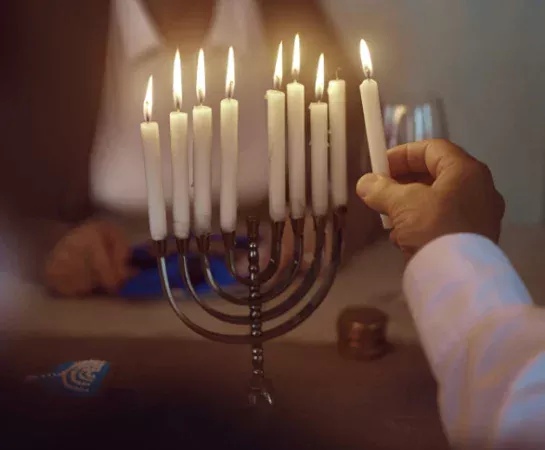
Why Hanukkah’s Date Moves Every Year on the Solar Calendar
In 2013, the first candle of Hanukkah was lit on the night before Thanksgiving, a coincidence rare enough that it won't happen again until 2070. Eleven years later, in 2024, the first candle fell on the evening of December 25 itself, the same alignment that

Why Scheduled Jobs Break at Daylight Saving Time
On Sunday, November 1, 2026, the local time 1:30 AM happens twice in New York. The first 1:30 AM is 05:30 UTC on Eastern Daylight Time. The second is an hour later, 06:30 UTC on Eastern Standard Time. Four and a half months later, on

When Does a Day Actually Begin? Midnight, Sunrise, and Sunset Across Cultures
Hebcal, the widely used Jewish calendar service, lists Saturday, December 5, 2026 as 25 Kislev 5787, the first day of Hanukkah. The first Hanukkah candle is lit the evening before, on Friday, December 4. This is not an error. The Hebrew date changes at sunset,

How Accurate Are Atomic Clocks: How Much Do They Actually Drift
In 2015, physicists at JILA in Colorado built a strontium clock so stable that, if it had started running 15 billion years ago, before the universe itself existed, it would still be within one second of correct today. That number sounds like marketing. It isn't.

Why the Hour Was Originally a Different Length in Summer and Winter
For most of recorded history, an hour was not a fixed amount of time. It was a fraction, one twelfth of however long daylight happened to last that day. In June that fraction stretched past 80 modern minutes. In December it shrank to barely 40.
Time Tools
Quick access to timers, stopwatch, world clock and time zone tools.
Time Guides
Read useful guides about time zones, calendars, finance and astronomy.


