Major Airports in Serbia
- Belgrade Nikola Tesla Airport (BEG) - 00:38:33
- Niš Constantine the Great Airport (INI) - 00:38:33
Daylight saving time changes in Serbia
Serbia has 1 listed IANA time zones. 1 of them observe daylight saving time changes in 2026.
Next change: October 25, 2026
Clock moves back from 03:00 to 02:00 local time.
Best Time to Call Serbia
Business hours in Serbia (9 AM–5 PM local time) fall at these local times elsewhere:
- Beijing: 3:00 PM – 11:00 PM ( Partial overlap)
- Paris: 9:00 AM – 5:00 PM ( Convenient)
- Toronto: 3:00 AM – 11:00 AM ( Outside normal hours)
- Seoul: 4:00 PM – 12:00 AM (next day) ( Partial overlap)
- Mexico City: 1:00 AM – 9:00 AM ( Outside normal hours)
- Cairo: 10:00 AM – 6:00 PM ( Convenient)
- Bangkok: 2:00 PM – 10:00 PM ( Partial overlap)
Times shown reflect current UTC offsets and may shift by up to an hour around daylight saving transitions.
Time Difference from Serbia
Compare time in Serbia with other countries.
Most Popular Cities in Serbia
Holidays in Serbia
Official national public holidays. Regional and religious observances may vary by area.
About Time in Serbia
The Date That Kept Returning
On 15 June 1389 by the old Julian calendar, the armies of Serbian Prince Lazar and Ottoman Sultan Murad fought each other to a standstill on the plain of Kosovo, a battle in which both commanders died and which decided comparatively little militarily but grew, in the centuries that followed, into the single most important date in Serbian national memory. Adjusted to the modern Gregorian calendar, that date falls on 28 June, and it became known as Vidovdan, Saint Vitus's Day, observed ever after by the Serbian Orthodox Church in memory of Lazar and the Kosovo dead.
What makes the date genuinely extraordinary is how often it kept reappearing at pivotal moments in Serbian history over the centuries that followed, whether by design or by a coincidence historians still debate. In 1881, an Austro-Serbian alliance effectively subordinating Serbian foreign policy to Vienna was signed within a day of the Vidovdan anniversary. On 28 June 1914 itself, a Bosnian Serb nationalist, Gavrilo Princip, assassinated Archduke Franz Ferdinand of Austria-Hungary in Sarajevo, an act that set off the chain of events leading directly to the First World War, and one his own testimony suggests was deliberately timed to fall on the Kosovo anniversary. Most remarkably of all, the treaty that formally ended that same war, the Treaty of Versailles, was signed on 28 June 1919, exactly five years to the day after the assassination that had started it, a date the Allied negotiators chose deliberately rather than by accident. A single calendar date, unchanged since a medieval battlefield, had by then anchored the outbreak and the formal conclusion of a war that killed millions.
Symbols Older Than Sumerian Writing, Still Unread
In 1908, the Serbian archaeologist Miloje Vasić began excavating a large mound on the banks of the Danube a few miles from Belgrade, at a site called Vinča, uncovering the remains of a Neolithic society that had thrived there roughly seven thousand years ago. The Vinča culture, which flourished from around 5300 to 4500 BCE across a region spanning much of the modern Balkans, built some of the largest settlements anywhere in prehistoric Europe and produced the earliest known evidence of copper smelting found anywhere in the ancient world.
Among the pottery, figurines and clay tablets recovered from Vinča sites, archaeologists identified a recurring set of incised symbols, ranging from simple crosses and circles to more elaborate geometric marks, that some researchers have argued may represent one of the earliest writing systems ever developed, potentially predating the cuneiform script of Sumer. The claim remains genuinely contested: many archaeologists argue the so-called Vinča symbols more likely functioned as ownership marks, religious or decorative motifs, or some other form of pre-linguistic notation rather than a true written language, and the debate has never been definitively settled either way. What is not disputed is the symbols' longevity: found across more than a hundred and fifty identified sites in Serbia alone, they remained in use for roughly two thousand years before disappearing from the archaeological record around 3500 BCE, disappearing as mysteriously as their original meaning.
Frequently Asked Questions
How many time zones does Serbia have?
One. The whole of Serbia follows Europe/Belgrade, so every city shows the same local time as the capital, Belgrade.
Is Serbia ahead of or behind GMT?
Serbia is currently 2 hours ahead of GMT (UTC+2).
Does Serbia use summer time?
Yes. Belgrade uses UTC+1 (CET) in standard time and UTC+2 (CEST) during daylight saving time, and is currently on summer time.
How many public holidays does Serbia have in 2026?
Serbia has 13 national public holidays in 2026, when banks and government offices are usually closed. Some regions may also have their own local holidays.
How do I dial a phone number in Serbia from abroad?
From a mobile phone, type +381 and then the local number without the leading 0 used for domestic calls, if it has one. From a landline, replace the plus sign with your exit code: 011 from the US and Canada, or 00 from most of Europe, for example 00 381 followed by the number.
What language is spoken in Serbia?
The main languages of Serbia are Serbian, Hungarian and Bosnian.
Beyond the Clock

Full Moon Names by Month: Where Beaver Moon and Cold Moon Come From
The November 2026 full moon, the Beaver Moon, peaks at 9:53 AM Eastern Time on Tuesday, November 24. The December full moon, the Cold Moon, follows at 8:28 PM Eastern on Wednesday, December 23. In UTC that moment already falls on December 24, so in
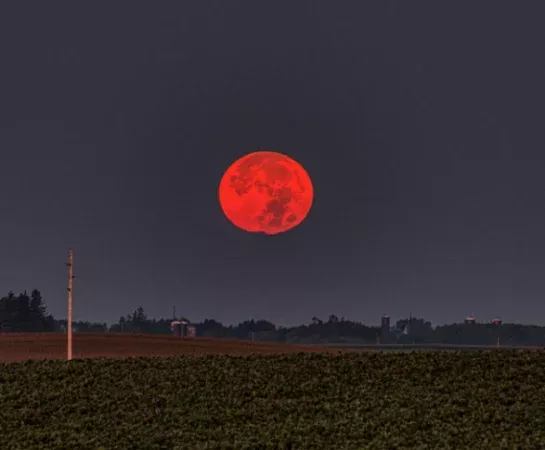
What Is a Blood Moon and Why Does the Moon Turn Red
On the night of August 27, 2026, the Moon came within a hair of disappearing entirely. Earth's shadow covered 96.2% of its surface, a partial eclipse so deep that skywatchers across the Americas, Europe, and Africa watched it turn a rusty, almost total red without
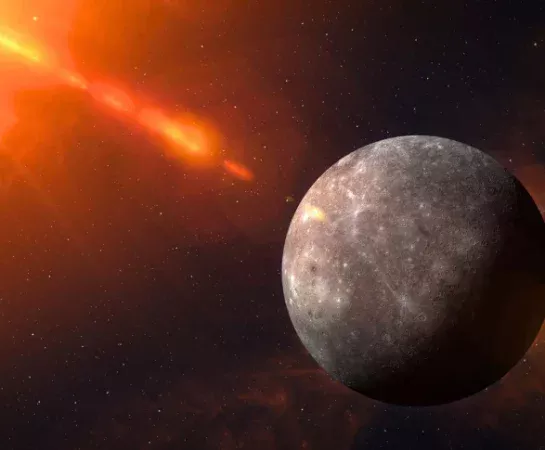
Mercury Retrograde: What’s Astronomically Real vs Astrological Myth
Mercury retrograde generates millions of searches every time it happens, and almost none of that content stops to explain what's actually occurring in space. The phenomenon itself is completely real, observable, and predictable centuries in advance. What isn't real is nearly everything attached to it

What Is Sidereal Time and How It Differs From Solar Time
Ask how long it takes Earth to spin once on its axis and the honest answer depends on what you're measuring the spin against. Measured against the sun, a full rotation takes 24 hours, the day everyone lives by. Measured against the distant stars, that

Options Expiration Time: When Do Options Actually Expire
Ask five options traders when a contract expires and you'll likely get three different answers, and all three will sound confident. Some will say 4:00 PM. Others will say 4:15 PM. A few old-timers will insist it's actually Saturday. All of them are half right,
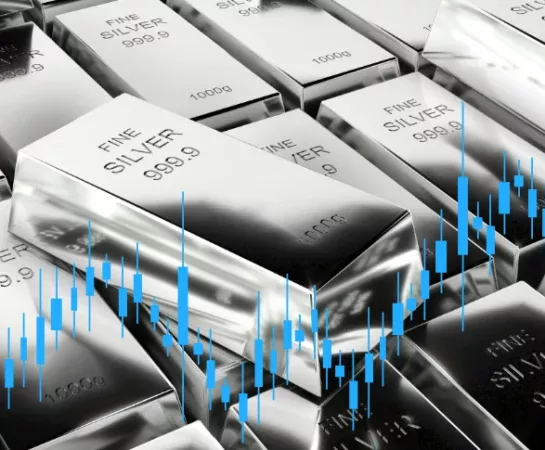
Best Time to Trade Silver: When the Market Actually Moves
The single best window to trade silver runs from roughly 8:30 a.m. to noon Eastern time, when London's afternoon session overlaps with the COMEX floor in New York and the day's biggest US economic releases land at 8:30 a.m. sharp. That much silver shares with

What Time Does the Stock Market Open in Your Time Zone
The New York Stock Exchange opens at 9:30 AM. That single fact is true every trading day of the year, and it's also close to useless on its own, because 9:30 AM Eastern Time lands at a different clock reading in nearly every other country

IPO First Trading Day: What Time Does a New Stock Start Trading
Every IPO photo looks the same: executives on a balcony, a giant chrome button, the 9:30 AM bell. What that photo doesn't show is that the stock almost never starts trading at 9:30. Facebook was supposed to open at 11:00 in 2012 and didn't trade
Time Tools
Quick access to timers, stopwatch, world clock and time zone tools.
Time Guides
Read useful guides about time zones, calendars, finance and astronomy.


