Daylight saving time changes in San Marino
San Marino has 1 listed IANA time zones. 1 of them observe daylight saving time changes in 2026.
Next change: October 25, 2026
Clock moves back from 03:00 to 02:00 local time.
Best Time to Call San Marino
Business hours in San Marino (9 AM–5 PM local time) fall at these local times elsewhere:
- Beijing: 3:00 PM – 11:00 PM ( Partial overlap)
- Paris: 9:00 AM – 5:00 PM ( Convenient)
- Toronto: 3:00 AM – 11:00 AM ( Outside normal hours)
- Seoul: 4:00 PM – 12:00 AM (next day) ( Partial overlap)
- Mexico City: 1:00 AM – 9:00 AM ( Outside normal hours)
- Cairo: 10:00 AM – 6:00 PM ( Convenient)
- Bangkok: 2:00 PM – 10:00 PM ( Partial overlap)
Times shown reflect current UTC offsets and may shift by up to an hour around daylight saving transitions.
Time Difference from San Marino
Compare time in San Marino with other countries.
Most Popular Cities in San Marino
Holidays in San Marino
Official national public holidays. Regional and religious observances may vary by area.
About Time in San Marino
A Date Carved Later Than the Legend: The Founding of San Marino
According to tradition, a Christian stonemason named Marinus fled religious persecution under the Roman emperor Diocletian, took refuge on the slopes of Mount Titano, and there founded the small community that grew into the Republic of San Marino. The traditional date given for this founding, and for the death of Marinus, is September 3 in the year 301, a date still celebrated every year as the country's national holiday. Marinus is said to have left his followers a final instruction that became the republic's founding principle, freeing them, in his words, from both men, meaning from both the Emperor and the Pope.
Historians studying San Marino's own archives have pointed out that the earliest surviving written mention of the community dates only to the year 885, and that the year 301 itself does not appear in the earliest surviving accounts of his life, which were written centuries after the events they describe. The date only became fixed as official fact through a government decree issued in 1941, after which every Sammarinese public document began carrying a short abbreviation meaning from the Foundation of the Republic next to the ordinary calendar year. Independent historians now generally place the origins of San Marino's actual governing institutions in the 13th century, making the state's documented political history roughly 800 years old rather than 1,700, though the older legendary date remains central to national identity.
Counting Years Since Marinus: San Marino's Parallel Calendar
Alongside the ordinary Gregorian calendar, official Sammarinese documents traditionally carry a second, parallel date expressed as a number of years from the Foundation of the Republic, abbreviated in Italian and usually written after the standard year. This convention was formally codified by a government decree in 1941, which declared September 3, 301, the fixed starting point of the era for legal and administrative purposes, regardless of any historical debate over the date's accuracy.
The idea of counting years from a symbolic founding moment rather than from a fixed religious epoch has parallels elsewhere in history, from the Ab Urbe Condita system Roman writers occasionally used to date events from the legendary founding of Rome, to the short lived French Republican calendar introduced after 1789, to the regnal era names still used on official documents in Japan today. In San Marino's case the practice survives mainly as a ceremonial flourish on state papers and commemorative currency rather than as a system ordinary citizens use in daily life, but it remains one of the more distinctive ways a modern European state marks its own sense of continuous political time.
Two Heads, Six Months: The Rhythm of San Marino's Government
San Marino is governed by two Captains Regent who serve jointly as heads of state for a term of exactly six months, a rotation that repeats twice every year without exception. The investiture ceremony always takes place on April 1 and October 1, in the Piazza della Liberta outside the Public Palace, and the practice of electing two co-equal regents rather than a single ruler is explicitly modeled on the paired consuls of the ancient Roman Republic. The earliest surviving written record of two such regents, then still called consuls, dates to a document from December 1243.
Once their six month term ends, the outgoing regents return immediately to the status of ordinary citizens and, under a rule set out in the republic's statutes, cannot be re-elected to the office again for at least three years. This built in expiration date is often cited as one of the reasons San Marino has avoided the concentration of long term political power seen in many larger states, and the twice yearly ceremony, complete with religious rites and a formal changing of authority, remains one of the most closely followed events on the republic's civic calendar.
The Clock Tower of the Public Palace
The building that now serves as San Marino's seat of government, known as the Public Palace, stands on Piazza della Liberta on the site of a much older medieval structure dating to the 1380s. By the late 19th century that older building had fallen into disrepair, and in 1883 the Grand and General Council voted to demolish it entirely and commission a new palace from the Rome born architect Francesco Azzurri. Construction ran from 1884 to 1894, and the finished building, with its stone battlements and a bell and clock tower rising above the main facade, was deliberately designed in a neo Gothic style recalling the civic palaces of medieval Italian city states.
Inside, the palace houses the chambers of the Grand and General Council and the Captains Regent, along with paintings commemorating the republic's founding legend. The clock tower itself, decorated with the same battlements and stonework as the rest of the facade, has become one of the most photographed features of the historic center, which along with Mount Titano was added to the UNESCO World Heritage list in 2008 partly in recognition of the unusual, centuries old system of government the building still houses today.
Every Thirty Minutes: The Changing of the Guard
Each year between spring and early autumn, visitors gathered in front of the Public Palace can watch a small ceremonial unit known as the Guardia di Rocca, dressed in dark green double breasted jackets with red trim and white gaiters, relieve the sentries on duty outside the seat of government. The ceremony runs on a strict schedule, typically repeating every thirty minutes through the afternoon, so that the same small piece of military theater plays out dozens of times across a single summer day.
Though the uniforms and marching drills evoke earlier centuries, the modern Guardia di Rocca traces its formal organization only to the 18th century, even if related fortress guard units are believed to have existed in some form much earlier. Today the unit's ceremonial duties exist alongside its practical role patrolling San Marino's borders, and the precisely timed changing of the guard has become, for many visitors, one of the most reliable ways to plan a visit to the historic center around a specific hour of the day.
Bartolomeo Borghesi and the Chronology of Ancient Rome
Born in 1781 in Savignano near Rimini, the scholar Bartolomeo Borghesi withdrew to San Marino in the early 1820s after political disturbances in the wider region and spent the rest of his life there as a private citizen and, for a time, as a local magistrate. Working largely alone from his adopted small republic, he built a reputation as one of the founders of modern epigraphy and numismatics, the study of ancient inscriptions and coins used to reconstruct history that written narratives often leave incomplete or contradictory.
His most influential work reconstructed the Fasti Consulares, the official list of Roman consuls whose paired names were used in antiquity to identify and date each year, since Rome had no continuous numbered calendar of its own. By carefully comparing inscriptions, coins and fragmentary ancient records, Borghesi helped establish a far more reliable chronology for large stretches of Roman history. From his home in San Marino he corresponded with and personally trained a generation of younger scholars, including the German historian Theodor Mommsen, and his research laid essential groundwork for the later systematic collection of Latin inscriptions still used by historians today. Borghesi died in San Marino in 1860, and a monument to him still stands in the historic center he called home for nearly forty years.
Frequently Asked Questions
How many time zones does San Marino have?
One. The whole of San Marino follows Europe/San_Marino, so every city shows the same local time as the capital, San Marino.
Is San Marino ahead of or behind GMT?
San Marino is currently 2 hours ahead of GMT (UTC+2).
Does San Marino use summer time?
Yes. San Marino uses UTC+1 (CET) in standard time and UTC+2 (CEST) during daylight saving time, and is currently on summer time.
How many public holidays does San Marino have in 2026?
San Marino has 18 national public holidays in 2026, when banks and government offices are usually closed. Some regions may also have their own local holidays.
How do I dial a phone number in San Marino from abroad?
From a mobile phone, type +378 and then the full local number, including its leading 0, which in San Marino is part of the number itself. From a landline, replace the plus sign with your exit code: 011 from the US and Canada, or 00 from most of Europe, for example 00 378 followed by the number.
What language is spoken in San Marino?
The main language of San Marino is Italian.
Beyond the Clock

When Does the Fed Announce Interest Rates: Exact Time and Why It Moves Markets
The Federal Reserve announces its interest rate decision at 2:00 p.m. Eastern Time on the final day of each scheduled Federal Open Market Committee (FOMC) meeting, and the Chair's press conference follows at 2:30 p.m. Those times have been fixed since March 2013. The rest

Why Bitcoin ETFs Close at 4 PM While Bitcoin Never Stops Trading
Bitcoin trades every minute of the year. The ETFs that hold it do not. A US spot bitcoin ETF follows a stock exchange schedule: regular trading from 9:30 AM to 4:00 PM ET on weekdays, thinner extended sessions on either side, and no trading at

What Is the Closing Auction and Why the Last 10 Minutes Move the Market
The 4:00 p.m. bell on the New York Stock Exchange does not simply end the trading day. It triggers the closing auction, a one-time match of buyers and sellers at a single price that becomes each stock's official close, and which NYSE describes as the

Earnings Season Calendar: Why Companies Report Before or After the Bell
JPMorgan Chase kicked off the 2026 earnings season on Tuesday, January 13, reporting its fourth-quarter results before the market opened, the same slot the bank has used every January for years. Two days later, Netflix, Microsoft, and Nvidia would report in the opposite window, after

Why Orthodox Christmas Falls on January 7, Not December 25
Millions of Orthodox Christians open presents and attend Christmas liturgy on January 7. They aren't celebrating a different holiday, and they aren't twelve days behind on purpose. They're marking December 25 on a calendar that stopped syncing with the seasons centuries ago and was never
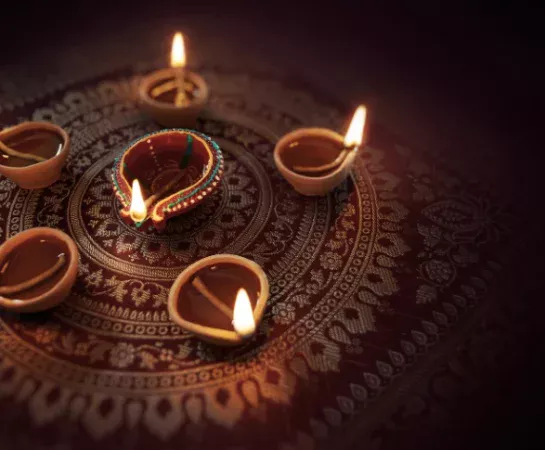
Why Diwali’s Date Changes Every Year
Why Diwali's Date Changes Every Year In October 2025, Diwali split down the middle. Cities where the sun set before 5:30 p.m. lit their lamps on October 21. Everywhere else celebrated a day earlier, on October 20. Same festival, same religious significance, nearly a billion

Why April Fools’ Day Falls on April 1
Ask almost anyone why April Fools' Day exists and the answer comes back the same way: France switched calendars in the 1500s, some people kept celebrating New Year's on the old date, and everyone else mocked them for it. It's a tidy story, repeated by
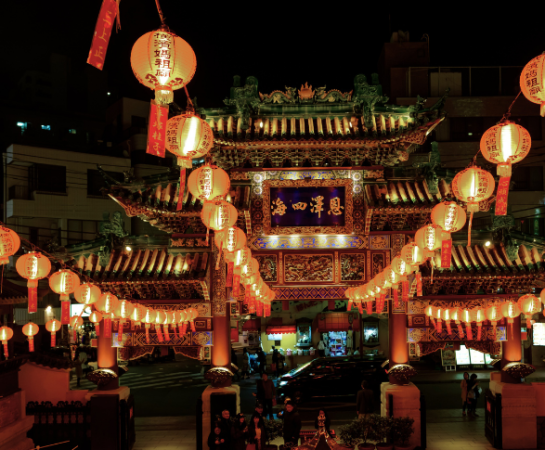
Why Chinese New Year Changes Date Every Year
Chinese New Year fell on January 22 in 2023, February 10 in 2024, January 29 in 2025, and February 17 in 2026. That's a swing of nearly four weeks across four consecutive years, and none of it is random. Every date traces back to a
Time Tools
Quick access to timers, stopwatch, world clock and time zone tools.
Time Guides
Read useful guides about time zones, calendars, finance and astronomy.


