Major Airports in Republic of the Congo
- Antonio Agostinho-Neto International Airport (PNR) - 23:18:23
- Maya-Maya International Airport (BZV) - 23:18:23
Daylight saving time in Republic of the Congo
Republic of the Congo has 1 listed IANA time zones. None of them observe daylight saving time in 2026. The UTC offset remains stable throughout the year.
Best Time to Call Republic of the Congo
Business hours in Republic of the Congo (9 AM–5 PM local time) fall at these local times elsewhere:
- Beijing: 4:00 PM – 12:00 AM (next day) ( Partial overlap)
- Paris: 10:00 AM – 6:00 PM ( Convenient)
- Toronto: 4:00 AM – 12:00 PM ( Outside normal hours)
- Seoul: 5:00 PM – 1:00 AM (next day) ( Partial overlap)
- Mexico City: 2:00 AM – 10:00 AM ( Outside normal hours)
- Cairo: 11:00 AM – 7:00 PM ( Convenient)
- Bangkok: 3:00 PM – 11:00 PM ( Partial overlap)
Times shown reflect current UTC offsets and may shift by up to an hour around daylight saving transitions.
Time Difference from Republic of the Congo
Compare time in Republic of the Congo with other countries.
Most Popular Cities in Republic of the Congo
Holidays in Republic of the Congo
Official national public holidays. Regional and religious observances may vary by area.
About Time in Republic of the Congo
Brazzaville Sits Almost Exactly on the Meridian Built Into UTC+1
The Republic of the Congo keeps West Africa Time, UTC+01:00, throughout the year and does not use seasonal daylight saving time. In Brazzaville, that civil offset is an unusually close fit to longitude. ASECNA gives the reference point of Maya-Maya Airport as 15°15′05″ east. The theoretical central meridian of UTC+1 is 15° east, so the airport lies only about a quarter of a degree east of the meridian around which the zone is centered.
Longitude can be translated directly into mean solar time because Earth rotates 360 degrees in 24 hours. The airport longitude corresponds to about 1 hour, 1 minute and 0.3 seconds east of Greenwich in a mean-solar model. Compared with a UTC+1 civil clock, the local mean Sun is therefore only about one minute ahead. Mean solar noon near Maya-Maya falls close to 11:59 WAT rather than being displaced by tens of minutes as it is in many capitals whose legal time zones are poorly aligned with longitude.
Apparent solar noon still moves through the year because the apparent Sun does not keep perfectly uniform time. The equation of time changes the observed relationship between sundial time and mean time, so the Sun does not cross the meridian at exactly 11:59 every day. The important geographical point is the baseline: Brazzaville is almost ideally placed for a UTC+1 clock.
1:01:08 Was Brazzaville Longitude Written as a Clock Offset
The historical IANA backzone data preserve a remarkably specific pre-standard offset for Brazzaville: +01:01:08 local mean time. That value is not a random historical curiosity. The representative coordinate in the IANA zone table is 4°16′ south, 15°17′ east. At four minutes of time per degree of longitude, 15°17′ east converts exactly to 1 hour, 1 minute and 8 seconds.
The same backzone record models a transition in 1912 from +01:01:08 to an even +01:00 WAT. The date deserves caution. IANA explicitly describes its historical database as a useful reconstruction rather than an authoritative legal record, and pre-1970 material in backzone is outside the main scope of tzdb. The offset itself is an excellent illustration of local mean time, but the modeled 1912 transition should not be treated as a fully proven legislative date without stronger archival evidence.
Modern software adds another twist. Africa/Brazzaville remains the geographic identifier listed for the country, but the current tz database can implement it as a link to Africa/Lagos because their civil timestamps agree throughout the period the main database is designed to cover. That is a data-modeling decision, not a statement that Congolese civil time is legally governed from Nigeria. The location name remains useful because it preserves geographic meaning even when the underlying modern rule set is shared.
Four-Day Markets and Fourteen Parts of a Day Preceded the Urban Clock
Research on colonial Brazzaville by historian Phyllis Martin documents systems of time reckoning that were organized around seasons, markets and observable changes in the environment rather than equal numerical hours. Among Kongo communities, two principal seasons and three intermediate periods were associated with rainfall and agricultural cycles. Mbochi communities distinguished six seasonal periods according to rain, fishing and farming strategies.
Smaller units of time were equally structured. Martin records that four-day or five-day weeks, often linked to markets held at particular places, were widespread among people who later formed part of Brazzaville's population. Lunar months were recognized in Kongo communities and could influence planting. They also provided a way of following longer biological intervals such as pregnancy.
The Mbochi division of a single day is particularly revealing. Fourteen points in the day and night were distinguished through natural cues, including the position of the Sun or Moon, calls of cocks and other birds, the sound of toads and the appearance of bats. Time was therefore read from a sequence of environmental events rather than from a dial divided into sixty-minute hours.
Among Kongo communities in the early twentieth century, the passage of days and weeks could also be tracked with mnemonic devices such as knots in a cord or marks cut into a stick. These methods were not crude substitutes for a clock. They measured the intervals that mattered to farming, markets, travel, ritual and social obligations, using a different logic from the mechanical time that colonial institutions increasingly demanded.
Brazzaville Made the New Clock Audible Before Everyone Owned One
The transition to urban clock time did not depend on every resident possessing a watch. Martin's study shows that colonial Brazzaville broadcast schedules through sound. A military bugle announced reveille. Church bells called people to mass and could mark the mission workday. A school bell separated periods of study and recreation, while work bells on the Plaine and Plateau divided the laboring day.
A cathedral tower clock displayed numerical time publicly, and ceremonial schedules were also announced acoustically. On 14 July, guns at the military post were fired at 6 a.m. to mark the beginning of the French national holiday. The city thus acquired a network of audible and visible time signals before personal timepieces became universal.
Watches gradually became part of urban life as well. Martin notes pocket watches among Europeans and African elites, and wristwatches becoming popular by the 1930s through catalogue purchases. Yet older cues did not vanish. Residents could still organize parts of the day by birds, rainfall, the position of the Sun and the seasonal behavior of the river while also responding to bells, clocks and employer schedules.
This overlap made time a social issue as well as a technical one. Colonial employers and administrators attached wages, attendance and discipline to the clock, while lateness could attract fines. The result was not an instantaneous replacement of one system by another, but a period in which task-based, environmental and mechanical forms of time existed side by side in the same city.
Makoua Had Fifty Seconds Inside the Moon's Shadow in 2013
On 3 November 2013, a hybrid solar eclipse crossed equatorial Africa. NASA classifies the event as part of Saros 143 and calculates the global greatest eclipse at 12:46:28.9 UT over the Atlantic, where the central phase lasted about 1 minute 39.6 seconds. The track later crossed the Republic of the Congo as a total eclipse.
Makoua, in the Cuvette Department, lay inside the narrow path of totality. Local eclipse calculations place second contact at about 15:03:09 WAT, maximum at 15:03:34 and the end of totality at about 15:03:59. The total phase lasted roughly 50 seconds, with an eclipse magnitude of about 1.0031 and the Sun around 38 degrees above the horizon.
The experience changed sharply over relatively short distances. Owando was outside the total path with a calculated magnitude near 0.992, while Brazzaville saw a substantially smaller partial eclipse with a magnitude near 0.877. The difference is a reminder that the national label on an eclipse map is not enough to describe what an observer actually sees. Latitude, longitude and distance from the center line determine whether the Sun disappears completely and for how long.
The timestamps also show the relationship between astronomical and civil time cleanly. NASA's eclipse calculations use Universal Time for the global geometry. Local observations in Makoua were read on WAT, one hour ahead of UTC. The same physical instant therefore carries two clock readings depending on the time reference used.
BRAZZA VOLMET Divides the Night Into UTC Broadcast Windows
Modern aviation provides one of the clearest examples of precision time in everyday national infrastructure. ASECNA's aeronautical information publication lists BRAZZA VOLMET on 10057 kHz. Its broadcast periods are defined not by local WAT but by their position inside each UTC hour: from H+15 to H+25 and again from H+45 to H+55.
The listed service window runs from 18:00 to 05:00 UTC. In Brazzaville's civil time that corresponds to 19:00 through 06:00 WAT, crossing local midnight. The broadcasts carry METAR and trend information, with SPECI and trend reports when required, in French and English. The service covers Brazzaville and several major airports and flight information areas across Central and West Africa, including N'Djamena, Douala, Bangui, Libreville, Yaounde and Kinshasa.
ASECNA uses the same UTC convention throughout the operational schedules published for Maya-Maya Airport. Administrative hours, briefing services and other aviation functions are stated against a common international clock even though passengers and city residents live on WAT. That separation prevents a regional flight network from depending on local civil-zone interpretation.
The contrast with the earlier history is unusually neat. Brazzaville once had a reconstructed mean-time offset precise to the second because time followed local longitude. Today its civil clock uses the round UTC+1 standard, while aviation operations step outside local civil time again and coordinate directly in UTC. The reference changed from the local meridian to the international UTC reference, but precision remains central to the system.
Frequently Asked Questions
How many time zones does Republic of the Congo have?
One. The whole of Republic of the Congo follows Africa/Brazzaville, so every city shows the same local time as the capital, Brazzaville.
Is Republic of the Congo ahead of or behind GMT?
Republic of the Congo is currently 1 hour ahead of GMT (UTC+1).
Does Republic of the Congo use summer time?
No. Republic of the Congo does not observe daylight saving time, so its clocks stay at UTC+1 all year. Its time difference with countries that do change their clocks still shifts by an hour in spring and autumn.
How many public holidays does Republic of the Congo have in 2026?
Republic of the Congo has 10 national public holidays in 2026, when banks and government offices are usually closed. Some regions may also have their own local holidays.
How do I dial a phone number in Republic of the Congo from abroad?
From a mobile phone, type +242 and then the local number without the leading 0 used for domestic calls, if it has one. From a landline, replace the plus sign with your exit code: 011 from the US and Canada, or 00 from most of Europe, for example 00 242 followed by the number.
What language is spoken in Republic of the Congo?
The main languages of Republic of the Congo are French, Kongo and Lingala.
Beyond the Clock

Why the Year Starts on January 1
Nothing happens in the sky on January 1. The winter solstice comes about ten days earlier, Earth's closest approach to the Sun a few days later, and no lunar phase is tied to the date. January 1 is not an astronomical boundary. It is an

What Is Nowruz and Why It Always Falls on the Spring Equinox
Nowruz is the Persian New Year, celebrated by more than 300 million people across Iran, Afghanistan, Central Asia, the Caucasus, and Kurdish communities, and it begins at the exact astronomical instant of the March equinox rather than on a fixed date on any calendar grid.

When Is Yom Kippur and Why It Always Falls 10 Days After Rosh Hashanah
Yom Kippur is the tenth day of Tishrei, and Rosh Hashanah is the first, so the ten-day gap between them looks like simple arithmetic. It isn't. The Hebrew calendar has a set of centuries-old rules that quietly forbid Rosh Hashanah from landing on three specific
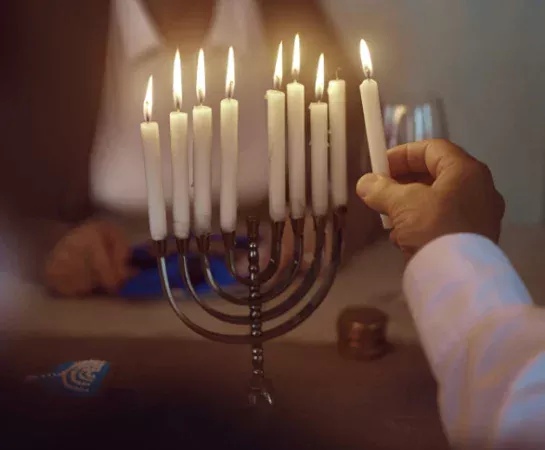
Why Hanukkah’s Date Moves Every Year on the Solar Calendar
In 2013, the first candle of Hanukkah was lit on the night before Thanksgiving, a coincidence rare enough that it won't happen again until 2070. Eleven years later, in 2024, the first candle fell on the evening of December 25 itself, the same alignment that

Full Moon Names by Month: Where Beaver Moon and Cold Moon Come From
The November 2026 full moon, the Beaver Moon, peaks at 9:53 AM Eastern Time on Tuesday, November 24. The December full moon, the Cold Moon, follows at 8:28 PM Eastern on Wednesday, December 23. In UTC that moment already falls on December 24, so in

What Is a Harvest Moon and Why It Rises at Almost the Same Time Several Nights Running
On most nights of the year, the Moon rises roughly 50 minutes later than it did the night before. Around the Harvest Moon, that gap collapses to as little as 10 minutes in parts of the UK and Canada, and rarely more than 30 minutes
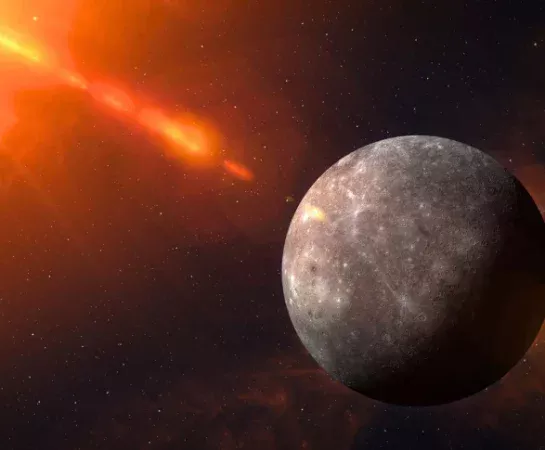
Mercury Retrograde: What’s Astronomically Real vs Astrological Myth
Mercury retrograde generates millions of searches every time it happens, and almost none of that content stops to explain what's actually occurring in space. The phenomenon itself is completely real, observable, and predictable centuries in advance. What isn't real is nearly everything attached to it

What Is Sidereal Time and How It Differs From Solar Time
Ask how long it takes Earth to spin once on its axis and the honest answer depends on what you're measuring the spin against. Measured against the sun, a full rotation takes 24 hours, the day everyone lives by. Measured against the distant stars, that
Time Tools
Quick access to timers, stopwatch, world clock and time zone tools.
Time Guides
Read useful guides about time zones, calendars, finance and astronomy.


