Major Airports in Montenegro
- Podgorica Airport / Podgorica Golubovci Airbase (TGD) - 01:46:12
Daylight saving time changes in Montenegro
Montenegro has 1 listed IANA time zones. 1 of them observe daylight saving time changes in 2026.
Next change: October 25, 2026
Clock moves back from 03:00 to 02:00 local time.
Best Time to Call Montenegro
Business hours in Montenegro (9 AM–5 PM local time) fall at these local times elsewhere:
- Beijing: 3:00 PM – 11:00 PM ( Partial overlap)
- Paris: 9:00 AM – 5:00 PM ( Convenient)
- Toronto: 3:00 AM – 11:00 AM ( Outside normal hours)
- Seoul: 4:00 PM – 12:00 AM (next day) ( Partial overlap)
- Mexico City: 1:00 AM – 9:00 AM ( Outside normal hours)
- Cairo: 10:00 AM – 6:00 PM ( Convenient)
- Bangkok: 2:00 PM – 10:00 PM ( Partial overlap)
Times shown reflect current UTC offsets and may shift by up to an hour around daylight saving transitions.
Time Difference from Montenegro
Compare time in Montenegro with other countries.
Most Popular Cities in Montenegro
Holidays in Montenegro
Official national public holidays. Regional and religious observances may vary by area.
About Time in Montenegro
On January 1, 1884, the Clock in the Territory of Modern Montenegro Moved Back About 22 Minutes
Historical reconstruction for Podgorica places local mean time before 1884 at roughly UTC+01:22. Like other longitude-based clocks, it was tied to the local solar meridian rather than to a broad European zone.
At the beginning of January 1, 1884, the reconstructed record changes to Central European Time, UTC+01:00. The adjustment was backward by about twenty-two minutes. A short interval of local clock readings was therefore repeated as the territory moved from a longitude-based clock to a standardized one-hour offset.
This predates the modern Republic of Montenegro by well over a century. It belongs to the time history of the territory and should not be read as a reform enacted by the present state. The important point is that the UTC+01:00 base used by Montenegro today has deep historical continuity in the region.
For Most of the Period from 1945 to 1982, There Was No Summer Clock Change at All
A modern summer in Montenegro normally means UTC+02:00, but applying that rule backward produces wrong timestamps for much of the twentieth century. Historical clock records for Podgorica show the last wartime-era seasonal reversal on September 16, 1945. After that, the territory remained on UTC+01:00 year-round for decades.
The gap lasted through the entire 1970s and into the early 1980s. A local time recorded in Podgorica in July 1970, July 1975 or July 1982 therefore corresponds to CET at UTC+01:00, not to the UTC+02:00 summer offset used on the same calendar dates today.
Seasonal clock changes returned on March 27, 1983. At 02:00, clocks advanced directly to 03:00. On September 25, the first modern cycle ended when 03:00 was set back to 02:00. From that point, the territory followed the recurring CET and CEST pattern that later independent Montenegro inherited.
Montenegro Became Independent in 2006 Without Creating a New Time-Zone Transition
The restoration of Montenegrin independence in 2006 changed sovereignty, borders and state institutions, but it did not produce a break in civil time. Clocks continued to follow Central European Time in winter and Central European Summer Time in summer.
This distinction matters when reading historical time data. A database entry for Podgorica before 2006 describes the clock used on the territory that is now Montenegro, not the time policy of an already independent modern republic. Political history and clock history do not begin on the same date.
IANA handles the modern country through Europe/Podgorica, but its database is organized around regions whose civil clocks agree, especially from 1970 onward. A separate geographic identifier therefore does not imply that Montenegro invented a separate offset after independence. In practical timestamp terms, 2006 created no skipped hour, repeated hour or new UTC relationship.
The 2024 Time Law Defines Montenegro's Clock Directly From UTC
Montenegro revisited the legal basis of national time in 2024. The government's Law on Time Calculation defines standard time as Coordinated Universal Time plus one hour, making UTC+01:00 the country's legal winter reference.
The same framework defines summer time as an additional one-hour advance. It applies from the last Sunday in March until the last Sunday in October, producing UTC+02:00 during that period. The transition therefore creates the familiar missing hour in spring and repeated hour in autumn.
The wording is significant because the legal clock is no longer described through a local meridian, a capital city or another national reference. It is defined directly against UTC. That gives modern Montenegro a precise international reference while preserving the same CET and CEST system that was already operating on its territory before independence.
Frequently Asked Questions
How many time zones does Montenegro have?
One. The whole of Montenegro follows Europe/Podgorica, so every city shows the same local time as the capital, Podgorica.
Is Montenegro ahead of or behind GMT?
Montenegro is currently 2 hours ahead of GMT (UTC+2).
Does Montenegro use summer time?
Yes. Podgorica uses UTC+1 (CET) in standard time and UTC+2 (CEST) during daylight saving time, and is currently on summer time.
How many public holidays does Montenegro have in 2026?
Montenegro has 9 national public holidays in 2026, when banks and government offices are usually closed. Some regions may also have their own local holidays.
How do I dial a phone number in Montenegro from abroad?
From a mobile phone, type +382 and then the local number without the leading 0 used for domestic calls, if it has one. From a landline, replace the plus sign with your exit code: 011 from the US and Canada, or 00 from most of Europe, for example 00 382 followed by the number.
What language is spoken in Montenegro?
The main languages of Montenegro are Serbian, Hungarian and Bosnian.
Beyond the Clock

Why the Year Starts on January 1
Nothing happens in the sky on January 1. The winter solstice comes about ten days earlier, Earth's closest approach to the Sun a few days later, and no lunar phase is tied to the date. January 1 is not an astronomical boundary. It is an

What Is Nowruz and Why It Always Falls on the Spring Equinox
Nowruz is the Persian New Year, celebrated by more than 300 million people across Iran, Afghanistan, Central Asia, the Caucasus, and Kurdish communities, and it begins at the exact astronomical instant of the March equinox rather than on a fixed date on any calendar grid.

When Is Yom Kippur and Why It Always Falls 10 Days After Rosh Hashanah
Yom Kippur is the tenth day of Tishrei, and Rosh Hashanah is the first, so the ten-day gap between them looks like simple arithmetic. It isn't. The Hebrew calendar has a set of centuries-old rules that quietly forbid Rosh Hashanah from landing on three specific
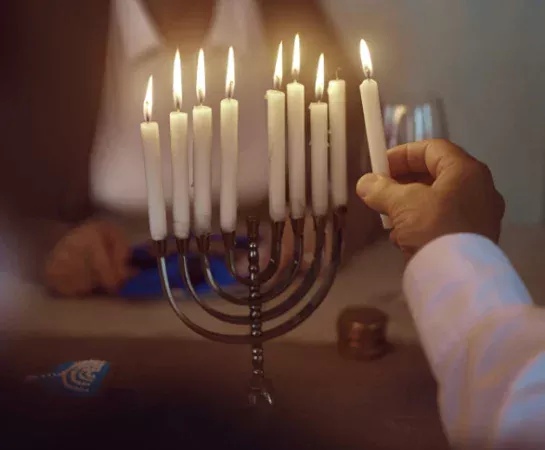
Why Hanukkah’s Date Moves Every Year on the Solar Calendar
In 2013, the first candle of Hanukkah was lit on the night before Thanksgiving, a coincidence rare enough that it won't happen again until 2070. Eleven years later, in 2024, the first candle fell on the evening of December 25 itself, the same alignment that

IST, CST, BST: Why the Same Time Zone Abbreviation Means Different Things
A meeting invite that says "10:00 IST" looks precise. It isn't. IST is India Standard Time (UTC+05:30), Irish Standard Time (UTC+01:00) and Israel Standard Time (UTC+02:00). In July, the first two are four and a half hours apart. CST can mean Chicago or Shanghai, 14

Why Nevada and Utah Sit in Different Time Zones Despite Sharing a Border
Nevada runs on Pacific Time. Utah runs on Mountain Time. The two states share a long, mostly straight desert border, yet anyone driving east from Ely, Nevada, toward Delta, Utah, loses an hour the moment they cross the line. This is not an accident of

Why Brazil Has Four Time Zones Despite Its Massive Size
Brazil covers 8,514,877 square kilometers, the fifth largest country on Earth, and its territory stretches 4,319 kilometers from its Atlantic tip near João Pessoa to the Peruvian border, a span of roughly 39 degrees of longitude. Despite that scale, Brazil runs on only four time
What Time Zone Is Kiribati In: The Country Furthest Ahead in Time
For most of the 20th century, Kiribati wasn't ahead of anyone. Parts of it were among the last places on Earth to see each new day, not the first. That changed in 1995 through a single, deliberate act of redrawing the map, and the country
Time Tools
Quick access to timers, stopwatch, world clock and time zone tools.
Time Guides
Read useful guides about time zones, calendars, finance and astronomy.


