Daylight saving time changes in Monaco
Monaco has 1 listed IANA time zones. 1 of them observe daylight saving time changes in 2026.
Next change: October 25, 2026
Clock moves back from 03:00 to 02:00 local time.
Best Time to Call Monaco
Business hours in Monaco (9 AM–5 PM local time) fall at these local times elsewhere:
- Beijing: 3:00 PM – 11:00 PM ( Partial overlap)
- Paris: 9:00 AM – 5:00 PM ( Convenient)
- Toronto: 3:00 AM – 11:00 AM ( Outside normal hours)
- Seoul: 4:00 PM – 12:00 AM (next day) ( Partial overlap)
- Mexico City: 1:00 AM – 9:00 AM ( Outside normal hours)
- Cairo: 10:00 AM – 6:00 PM ( Convenient)
- Bangkok: 2:00 PM – 10:00 PM ( Partial overlap)
Times shown reflect current UTC offsets and may shift by up to an hour around daylight saving transitions.
Time Difference from Monaco
Compare time in Monaco with other countries.
Most Popular Cities in Monaco
Holidays in Monaco
Official national public holidays. Regional and religious observances may vary by area.
About Time in Monaco
Eleven Fifty-Five, Without Exception
Since 8 December 1817, when the Prince's Carabinieri were first formed to guard the Palace, the changing of the guard on the Place du Palais has taken place at precisely 11:55 in the morning, seven days a week, in white uniforms through the summer and black through the winter. The ritual has proven remarkably resistant to interruption. During the First World War, when most of the Carabinieri were mobilised into the French army, the Palace continued to be watched over by Monegasques and retired riflemen dressed in plain civilian clothes rather than uniform, so that the guard itself changed even when almost nothing about it looked the same. During the COVID-19 restrictions of 2020, the daily ceremony was for the first time in its recorded history moved inside the Palace grounds, performed without the public present and without full dress uniform, before returning to its usual spot in front of the gates once restrictions eased.
What makes the custom distinctive is less the ceremony itself, echoed by palace guards from London to Stockholm, than its stubborn precision: nearly two centuries on, the changeover is still fixed to a five-minute-to-noon slot rather than the rounder hour that most public rituals eventually drift toward, a small daily reminder, repeated some seventy thousand times since 1817, that has quietly outlasted world wars, occupations and pandemics.
Borrowing Paris's Clock
Monaco's own legal clock is younger than the Palace guard by nearly a century. From 28 March 1911, the principality adopted Paris Mean Time as its official standard, the same offset France itself had only just formalised in law that year after decades of resisting the Greenwich meridian, keeping Monaco's civil and railway time tied to the French capital rather than to its own geographic position on the Mediterranean coast. That arrangement lasted until after the Second World War, when Monaco, like France, shifted its clocks to Central European Time, an hour ahead of the earlier standard, a change it has kept ever since. Because the principality has no railways, airports or telegraph offices of its own separate from France's network, its adoption of a given legal time has, in practice if not in law, always followed the decisions taken just across its borders rather than being independently argued out at home.
A Square Watch Named for a Street Circuit
On 3 March 1969, the Swiss watchmaker Heuer, working alongside Breitling and Hamilton under the code name Project 99, unveiled one of the first self-winding chronograph movements ever brought to market, the calibre 11. To house it, the company's chief executive Jack Heuer commissioned an entirely new case shape from the manufacturer Piquerez, square rather than round, made possible by a newly patented waterproofing technique that had not previously worked on anything but circular cases. Heuer named the resulting watch after the Monaco Grand Prix, hoping to borrow some of the glamour of the world's most famous street circuit for a design that, on its 1969 launch, drew as much skepticism as admiration.
The watch owes its lasting fame less to its movement than to a single film role. In 1970, while shooting the racing picture Le Mans, Steve McQueen asked to wear the same equipment used by his friend, the Swiss driver Jo Siffert, who was sponsored by Heuer at the time; the blue-dialled, square-cased Monaco that appeared on McQueen's wrist on screen the following year turned a watch that had struggled commercially into one of the most recognisable chronographs ever made, still sold today under the name of a principality that had nothing to do with designing it, only with lending it a name.
Frequently Asked Questions
How many time zones does Monaco have?
One. The whole of Monaco follows Europe/Monaco, so every city shows the same local time as the capital, Monaco.
Is Monaco ahead of or behind GMT?
Monaco is currently 2 hours ahead of GMT (UTC+2).
Does Monaco use summer time?
Yes. Monaco uses UTC+1 (CET) in standard time and UTC+2 (CEST) during daylight saving time, and is currently on summer time.
How many public holidays does Monaco have in 2026?
Monaco has 13 national public holidays in 2026, when banks and government offices are usually closed. Some regions may also have their own local holidays.
How do I dial a phone number in Monaco from abroad?
From a mobile phone, type +377 and then the full local number exactly as it is written, because numbers in Monaco have no domestic prefix to drop. From a landline, replace the plus sign with your exit code: 011 from the US and Canada, or 00 from most of Europe, for example 00 377 followed by the number.
What language is spoken in Monaco?
The main languages of Monaco are French, English and Italian.
Beyond the Clock

The Hour That Happens Twice: What Actually Occurs at 1:30 AM When Clocks Fall Back
At 1:59:59 a.m. on Sunday, November 1, 2026, clocks in New York will not tick over to 2:00. They will jump back to 1:00:00 a.m., and the next 60 minutes will replay. Every time from 1:00 to 1:59 happens twice that night, once on Eastern

Why the International Space Station Runs on UTC Instead of Local Time
Astronauts aboard the International Space Station see the sun rise and set 16 times in a 24-hour period, once every 90 to 93 minutes, as the station circles Earth at roughly 28,000 kilometers per hour. No conventional time zone survives contact with that kind of
Standard Time vs Daylight Time: What’s the Actual Difference
Most people assume "Standard Time" is the normal, default setting and "Daylight Time" is some separate seasonal overlay that temporarily replaces it. That mental model is backwards in a way that federal law makes explicit, and once you see the actual legal language, the whole
How Accurate Are Atomic Clocks: How Much Do They Actually Drift
In 2015, physicists at JILA in Colorado built a strontium clock so stable that, if it had started running 15 billion years ago, before the universe itself existed, it would still be within one second of correct today. That number sounds like marketing. It isn't.

Which US States Are Split Between Two Time Zones (and Where the Line Runs)
"What time zone is Texas in?" has two correct answers. Houston, Dallas and Austin are on Central Time, while El Paso is on Mountain Time, an hour behind the rest of the state. Florida, Kentucky, Tennessee, Michigan and nine other states work the same way:

India vs US Time Difference: Why the Gap Changes Twice a Year
For most of the year, India is 9 hours 30 minutes ahead of New York. From November 1, 2026 to March 14, 2027, it is 10 hours 30 minutes ahead. India's clocks do not change in either case. The whole difference comes from the United
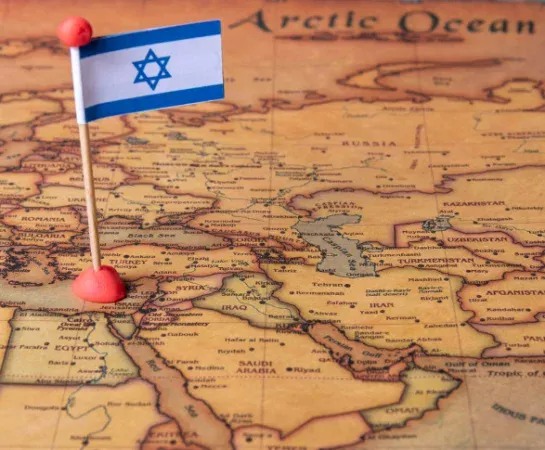
Why Israel Changes Its Clocks on a Different Schedule Than Europe
Israel's clocks now fall back on the same day the European Union's do, the last Sunday of October, a deliberate alignment written into a 2013 law. But the two systems still don't match. Israel springs forward on the Friday before the EU's last Sunday of
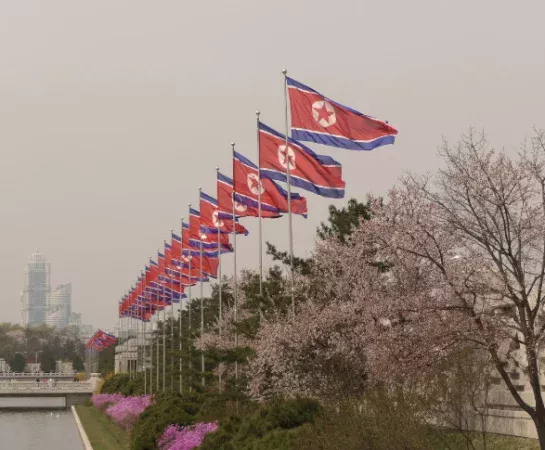
Why North Korea Changed Its Time Zone Twice in One Decade
North Korea turned its clocks back 30 minutes on August 15, 2015, breaking from South Korea and Japan to create its own "Pyongyang Time," then reversed the entire move less than three years later, on May 5, 2018, realigning with Seoul again. Both changes were
Time Tools
Quick access to timers, stopwatch, world clock and time zone tools.
Time Guides
Read useful guides about time zones, calendars, finance and astronomy.


