Major Airports in Equatorial Guinea
- Bata International Airport (BSG) - 23:54:21
- Corisco International Airport (OCS) - 23:54:21
- Malabo International Airport (SSG) - 23:54:21
Daylight saving time in Equatorial Guinea
Equatorial Guinea has 1 listed IANA time zones. None of them observe daylight saving time in 2026. The UTC offset remains stable throughout the year.
Best Time to Call Equatorial Guinea
Business hours in Equatorial Guinea (9 AM–5 PM local time) fall at these local times elsewhere:
- Beijing: 4:00 PM – 12:00 AM (next day) ( Partial overlap)
- Paris: 10:00 AM – 6:00 PM ( Convenient)
- Toronto: 4:00 AM – 12:00 PM ( Outside normal hours)
- Seoul: 5:00 PM – 1:00 AM (next day) ( Partial overlap)
- Mexico City: 2:00 AM – 10:00 AM ( Outside normal hours)
- Cairo: 11:00 AM – 7:00 PM ( Convenient)
- Bangkok: 3:00 PM – 11:00 PM ( Partial overlap)
Times shown reflect current UTC offsets and may shift by up to an hour around daylight saving transitions.
Time Difference from Equatorial Guinea
Compare time in Equatorial Guinea with other countries.
Most Popular Cities in Equatorial Guinea
Holidays in Equatorial Guinea
Official national public holidays. Regional and religious observances may vary by area.
About Time in Equatorial Guinea
Bioko and Río Muni Can Be in Opposite Seasons at the Same Time
Equatorial Guinea is small enough to fit comfortably inside many larger countries, yet one national rainy-season calendar does not work for it. The island of Bioko and the continental region of Río Muni can pass through almost opposite seasonal phases during the same months.
FAO describes Bioko's main dry season as running broadly from November to April, with the wetter period extending from April into October. On the mainland, the strongest dry interval falls around June to August, followed by a rainy season from September to November, another shorter dry period from roughly December to March and a shorter rainy interval in April and May.
The contrast becomes especially clear around July. Much of Río Muni is then in its principal dry period, while Bioko is deep inside its rainy season. In December or January, the relationship reverses: Bioko becomes comparatively dry while parts of the mainland have only recently emerged from the autumn rains.
This seasonal inversion is produced by geography rather than by a change in civil time. Bioko lies farther north in the Gulf of Guinea and rises steeply from the sea into volcanic mountains. Moist southwesterly air interacts strongly with that relief, especially on the southern side of the island. Río Muni follows a different progression of the tropical rain belt over continental Central Africa.
The difference matters operationally. Planting, road conditions, forest work and agricultural labor cannot be scheduled nationally by assuming that 'the rainy season' begins everywhere together. A date that represents wet-season field conditions on Bioko can correspond to a relatively dry working period around Bata and the continental interior.
Annobón adds another calendar again. Government climate descriptions place its wetter period broadly from November to May and the drier season from June to October. One country therefore contains several annual rainfall clocks offset from one another by geography.
Bioko's Turtle Season Runs from October into February, Then the Animals Begin a Journey Measured in Weeks
On the remote southern beaches of Bioko, sea turtle reproduction creates one of the island's most tightly monitored annual schedules. Four species nest there, but green turtles and leatherbacks account for the strongest recurring activity.
Long-term studies place the main nesting season broadly between October and February, with activity strongest around December and January. Historical observations show that some nesting can begin in late September and continue into March, so the seasonal window has edges rather than one exact opening and closing date.
Field teams work through the night because that is when females emerge from the ocean. Researchers identify turtles, mark nests, measure animals and later return to monitor hatching success. A beach that appears almost empty during the day can therefore contain the results of many events that happened hours earlier under darkness.
The end of nesting starts another clock. In 2018, researchers fitted satellite transmitters to green turtles after their final nests on Bioko. All five animals that completed long post-nesting migrations eventually established extended foraging residency off Ghana after journeys lasting approximately 14 to 28 days.
The routes were not identical. One turtle followed a more coastal track while another travelled much farther offshore. Ocean currents influenced the paths, and the animals spent much of their migration in relatively weak-current areas rather than simply drifting with the fastest flow.
Leatherbacks operate on an even larger spatial scale. A 2023 satellite study of ten females showed that during the breeding period they remained entirely within Equatorial Guinea's exclusive economic zone, with core use concentrated near southern Bioko. After nesting, however, tracked animals moved into the wider South Atlantic, and about 70 percent of all recorded tracking time occurred in areas beyond national jurisdiction.
The reproductive year therefore changes scale abruptly. For several months, a female may return repeatedly to the same few beaches. After her final nest, the relevant unit of geography expands from kilometres of coastline to an ocean basin, while the relevant unit of time changes from nights between nesting attempts to weeks and months of migration.
Equatorial Guinea's Labour Code Gives Day, Night and Offshore Work Three Different Clocks
National labour law does not treat every working hour as equivalent. The General Labour Law defines daytime, nighttime and offshore work through different legal limits, effectively creating several working clocks inside the same twenty-four-hour day.
Under Article 77, ordinary daytime work is limited to eight hours per day and forty-eight hours per week. Night work is shorter: six hours per day and thirty-six hours per week. A mixed schedule has its own limit of seven hours per day and forty-two hours per week.
The law defines the daytime period as 06:00 to 18:00. A mixed shift may include daytime hours and up to three nighttime hours. Once the night portion exceeds three hours, the entire shift is legally treated as night work.
That threshold can change the legal character of the same shift within minutes. A schedule containing three hours of night work remains mixed; extending it beyond that point pushes it into the night-work category with a lower daily and weekly limit.
Offshore workers are treated differently again. The law permits a maximum offshore working day of twelve hours, composed of eight ordinary hours and four extraordinary hours. This reflects the operational reality of petroleum platforms and other installations where workers may remain at a remote site and production processes continue around the clock.
Rest and meal time are also defined. The normal workday includes a one-hour meal and rest period unless the employer and worker agree otherwise. If the interruption exceeds two hours, the schedule is treated as a split working day and, unless otherwise agreed, the interruption is not counted as working time.
These rules mean that legal time is not merely elapsed time. A worker can spend the same physical hour at the workplace under several different legal classifications depending on when the shift occurs, how much of it falls after 18:00 and whether the work is performed offshore.
Pico Basilé Has Three Recorded Eruptions, but Even Their Dates Carry Uncertainty
Bioko is a volcanic island, and Pico Basilé dominates its northern half. Modern geological research still classifies the volcanic system as active, but its historical eruption chronology contains a warning about how easily exact-looking dates can overstate what is actually known.
The Smithsonian Global Volcanism Program lists three confirmed eruptive periods for Pico Basilé: 1898, 1903 and 1923. All were reported from vents on the southeastern flank. The 1923 event is the most recent known eruption.
The database does not, however, pretend to know the exact day. Its nominal entries are displayed around 2 July with an uncertainty of plus or minus 182 days, effectively indicating that the year is known far better than the month or date.
The same problem affects the earlier events. The 1898 eruption is marked with additional uncertainty, while the 1903 event is also represented with a broad six-month range. These are reported historical eruptions rather than events reconstructed from modern seismic networks, satellite imagery or continuous instruments.
A 2024 study of Bioko's volcanic structure reinforces the caution. Researchers identified at least 158 vents on Pico Basilé and noted that the island still lacks a modern volcano-monitoring system and detailed hazard maps comparable with those available at many heavily studied active volcanoes.
The chronology therefore contains two very different levels of precision. The volcano's recent geological structure can be mapped from high-resolution elevation data, while the exact timing of eruptions observed only a century ago remains coarse.
This is a useful example of why a date in a database should not automatically be read as a timestamp. '1923' is well supported as the last known eruption year; a precise day and hour are not. In volcanic history, admitting the width of the time window is part of accurate timekeeping.
Cocoa Production and Cocoa Export Do Not Belong to the Same Calendar Year
For much of Equatorial Guinea's modern economic history, cocoa from Bioko created a commercial calendar that crossed from one civil year into the next. Government statistical work on the cocoa sector explicitly separates the production campaign from the export campaign because the two do not line up neatly inside January to December.
Official historical data describe cocoa production by agricultural campaign, commonly centered around December and January. Exports, however, are recorded on a campaign that generally begins around July and continues until March of the following year.
That means cocoa harvested and classified as part of one production cycle can continue leaving the country after New Year. A shipment in February may belong economically to a campaign associated with the previous harvest rather than to a completely new production year.
This distinction matters when comparing statistics. A simple annual export total can appear to disagree with annual production if one forgets that the beans are moving through a longer chain of harvesting, fermentation, drying, storage and shipping.
Cocoa itself requires time before export. International Cocoa Organization guidance places the main fermentation process broadly within the first 36 to 72 hours, while effective sun-drying in West African conditions normally requires at least about a week and can take longer when weather is humid.
Bioko's rainy climate makes that drying interval especially sensitive to season. Cocoa harvested during wetter conditions cannot simply be rushed onto a ship because excess moisture increases the risk of mould and deterioration during storage.
The country's historical production data also show why campaign timing became economically important. Output rose strongly through the first half of the twentieth century and reached tens of thousands of tonnes before collapsing during the 1970s. Later rehabilitation programs tried to restore quality grading and productivity, but by then petroleum had displaced cocoa as the dominant export sector.
The old cocoa calendar nevertheless illustrates a broader point: agricultural time and accounting time are not identical. A crop develops in the field, is processed over days, marketed over months and may be exported in a different calendar year from the one in which it was harvested.
Malabo Uses UTC+1 All Year, but Modern Time-Zone Data Deliberately Avoid Pretending Its Early History Is Better Known Than It Is
Equatorial Guinea now keeps West Africa Time, UTC+1, throughout the year. There is no seasonal daylight-saving transition, so modern civil timestamps are straightforward.
The interesting part of the time-zone record lies in what the IANA Time Zone Database chooses not to claim. The identifier Africa/Malabo exists for Equatorial Guinea, but in current tzdb it is linked to the same post-1970 history as Africa/Lagos rather than carrying an elaborate separate sequence of early local-time transitions.
This is intentional. IANA guarantees practical accuracy primarily for timestamps from 1970 onward. For many African locations, surviving evidence about earlier civil-time practice is incomplete, contradictory or based on later secondary compilations.
A longitude calculation could produce a very precise-looking local mean time for Malabo before standardization. That would not prove that every government office, ship, railway clock or household on Bioko actually used that calculated offset at a particular historical moment.
Modern software therefore distinguishes between geographical precision and documentary precision. Knowing Malabo's longitude to seconds of arc is not the same as knowing the exact legal clock rule that applied to every historical timestamp.
For current use there is no ambiguity: Equatorial Guinea remains on UTC+1 throughout the year. The more interesting lesson is that responsible time-zone history sometimes means refusing to invent a neat sequence where the archival evidence does not justify one.
Frequently Asked Questions
How many time zones does Equatorial Guinea have?
One. The whole of Equatorial Guinea follows Africa/Malabo, so every city shows the same local time as the capital, Ciudad de la Paz.
Is Equatorial Guinea ahead of or behind GMT?
Equatorial Guinea is currently 1 hour ahead of GMT (UTC+1).
Does Equatorial Guinea use summer time?
No. Equatorial Guinea does not observe daylight saving time, so its clocks stay at UTC+1 all year. Its time difference with countries that do change their clocks still shifts by an hour in spring and autumn.
How many public holidays does Equatorial Guinea have in 2026?
Equatorial Guinea has 14 national public holidays in 2026, when banks and government offices are usually closed. Some regions may also have their own local holidays.
How do I dial a phone number in Equatorial Guinea from abroad?
From a mobile phone, type +240 and then the local number without the leading 0 used for domestic calls, if it has one. From a landline, replace the plus sign with your exit code: 011 from the US and Canada, or 00 from most of Europe, for example 00 240 followed by the number.
What language is spoken in Equatorial Guinea?
The main languages of Equatorial Guinea are Spanish, French and Portuguese.
Beyond the Clock

When Does the Fed Announce Interest Rates: Exact Time and Why It Moves Markets
The Federal Reserve announces its interest rate decision at 2:00 p.m. Eastern Time on the final day of each scheduled Federal Open Market Committee (FOMC) meeting, and the Chair's press conference follows at 2:30 p.m. Those times have been fixed since March 2013. The rest

Why Bitcoin ETFs Close at 4 PM While Bitcoin Never Stops Trading
Bitcoin trades every minute of the year. The ETFs that hold it do not. A US spot bitcoin ETF follows a stock exchange schedule: regular trading from 9:30 AM to 4:00 PM ET on weekdays, thinner extended sessions on either side, and no trading at

What Is the Closing Auction and Why the Last 10 Minutes Move the Market
The 4:00 p.m. bell on the New York Stock Exchange does not simply end the trading day. It triggers the closing auction, a one-time match of buyers and sellers at a single price that becomes each stock's official close, and which NYSE describes as the

Jobs Report Day: Why the First Friday of the Month Moves Every Market at Once
Once a month, at 8:30 a.m. Eastern, currency pairs jump, bond yields snap, and equity futures swing before most traders have settled at their desks. Everyone calls it "the first Friday of the month." Almost everyone is wrong about why it lands there. The date

Why the Earliest Sunset Comes Before the Winter Solstice
In New York, the Sun sets earliest on Monday, December 7, 2026, at about 4:28 PM. The shortest day comes two weeks later. The solstice falls at 20:50 UTC on December 21 (3:50 PM EST), and on that day New York gets roughly 9 hours

When Does Winter Start: Meteorological vs Astronomical Seasons
Winter 2026 starts twice in the Northern Hemisphere. Meteorological winter begins on Tuesday, December 1, 2026. Astronomical winter begins at the December solstice, on Monday, December 21, 2026 at 20:50 UTC, which is 3:50 p.m. Eastern and 12:50 p.m. Pacific. Both answers are correct. They
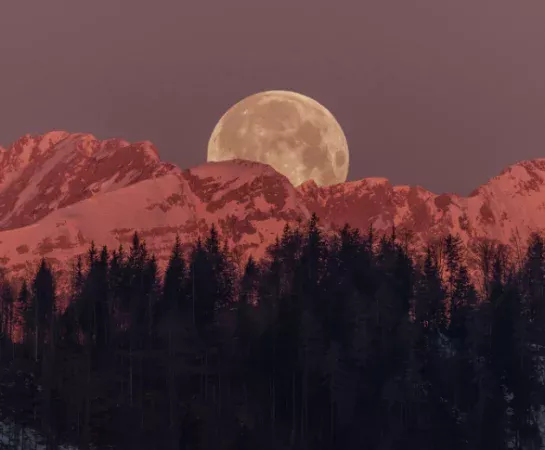
What Is a Supermoon and When Is the Next One
Every time a supermoon rises, the same statistic gets repeated: 14% bigger, 30% brighter. It's in almost every news segment and nearly every listicle, and it's also a comparison almost nobody in the audience will ever actually witness, because it measures the single closest possible
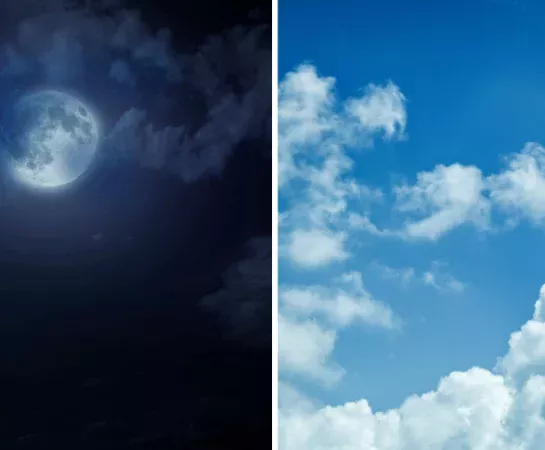
Why the Sky Is Blue During the Day and Black at Night
Sunlight is white. Air is, as far as anyone can tell by looking through a window, colorless. And yet every clear afternoon the same 400,000-kilometer column of gas above your head reads as a specific, saturated blue, then goes black within an hour of sunset.
Time Tools
Quick access to timers, stopwatch, world clock and time zone tools.
Time Guides
Read useful guides about time zones, calendars, finance and astronomy.


