Daylight saving time changes in Andorra
Andorra has 1 listed IANA time zones. 1 of them observe daylight saving time changes in 2026.
Next change: October 25, 2026
Clock moves back from 03:00 to 02:00 local time.
Best Time to Call Andorra
Business hours in Andorra (9 AM–5 PM local time) fall at these local times elsewhere:
- Beijing: 3:00 PM – 11:00 PM ( Partial overlap)
- Paris: 9:00 AM – 5:00 PM ( Convenient)
- Toronto: 3:00 AM – 11:00 AM ( Outside normal hours)
- Seoul: 4:00 PM – 12:00 AM (next day) ( Partial overlap)
- Mexico City: 1:00 AM – 9:00 AM ( Outside normal hours)
- Cairo: 10:00 AM – 6:00 PM ( Convenient)
- Bangkok: 2:00 PM – 10:00 PM ( Partial overlap)
Times shown reflect current UTC offsets and may shift by up to an hour around daylight saving transitions.
Time Difference from Andorra
Compare time in Andorra with other countries.
Most Popular Cities in Andorra
Holidays in Andorra
Official national public holidays. Regional and religious observances may vary by area.
About Time in Andorra
A Clock That Follows Its Neighbors by Choice
Andorra adopted Central European Time only after the Second World War, aligning its clocks with both France and Spain despite being a fully independent principality with no obligation to match either neighbor's timekeeping. That decision reflects a broader pattern in how the tiny Pyrenean state manages time: Andorra is not a member of the European Union, yet it voluntarily follows the EU's daylight saving schedule anyway, shifting to Central European Summer Time on the last Sunday in March and back to standard time on the last Sunday in October, precisely in step with Brussels even though no EU regulation actually requires it to do so.
The practical logic behind this voluntary alignment is straightforward given Andorra's size and geography. The entire country fits inside a single time zone and is small enough to drive across in under an hour, wedged into the high Pyrenees between two much larger neighbors whose banking hours, bus schedules, and border crossings Andorra's own tourism and retail economy depends on daily. Keeping the country's clocks perfectly synchronized with Toulouse and Barcelona costs Andorra nothing in sovereignty and saves its shopkeepers, ski resorts, and cross border commuters the daily friction of doing time zone math every time they leave the principality.
Three Dates That Built a Country's Sovereignty
Andorra's unusual system of shared sovereignty did not emerge all at once, but accumulated across roughly five centuries of specific, documented political dates. Tradition holds that the Frankish emperor Charlemagne granted the Andorran valleys a charter around the year 805 in gratitude for local fighters who helped repel Moorish forces near Porté-Puymorens, though the earliest surviving document that actually names Andorra's parishes dates to 839, in the deed consecrating the cathedral of La Seu d'Urgell. In 988, Count Borrell II of Urgell transferred control of the Andorran valleys to the Diocese of Urgell in exchange for land elsewhere, establishing the bishop of Urgell as a permanent power in Andorran affairs, a role the office still holds today.
The arrangement that defines Andorra's government took its current form nearly three centuries later. In 1278, a formal pareage agreement resolved a long running dispute between the bishop of Urgell and the French count of Foix by establishing joint, co-equal sovereignty over the principality, a structure that has persisted with remarkably little structural change ever since. Today those two original medieval claims survive in modernized form as Andorra's co-princes, the bishop of Urgell and the president of France, meaning the country's head of state arrangement can trace an essentially unbroken institutional line back through 1278, 988, and the disputed events of 805, an unusually long and well documented chain of political dates for a state of Andorra's size.
The Cupboard That Needed Seven Keys at Once
For more than three centuries, the government of Andorra operated out of a single stone manor house called Casa de la Vall, built in 1580 and acquired by the Consell de la Terra, Andorra's parliament, in 1702. The Consell General itself, one of the oldest continuously functioning parliaments in Europe, traces its origins to 1419, and for generations its representatives convened at Casa de la Vall to conduct the country's legislative business and, on the ground floor, to sit as the principality's only criminal court.
The building's most distinctive feature was a piece of physical security engineered around coordinated timing rather than a single lock and key. The Armari de les Set Claus, or Cupboard of the Seven Keys, held Andorra's most important official documents, including its historic legal code, and was designed so that it could only be opened when representatives from all seven of the country's parishes were simultaneously present, each holding one of seven separate keys. No single parish, however powerful, could access the principality's foundational records alone; the cupboard physically enforced a requirement that all seven communities show up together at the same moment before the nation's own history could be unlocked. Casa de la Vall served as parliament's seat until 2011, when the Consell General finally relocated to a larger, modern building nearby.
Frequently Asked Questions
How many time zones does Andorra have?
One. The whole of Andorra follows Europe/Andorra, so every city shows the same local time as the capital, Andorra la Vella.
Is Andorra ahead of or behind GMT?
Andorra is currently 2 hours ahead of GMT (UTC+2).
Does Andorra use summer time?
Yes. Andorra la Vella uses UTC+1 (CET) in standard time and UTC+2 (CEST) during daylight saving time, and is currently on summer time.
How many public holidays does Andorra have in 2026?
Andorra has 14 national public holidays in 2026, when banks and government offices are usually closed. Some regions may also have their own local holidays.
How do I dial a phone number in Andorra from abroad?
From a mobile phone, type +376 and then the local number without the leading 0 used for domestic calls, if it has one. From a landline, replace the plus sign with your exit code: 011 from the US and Canada, or 00 from most of Europe, for example 00 376 followed by the number.
What language is spoken in Andorra?
The main language of Andorra is Catalan.
Beyond the Clock

The Planning Fallacy: Why Tasks Take Longer Than You Expect and How to Correct It
In a 1994 study, 37 psychology students estimated how long it would take them to finish their honors theses. Their average answer was 33.9 days. They also gave a best-case estimate, 27.4 days on average, and a worst-case estimate, "if everything went as poorly as

What the Research Actually Says About the “23 Minutes to Refocus” Claim
"It takes 23 minutes and 15 seconds to refocus after an interruption" shows up in productivity apps, management slide decks, and posts about deep work. The figure is real, and it comes from a serious researcher. It does not mean what it is usually taken

Why the 40-Hour Work Week Exists: From 10-Hour Days to Ford’s 1926 Experiment
The 40-hour week looks like a natural unit of work, but the number was never derived from a measurement of how much work is best. It is the product of two separate fights: one over the length of the day, which ended at eight hours,

Pomodoro Technique: Why 25 Minutes and When a Different Interval Works Better
The most famous number in time management started as a workaround. In the late 1980s Francesco Cirillo, a university student who could not make himself study, used a tomato-shaped kitchen timer to test a small question: could he work for two minutes without interruption? Twenty-five

Why the Year Starts on January 1
Nothing happens in the sky on January 1. The winter solstice comes about ten days earlier, Earth's closest approach to the Sun a few days later, and no lunar phase is tied to the date. January 1 is not an astronomical boundary. It is an

What Is Nowruz and Why It Always Falls on the Spring Equinox
Nowruz is the Persian New Year, celebrated by more than 300 million people across Iran, Afghanistan, Central Asia, the Caucasus, and Kurdish communities, and it begins at the exact astronomical instant of the March equinox rather than on a fixed date on any calendar grid.

When Is Yom Kippur and Why It Always Falls 10 Days After Rosh Hashanah
Yom Kippur is the tenth day of Tishrei, and Rosh Hashanah is the first, so the ten-day gap between them looks like simple arithmetic. It isn't. The Hebrew calendar has a set of centuries-old rules that quietly forbid Rosh Hashanah from landing on three specific
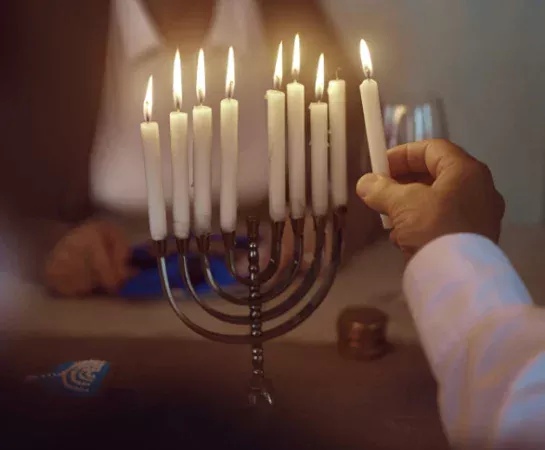
Why Hanukkah’s Date Moves Every Year on the Solar Calendar
In 2013, the first candle of Hanukkah was lit on the night before Thanksgiving, a coincidence rare enough that it won't happen again until 2070. Eleven years later, in 2024, the first candle fell on the evening of December 25 itself, the same alignment that
Time Tools
Quick access to timers, stopwatch, world clock and time zone tools.
Time Guides
Read useful guides about time zones, calendars, finance and astronomy.


