The Moon is one of the most familiar objects in the sky, but most people only know a few basic things about it. In reality, it plays a key role in how Earth works, from ocean tides to the stability of our planet’s rotation.
Its influence is not limited to what we see at night. The Moon is constantly interacting with Earth through gravity, shaping natural cycles that affect oceans, time, and even long-term planetary behavior. Many everyday phenomena make more sense once you understand how this connection works.
Here are some of the most important facts that help explain how the Moon actually works, each highlighting a different part of the Earth-Moon system.
1. The Moon controls ocean tides
The Moon’s gravity affects Earth’s oceans and creates tides. As the Earth rotates, different areas move through this gravitational influence, causing water levels to rise and fall throughout the day.

This happens because the Moon pulls water slightly toward itself, creating a bulge on the side of Earth facing the Moon. At the same time, another bulge forms on the opposite side due to the way Earth and the Moon interact as a system. As the planet rotates, coastlines move through these bulges, which is why most places experience two high tides and two low tides each day.
The strength of tides is not constant. It changes depending on the position of the Moon and the Sun. When they align, tides become stronger. When they form a right angle, tides are weaker. This constant variation is part of a larger rhythm driven by gravity.
Without the Moon, tides would still exist, but they would be much weaker. The Sun also influences tides, but the Moon’s effect is more than twice as strong. This makes it the primary force behind the daily movement of ocean water.
2. The Moon is moving away from Earth
The Moon is slowly moving away from Earth at a rate of about 3.8 cm per year. This seems small, but over millions of years it affects the length of our days and the strength of tides.
This movement is caused by tidal interactions between Earth and the Moon. As the Moon pulls on Earth’s oceans, it creates friction that slightly slows down Earth’s rotation. That lost energy is transferred to the Moon, pushing it into a higher orbit.
As a result, days on Earth are gradually becoming longer. Hundreds of millions of years ago, a full day was noticeably shorter than it is today. This change is extremely slow, but it is constant and measurable.
At the same time, the increasing distance weakens the Moon’s gravitational influence. Over very long periods, this reduces the strength of tides and slightly changes how Earth’s systems behave.
This process will continue for billions of years. The Moon will keep drifting away until the system reaches a stable balance, where both Earth and the Moon are gravitationally locked in a way that stops further change.
3. We always see the same side of the Moon
The Moon rotates on its axis at the same speed that it orbits Earth. This is called tidal locking, which is why we always see the same side, known as the near side.
One full rotation of the Moon takes the same time as one orbit around Earth, about 27.3 days. Because of this perfect synchronization, the same hemisphere is always facing our planet.
This does not mean the Moon does not rotate. It does, but at exactly the right speed to keep the same side visible. If the rotation were even slightly different, we would gradually see more of its surface over time.
The side we never see directly is often called the far side. It is not permanently dark, as people sometimes assume. It receives sunlight just like the near side, but it faces away from Earth.
Tidal locking is a result of long-term gravitational interaction between Earth and the Moon. Over millions of years, these forces slowed the Moon’s rotation until it matched its orbit, creating the stable pattern we observe today.
4. The Moon has no atmosphere
Unlike Earth, the Moon has no atmosphere to hold heat or protect its surface. This leads to strong temperature differences between day and night.
Without an atmosphere, there is nothing to scatter sunlight or create a blue sky. The sky above the Moon appears completely black, even during the day.
It also means there is no protection from space. Meteoroids regularly hit the surface, which is why the Moon is covered with craters. On Earth, most of these objects burn up in the atmosphere before reaching the ground.
Another key difference is sound. Without air, sound cannot travel, so the Moon is completely silent.
5. Temperatures on the Moon are extreme
During the day, the surface can heat up to over 120°C, while at night it can drop below −170°C. These extremes happen because there is no atmosphere to regulate temperature.
On Earth, air helps distribute heat and smooth out temperature changes. On the Moon, heat builds up quickly in sunlight and escapes just as quickly in darkness.
The length of the lunar day makes this even more extreme. Because one full cycle lasts about 29.5 Earth days, the surface spends long periods heating up and cooling down without interruption.
These conditions make survival difficult and require specialized technology for any missions or equipment operating on the surface.
6. The Moon helps stabilize Earth’s rotation
The presence of the Moon helps keep Earth’s tilt relatively stable. Without it, the planet’s climate could change much more dramatically over time.
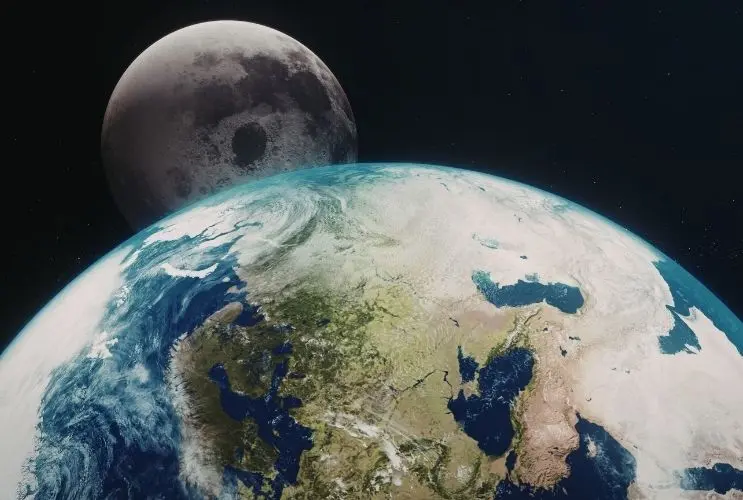
Earth is tilted at about 23.5 degrees, which is what creates seasons. The Moon’s gravity acts like a stabilizing force, preventing this tilt from shifting too much.
Without the Moon, Earth’s axis could wobble unpredictably over long periods. This would lead to extreme climate changes, making conditions much less stable for life.
This stabilizing effect is one of the reasons why Earth has maintained relatively consistent environmental conditions for millions of years.
7. A day on the Moon lasts about 29.5 Earth days
The Moon completes one full cycle of phases, from new moon to full moon and back again, in about 29.5 days, following natural daily and seasonal cycles.
This period is called a lunar month and reflects how the Moon moves relative to the Sun as seen from Earth.
Because of this, a single day on the Moon, from sunrise to the next sunrise, is much longer than on Earth. Each location experiences about two weeks of daylight followed by two weeks of darkness.
This slow cycle affects temperature, visibility, and planning for any missions on the Moon’s surface.
8. The Moon likely formed after a massive impact
Scientists believe the Moon formed after a Mars-sized object collided with Earth billions of years ago, and the debris eventually came together to form the Moon.
This idea is known as the giant impact hypothesis. According to this model, a young Earth was struck by a large body often called Theia. The collision was powerful enough to eject huge amounts of material into orbit.
Over time, this debris formed a disk around Earth and gradually combined under gravity, eventually creating the Moon. Evidence for this comes from similarities in the composition of Earth’s outer layers and lunar rocks.
This event likely reshaped early Earth and played a major role in defining the system we have today.
9. The Moon has water, but not like Earth
There is evidence of frozen water in permanently shadowed craters near the poles. However, there are no rivers, lakes, or oceans like on Earth.
These regions never receive direct sunlight, which allows ice to remain stable for long periods. Temperatures in these craters are extremely low, making them some of the coldest places in the solar system.
The presence of water is important for future exploration. It could potentially be used for drinking, producing oxygen, or even creating fuel for space missions.
However, this water is not easily accessible and exists in limited quantities compared to Earth’s vast oceans.
10. The Moon affects Earth’s time and rotation
The gravitational interaction between the Moon and Earth slowly reduces the speed of Earth’s rotation. This means that days on Earth are gradually becoming longer over long periods of time.
This process is caused by tidal friction. As the Moon pulls on Earth’s oceans, energy is transferred and Earth’s rotation loses a small amount of speed.
Hundreds of millions of years ago, a day on Earth was significantly shorter than it is now. The difference is small on a human timescale, but over geological time it becomes measurable.
This interaction links the Moon directly to how we experience time on Earth, making it part of the long-term evolution of our planet’s daily cycle.
11. The Moon can be seen during the day
The Moon is often visible during daylight hours, depending on its phase and position in the sky. It does not appear only at night.
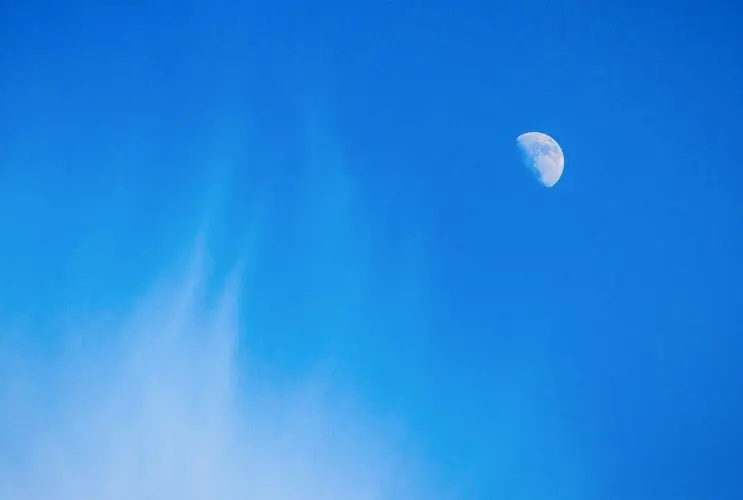
This happens because the Moon reflects sunlight and can be bright enough to stand out even against the blue sky. Visibility depends on its angle relative to the Sun and Earth.
During phases like the first and last quarter, the Moon is commonly visible during the day. Many people overlook this simply because they are not expecting to see it.
Once you start paying attention, you will notice that the Moon is present in the sky much more often than it seems.
12. The Moon has mountains and valleys
The surface of the Moon is covered with craters, mountains, and flat plains called maria. These features formed due to volcanic activity and impacts from space objects.
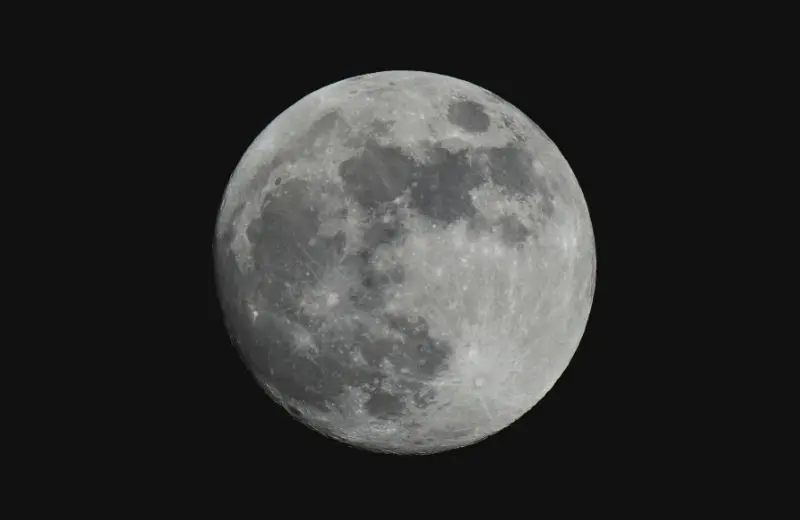
The maria, which appear as darker areas, are ancient lava plains formed billions of years ago. In contrast, the brighter regions are heavily cratered highlands.
Some lunar mountains are comparable in height to those on Earth, but they formed differently, mostly through impacts rather than plate tectonics.
Because there is no atmosphere or erosion, these surface features remain preserved for extremely long periods of time.
13. The Moon has quakes
The Moon experiences moonquakes, which are similar to earthquakes but usually weaker. Some of them are caused by gravitational interactions with Earth.
There are several types of moonquakes, including deep internal shifts, surface impacts, and thermal quakes caused by extreme temperature changes.
Unlike earthquakes, moonquakes can last much longer because the Moon’s interior structure allows vibrations to travel differently.
These seismic events help scientists better understand the Moon’s internal composition and structure.
14. The Moon looks bigger near the horizon
This is known as the Moon illusion. When the Moon is close to the horizon, it appears larger because of how our brain interprets distance and perspective.
In reality, the Moon does not change size. The effect is purely psychological and linked to how we compare the Moon with objects like buildings, trees, or the landscape.
When the Moon is higher in the sky, there are fewer visual reference points, so it appears smaller even though its actual size remains the same.
This illusion has been observed and studied for centuries, and it remains one of the most interesting examples of how human perception works.
15. The Moon plays a role in life on Earth
In addition to tides, the Moon influences biological rhythms in some species and has played an important role in the development of life on Earth.
Many marine organisms rely on lunar cycles for reproduction and behavior. The regular pattern of tides creates stable environmental conditions that support ecosystems.
The Moon also contributes to long-term stability on Earth, helping maintain conditions that allow life to develop and evolve.
Without the Moon, Earth would likely be a much less stable environment, with more extreme changes in climate and natural cycles.
Why the Moon matters more than you think
The Moon is not just an object in the night sky. It is part of a system that directly influences how Earth behaves, from its rotation to long-term natural cycles.
Its gravitational pull shapes ocean tides, affects the length of our days, and helps stabilize the planet’s axis. These are not abstract effects. They define how environments function and how life adapts over time.
The Moon also acts as a balancing factor. By keeping Earth’s tilt relatively stable, it reduces extreme climate variations and supports more predictable conditions across the planet.
When you look at the Moon, you are not just seeing a distant object. You are looking at something that has been quietly shaping Earth for billions of years.
Understanding how the Moon works helps explain many everyday phenomena, from tides to the length of a day, and reveals how deeply Earth is connected to space.