Daylight saving time changes in British Columbia, Canada
British Columbia has 3 listed IANA time zones. 2 observe daylight saving time changes in 2026. 1 keeps a stable UTC offset throughout the year.
No further clock change scheduled
America/Edmonton: the last change was on March 8, 2026, when the clock moved forward from 02:00 to 03:00. It has stayed on UTC-6 since then.
America/Vancouver: the last change was on March 8, 2026, when the clock moved forward from 02:00 to 03:00. It has stayed on UTC-7 since then.
Time Zones Used in British Columbia
British Columbia is split between 2 different clocks. They differ by 1 hour all year. The first row is the clock used in most of the province.
| Clock | Jan 15, 2027 | Jul 15, 2027 | Used in |
|---|---|---|---|
| No clock change | UTC−7 | UTC−7 | Vancouver, Victoria, Fort St. John |
| No clock change | UTC−6 | UTC−6 | Cranbrook |
Places are examples, not full boundaries: county and other local lines decide which clock applies.
Crossing the Border: Clock Changes Around British Columbia
At 6 of British Columbia's 7 land borders the time changes for at least part of the year. The table compares the time used in most of each neighbour with the time used in most of British Columbia on the next mid-winter and mid-summer dates.
| Neighbour | Jan 15, 2027 | Jul 15, 2027 |
|---|---|---|
| Alaska* | 2 hours behind | 1 hour behind |
| Alberta | 1 hour ahead | 1 hour ahead |
| Northwest Territories | 1 hour ahead | 1 hour ahead |
| Idaho* | Same time | 1 hour ahead |
| Montana | Same time | 1 hour ahead |
| Washington | 1 hour behind | Same time |
Same clock all year: Yukon.
* Part of this neighbour uses a different time zone, so the difference at some crossings is not the one shown. British Columbia itself uses more than one time zone; the comparison is with the time used in most of the province.
Time Difference from British Columbia
Compare time in British Columbia with major cities worldwide.
When the Time Difference with British Columbia Changes
Clocks change on different dates around the world, so the gap between British Columbia and these places is not the same all year. Next 12 months; dates in Vancouver time.
Best Time to Call British Columbia
Business hours in British Columbia (9 AM-5 PM local time) fall at these local times elsewhere:
- New York: 11:00 AM - 7:00 PM ( Convenient · 6 h shared)
- Chicago: 10:00 AM - 6:00 PM ( Convenient · 7 h shared)
- Los Angeles: 8:00 AM - 4:00 PM ( Convenient · 7 h shared)
- Toronto: 11:00 AM - 7:00 PM ( Convenient · 6 h shared)
- London: 4:00 PM - 12:00 AM (next day) ( Partial overlap · 1 h shared)
- Mexico City: 10:00 AM - 6:00 PM ( Convenient · 7 h shared)
- Tokyo: 1:00 AM (next day) - 9:00 AM (next day) ( Outside normal hours)
in British Columbia today, it is:
- New York: 2:00 PM working hours
- Chicago: 1:00 PM working hours
- Los Angeles: 11:00 AM working hours
- Toronto: 2:00 PM working hours
- London: 7:00 PM outside working hours
- Mexico City: 1:00 PM working hours
- Tokyo: 4:00 AM (next day) night
Times are for today. Clock changes shift them on some dates: see when the time difference changes.
Sun Across British Columbia
Most of British Columbia reads the same clock, but the sun crosses that part from east to west. Of the towns with 10,000 or more people on this clock, Salmon Arm lies furthest east and Terrace furthest west, 9.3° of longitude apart. The sun is highest in Terrace about 37 minutes later than in Salmon Arm, so by the clock the whole day there starts and ends later. The difference in latitude moves sunrise and sunset further:
| Sunrise - sunset | Jan 15, 2027 | Jul 15, 2027 |
|---|---|---|
| Salmon Arm (east) | 08:53 - 17:21 | 05:01 - 21:04 |
| Terrace (west) | 09:47 - 17:41 | 05:19 - 22:01 |
Local clock times in the province's main time zone, rounded to the minute. Towns are taken from the city database used across this site.
About Time in British Columbia
Done Waiting
British Columbia passed legislation in 2019 that would let it stay on daylight time all year. The public engagement that preceded it drew about 223,000 responses, and 93 percent backed year-round daylight time. The province then held off for years, waiting for Washington, Oregon and California, which cannot make the same move without approval from the US Congress.
On March 2, 2026 the provincial government announced it would stop waiting. Clocks moved forward on March 8, 2026 for the last time, and on November 1, 2026 they did not move back. Most of the province now keeps a single year-round time called Pacific time, fixed at UTC-7. That matches California, Oregon and Washington in summer and Alberta's former winter time from November to March.
The Town That Stopped in 1918
Creston, in the province's southeast, has not changed its clocks since 1918. According to research by the local museum, the town used Mountain time from the mid-1880s, switched to Pacific time in 1916, and adopted Pacific daylight time in the summer of 1918. When the rest of Canada fell back that October, Creston did not, and found itself on Mountain Standard Time again without touching a clock.
During the Second World War, when Ottawa required clock changes nationwide, Creston could say it was observing Pacific war time and still did not move its clocks. Afterwards it was back on Mountain Standard Time, again with no change. Creston's UTC-7 is the same offset the rest of British Columbia adopted permanently in 2026, so for the first time since the Second World War the town matches the coast.
Where the Rest of Mountain Time Went
The northeast of the province, including Dawson Creek, Fort St. John, Chetwynd, Tumbler Ridge and Fort Nelson, has stayed on Mountain Standard Time year-round. Like Creston, it is now on the same UTC-7 as Vancouver and Victoria every day of the year.
The southeast went the other way. The East Kootenay, including Cranbrook, Fernie and Invermere, had followed Alberta's seasonal clock. After a public survey, the Regional District of East Kootenay decided in August 2026 to stay on Mountain Daylight Time permanently, and the Town of Golden reversed an earlier plan and chose the same. These communities now keep UTC-6, in line with Alberta, and sit one hour ahead of the rest of the province all year.
The Gap Between Clock Noon and Sun Noon
Year-round UTC-7 places the coast's solar noon well after 1 p.m. In Victoria on June 21, 2027 the sun is highest at 1:15 p.m. and sets at 9:20 p.m. On December 21, 2027 it is highest at 1:11 p.m., rising at 9:00 a.m. and setting at 5:22 p.m. Farther north in Prince Rupert, the December sunrise comes at 9:57 a.m.
Airports Serving Vancouver
Vancouver International Airport (YVR / CYVR) is the main airport serving Vancouver: a major airport about 8 km (5 mi) from the city centre.
Current local time at the airport is 16:18:13.
Other airports within 80 km:
- Victoria International Airport (YYJ) - major, 71 km
- Bellingham International Airport (BLI), United States - regional, 66 km
- Nanaimo Airport (YCD) - regional, 59 km
- Abbotsford International Airport (YXX) - regional, 61 km
Frequently Asked Questions
What time zone is British Columbia in?
British Columbia does not keep a single clock. Its territory uses 2 different UTC offsets: UTC-6, UTC-7 (MST). Vancouver, the main city, follows America/Vancouver, so check the local time of a specific city before planning a call or a trip.
Is the time in British Columbia the same as in Ottawa?
No. Vancouver, the main city of British Columbia, is currently 2 hours behind Ottawa, the capital of Canada.
Do clocks change in British Columbia?
No. British Columbia now stays on UTC-7 all year; its last clock change was on 8 March 2026.
What is the main city of British Columbia?
Vancouver is the main city of British Columbia, with a population of about 662,248. The time, sunrise and sunset shown on this page are based on Vancouver.
Which airport serves Vancouver?
Vancouver International Airport (YVR) is the main airport serving Vancouver, about 8 km (5 mi) from the city centre. Flight arrival and departure times there are shown in local time.
Beyond the Clock

Election Night 2026: Poll Closing Times Across US Time Zones
On Tuesday, November 3, 2026, the first polls close at 6 p.m. Eastern Time and the last at 1 a.m. Eastern on Wednesday. That seven-hour stretch is not a quirk of state law. Almost every state closes its polls at 7 or 8 p.m. local

Countries That Don’t Use Daylight Saving Time (and the Ones That Recently Quit)
Most of the world never changes its clocks. About 70 countries observe daylight saving time (DST) in at least part of their territory, according to National Geographic. Out of roughly 195 countries, that is about one in three. The list of places giving it up

Why Morocco Changed Its Clocks for Ramadan, and Why It Stopped in 2026
For eight years, Morocco ran one of the strangest clock systems in the world. The country kept GMT+1 all year as its working time, then set its clocks back to GMT for roughly a month around Ramadan, and moved them forward again after Eid al-Fitr.

Europe Time Zones Explained: WET, CET and EET and Why the Map Doesn’t Match
Most of Europe runs on three standard time zones: Western European Time (WET), Central European Time (CET) and Eastern European Time (EET). On paper they are one hour apart and centered on the meridians at 0°, 15° E and 30° E. In practice, the borders
When to See the Geminids in 2026 and Why They Come From an Asteroid
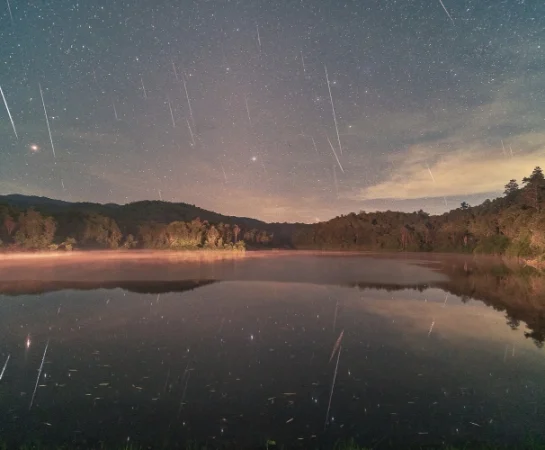
The Geminids are the strongest annual meteor shower, and 2026 gives them close to ideal conditions. The International Meteor Organization (IMO) predicts the maximum for Monday, December 14, 2026, at about 14:00 UT, with a zenithal hourly rate (ZHR) of 150. The Moon is new
Why Days Get Shorter Fastest Around the Equinox
In London, the day loses about four minutes of daylight every 24 hours in late September. Three months later, around the winter solstice, it changes by only a few seconds a day. The shortening is not steady, and at most latitudes it is not fastest

Full Moon Names by Month: Where Beaver Moon and Cold Moon Come From
The November 2026 full moon, the Beaver Moon, peaks at 9:53 AM Eastern Time on Tuesday, November 24. The December full moon, the Cold Moon, follows at 8:28 PM Eastern on Wednesday, December 23. In UTC that moment already falls on December 24, so in
What Is a Blood Moon and Why Does the Moon Turn Red
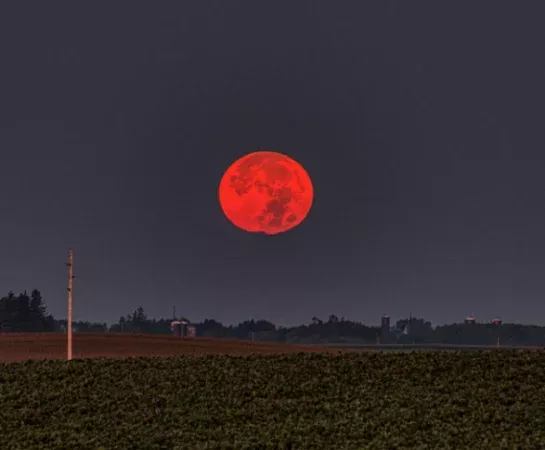
On the night of August 27, 2026, the Moon came within a hair of disappearing entirely. Earth's shadow covered 96.2% of its surface, a partial eclipse so deep that skywatchers across the Americas, Europe, and Africa watched it turn a rusty, almost total red without


