Major Airports in Trinidad and Tobago
- A.N.R. Robinson International Airport (TAB) - 19:38:07
- Piarco International Airport (POS) - 19:38:07
Daylight saving time in Trinidad and Tobago
Trinidad and Tobago has 1 listed IANA time zones. None of them observe daylight saving time in 2026. The UTC offset remains stable throughout the year.
Best Time to Call Trinidad and Tobago
Business hours in Trinidad and Tobago (9 AM–5 PM local time) fall at these local times elsewhere:
- Beijing: 9:00 PM – 5:00 AM (next day) ( Partial overlap)
- Paris: 3:00 PM – 11:00 PM ( Partial overlap)
- Toronto: 9:00 AM – 5:00 PM ( Convenient)
- Seoul: 10:00 PM – 6:00 AM (next day) ( Outside normal hours)
- Mexico City: 7:00 AM – 3:00 PM ( Partial overlap)
- Cairo: 4:00 PM – 12:00 AM (next day) ( Partial overlap)
- Bangkok: 8:00 PM – 4:00 AM (next day) ( Partial overlap)
Times shown reflect current UTC offsets and may shift by up to an hour around daylight saving transitions.
Time Difference from Trinidad and Tobago
Compare time in Trinidad and Tobago with other countries.
Countries in the Same Time Zone as Trinidad and Tobago
Most Popular Cities in Trinidad and Tobago
Holidays in Trinidad and Tobago
Official national public holidays. Regional and religious observances may vary by area.
About Time in Trinidad and Tobago
An Instrument Invented Within Living Memory
Unusually for a major acoustic instrument, the steelpan's invention can be traced not to some distant, half-legendary past but to a specific handful of decades in twentieth-century Port of Spain. After British colonial authorities banned African-derived skin drums following the 1884 Canboulay Riots, fearing they could be used to coordinate unrest, Carnival musicians improvised a succession of substitutes: first tamboo bamboo, lengths of bamboo struck against the ground, then biscuit tins and dustbin lids, and by the mid-1930s scavenged metal objects including automobile brake hubs. Musicians in the city's poorer neighbourhoods discovered that careful, repeated hammering could tune small dents in these metal surfaces to distinct pitches, and by 1939 the first recognisable steel pans had emerged; Carnival of 1940 marked their first public appearance as a genuine musical ensemble rather than mere rhythmic noise.
The instrument's now-familiar form came together only after the Second World War, when the large American naval base at Chaguaramas left behind an abundant new supply of 55-gallon steel oil drums, which musicians including Ellie Mannette and Winston "Spree" Simon began shaping into the concave, multi-note surfaces still used today. By 1951, the instrument had travelled far enough from its origins that the Trinidad All Steel Percussion Orchestra performed at London's Festival of Britain, and in 1992 Prime Minister Patrick Manning formally declared the steelpan Trinidad and Tobago's national instrument, a designation the country's parliament reaffirmed by law in 2024, the year after the United Nations General Assembly established 11 August as World Steelpan Day, completing the journey of an instrument invented from wartime scrap into a globally recognised national symbol within roughly a single lifetime.
A Lake That Swallows Things and Gives Them Back
In the village of La Brea in southwest Trinidad lies the largest deposit of natural asphalt anywhere on Earth, a roughly hundred-acre lake of thick black pitch estimated to run some 250 feet deep and to hold more than ten million tons of material. The lake formed over thousands of years as tectonic subduction opened fault lines beneath the region, allowing crude oil from deep underground reservoirs to seep upward into an old volcanic crater, where exposure to air caused its lighter components to evaporate and left behind the heavy, viscous asphalt that remains today.
English explorer Sir Walter Raleigh is generally credited with introducing the lake to European knowledge in 1595, though the local Amerindian population had known and named it long before his arrival, guiding him to what they called Tierra de Brea. Raleigh found the material ideal for caulking his ships' hulls, reportedly praising it as superior to comparable pitch imported from Norway because it resisted melting in the sun. Commercial mining began in earnest in the late nineteenth century, and the asphalt has been extracted continuously ever since for use in roads and roofing worldwide, even as the lake's surface exhibits a peculiar, slow churning motion of its own, periodically swallowing objects, from prehistoric tree trunks to modern debris, that have been known to resurface, sometimes years later, in an entirely different part of the lake.
Frequently Asked Questions
How many time zones does Trinidad and Tobago have?
One. The whole of Trinidad and Tobago follows America/Port_of_Spain, so every city shows the same local time as the capital, Port of Spain.
Is Trinidad and Tobago ahead of or behind GMT?
Trinidad and Tobago is currently 4 hours behind GMT (UTC-4).
Does Trinidad and Tobago use summer time?
No. Trinidad and Tobago does not observe daylight saving time, so its clocks stay at UTC-4 all year. Its time difference with countries that do change their clocks still shifts by an hour in spring and autumn.
How many public holidays does Trinidad and Tobago have in 2026?
Trinidad and Tobago has 15 national public holidays in 2026, when banks and government offices are usually closed. Some regions may also have their own local holidays.
How do I dial a phone number in Trinidad and Tobago from abroad?
From a mobile phone, type +1-868 and then the 10-digit number, without the 1 that is dialed first for long-distance calls inside the country. From a landline in the US or Canada, dial 1 and the 10-digit number; from most of Europe, dial 00 1-868 followed by the number.
What language is spoken in Trinidad and Tobago?
The main languages of Trinidad and Tobago are English, French and Spanish.
Beyond the Clock

How Many Weeks Are in a Quarter and How 4-4-5 Fiscal Calendars Work
A quarter is 13 weeks only on paper. A calendar quarter runs 90, 91, or 92 days, which works out to somewhere between 12.86 and 13.14 weeks, and it never starts on the same weekday two years in a row. That small mismatch is why

Social Jet Lag: How Uneven Sleep Schedules Cost You a Time Zone Every Weekend
If you go to bed at 11 p.m. and wake at 6:30 a.m. on workdays, then sleep from 12:30 a.m. to 9 a.m. on weekends, your body spends every weekend about two hours west of where you live. On Monday morning, the alarm drags it

What Week Number Is It? ISO Week Numbers vs US Week Numbers
Ask a spreadsheet in Chicago and a planner in Stockholm what week Sunday, January 3, 2027 falls in, and you get two different years. Excel's default setting says week 2 of 2027. The ISO standard used across Europe says week 53 of 2026. Both answers

Time Blocking vs Time Boxing vs Task Batching: What’s the Difference
The three names sound alike and are often used interchangeably, and all three promise a more focused day. They are not competing methods. Each one answers a different question. A frequent way for a technique to disappoint is being asked to do another one's job:

Friday the 13th: How Often It Happens and Why It Falls on a Friday Most Often
November 13, 2026 is the third Friday the 13th of the year, after February 13 and March 13. That won't happen again until 2037. The next one after November comes on August 13, 2027, and then the calendar produces the longest possible drought: 14 months

When Is Eid al-Fitr and How Its Date Depends on Ramadan’s Final Moon Sighting
Eid al-Fitr never sits on a fixed date, and it isn't confirmed until the night before it happens. Unlike Christmas or New Year's Day, locked to the Gregorian calendar months in advance, the first day of Shawwal depends on whether a sliver of crescent moon

When Is Yom Kippur and Why It Always Falls 10 Days After Rosh Hashanah
Yom Kippur is the tenth day of Tishrei, and Rosh Hashanah is the first, so the ten-day gap between them looks like simple arithmetic. It isn't. The Hebrew calendar has a set of centuries-old rules that quietly forbid Rosh Hashanah from landing on three specific
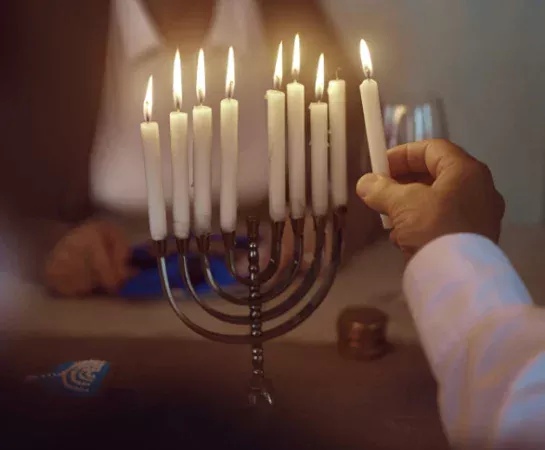
Why Hanukkah’s Date Moves Every Year on the Solar Calendar
In 2013, the first candle of Hanukkah was lit on the night before Thanksgiving, a coincidence rare enough that it won't happen again until 2070. Eleven years later, in 2024, the first candle fell on the evening of December 25 itself, the same alignment that
Time Tools
Quick access to timers, stopwatch, world clock and time zone tools.
Time Guides
Read useful guides about time zones, calendars, finance and astronomy.


