Major Airports in Puerto Rico
- Luis Munoz Marin International Airport (SJU) - 19:40:15
Daylight saving time in Puerto Rico
Puerto Rico has 1 listed IANA time zones. None of them observe daylight saving time in 2026. The UTC offset remains stable throughout the year.
Best Time to Call Puerto Rico
Business hours in Puerto Rico (9 AM–5 PM local time) fall at these local times elsewhere:
- Beijing: 9:00 PM – 5:00 AM (next day) ( Partial overlap)
- Paris: 3:00 PM – 11:00 PM ( Partial overlap)
- Toronto: 9:00 AM – 5:00 PM ( Convenient)
- Seoul: 10:00 PM – 6:00 AM (next day) ( Outside normal hours)
- Mexico City: 7:00 AM – 3:00 PM ( Partial overlap)
- Cairo: 4:00 PM – 12:00 AM (next day) ( Partial overlap)
- Bangkok: 8:00 PM – 4:00 AM (next day) ( Partial overlap)
Times shown reflect current UTC offsets and may shift by up to an hour around daylight saving transitions.
Time Difference from Puerto Rico
Compare time in Puerto Rico with other countries.
Most Popular Cities in Puerto Rico
Holidays in Puerto Rico
Official national public holidays. Regional and religious observances may vary by area.
About Time in Puerto Rico
A Sovereignty Established in Six Separate Steps
Puerto Rico did not become American territory on a single date but through a slow, legally layered sequence spread across nearly two years. United States forces invaded the island on 25 July 1898, during the Spanish-American War. Spain formally renounced sovereignty under an armistice signed just eighteen days later, on 12 August, yet actual Spanish authority did not end on the ground until 18 October 1898, when the last Spanish officials evacuated and American sovereignty effectively began.
The paperwork took even longer to catch up with the reality on the island. The Treaty of Paris, under which Spain formally ceded Puerto Rico to the United States, was not signed until 10 December 1898, and did not legally take effect until the two governments exchanged ratifications and President William McKinley proclaimed it in force on 11 April 1899, five months after the signing and nearly two years after the invasion itself. Puerto Rico then spent a further thirteen months under direct U.S. military government before Congress replaced it with a civilian administration under the Foraker Act on 1 May 1900, and it would be more than half a century later, on 25 July 1952, exactly fifty-four years to the day after the original 1898 invasion, that Puerto Rico's status changed again with the proclamation of the Commonwealth.
Thirteen Years Before It Had Its Permanent Name
The oldest European-founded city under the United States flag did not begin where it stands today. In 1508, Juan Ponce de León, recently appointed the island's first governor, established the original settlement at a site called Caparra, named after a Roman-era town in Spain, on marshy ground a short distance inland. Within a year, colonists were petitioning to move, complaining of the mosquito-infested location and its isolation from the harbour, and in 1509 the settlement relocated to a small coastal islet, the site of what is now Old San Juan.
The names took even longer to settle into their modern arrangement than the town itself did. Columbus had named the island San Juan Bautista in 1493, while the new coastal settlement initially took the name Puerto Rico, "rich port." It was not until 1521 that the town received its formal combined name, San Juan Bautista de Puerto Rico, and sometime in the following decade the two names quietly swapped their objects: the island became known simply as Puerto Rico, and its capital took the name San Juan, an arrangement so thoroughly settled today that few visitors realise the city and the island it anchors once wore each other's names.
Six Hours That Started the Longest Blackout in American History
Hurricane Maria made landfall on Puerto Rico at 6:15 in the morning on 20 September 2017, a Category 4 storm carrying sustained winds averaging 123 miles per hour for roughly twelve continuous hours as it crossed the island. By the following day, essentially all 3.4 million residents, along with tens of thousands more in the neighbouring U.S. Virgin Islands, were without power, a blackout of a scale and duration that researchers combing through the historical record could find no precedent for anywhere in the United States.
The recovery timeline stretched out in stages that themselves became a kind of public countdown. It took until 28 November, more than two months after landfall, for federal officials to report that even half of the island's normal peak electricity load had been restored. Roughly six months after the storm, on 21 March 2018, the government announced that more than ninety percent of power had returned. But the very last connected households, concentrated in remote mountain communities where access roads themselves needed months of repair before crews could even reach the lines, did not get power back until mid-August 2018, 328 days after the hurricane first struck, making it, by a wide margin, the longest electrical blackout in United States history.
Frequently Asked Questions
How many time zones does Puerto Rico have?
One. The whole of Puerto Rico follows America/Puerto_Rico, so every city shows the same local time as the capital, San Juan.
Is Puerto Rico ahead of or behind GMT?
Puerto Rico is currently 4 hours behind GMT (UTC-4).
Does Puerto Rico use summer time?
No. Puerto Rico does not observe daylight saving time, so its clocks stay at UTC-4 all year. Its time difference with countries that do change their clocks still shifts by an hour in spring and autumn.
How many public holidays does Puerto Rico have in 2026?
Puerto Rico has 18 national public holidays in 2026, when banks and government offices are usually closed. Some regions may also have their own local holidays.
How do I dial a phone number in Puerto Rico from abroad?
From a mobile phone, type +1-787 and then the 10-digit number, without the 1 that is dialed first for long-distance calls inside the country. From a landline in the US or Canada, dial 1 and the 10-digit number; from most of Europe, dial 00 1-787 followed by the number.
What language is spoken in Puerto Rico?
The main languages of Puerto Rico are English and Spanish.
Beyond the Clock

Why Scheduled Jobs Break at Daylight Saving Time
On Sunday, November 1, 2026, the local time 1:30 AM happens twice in New York. The first 1:30 AM is 05:30 UTC on Eastern Daylight Time. The second is an hour later, 06:30 UTC on Eastern Standard Time. Four and a half months later, on

When Does a Day Actually Begin? Midnight, Sunrise, and Sunset Across Cultures
Hebcal, the widely used Jewish calendar service, lists Saturday, December 5, 2026 as 25 Kislev 5787, the first day of Hanukkah. The first Hanukkah candle is lit the evening before, on Friday, December 4. This is not an error. The Hebrew date changes at sunset,
How Accurate Are Atomic Clocks: How Much Do They Actually Drift
In 2015, physicists at JILA in Colorado built a strontium clock so stable that, if it had started running 15 billion years ago, before the universe itself existed, it would still be within one second of correct today. That number sounds like marketing. It isn't.

Why the Hour Was Originally a Different Length in Summer and Winter
For most of recorded history, an hour was not a fixed amount of time. It was a fraction, one twelfth of however long daylight happened to last that day. In June that fraction stretched past 80 modern minutes. In December it shrank to barely 40.

Full Moon Names by Month: Where Beaver Moon and Cold Moon Come From
The November 2026 full moon, the Beaver Moon, peaks at 9:53 AM Eastern Time on Tuesday, November 24. The December full moon, the Cold Moon, follows at 8:28 PM Eastern on Wednesday, December 23. In UTC that moment already falls on December 24, so in
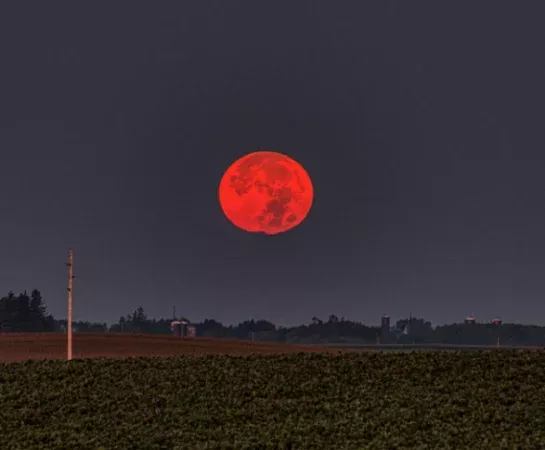
What Is a Blood Moon and Why Does the Moon Turn Red
On the night of August 27, 2026, the Moon came within a hair of disappearing entirely. Earth's shadow covered 96.2% of its surface, a partial eclipse so deep that skywatchers across the Americas, Europe, and Africa watched it turn a rusty, almost total red without
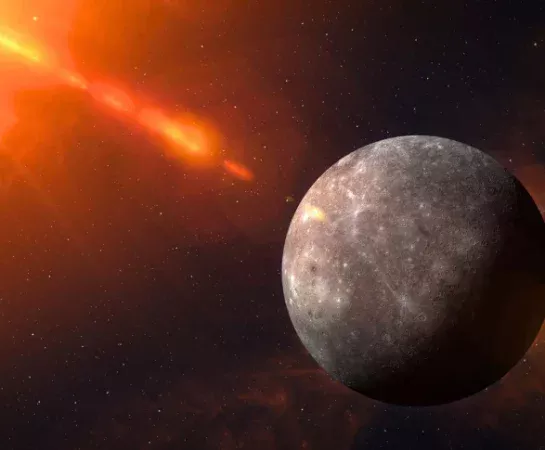
Mercury Retrograde: What’s Astronomically Real vs Astrological Myth
Mercury retrograde generates millions of searches every time it happens, and almost none of that content stops to explain what's actually occurring in space. The phenomenon itself is completely real, observable, and predictable centuries in advance. What isn't real is nearly everything attached to it

What Is Sidereal Time and How It Differs From Solar Time
Ask how long it takes Earth to spin once on its axis and the honest answer depends on what you're measuring the spin against. Measured against the sun, a full rotation takes 24 hours, the day everyone lives by. Measured against the distant stars, that
Time Tools
Quick access to timers, stopwatch, world clock and time zone tools.
Time Guides
Read useful guides about time zones, calendars, finance and astronomy.


