Major Airports in Sint Maarten
- Princess Juliana International Airport (SXM) - 19:34:09
Daylight saving time in Sint Maarten
Sint Maarten has 1 listed IANA time zones. None of them observe daylight saving time in 2026. The UTC offset remains stable throughout the year.
Best Time to Call Sint Maarten
Business hours in Sint Maarten (9 AM–5 PM local time) fall at these local times elsewhere:
- Beijing: 9:00 PM – 5:00 AM (next day) ( Partial overlap)
- Paris: 3:00 PM – 11:00 PM ( Partial overlap)
- Toronto: 9:00 AM – 5:00 PM ( Convenient)
- Seoul: 10:00 PM – 6:00 AM (next day) ( Outside normal hours)
- Mexico City: 7:00 AM – 3:00 PM ( Partial overlap)
- Cairo: 4:00 PM – 12:00 AM (next day) ( Partial overlap)
- Bangkok: 8:00 PM – 4:00 AM (next day) ( Partial overlap)
Times shown reflect current UTC offsets and may shift by up to an hour around daylight saving transitions.
Time Difference from Sint Maarten
Compare time in Sint Maarten with other countries.
Countries in the Same Time Zone as Sint Maarten
Most Popular Cities in Sint Maarten
Holidays in Sint Maarten
Official national public holidays. Regional and religious observances may vary by area.
About Time in Sint Maarten
A Harbor Master's Letter Led to Sint Maarten's Official-Time Rule
The legal foundation of time in Sint Maarten can be traced to a remarkably specific administrative document. On March 13, 1950, the Governor of the Netherlands Antilles signed Decision No. 1930 establishing official time for the Windward Islands. The decision records what prompted it: a letter dated March 3, 1950, No. 178, from the harbor master.
The resulting rule declared that official time for the Windward Islands differed by four hours from Greenwich Mean Time and by one hour from Eastern Standard Time. In the Caribbean context of the order, that corresponds to GMT-4, one hour ahead of EST at GMT-5. The decision was published as P.B. 1950, No. 36. Government metadata for the surviving Sint Maarten regulation gives April 19, 1950 as its original effective date.
The wording is notable because the measure was not originally written for an independent or autonomous country called Sint Maarten. It applied to the Bovenwindse Eilanden, the Windward Islands within the Netherlands Antilles. More than sixty years later, the political structure surrounding that clock disappeared while the rule itself survived.
10-10-10 Changed the State, Not the Time
On October 10, 2010, the Netherlands Antilles ceased to exist as a country within the Kingdom of the Netherlands, and Sint Maarten acquired the status of a separate country within the Kingdom. Midnight did not bring a new time zone with the new constitutional order.
Sint Maarten's constitution expressly preserved existing Netherlands Antilles legislation and regulations of the former island territory until they were amended or repealed. The official-time rule followed that continuity. The present government legislation database lists the Landsbesluit tot vaststelling van de officiële tijd voor Sint Maarten as effective from October 10, 2010 onward, while its legislative notes identify the 1950 decision as the original regulation behind it.
That produces an unusually long legal thread. A rule initiated under the Netherlands Antilles administration after a harbor master's letter in 1950 still forms the basis of official time in a country whose present constitutional status dates only from 2010.
The International Border Through the Island Does Not Divide Its Clocks
Sint Maarten occupies the southern part of an island divided between two jurisdictions. Crossing the boundary into the French collectivity of Saint-Martin changes the legal system and public administration, but not the clock.
The two sides arrive at UTC-4 through different legislation. Sint Maarten retains its own official-time decision. France's Decree No. 2017-292 on French legal time separately provides that legal time in the collectivity of Saint-Martin is four hours behind the UTC-based French reference established through the national metrology system and the Observatoire de Paris. Both legal routes therefore produce UTC-4 on the same island.
The border is consequently invisible to civil time. There is no one-hour adjustment between Philipsburg and Marigot and no seasonal period in which the two sides separate because metropolitan France changes to summer time. The French decree assigns Saint-Martin its own UTC-4 rule rather than the seasonal UTC+1/UTC+2 regime used in metropolitan France.
Why Software Calls the Zone America/Lower_Princes
Sint Maarten's IANA identifier has a less obvious history than its legal clock. After the dissolution of the Netherlands Antilles, the time-zone database was updated in 2011 to reflect the new ISO country code SX. The maintainers needed a location-based identifier for Sint Maarten and selected Lower Prince's Quarter.
The mailing-list record preserves the naming decision itself. Lower Prince's Quarter was considered too long for the naming constraints then being followed and also contained an apostrophe, so the identifier became America/Lower_Princes. It originally appeared as a link to America/Curacao rather than as an independently maintained set of clock rules.
Later consolidation changed the technical target. Current tzdb backward-compatibility data links America/Lower_Princes to America/Puerto_Rico because their civil clocks agree throughout tzdb's principal post-1970 period. The unusual identifier therefore reflects database history and naming constraints, not a special time zone used only in Lower Prince's Quarter.
Frequently Asked Questions
How many time zones does Sint Maarten have?
One. The whole of Sint Maarten follows America/Lower_Princes, so every city shows the same local time as the capital, Philipsburg.
Is Sint Maarten ahead of or behind GMT?
Sint Maarten is currently 4 hours behind GMT (UTC-4).
Does Sint Maarten use summer time?
No. Sint Maarten does not observe daylight saving time, so its clocks stay at UTC-4 all year. Its time difference with countries that do change their clocks still shifts by an hour in spring and autumn.
How many public holidays does Sint Maarten have in 2026?
Sint Maarten has 14 national public holidays in 2026, when banks and government offices are usually closed. Some regions may also have their own local holidays.
How do I dial a phone number in Sint Maarten from abroad?
From a mobile phone, type +599 and then the local number without the leading 0 used for domestic calls, if it has one. From a landline, replace the plus sign with your exit code: 011 from the US and Canada, or 00 from most of Europe, for example 00 599 followed by the number.
What language is spoken in Sint Maarten?
The main languages of Sint Maarten are Dutch and English.
Beyond the Clock

Why the Year Starts on January 1
Nothing happens in the sky on January 1. The winter solstice comes about ten days earlier, Earth's closest approach to the Sun a few days later, and no lunar phase is tied to the date. January 1 is not an astronomical boundary. It is an

Friday the 13th: How Often It Happens and Why It Falls on a Friday Most Often
November 13, 2026 is the third Friday the 13th of the year, after February 13 and March 13. That won't happen again until 2037. The next one after November comes on August 13, 2027, and then the calendar produces the longest possible drought: 14 months

When Is Eid al-Fitr and How Its Date Depends on Ramadan’s Final Moon Sighting
Eid al-Fitr never sits on a fixed date, and it isn't confirmed until the night before it happens. Unlike Christmas or New Year's Day, locked to the Gregorian calendar months in advance, the first day of Shawwal depends on whether a sliver of crescent moon
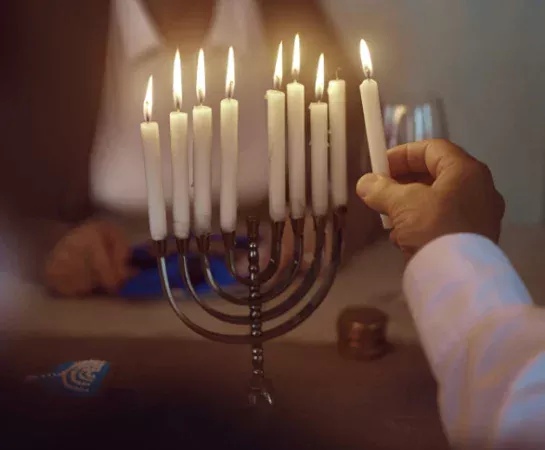
Why Hanukkah’s Date Moves Every Year on the Solar Calendar
In 2013, the first candle of Hanukkah was lit on the night before Thanksgiving, a coincidence rare enough that it won't happen again until 2070. Eleven years later, in 2024, the first candle fell on the evening of December 25 itself, the same alignment that

Why the Moon’s Phases Don’t Actually Change Its Size
A thin crescent looks small enough to disappear. A full moon looks like it's swelling on the horizon. Neither impression is true. The Moon's diameter is 3,474 kilometers on every night of the month, whether it's a sliver or a full disc, and nothing in
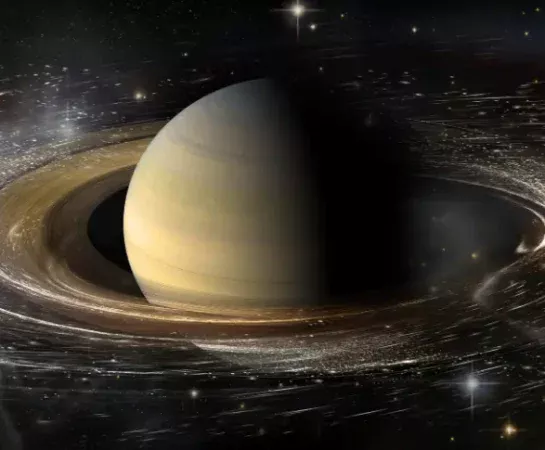
Why Saturn’s Rings Are Disappearing From View in 2025 and 2026
Saturn's rings turned edge-on to Earth on March 23, 2025, at 12:04 p.m. EDT, and for weeks the planet looked like a plain yellow ball through backyard telescopes. This is not decay or destruction. It is a geometric alignment called a ring plane crossing, and
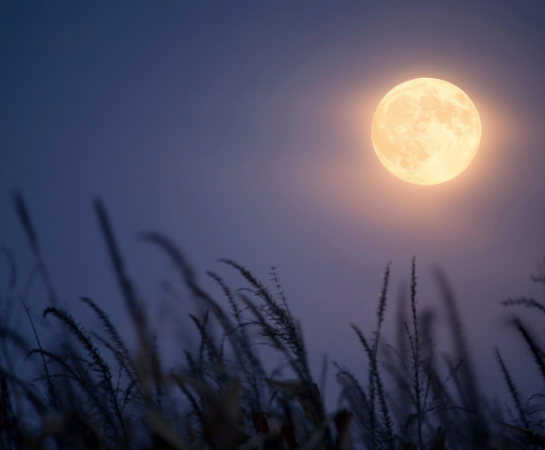
What Is a Harvest Moon and Why It Rises at Almost the Same Time Several Nights Running
On most nights of the year, the Moon rises roughly 50 minutes later than it did the night before. Around the Harvest Moon, that gap collapses to as little as 10 minutes in parts of the UK and Canada, and rarely more than 30 minutes
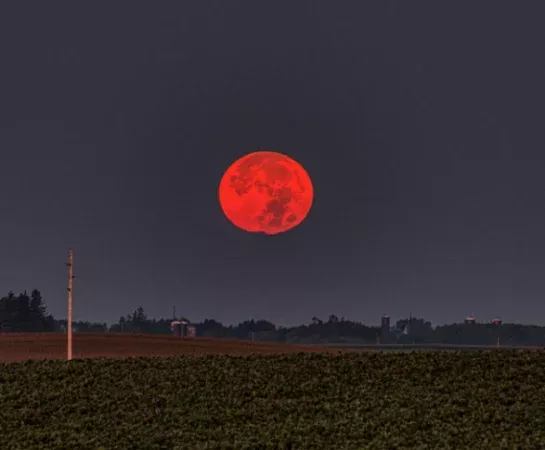
What Is a Blood Moon and Why Does the Moon Turn Red
On the night of August 27, 2026, the Moon came within a hair of disappearing entirely. Earth's shadow covered 96.2% of its surface, a partial eclipse so deep that skywatchers across the Americas, Europe, and Africa watched it turn a rusty, almost total red without
Time Tools
Quick access to timers, stopwatch, world clock and time zone tools.
Time Guides
Read useful guides about time zones, calendars, finance and astronomy.


