Major Airports in Montserrat
- John A. Osborne Airport (MNI) - 09:46:51
Daylight saving time in Montserrat
Montserrat has 1 listed IANA time zones. None of them observe daylight saving time in 2026. The UTC offset remains stable throughout the year.
Best Time to Call Montserrat
Business hours in Montserrat (9 AM–5 PM local time) fall at these local times elsewhere:
- Beijing: 9:00 PM – 5:00 AM (next day) ( Partial overlap)
- Paris: 3:00 PM – 11:00 PM ( Partial overlap)
- Toronto: 9:00 AM – 5:00 PM ( Convenient)
- Seoul: 10:00 PM – 6:00 AM (next day) ( Outside normal hours)
- Mexico City: 7:00 AM – 3:00 PM ( Partial overlap)
- Cairo: 4:00 PM – 12:00 AM (next day) ( Partial overlap)
- Bangkok: 8:00 PM – 4:00 AM (next day) ( Partial overlap)
Times shown reflect current UTC offsets and may shift by up to an hour around daylight saving transitions.
Time Difference from Montserrat
Compare time in Montserrat with other countries.
Countries in the Same Time Zone as Montserrat
Most Popular Cities in Montserrat
Holidays in Montserrat
Official national public holidays. Regional and religious observances may vary by area.
About Time in Montserrat
A Volcano Once Changed the Coordinates Behind Montserrat's Historical Clock
The Soufrière Hills eruption did not change Montserrat's UTC offset, but it produced a rare side effect inside the historical time-zone record. After Plymouth was evacuated in the 1990s, IANA maintainers reconsidered which location should represent the island when calculating its old local mean time.
A 1997 tzdb patch records the reasoning directly. Plymouth had previously been used as the representative location, giving a reconstructed pre-standard offset of UTC-4:08:52. With the capital evacuated, the maintainer proposed using Olveston instead and changed the historical value to approximately UTC-4:08, explicitly describing the longitude as a guess because reliable coordinates were not then available.
The current extended tzdb record no longer uses that guessed Olveston value. Its backzone entry again gives UTC-4:08:52, now with Cork Hill named as the representative location. The sequence documents something unusual: volcanic destruction and population displacement influenced the coordinates used by a global time-zone database to model Montserrat's nineteenth- and early-twentieth-century time.
None of these database revisions means that Montserrat physically altered its clocks after the eruption. They affect the reconstruction of time before standardization, more than eighty years before the volcanic crisis. The civil offset in the modern period remained UTC-4.
The 1911 Reconstruction Starts Standard Time at 00:01, Not at Midnight
Montserrat's surviving pre-1970 tzdb entry contains an oddly precise boundary. It keeps the reconstructed UTC-4:08:52 local mean time until July 1, 1911 at 00:01, then changes to Atlantic Standard Time at UTC-4.
Read literally, that reconstruction creates a forward discontinuity of 8 minutes 52 seconds. When the old local clock reached 00:01, the new offset would make the corresponding displayed time 00:09:52. Local readings from 00:01 through 00:09:51 would therefore not occur in the reconstructed sequence.
The precision should not be promoted into a stronger historical claim than the evidence supports. The second-level offset is a representative longitude-based value, and the current entry resides in backzone, where IANA keeps pre-1970 material that falls outside tzdb's principal historical guarantees. The unusual 00:01 boundary is part of that reconstruction; without a matching Montserrat colonial order, it should not be described as a proven instruction telling every island clock to jump at exactly one minute after midnight.
A 1905 Montserrat Timestamp Can Depend on How tzdb Was Built
Current tzdb does not maintain America/Montserrat as an independent main-data zone for the post-1970 era. In the standard backward-compatibility file, America/Montserrat links to America/Puerto_Rico. The reason is clock equivalence, not political or administrative connection: their civil-time histories agree throughout tzdb's primary post-1970 scope.
The older histories are not identical. Puerto Rico's main record had already reached UTC-4 by 1899, whereas Montserrat's optional backzone reconstruction remains at UTC-4:08:52 until 1911. A timestamp in Montserrat in 1905 can therefore be interpreted differently depending on whether a system uses only the normal compatibility link or includes the separate backzone history.
For 1905, the difference is 8 minutes 52 seconds. The ordinary America/Montserrat link inherits Puerto Rico's UTC-4 history, while the extended Montserrat reconstruction retains local mean time. That discrepancy is confined to old timestamps, but it makes Montserrat a particularly clear case of why a familiar IANA zone name does not guarantee identical historical depth on every tzdb installation.
Frequently Asked Questions
How many time zones does Montserrat have?
One. The whole of Montserrat follows America/Montserrat, so every city shows the same local time as the capital, Plymouth.
Is Montserrat ahead of or behind GMT?
Montserrat is currently 4 hours behind GMT (UTC-4).
Does Montserrat use summer time?
No. Montserrat does not observe daylight saving time, so its clocks stay at UTC-4 all year. Its time difference with countries that do change their clocks still shifts by an hour in spring and autumn.
How many public holidays does Montserrat have in 2026?
Montserrat has 13 national public holidays in 2026, when banks and government offices are usually closed. Some regions may also have their own local holidays.
How do I dial a phone number in Montserrat from abroad?
From a mobile phone, type +1-664 and then the 10-digit number, without the 1 that is dialed first for long-distance calls inside the country. From a landline in the US or Canada, dial 1 and the 10-digit number; from most of Europe, dial 00 1-664 followed by the number.
What language is spoken in Montserrat?
The main language of Montserrat is English.
Beyond the Clock

Civil, Nautical and Astronomical Twilight: What Each One Means
Sunset is not the moment the light goes out. After the Sun drops below the horizon, the upper atmosphere is still sunlit and scatters that light down to the ground, so the sky dims gradually instead of switching off. Astronomers divide this fading into three

Why the Earliest Sunset Comes Before the Winter Solstice
In New York, the Sun sets earliest on Monday, December 7, 2026, at about 4:28 PM. The shortest day comes two weeks later. The solstice falls at 20:50 UTC on December 21 (3:50 PM EST), and on that day New York gets roughly 9 hours
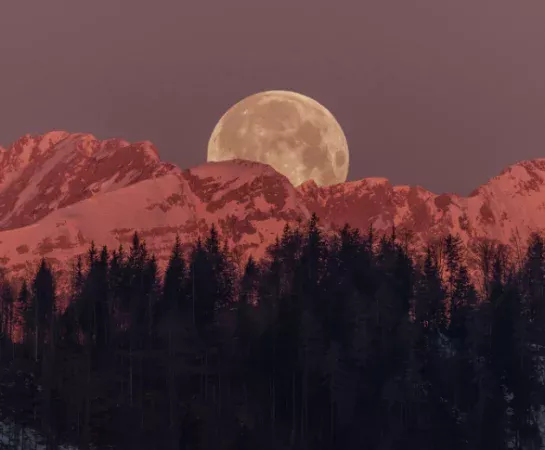
What Is a Supermoon and When Is the Next One
Every time a supermoon rises, the same statistic gets repeated: 14% bigger, 30% brighter. It's in almost every news segment and nearly every listicle, and it's also a comparison almost nobody in the audience will ever actually witness, because it measures the single closest possible

Why the Sky Is Blue During the Day and Black at Night
Sunlight is white. Air is, as far as anyone can tell by looking through a window, colorless. And yet every clear afternoon the same 400,000-kilometer column of gas above your head reads as a specific, saturated blue, then goes black within an hour of sunset.

Three Kings Day: Why Epiphany Falls on January 6
On the morning of Wednesday, January 6, 2027, children across Spain will open what are traditionally the main presents of the holiday season. In Spain the gifts come not from Santa Claus but from the Three Kings. In Puerto Rico, children leave grass in shoeboxes

Why Orthodox Christmas Falls on January 7, Not December 25
Millions of Orthodox Christians open presents and attend Christmas liturgy on January 7. They aren't celebrating a different holiday, and they aren't twelve days behind on purpose. They're marking December 25 on a calendar that stopped syncing with the seasons centuries ago and was never

Why Diwali’s Date Changes Every Year
Why Diwali's Date Changes Every Year In October 2025, Diwali split down the middle. Cities where the sun set before 5:30 p.m. lit their lamps on October 21. Everywhere else celebrated a day earlier, on October 20. Same festival, same religious significance, nearly a billion

Why April Fools’ Day Falls on April 1
Ask almost anyone why April Fools' Day exists and the answer comes back the same way: France switched calendars in the 1500s, some people kept celebrating New Year's on the old date, and everyone else mocked them for it. It's a tidy story, repeated by
Time Tools
Quick access to timers, stopwatch, world clock and time zone tools.
Time Guides
Read useful guides about time zones, calendars, finance and astronomy.


