Major Airports in Martinique
- Martinique Aimé Césaire International Airport (FDF) - 19:31:40
Daylight saving time in Martinique
Martinique has 1 listed IANA time zones. None of them observe daylight saving time in 2026. The UTC offset remains stable throughout the year.
Best Time to Call Martinique
Business hours in Martinique (9 AM–5 PM local time) fall at these local times elsewhere:
- Beijing: 9:00 PM – 5:00 AM (next day) ( Partial overlap)
- Paris: 3:00 PM – 11:00 PM ( Partial overlap)
- Toronto: 9:00 AM – 5:00 PM ( Convenient)
- Seoul: 10:00 PM – 6:00 AM (next day) ( Outside normal hours)
- Mexico City: 7:00 AM – 3:00 PM ( Partial overlap)
- Cairo: 4:00 PM – 12:00 AM (next day) ( Partial overlap)
- Bangkok: 8:00 PM – 4:00 AM (next day) ( Partial overlap)
Times shown reflect current UTC offsets and may shift by up to an hour around daylight saving transitions.
Time Difference from Martinique
Compare time in Martinique with other countries.
Countries in the Same Time Zone as Martinique
Most Popular Cities in Martinique
Holidays in Martinique
Official national public holidays. Regional and religious observances may vary by area.
About Time in Martinique
Three Minutes That Erased a City
Shortly after eight o'clock on the morning of 8 May 1902, Mount Pelée, the volcano overlooking Martinique's largest city, released a pyroclastic surge, a superheated cloud of gas and ash, that swept down onto Saint-Pierre below. Known at the time as the Paris of the West Indies for its theatres, churches and elegant colonial architecture, the city of roughly 28,000 people was destroyed almost in its entirety within about three minutes, making it, by most measures, the deadliest volcanic eruption of the twentieth century.
Popular accounts have long claimed only two people survived within the city centre itself, and while researchers have since established that a handful of others on the town's fringes and aboard ships in the harbour also escaped, those two central figures became inseparable from the disaster's memory. Ludger Sylbaris, a young man jailed days earlier for a knife assault, survived inside a partially underground stone punishment cell whose thick walls and single small grated window, facing away from the volcano, shielded him from the worst of the blast; badly burned, he was pulled from the ruins days later, was ultimately pardoned, and went on to tour the United States with the Barnum & Bailey circus as a survivor of what promoters billed as doomsday itself. A young shoemaker, Léon Compère-Léandre, survived with severe burns after sheltering in his home near the edge of the pyroclastic flow's path. The devastation was so total that Fort-de-France, previously a secondary port, replaced Saint-Pierre as Martinique's capital in the disaster's immediate aftermath, a status it has held ever since.
Freedom Seized Before the Decree Arrived
On 27 April 1848, France's newly formed provisional government signed a decree abolishing slavery throughout its colonies, at the urging of the abolitionist Victor Schoelcher, with instructions that it be formally implemented within each territory over the following two months. In Martinique, that timeline never had the chance to run its course. Enslaved people on the island, already aware of the political upheaval unfolding in Paris and wary after an earlier abolition decree from 1794 had later been reversed, grew increasingly restive as the official announcement was delayed.
The breaking point came on 22 May 1848 in Saint-Pierre, when an enslaved man named Romain was arrested simply for playing a drum, an act colonial authorities treated as a form of defiance given the instrument's long-standing role in coordinating resistance among the enslaved population. The arrest triggered an uprising that spread rapidly across the island, and within days the colonial administration, unable to contain the unrest, proclaimed the abolition of slavery in Martinique on its own initiative, weeks ahead of the schedule Paris had originally set and before the formal decree had even completed its journey across the Atlantic. Martinique's emancipation is remembered locally each year specifically on 22 May, a date chosen not to mark when Paris granted freedom, but when Martinique's own enslaved population had already taken it.
Made Equal to Metropolitan France by a Single Vote
On 19 March 1946, the French National Constituent Assembly unanimously passed a law transforming Martinique, along with Guadeloupe, French Guiana and Réunion, from colonies into full overseas departments of France, legally equivalent, at least on paper, to any department in mainland France itself. The bill's principal author was Aimé Césaire, the poet and writer who had recently become the youngest deputy representing any part of Overseas France, and who argued in the debate preceding the vote that full integration into the Republic represented the logical conclusion of a historical process rather than a break from it.
The change was more than symbolic: departmental status brought Martinique's residents under the same legal framework, welfare system and political representation as citizens anywhere else in France, administered by a prefect reporting directly to the Ministry of the Interior in Paris rather than to a colonial governor. The law's window of opportunity was narrow, pushed through during a brief period of left-wing parliamentary dominance in France that dissolved within months of the vote, and further status changes followed in the decades afterward, including regional status in 1974 and a 2010 referendum that merged Martinique's separate departmental and regional councils into a single territorial body, but the foundational date, when a former plantation colony became, in law, an ordinary piece of France itself, has remained fixed at 19 March 1946.
Frequently Asked Questions
How many time zones does Martinique have?
One. The whole of Martinique follows America/Martinique, so every city shows the same local time as the capital, Fort-de-France.
Is Martinique ahead of or behind GMT?
Martinique is currently 4 hours behind GMT (UTC-4).
Does Martinique use summer time?
No. Martinique does not observe daylight saving time, so its clocks stay at UTC-4 all year. Its time difference with countries that do change their clocks still shifts by an hour in spring and autumn.
How many public holidays does Martinique have in 2026?
Martinique has 14 national public holidays in 2026, when banks and government offices are usually closed. Some regions may also have their own local holidays.
How do I dial a phone number in Martinique from abroad?
From a mobile phone, type +596 and then the local number without the leading 0 used for domestic calls, if it has one. From a landline, replace the plus sign with your exit code: 011 from the US and Canada, or 00 from most of Europe, for example 00 596 followed by the number.
What language is spoken in Martinique?
The main language of Martinique is French.
Beyond the Clock

Why the Earliest Sunset Comes Before the Winter Solstice
In New York, the Sun sets earliest on Monday, December 7, 2026, at about 4:28 PM. The shortest day comes two weeks later. The solstice falls at 20:50 UTC on December 21 (3:50 PM EST), and on that day New York gets roughly 9 hours

When Does Winter Start: Meteorological vs Astronomical Seasons
Winter 2026 starts twice in the Northern Hemisphere. Meteorological winter begins on Tuesday, December 1, 2026. Astronomical winter begins at the December solstice, on Monday, December 21, 2026 at 20:50 UTC, which is 3:50 p.m. Eastern and 12:50 p.m. Pacific. Both answers are correct. They
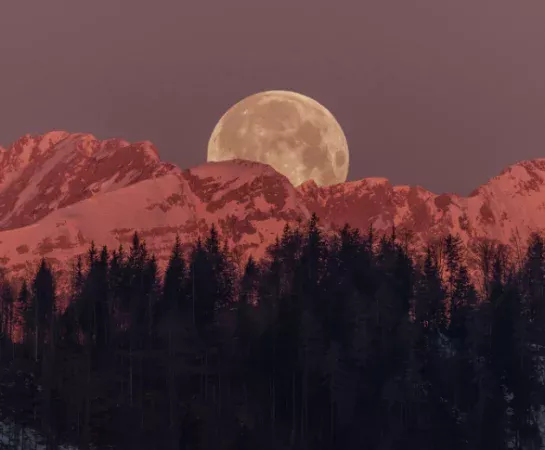
What Is a Supermoon and When Is the Next One
Every time a supermoon rises, the same statistic gets repeated: 14% bigger, 30% brighter. It's in almost every news segment and nearly every listicle, and it's also a comparison almost nobody in the audience will ever actually witness, because it measures the single closest possible
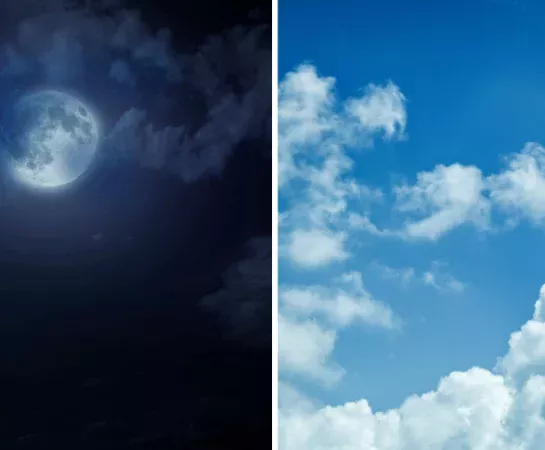
Why the Sky Is Blue During the Day and Black at Night
Sunlight is white. Air is, as far as anyone can tell by looking through a window, colorless. And yet every clear afternoon the same 400,000-kilometer column of gas above your head reads as a specific, saturated blue, then goes black within an hour of sunset.

Three Kings Day: Why Epiphany Falls on January 6
On the morning of Wednesday, January 6, 2027, children across Spain will open what are traditionally the main presents of the holiday season. In Spain the gifts come not from Santa Claus but from the Three Kings. In Puerto Rico, children leave grass in shoeboxes

Why Orthodox Christmas Falls on January 7, Not December 25
Millions of Orthodox Christians open presents and attend Christmas liturgy on January 7. They aren't celebrating a different holiday, and they aren't twelve days behind on purpose. They're marking December 25 on a calendar that stopped syncing with the seasons centuries ago and was never

Why April Fools’ Day Falls on April 1
Ask almost anyone why April Fools' Day exists and the answer comes back the same way: France switched calendars in the 1500s, some people kept celebrating New Year's on the old date, and everyone else mocked them for it. It's a tidy story, repeated by
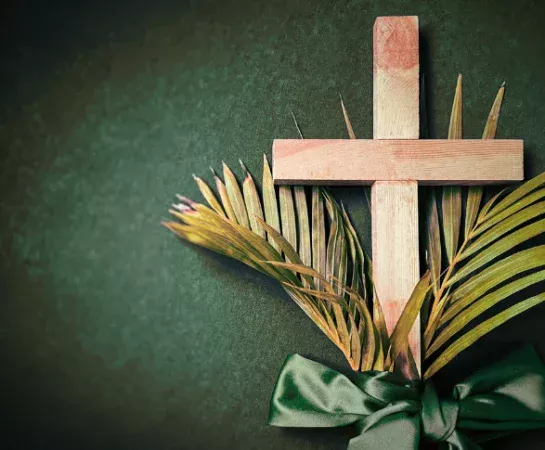
What Is Lent and Why Does It Last Exactly 40 Days
Count the days on a calendar from Ash Wednesday to Easter Sunday and the number that comes out is 46, not 40. That's not a mistake in how most people describe the season, and it's not a modern miscount either. The gap between the number
Time Tools
Quick access to timers, stopwatch, world clock and time zone tools.
Time Guides
Read useful guides about time zones, calendars, finance and astronomy.


