Days in Iqaluit are currently getting shorter, about 40 minutes shorter than a week ago.*
* Calculated from sunrise and sunset times; actual visible daylight can vary slightly with weather, elevation and atmospheric conditions.
Key Facts About Time in Iqaluit
- Changed its standard time on 29 October 2000, from UTC−6 to UTC−5.
- Among the 10 longest summer days of all 806 cities on this site, and the shortest winter days.
- The easternmost of the 4 cities in Canada on this site that use UTC−5.
- The clock runs about 34 minutes ahead of the sun in summer, so solar noon comes as late as 12:43.
Time Difference from Iqaluit
Compare time in Iqaluit with major cities worldwide.
When the Time Difference with Iqaluit Changes
Clocks change on different dates around the world, so the gap between Iqaluit and these places is not the same all year. Next 12 months; dates in Iqaluit time.
- 14–27 Mar 2027: the difference with London, Paris, Berlin and 2 more is 1 hour smaller than usual.
- 30 Oct – 7 Nov 2027: the difference with London, Paris, Berlin and 2 more is 1 hour smaller than usual.
Iqaluit changes its clocks by 1 hour on 14 Mar 2027 and 7 Nov 2027. Mexico City, Dubai, Tokyo, Singapore, Hong Kong, Bangkok, Sao Paulo and 2 more keep the same time all year, so the difference with them changes on these dates.
Best Time to Call Iqaluit
Business hours in Iqaluit (9 AM-5 PM local time) fall at these local times elsewhere:
- New York: 9:00 AM - 5:00 PM ( Convenient · 8 h shared)
- Los Angeles: 6:00 AM - 2:00 PM ( Partial overlap · 5 h shared)
- London: 2:00 PM - 10:00 PM ( Partial overlap · 3 h shared)
- Dubai: 6:00 PM - 2:00 AM (next day) ( Outside normal hours)
- Mumbai: 7:30 PM - 3:30 AM (next day) ( Outside normal hours)
- Tokyo: 11:00 PM - 7:00 AM (next day) ( Outside normal hours)
- Sydney: 1:00 AM (next day) - 9:00 AM (next day) ( Outside normal hours)
in Iqaluit today, it is:
- Los Angeles: 9:00 AM working hours
- London: 5:00 PM outside working hours
- Dubai: 9:00 PM outside working hours
- Mumbai: 10:30 PM night
- Tokyo: 2:00 AM (next day) night
- Sydney: 4:00 AM (next day) night
Times are for today. Clock changes shift them on some dates: see when the time difference changes.
Public Holidays Affecting Iqaluit
Official national holiday observed in Canada.
Daylight saving time changes in Iqaluit
Iqaluit uses the IANA time zone identifier America/Iqaluit. The current local offset is UTC-5 / EST.
2026
Previous change: Standard time started
- The offset changed from UTC-4 / EDT to UTC-5 / EST.
- The clock was moved back from 02:00 to 01:00 local time.
2027
Next change: Daylight saving time starts
- The offset will change from UTC-5 / EST to UTC-4 / EDT.
- The clock will be moved forward from 02:00 to 03:00 local time.
Time Zone History of Iqaluit
Iqaluit follows the America/Iqaluit time zone. According to the IANA time zone database, these are the standard times it has used since 1970:
- In 1970: UTC−5
- From 31 October 1999: UTC−6
- From 29 October 2000: UTC−5, the current standard time
Daylight saving time is in use: clocks have been moved forward for summer in 55 different years since 1972.
About Time in Iqaluit
Iqaluit, the capital of Nunavut, follows Eastern Time: UTC−5 in winter and UTC−4 from the second Sunday of March to the first Sunday of November. It shares its clock with Ottawa, Toronto and New York, even though it lies on Baffin Island, some 2,000 kilometres north of Ottawa.
The Single Time Zone Experiment
Nunavut was created on 1 April 1999, and its new government soon tried to bring the whole territory, which spans three time zones, onto one clock. The aim was to make government more accessible and its operations more efficient across a region stretching thousands of kilometres from east to west. From 31 October 1999 all of Nunavut was to use Central Standard Time.
For Iqaluit, on the far eastern edge of the territory, that meant clocks one hour behind the rest of eastern Canada. The city council at first voted to stay on Eastern Time, then backed down shortly before the switch and accepted Central time, agreeing to review it later.
Complaints from several communities followed. In October 2000 the government changed course again: from 29 October 2000 most of Nunavut would use Eastern Standard Time all year with no daylight saving. That compromise did not last either. In April 2001 Nunavut returned to the Eastern, Central and Mountain zones it had inherited from the Northwest Territories, with daylight saving time, and Iqaluit has used Eastern Time ever since.
From Frobisher Bay to Iqaluit
The settlement grew around an air base built during the Second World War and was known as Frobisher Bay until 1987. The time zone database starts its record in 1942 and shows Eastern Time throughout, with the single exception of the year on Central time from October 1999 to October 2000.
Arctic Daylight
At 63.7 degrees North, just south of the Arctic Circle, Iqaluit has extreme seasons. Around the June solstice the sun rises at about 02:04 and sets at about 23:07, giving 21 hours of daylight. In late December sunrise is after 09:15 and sunset about 13:47, leaving about 4 and a half hours. Because the city lies at 68.5 degrees West, east of the 75th meridian that Eastern Time is based on, solar noon in winter comes early, at about 11:17 in early November.
Time Differences
- Ottawa, Toronto, New York: always the same time.
- Rankin Inlet: 1 hour behind. Cambridge Bay: 2 hours behind.
- Nuuk: 3 hours ahead for most of the year.
- London: 5 hours ahead for most of the year.
Sun & Daylight in Iqaluit
Iqaluit lies at 63.75° N, 68.52° W in the Northern Hemisphere and the Western Hemisphere, about 7,096 km (4,409 mi) from the Equator, in the high-latitude zone.
Sun Time vs Clock Time
Standard time in Iqaluit, UTC−5, is based on the 75° W meridian, while the city lies at 68.52° W. So on standard time the clock runs about 26 minutes behind local solar time. With daylight saving time the clock is about 34 minutes ahead of the sun.
Solar noon, the moment the sun is highest in the sky, comes as early as 11:17 (around November 7) and as late as 12:43 (around March 14) by the local clock.
Same Clock as Ottawa, Different Sun
Iqaluit keeps the same clock as the capital, Ottawa (UTC−5 today), but lies about 2,088 km to the north. The sun reaches its highest point about 29 minutes earlier than in Ottawa, so by the clock the whole day is shifted earlier. The difference in latitude changes sunrise and sunset further:
| Sunrise / sunset | Iqaluit | Ottawa |
|---|---|---|
| Today (Nov 21) | 08:18-14:21 | 07:10-16:27 |
| Dec 21 (solstice) | 09:22-13:42 | 07:40-16:22 |
| Jun 21 (solstice) | 02:11-23:01 | 05:14-20:55 |
Golden Hour & Blue Hour Today
Approximate times from today's sunrise and sunset; the light itself depends on weather.
Airport Serving Iqaluit
Iqaluit Airport (YFB / CYFB) is the main airport serving Iqaluit: a regional airport about 2 km (1 mi) from the city centre.
Current local time at the airport is 18:18:09.
Antipode of Iqaluit
The point on Earth exactly opposite Iqaluit lies at 63.75° S, 111.48° E, in the Southern Ocean. The nearest populated place is Port-aux-Francais, French Southern Territories, about 2,920 km away.
When it is noon by the sun in Iqaluit, it is midnight by the sun at its antipode.
Frequently Asked Questions
What time zone is Iqaluit in?
Iqaluit follows the America/Iqaluit time zone, the official IANA identifier used by computers and databases worldwide to track local time accurately. Right now, this puts Iqaluit at UTC-5.
What time is it in Iqaluit right now?
The current local time in Iqaluit is 18:18:09 on Saturday, 21 November 2026. The clock at the top of this page shows the live time and updates every second.
Does Iqaluit observe daylight saving time?
Yes. Clocks in Iqaluit go forward 1 hour on 14 March 2027 and go back 1 hour on 7 November 2027. Right now Iqaluit is on UTC-5 (EST).
How far ahead or behind UTC is Iqaluit?
Iqaluit is currently UTC-5, meaning local time is 5 hours behind Coordinated Universal Time (UTC).
When did Iqaluit last change its standard time?
On 29 October 2000, standard time in Iqaluit changed from UTC−6 to UTC−5, the offset it uses today.
Does all of Canada have the same time as Iqaluit?
No. Canada uses 5 standard time offsets: UTC−7, UTC−6, UTC−5, UTC−4 and UTC−3:30. Iqaluit is on UTC−5, so check the local time of the exact place you are calling or travelling to.
Which airport serves Iqaluit?
Iqaluit Airport (YFB) is the main airport serving Iqaluit, about 2 km away. The current local time at the airport is 18:18:09.
Beyond the Clock
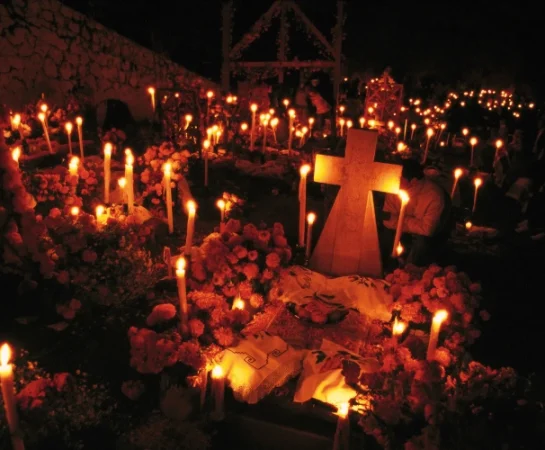
Día de los Muertos: Why the Day of the Dead Spans November 1 and 2
Día de los Muertos lasts two days because it sits on top of two separate Catholic feasts: All Saints' Day on November 1 and All Souls' Day on November 2. Mexican tradition gave each day its own guests. November 1 belongs to children who have

Why Veterans Day Is Observed at 11 AM on November 11
Veterans Day is one of the few American holidays tied to a specific minute. The national observance at Arlington National Cemetery opens with a wreath at the Tomb of the Unknown Soldier at 11:00 AM, and many local ceremonies follow the same hour. The time

Why the Year Starts on January 1
Nothing happens in the sky on January 1. The winter solstice comes about ten days earlier, Earth's closest approach to the Sun a few days later, and no lunar phase is tied to the date. January 1 is not an astronomical boundary. It is an

What Is Nowruz and Why It Always Falls on the Spring Equinox
Nowruz is the Persian New Year, celebrated by more than 300 million people across Iran, Afghanistan, Central Asia, the Caucasus, and Kurdish communities, and it begins at the exact astronomical instant of the March equinox rather than on a fixed date on any calendar grid.

Parkinson’s Law: Does Work Really Expand to Fill the Time Available?
"Work expands so as to fill the time available for its completion" is one of the most quoted lines in management writing, and it began as a joke. C. Northcote Parkinson, a British naval historian, put it in the opening sentence of an essay in

Do 90-Minute Work Cycles Exist? Ultradian Rhythms and the Evidence
The claim is everywhere in productivity writing: the brain runs on 90-minute cycles during the day, so you should work in 90-minute blocks and rest when the cycle dips. It traces back to a real scientist, the sleep researcher Nathaniel Kleitman, and to a real

The 7-Minute Rule: How Employers Round Time Clock Punches
The 7-minute rule is the usual name for rounding time clock punches to the nearest quarter hour. A punch 1 to 7 minutes past a quarter hour rounds down; a punch 8 to 14 minutes past rounds up to the next quarter. Clock in at

How Long Does It Take to Form a Habit? What the 66-Day Study Actually Found
The most quoted answer, 21 days, has no study behind it. The second most quoted answer, 66 days, does, but it rarely comes with the details that make it meaningful. In the study behind that number, the time for a new daily behavior to become


