Airport in Iowa
Des Moines International Airport (DSM / KDSM) is a major international airport serving Iowa directly.
Current local time at the airport is 18:11:02.
Daylight saving time changes in Iowa, United States
Iowa uses the IANA time zone identifier America/Chicago. The current local offset is UTC-5 / CDT.
Next change: November 1, 2026
Clock moves back from 02:00 to 01:00 local time.
Best Time to Call Iowa
Business hours in Iowa (9 AM-5 PM local time) fall at these local times elsewhere:
- Sao Paulo: 11:00 AM - 7:00 PM ( Convenient)
- Frankfurt: 4:00 PM - 12:00 AM (next day) ( Partial overlap)
- Johannesburg: 4:00 PM - 12:00 AM (next day) ( Partial overlap)
- Singapore: 10:00 PM - 6:00 AM (next day) ( Outside normal hours)
- Hong Kong: 10:00 PM - 6:00 AM (next day) ( Outside normal hours)
- Istanbul: 5:00 PM - 1:00 AM (next day) ( Partial overlap)
- Auckland: 3:00 AM (next day) - 11:00 AM (next day) ( Outside normal hours)
Times shown reflect current UTC offsets and may shift by up to an hour around daylight saving transitions.
Time Difference from Iowa
Compare time in Iowa with major cities worldwide.
Current Time in Cities of Iowa, United States
About Time in Iowa
The Town Where City Hall and the School Ran on Different Clocks
Before the federal government finally imposed order in 1966, Iowa's relationship with Daylight Saving Time descended into genuine chaos. By 1962, the state's own communities had settled on 23 different combinations of start and end dates for the seasonal clock change, each town effectively free to pick its own version of when summer time began and ended.
Springville, in Linn County, offers the starkest example of just how far this went. The town's city government switched to Central Standard Time while the local schools and merchants stayed on Daylight Saving Time, meaning residents in the same small town were, quite literally, living under two different official clocks depending on whether they walked into the municipal building or the schoolhouse next door. A Des Moines Register headline on September 6, 1964 summed up the general mood bluntly: "Daylight time spreads nightmare of chaos across Iowa."
The confusion only ended when Congress passed the Uniform Time Act of 1966, which finally imposed a single standardized schedule nationwide, while still allowing any state, as a whole, to opt out entirely if it chose, an option only Arizona and Hawaii would eventually take.
Farmers Against the Clock
Iowa's agricultural community fought hardest against the earlier version of forced permanent Daylight Saving Time, the World War II era policy known as War Time, which locked the entire country onto summer clocks continuously from February 1942 until September 1945.
The Cedar County Farm Bureau did not mince words about the policy's effect on farm work, telling The Gazette in 1943 that War Time was "a hindrance rather than a benefit" to meeting wartime production goals, since farm schedules were built around the sun and livestock rather than an artificially shifted clock. The Iowa Legislature took the farmers' side twice, passing resolutions asking Congress to abandon the wartime clock policy altogether. Both resolutions were ignored, and War Time continued on schedule until the war itself ended.
The debate has never fully gone away. In 2022, the Iowa House passed House File 2331 by a strong 82 to 13 vote, aiming once again to establish year round Daylight Saving Time contingent on congressional approval, following a similar 2020 attempt that never made it out of committee. Like every comparable law in other states, it remains unable to take effect until Congress itself changes the underlying federal rule Iowa's own farmers once tried to overturn eighty years earlier.
Frequently Asked Questions
What time zone is Iowa in?
The whole of Iowa uses the America/Chicago time zone (CDT). Local time is 5 hours behind UTC (UTC-5), and all cities in the region show the same time.
Is the time in Iowa the same as in Washington?
No. Des Moines, the main city of Iowa, is currently 1 hour behind Washington, the capital of United States.
Do clocks change in Iowa?
Yes. The next clock change in Iowa is on November 1, 2026, when clocks move back from 02:00 to 01:00 local time.
What is the main city of Iowa?
Des Moines is the main city of Iowa, with a population of about 214,133. The time, sunrise and sunset shown on this page are based on Des Moines.
Which airport is closest to Des Moines?
Des Moines International Airport (DSM) serves Des Moines directly. Flight arrival and departure times there are shown in local time.
Beyond the Clock

Full Moon Names by Month: Where Beaver Moon and Cold Moon Come From
The November 2026 full moon, the Beaver Moon, peaks at 9:53 AM Eastern Time on Tuesday, November 24. The December full moon, the Cold Moon, follows at 8:28 PM Eastern on Wednesday, December 23. In UTC that moment already falls on December 24, so in

Why Saturn’s Rings Are Disappearing From View in 2025 and 2026
Saturn's rings turned edge-on to Earth on March 23, 2025, at 12:04 p.m. EDT, and for weeks the planet looked like a plain yellow ball through backyard telescopes. This is not decay or destruction. It is a geometric alignment called a ring plane crossing, and
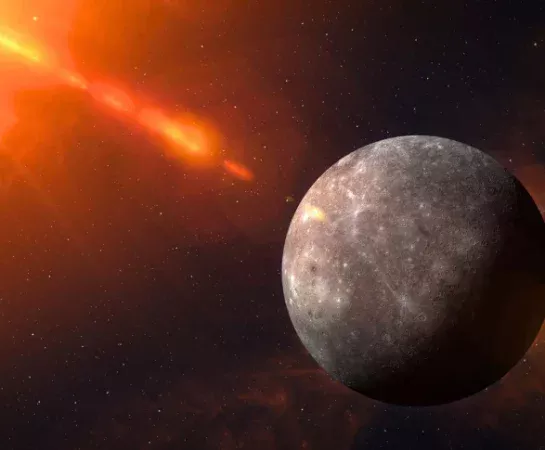
Mercury Retrograde: What’s Astronomically Real vs Astrological Myth
Mercury retrograde generates millions of searches every time it happens, and almost none of that content stops to explain what's actually occurring in space. The phenomenon itself is completely real, observable, and predictable centuries in advance. What isn't real is nearly everything attached to it

What Is Sidereal Time and How It Differs From Solar Time
Ask how long it takes Earth to spin once on its axis and the honest answer depends on what you're measuring the spin against. Measured against the sun, a full rotation takes 24 hours, the day everyone lives by. Measured against the distant stars, that

The Planning Fallacy: Why Tasks Take Longer Than You Expect and How to Correct It
In a 1994 study, 37 psychology students estimated how long it would take them to finish their honors theses. Their average answer was 33.9 days. They also gave a best-case estimate, 27.4 days on average, and a worst-case estimate, "if everything went as poorly as

What the Research Actually Says About the “23 Minutes to Refocus” Claim
"It takes 23 minutes and 15 seconds to refocus after an interruption" shows up in productivity apps, management slide decks, and posts about deep work. The figure is real, and it comes from a serious researcher. It does not mean what it is usually taken

Why the 40-Hour Work Week Exists: From 10-Hour Days to Ford’s 1926 Experiment
The 40-hour week looks like a natural unit of work, but the number was never derived from a measurement of how much work is best. It is the product of two separate fights: one over the length of the day, which ended at eight hours,

How Americans Spend Their 24 Hours: What the Time Use Survey Shows
The average American age 15 and over logs about 9 hours of sleep a day, spends just over 5 hours on leisure and works 3 hours. That last number looks wrong until you see how it is built, and nearly every headline figure from the
Time Tools
Quick access to timers, stopwatch, world clock and time zone tools.
Time Guides
Read useful guides about time zones, calendars, finance and astronomy.


